

Amazon is making one of its biggest investments in nature-based carbon removal. The company has agreed to buy about half of the carbon credits expected from South Africa’s Bacon Tree Restoration Project. The large project will restore degraded land in the Eastern Cape while removing carbon dioxide from the atmosphere.
The project is expected to generate up to 18 million carbon credits over 30 years. It will restore native vegetation across thousands of hectares of damaged land.
For Amazon, the deal is more than a carbon credit purchase. It shows how large companies are changing the way they buy carbon credits. Many are choosing long-term agreements instead of short-term purchases. This helps them secure high-quality credits years in advance.
Kara Hurst, Amazon’s chief sustainability officer, stated:
“Spekboom is a natural wonder, but it can’t heal the land without help from the people who call the Eastern Cape home. This project will restore the ecosystem and create jobs—a model for how nature-based solutions can enable both climate action and economic development.”
Restoring Nature While Removing Carbon
The timing of the project is also important. The voluntary carbon market (VCM) is showing signs of recovery after several difficult years. Buyers are now focusing more on credit quality than on low prices. They want projects that remove carbon, protect nature, and deliver clear benefits for local communities.

AlliedOffsets reports that in 2026, over 200 million carbon credits were retired worldwide. This set a new record and shows that companies want high-quality credits more than ever.
The Bacon Tree Restoration Project is one of Africa’s largest forest restoration efforts. The project will restore degraded subtropical thicket using native plants, especially Spekboom (Portulacaria afra). This hardy plant, locally known as elephant bush, can store large amounts of carbon while surviving in dry conditions.
Spekboom thrives in dry conditions where many other plants cannot grow. It can be planted from simple cuttings placed directly into the soil, making large-scale restoration practical. As it grows, it helps restore soil, reduce erosion, and create conditions for native plants and wildlife to return.
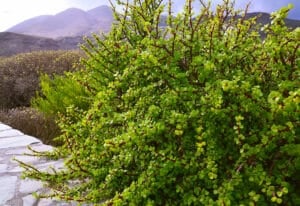
Today, the project area supports 165 recorded plant and animal species, including several considered vulnerable.
South Africa has lost an estimated more than one million hectares of subtropical thicket because of decades of overgrazing and land degradation. Researchers estimate that restoring these ecosystems could remove well over 100 million metric tons of CO₂ over time while improving biodiversity and soil health.
Unlike commercial tree plantations, the project aims to rebuild a natural ecosystem spanning 50,000 hectares. Restoring native plants helps pull carbon dioxide from the air. It also improves soil health, cuts down erosion, and supports wildlife.
By the end of 2028, the project will plant 180 million spekboom cuttings to help restore the Albany thicket, a unique ecosystem that has been declining for decades.
The project is also expected to create 11,000 jobs for local communities through planting, land management, and environmental monitoring. These benefits make the project attractive to companies looking for carbon credits that deliver both climate and social value.
A New Way to Finance Carbon Projects
Large restoration projects need significant funding before they can generate carbon credits. That has slowed many projects because developers often wait years before earning any revenue.
The Bacon Tree project uses a different approach. It secured about $91 million in blended finance by combining private investment with support from development finance partners and climate investors.
Amazon’s long-term purchase agreement also helps reduce financial risk. It gives developers confidence that there will be buyers for future carbon credits. This makes it easier to raise money and move the project forward.
The tech giant has committed to buying 1.95 million tons of carbon removal credits from the project. This long-term purchase agreement also helped the World Bank launch the Spekboom Outcome Bond.
The bond gave investors confidence because the project already had a major buyer for its future carbon credits. Companies that qualify can buy these credits through Amazon’s carbon credit service.
Moreover, the credits will meet some of the world’s highest standards for nature-based carbon removal, including the ABACUS label and Climate, Community & Biodiversity (CCB) certification.
This financing model is becoming more common across the carbon market. More companies are signing long-term offtake agreements instead of waiting for credits to become available. The same trend is now spreading across direct air capture, biochar, and other carbon removal technologies.
Many experts think these agreements will matter more as demand for high-quality carbon removals increases.
Amazon Builds on a Bigger Net-Zero Strategy
The Bacon Tree deal is part of Amazon’s wider climate plan. In 2019, Amazon co-founded The Climate Pledge, committing to reach net-zero carbon by 2040, ten years ahead of the goals set in the Paris Agreement.
The company says its priority is cutting emissions across its business. It continues to invest in renewable energy, electric delivery vehicles, cleaner buildings, and more efficient operations.
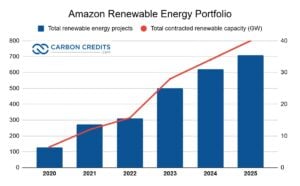
Amazon has already become the world’s largest corporate buyer of renewable energy. By the end of 2025, it had supported more than 700 wind and solar projects worldwide. The company says these projects can generate enough clean electricity to power millions of homes each year.
Still, Amazon recognizes that some emissions are difficult to eliminate. These include emissions from aviation, heavy transport, and some industrial processes.
The company reports that its renewable energy portfolio now tops 40 gigawatts (GW). This makes it the largest corporate buyer of renewable energy in the world for five years running.
For those remaining emissions, the company is investing in high-quality carbon removals.
Besides the Bacon Tree project, Amazon has backed direct air capture (DAC), reforestation, biochar, and other carbon removal technologies. The company says these investments will help address emissions that cannot yet be avoided.
Demand for High-Quality Nature-Based Carbon Credits Is Growing
Amazon’s latest purchase reflects a broader shift in the VCM. Companies look for carbon credits that do more than just cut emissions; they must also restore nature, support local communities, and pass strict verification standards.
Demand is expected to keep rising. The International Energy Agency (IEA) states that industries like aviation, shipping, cement, and steel will keep depending on carbon removals. This helps tackle emissions that are hard to get rid of.
Nature-based carbon markets are becoming more concentrated around high-quality projects. According to MSCI, only 3% of companies in the MSCI ACWI Investable Market Index retired nature-based carbon credits in 2024, yet those firms accounted for 65% of all disclosed retirements.
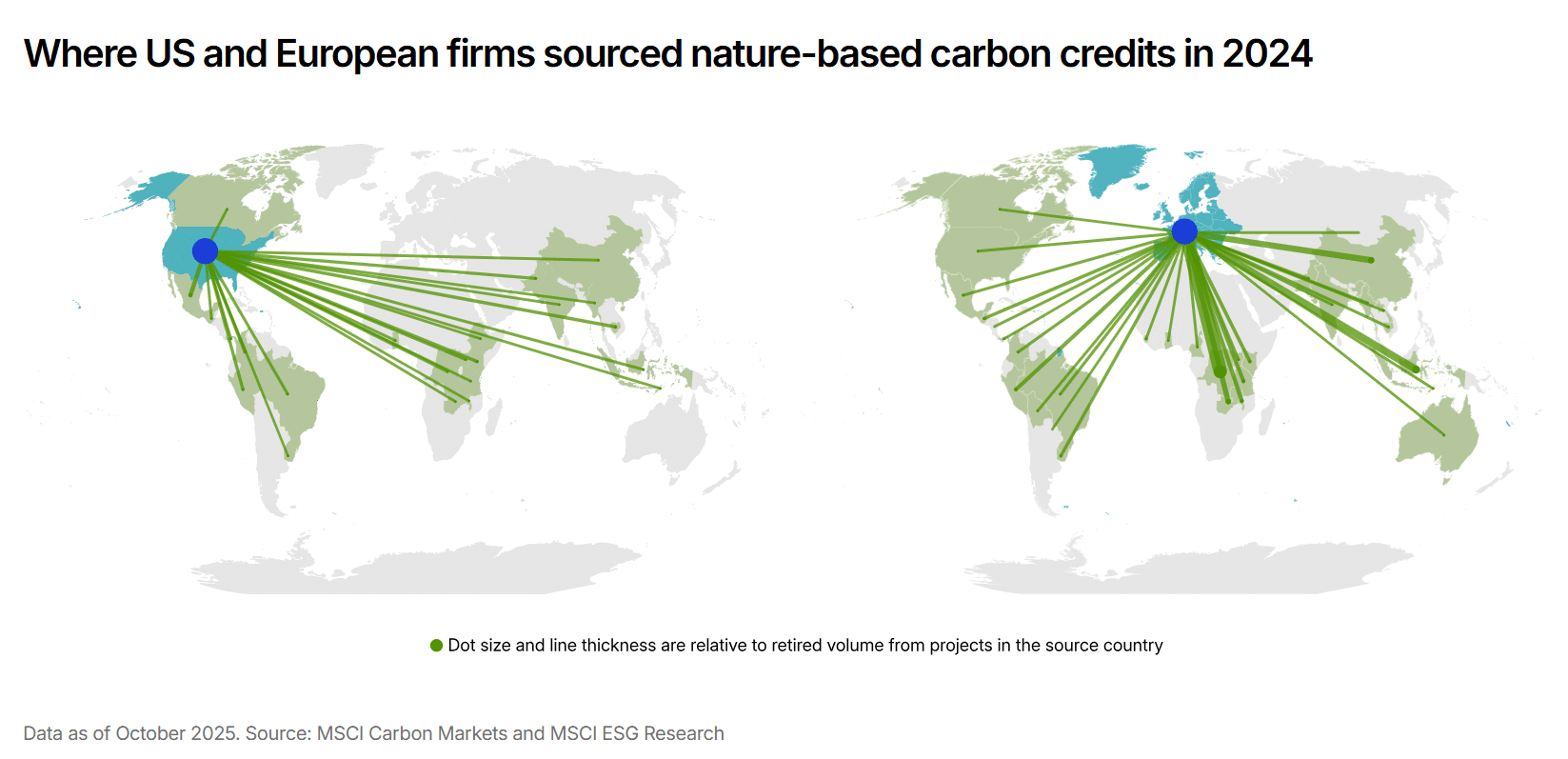
Buyers are also willing to pay $40–$50 per credit—three to five times the current market average—to secure future supplies of high-integrity projects. This shows strong long-term demand for premium nature-based credits.
Also, the UN Decade on Ecosystem Restoration estimates that every $1 spent on restoration can bring $7 to $30 in economic benefits.
Projects like Bacon Tree show how carbon removal can also restore ecosystems and support local communities. However, experts stress that carbon credits should complement, not replace, direct emissions cuts.
A Blueprint for Future Climate Finance
Amazon’s investment in the Bacon Tree project shows that major companies are becoming long-term partners in building the next generation of carbon removal projects. Funding before credits are issued helps developers. It allows them to restore larger areas, lower financial risk, and attract more investment.
For Amazon, the agreement supports its goal of reaching net zero by 2040 while helping restore one of South Africa’s most important ecosystems.
For the wider carbon market, the deal sends a clear message. Companies are no longer looking only for carbon credits. They are investing in projects that can remove carbon, restore nature, and create lasting benefits for local communities.