


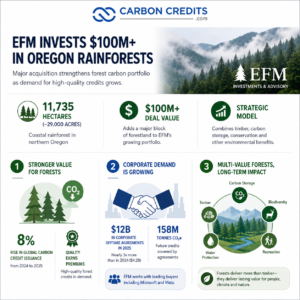
EFM Investments & Advisory has acquired 11,735 hectares, or about 29,000 acres, of coastal rainforest in northern Oregon in a deal worth more than $100 million. The acquisition adds a major block of forestland to EFM’s portfolio. It also highlights a growing trend in the carbon market wherein investors are placing greater value on forests for more than timber.
EFM’s model combines timber production with carbon storage, conservation, and other environmental benefits. The company has developed forest carbon projects across the U.S. West and sees carbon revenue as a way to support longer forest rotations and restoration.
The deal comes as buyers show stronger interest in higher-quality forest carbon credits.
EFM Builds a Larger Forest Carbon Portfolio
EFM is a U.S. forest investment and management firm focused on what it calls climate-smart forestry. The company says it has developed forest carbon projects across about 150,000 acres in the United States. It has worked with the three major U.S. voluntary carbon registries: Verra, the American Carbon Registry (ACR), and the Climate Action Reserve (CAR).
EFM manages forests for several sources of value. These include timber, carbon credits, conservation, and recreation. Its approach is important because carbon revenue can help change how forests are managed. EFM says this revenue can support longer harvest rotations, restoration, salmon habitat, and tribal partnerships.
The Oregon acquisition gives the company another large forest asset where this model can be applied.
Forests Are Becoming More Valuable for Carbon
Forests are a major part of the global carbon market because they can remove and store large amounts of carbon dioxide.
The World Bank’s State and Trends of Carbon Pricing 2026 found that global carbon credit issuance increased 8% from 2024 to 2025. Prices declined slightly overall, but some credits continued to earn premiums. These included highly rated forest conservation and reforestation projects.
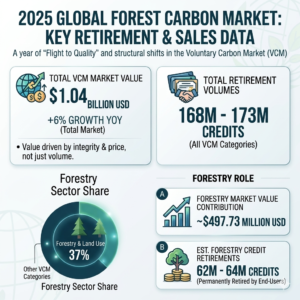
This is an important change for forest investors. The market is becoming less focused on the number of credits a project can produce. Buyers are paying more attention to quality, measurement, and the risk that claimed carbon benefits may not last.
That trend favors forest projects with strong management plans and reliable monitoring.
Improved Forest Management Is EFM’s Core Strategy
A key part of EFM’s business is Improved Forest Management (IFM). IFM projects seek to increase carbon storage by changing how existing forests are managed. Actions can include:
- Extending harvest rotations,
- Protecting carbon-rich areas, and
- Restoring degraded forests while maintaining timber production.
EFM uses third-party carbon standards and says it uses ACR’s dynamic baseline approach for its projects.
A dynamic baseline updates the reference scenario over time. EFM says this helps measure project performance more accurately and reduce the risk of over-crediting. This matters because forest carbon credits face scrutiny over additionality and permanence.
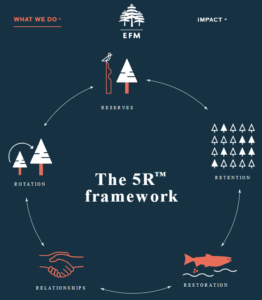
A project must show that its carbon gains are real and that the forest management changes would not have happened without the carbon project. The company is also following a 5R framework for its climate-smart forestry implementation.
Oregon Offers Strong Carbon and Conservation Value
Oregon is an important market for this strategy. EFM already has a history in the state. Its Moss Creek project on the Garibaldi property was the first forest carbon project in Oregon and Washington to generate credits, according to the company.
EFM says the project is expected to offset about 150,000 tons of carbon through 2040. The carbon benefits come from actions such as reducing harvest volumes, extending rotations, expanding reserves and protecting habitat. The company’s latest acquisition adds another major forest asset to this strategy.
Oregon’s forests also have important climate value at the state level. The Oregon Department of Energy says forests provide the largest carbon removal benefit among the state’s land types.
However, the state also faces growing climate risks. Wildfire emissions have increased, while the annual carbon removal provided by Oregon’s lands has declined since 1990. That makes long-term forest management increasingly important.
Corporate Demand Is Supporting Forest Carbon
The growth of forest investment is also linked to rising demand from corporate buyers. The World Bank found that companies signed about $12 billion in carbon credit offtake agreements in 2025. These contracts covered an estimated 158 million tonnes of CO2e in future credits.
The value of the agreements was nearly three times the $4.2 billion recorded in 2024. Nature-based projects (NBS)accounted for a significant share of this future demand.
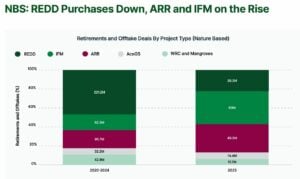
These agreements can provide forest developers with more certainty. Instead of waiting until credits are issued, developers can secure buyers in advance. That can help finance forest acquisitions and long-term management.
EFM has already worked with major corporate buyers. Its forest carbon portfolio includes projects linked to buyers such as Microsoft and Meta.
The company says its Olympic Rainforest project in Washington contains more than 10 million tonnes of stored carbon across a 68,000-acre property. EFM expects climate-smart management to add about 1 million tonnes of CO2 in carbon storage over the next decade.
These projects show how forest ownership and carbon finance can work together.
Higher-Quality Credits Face a Higher Bar
The growing value of forest carbon does not remove the risks. Forests can lose stored carbon through wildfire, disease, drought, and other disturbances. Carbon projects must also prove that their claimed reductions or removals are additional.
This makes strong measurement and monitoring essential.
The World Bank’s latest market data shows why quality matters. Carbon-credit prices fell slightly overall in 2025, but higher-quality forest projects continued to receive premiums. EFM is positioning itself around this part of the market.
The company says it keeps control of carbon project development, including baseline design, third-party consultants, credit marketing, and delivery. It also uses major carbon registries and third-party standards.
For investors, this approach can help reduce some of the risks linked to low-quality credits.
Forest Investment Is Moving Beyond Timber
EFM’s $100 million Oregon acquisition reflects a broader change in how forests are valued. Timber remains an important source of revenue. But forests can also generate value through carbon storage, conservation, biodiversity, water protection, and recreation.
The carbon market is creating another financial incentive to manage those assets over longer periods. This opportunity is becoming more important as companies commit billions of dollars to future carbon purchases. At the same time, buyers are becoming more selective and placing premiums on higher-quality forest credits.
EFM’s strategy fits this shift. Its latest Oregon acquisition gives the company a larger forest base while expanding its potential role in the U.S. forest carbon market.
The deal shows how forests are becoming multi-value assets: sources of timber and investment returns, as well as long-term carbon stores that can support the growing demand for higher-quality nature-based credits.