

Guyana has earned US$353 million from carbon credit sales since 2022, making it one of the world’s most successful examples of turning forest protection into climate finance.
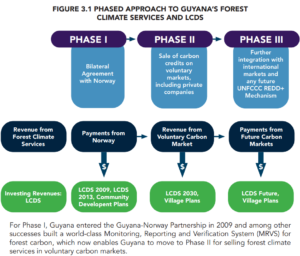
The announcement came from Pradeepa Bholanath, Senior Director of Climate and REDD+ in Guyana’s Office of the President. She said the revenues help fund climate action, community projects, and economic development. This is part of the country’s Low Carbon Development Strategy (LCDS) 2030.
Bholanath remarked:
“Since then, we’ve been able to expand those market opportunities in ways that we didn’t even envision, to the point now where, to date, since 2022, we have earned a total of US$353 million from the sale of carbon credits.”
Forest Cover: The Natural Asset Powering Guyana’s Carbon Economy
Guyana’s achievement is significant. It became the first country to earn forest carbon credits under the ART-TREES standard on a national level.
In 2022, the country received certification for about 33.4 million carbon credits generated between 2016 and 2020. Guyana soon signed a landmark deal with Hess Corporation, which will see Hess buy some of those credits.
The deal is worth at least US$750 million from 2022 to 2032. The agreement quickly became one of the largest sovereign carbon credit transactions ever completed.
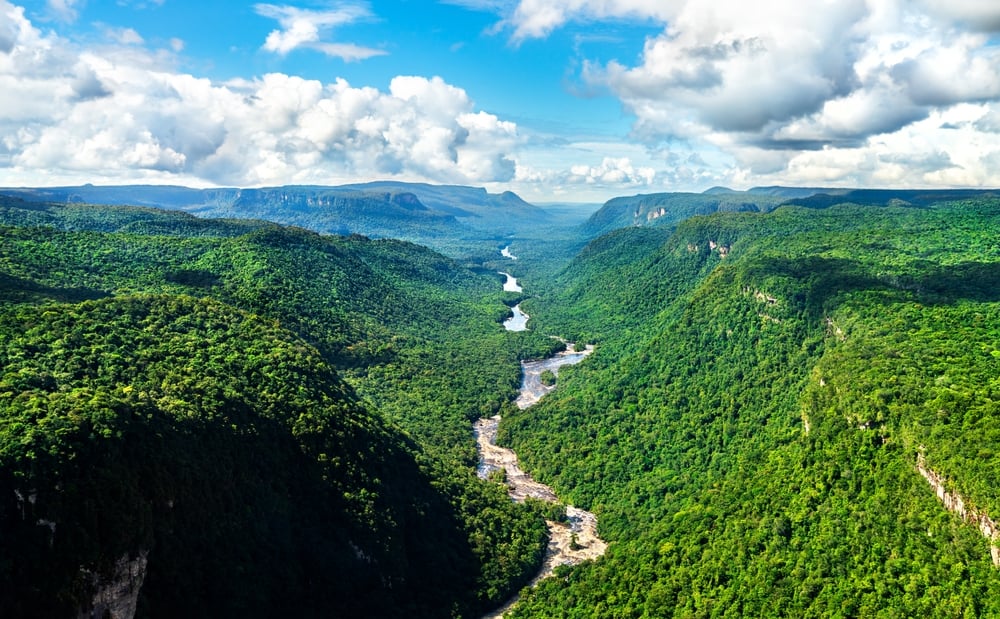
Today, Guyana is a prime example of how countries can earn money by protecting forests and supporting local growth. Few countries have as much forest coverage as Guyana.
About 86% of the country’s land area remains covered by forests, giving it one of the highest forest cover rates in the world. At the same time, Guyana has maintained one of the lowest deforestation rates among tropical forest nations.
These forests play an important role in fighting climate change.
According to Guyana’s LCDS 2030 framework, the country’s forests store an estimated 19.5 gigatons of carbon dioxide equivalent (CO2e). That makes them one of the world’s largest carbon sinks relative to the country’s size and population.
For years, developing countries have argued that they deserve compensation for safeguarding forests. These forests benefit the climate worldwide.
Carbon markets are now helping make that possible. Countries can earn credits under the ART-TREES system. They can do this by reducing forest-related emissions and protecting carbon-rich ecosystems.
In Guyana’s case, the credits represent emissions that were avoided because forests remained standing instead of being cleared.
The country’s program has gained global attention because it covers the entire nation rather than a single project area. Many experts believe this broader approach can help address some of the trust and quality concerns that have affected parts of the carbon market in recent years.
Carbon Revenue Is Reaching Indigenous Communities
One of the most important parts of Guyana’s program is how the money is shared. Under LCDS 2030, the government promised that at least 15% of carbon credit revenues would go to Indigenous peoples and local communities.
According to government officials, this has become one of the biggest successes of the program. Today, 252 Indigenous villages participate in the initiative. Community leaders decide how the funds should be used based on local needs and priorities.
Since the first carbon revenues arrived in 2022, Guyana has distributed funding to villages every year. According to Bholanath, nearly 3,000 village-level projects have already been completed or launched.
- Government data show that over GYD 9 billion has gone to Indigenous communities via the benefit-sharing system.
The money has supported projects in agriculture, transportation, tourism, renewable energy, education, food security, and community infrastructure.
This approach is unique. Local communities get to decide how to spend the funds. This is different from decisions being made only at the national level.
Forest Carbon Markets Are Showing Signs of Recovery
Guyana’s success comes at an important time for global carbon markets. The voluntary carbon market (VCM) grew fast from 2020 to 2022. Companies made more climate commitments, so demand for carbon credits surged.
The VCM reached roughly US$2 billion in value in 2022, according to Ecosystem Marketplace. But growth later slowed as concerns emerged about the quality and effectiveness of some carbon credits. As a result, buyers became more selective, and so a lower transaction value was recorded.
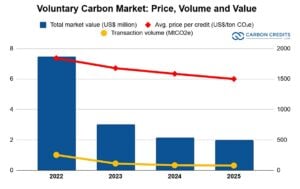
Today, demand is increasingly shifting toward credits that can show strong environmental benefits, independent verification, and clear community impacts. Forest credits remain one of the largest parts of the market.
Recent market data show that companies continue to retire millions of forestry and land-use credits each year as part of their climate strategies. Buyers are increasingly favoring credits backed by stronger standards and transparent monitoring systems.
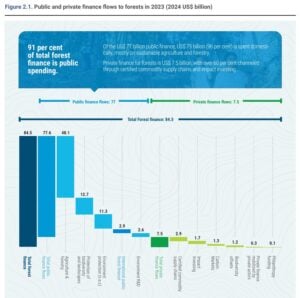
At the same time, forests continue to play a critical role in climate action. The United Nations Environment Programme (UNEP) estimates that forests absorb about 7.6 billion metric tons of carbon dioxide every year.
New initiatives are also helping improve confidence in carbon markets. Organizations like the Integrity Council for the Voluntary Carbon Market (ICVCM) and the Voluntary Carbon Markets Integrity Initiative (VCMI) have launched new frameworks. These aim to boost transparency and enhance credit quality.
These efforts are helping rebuild trust and could support future growth for large-scale forest programs like Guyana’s.
Sovereign Carbon Credits Are Gaining Global Attention
Guyana’s experience is helping shape a growing market for sovereign carbon credits. Unlike traditional project-based credits, sovereign credits are issued at the national or regional level. They measure performance across entire forest landscapes rather than a single conservation project.
Supporters say this approach can reduce the risk that deforestation simply shifts from one location to another. It can also improve oversight and accountability. As a result, governments across Latin America, Africa, and Southeast Asia are closely watching Guyana’s progress.
Many tropical forest nations face a similar challenge. Forests offer key climate benefits, but protecting them usually earns less than logging, mining, or big agriculture.
Carbon markets offer a way to change that equation. By creating financial value for conservation, countries can generate new revenue while keeping forests intact.
Guyana has become one of the strongest examples of how this model can work in practice.
Turning Carbon Into Capital: Guyana’s New Development Model
Carbon credit revenues are now playing a growing role in Guyana’s long-term development plans. The government is using LCDS 2030 to fund:
- Climate adaptation,
- Clean energy,
- Environmental protection, and
- Community development.
The strategy is especially notable because Guyana is also one of the world’s fastest-growing economies due to major offshore oil discoveries. Rather than choosing between economic growth and environmental protection, the government says both can advance together.
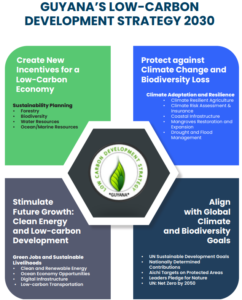
The country uses carbon revenues to fund projects. These projects strengthen communities and protect natural resources. As revenues grow, carbon finance is becoming a key funding source for these efforts.
A Blueprint for the Future of Forest Finance
Guyana’s US$353 million in carbon credit revenue is more than a financial milestone. It shows that protecting forests can generate significant economic value when supported by strong standards and credible market rules.
The program has funded nearly 3,000 projects in Indigenous communities, proving that carbon markets can support both climate action and local development.
As buyers look for high-quality credits with clear environmental and social benefits, Guyana is emerging as a leading example of how forest conservation can generate long-term climate finance while keeping forests standing.