

Vietnam has earned $56.5 million from the World Bank after cutting 10.3 million metric tons of carbon dioxide (CO₂) through forest protection and better land management.
The payment covers verified emissions reductions from 2018 to 2019 in Vietnam’s North Central Region. It was made under the Emission Reductions Payment Agreement (ERPA) of the Forest Carbon Partnership Facility (FCPF), a World Bank program that rewards countries for reducing emissions from forests.
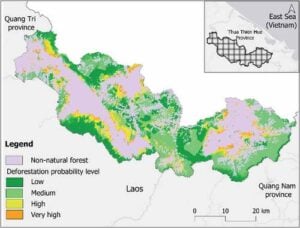
The program covers six provinces: Thanh Hoa, Nghe An, Ha Tinh, Quang Binh, Quang Tri, and Thua Thien Hue.
More than 70% of the payment will go directly to forest owners, local communities, households, and organizations that helped protect and restore forests. The remaining funds will support forest management, monitoring, and future conservation work.
The payment is one of Southeast Asia’s largest jurisdictional forest carbon transactions. It also marks another step in Vietnam’s plan to build a stronger carbon market.
Forests Are Key to Vietnam’s Net-Zero Goal
Vietnam sees its forests as one of its biggest climate assets. At the COP26 climate summit, the country pledged to reach net-zero emissions by 2050.
It also improved its climate target in the updated Nationally Determined Contribution (NDC). The goal is to cut emissions by 15.8% by 2030 using domestic resources. If it gets international support, the target could rise to 43.5%, compared to its usual scenario.
Vietnam’s emissions have surged in the last twenty years due to economic growth. The energy sector is now the biggest source of greenhouse gases in the country. To reverse this trend, the government is investing in renewable energy, improving energy efficiency, expanding electric transport, and developing green hydrogen.
It has launched a pilot phase for a national emissions trading system, which includes the power, steel, and cement industries. Together, these industries make up about 50% of the country’s CO₂ emissions.
Forests remain a key part of this strategy. They help clear carbon dioxide from the air. They also protect biodiversity, water sources, and rural livelihoods.
According to the Food and Agriculture Organization (FAO), forests cover about 43% of Vietnam’s land area. Years of reforestation and stronger forest protection have helped increase forest cover across the country.
By combining forest conservation with clean energy and industrial decarbonization, Vietnam aims to build a more balanced pathway toward its 2050 net-zero goal.
Vietnam also plans to launch a pilot carbon exchange, which will start before the full market opens. This will create new chances for forest carbon credits and other emissions reduction projects.
Why High-Quality Forest Credits Are in Demand
Vietnam’s latest payment comes as global demand for high-quality forest carbon credits continues to grow.
Companies are facing greater pressure to reduce emissions and invest in credible climate projects. Buyers are now more selective. They want carbon credits that have strong science, independent verification, and clear benefits for local communities.
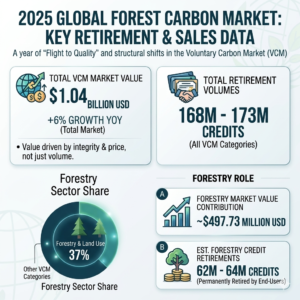
Forest carbon credits remain the largest segment of the voluntary carbon market (VCM) in 2026, making up 37% of all retired credits. However, buyers are placing greater focus on credit quality, transparency, and project integrity than ever before.
Across the entire VCM, total retirements reached between 168 million and 173 million credits, per Sylvera data. That means roughly 62 million to 64 million forest carbon credits were permanently retired by end-users in 2025.
Jurisdictional forest programs, like Vietnam’s, are set to gain from this trend. They measure emissions over large areas, not just single projects. This boosts transparency and cuts the risk of double-counting.
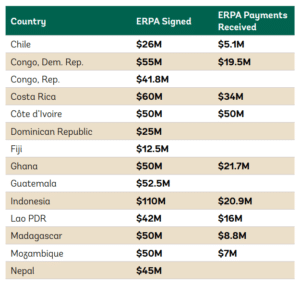
Vietnam joins a growing list of countries receiving results-based payments through the FCPF’s ERPA program. Since its start, the FCPF has helped 47 developing countries. It has raised around $1.3 billion to cut emissions from deforestation and forest degradation. Other successful participants include Mozambique and the Dominican Republic.
Costa Rica, Chile, Ghana, Guatemala, Lao PDR, Nepal, and Indonesia have also signed ERPAs worth millions. This shows that results-based forest finance is key to protecting forests. It also helps rural livelihoods and supports national climate goals.
- SEE MORE: Guyana’s $353 Million Carbon Credit Success Shows How Forests Can Become a Global Climate Asset
Nature-Based Carbon Markets Continue to Expand
Forests are expected to play a growing role in global climate action.
The Intergovernmental Panel on Climate Change (IPCC) states that we must protect and restore forests. This is crucial for limiting global warming. alongside significant reductions in fossil fuel emissions.
At the same time, the United Nations considers forests one of the most cost-effective natural climate solutions available today.
For Vietnam, carbon finance offers more than environmental benefits. It creates a new source of income for rural communities while encouraging long-term forest conservation.
As governments strengthen climate policies and more companies seek high-quality carbon credits, jurisdictional forest programs could attract more investment. Vietnam’s latest agreement with the World Bank shows how healthy forests can deliver both climate benefits and long-term economic value.
Forest Carbon Is Becoming More Valuable
Forest carbon credits are changing. Buyers are no longer looking only for large volumes. They also want projects with strong environmental benefits and reliable verification.
According to MSCI, companies are paying $40 to $50 per credit to secure future supplies of high-quality nature-based carbon credits. That is three to five times higher than the average market price for this carbon credit.
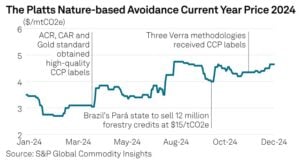
The report also found that just 3% of companies in the MSCI ACWI Investable Market Index retired nature-based carbon credits in 2024, but they accounted for 65% of all disclosed retirements. This shows that demand is becoming concentrated among a small group of large corporate buyers.
Market forecasts also point to strong long-term growth. McKinsey & Company estimates that global demand for carbon credits could hit 1.5 billion to 2 billion metric tons annually by 2030. Nature-based solutions could be one of the biggest market segments.
For countries like Vietnam, this creates new opportunities to earn climate finance while protecting forests.
Vietnam Is Building a Larger Carbon Economy
The World Bank payment is only one part of Vietnam’s broader climate strategy.
The government plans to launch a pilot carbon trading exchange before expanding into a full carbon market later this decade. This follows new regulations that establish the legal framework for carbon credit trading and emissions reporting.
Vietnam is also working with international partners to develop more forest carbon projects and improve carbon accounting. These efforts could help the country attract more investment from companies seeking high-integrity carbon credits.
Beyond carbon markets, healthy forests support biodiversity, protect watersheds, reduce soil erosion, and strengthen rural livelihoods. They also make communities more resilient to floods, droughts, and other climate risks.
A Model for Other Forest-Rich Countries
Vietnam’s $56.5 million carbon credit payment rewards actual emissions reductions. It also gives financial support to the people and communities that protect the forests. This creates a stronger incentive to preserve forests instead of clearing them for other land uses.
Challenges remain. Forest carbon projects need strong monitoring, transparency, and long-term protection. This keeps buyer confidence high. At the same time, countries will need clear policies and strong governance to expand these programs successfully.
Even so, Vietnam has shown that jurisdictional forest carbon programs can deliver measurable climate benefits at scale. Governments want net-zero goals, and companies need high-quality carbon credits. With this, similar programs may play a bigger role in the global carbon market.
For Vietnam, the latest payment is more than a financial milestone. It shows that protecting forests can generate lasting economic value while helping the world move closer to its climate goals.