

The global carbon market is entering a new era. Investors, corporations, and regulators are no longer satisfied with projects built mainly around future credit issuance and long validation timelines.
Concerns over verification, permanence, transparency, and financing gaps are reshaping expectations across the voluntary carbon market toward a broader question:
- What does a more durable and financeable natural capital model look like?
That shift is driving a new generation of land-based climate projects that combine reforestation, biomass, biochar, sustainable land management, and long-term land care into diversified operating businesses.
KARBNZ Global is positioning itself at the center of this transition.
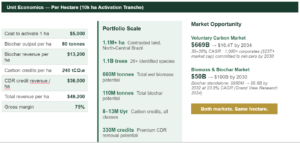
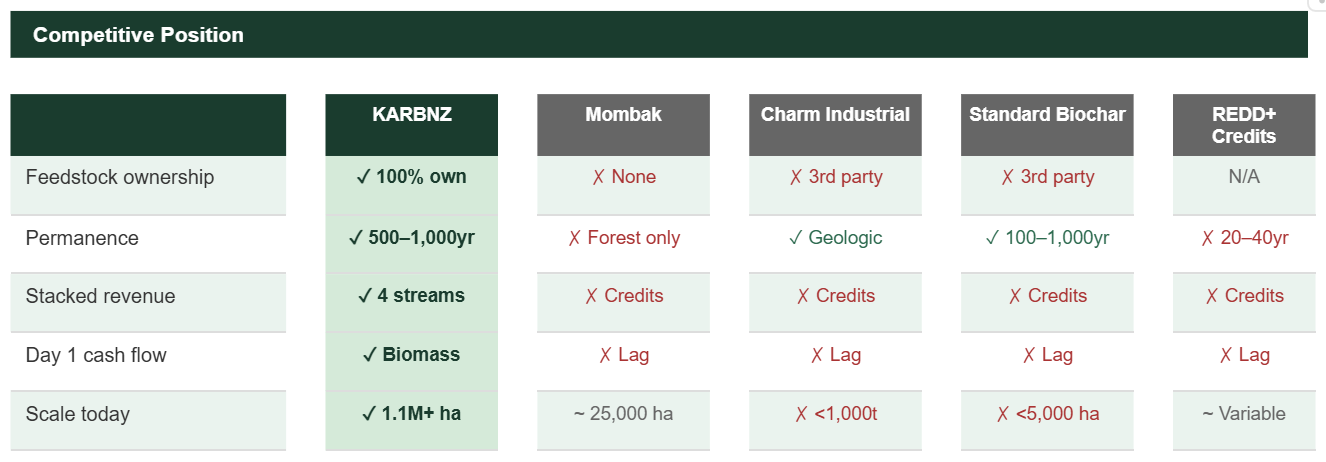
According to the company, KARBNZ’s platform currently spans more than 1.1 million hectares in Brazil, creating the scale necessary to integrate reforestation, biomass production, biochar carbon removal, and ARR (Afforestation, Reforestation, and Revegetation) carbon credits into a single natural capital platform.
Rather than relying solely on future carbon credits, KARBNZ is building multiple pathways to generate value from restored and sustainably managed forests.
Why Carbon Markets Are Evolving
Traditional carbon projects often require years before generating revenue. Developers must secure land rights, complete environmental studies, establish carbon baselines, and navigate complex verification requirements before credits may be issued.
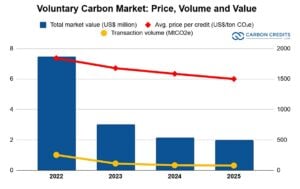
At the same time, increased scrutiny around older offset projects, particularly avoidance-based methodologies, has made carbon credit buyers more selective. According to Ecosystem Marketplace, the voluntary carbon market declined from around $1.9 billion in 2022 to about $535 million in 2024, and even further down in 2025, as demand shifted to higher-quality projects.
Today’s investors increasingly favor projects with:
- Tangible underlying assets
- Diversified revenue streams
- Strong monitoring and verification systems
- Long-term operational sustainability
The challenge is no longer simply creating carbon credits. It is building climate businesses that can thrive long before credits are issued.
Biochar Is Emerging as a Major Growth Market
A central component of the KARBNZ strategy is biochar.
Biochar is produced by heating biomass such as forestry residues or agricultural waste in a low-oxygen process called pyrolysis. The process makes a stable, carbon-rich material. This material can store carbon for hundreds to thousands of years. It also boosts soil quality and helps with water retention.
The market for biochar is expanding quickly. According to Carbonfuture and CDR.fyi, biochar represented 86% of all durable carbon dioxide removal deliveries in 2024, making it the largest durable carbon removal solution today.
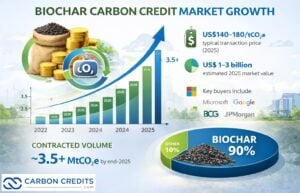
Corporate demand is also accelerating. Reuters reported that durable carbon removal purchases rose from about 8 million metric tons in 2024 to around 25 million metric tons in 2025. However, issued supply remains below 1 million tons, highlighting a major supply gap for high-quality removals.
KARBNZ says it plans to integrate biochar production directly into its forestry and land management, converting biomass that would otherwise be treated as waste into a high-value climate asset.
The company estimates its biochar operations could ultimately remove about 2.57 million tons of CO₂e annually, positioning KARBNZ among the larger emerging biochar developers globally if those targets are achieved.
Creating Revenue Before Carbon Credits
Another distinguishing feature of the KARBNZ model is its focus on generating earlier revenue streams.
Activities such as forest thinning, biomass collection, firebreak creation, and forest health management not only strengthen ecosystems but also produce commercially valuable biomass feedstock.
Global demand for biomass energy continues to grow as countries look for alternatives to coal and other fossil fuels. According to the International Energy Agency (IEA), modern bioenergy currently provides about 55% of global renewable energy consumption.
Wood pellets are now a key global commodity, especially in Europe and Asia. Utilities are moving to lower-carbon fuel sources. The global wood pellet market was valued at more than $14 billion in 2024 and is projected to continue growing through the decade.
Brazil plays a major role in this sector. The Brazilian Tree Industry (Ibá) reports that Brazil has over 10 million hectares of planted forests and is one of the top exporters of forest products globally.
KARBNZ says biomass generated through sustainable land management may support biomass energy, wood pellets, and biochar production. This provides the company with several possible revenue streams as carbon projects move through development.
KARBNZ believes this diversified approach provides investors with something increasingly valuable: tangible operating assets rather than a business model dependent solely on future carbon credit issuance.
The company also emphasizes local economic development through job creation, infrastructure investment, energy access, and long-term regional partnerships.
- SEE MORE: Carbon Markets Go Financial with Abatable Launching First Forward Pricing Curve for Carbon Credits
Natural Capital Is Becoming an Institutional Asset Class
Climate finance is becoming more disciplined. Investors increasingly expect stronger governance, transparent reporting, and robust monitoring systems before committing capital.
KARBNZ says its platform is being built with institutional standards in mind, including project-level SPVs, Verra-aligned ARR methodologies, and advanced MRV (Monitoring, Reporting, and Verification) systems.
According to the company, its MRV architecture will incorporate satellite monitoring, AI-driven analytics and blockchain tracking to enhance transparency and auditability.
This reflects a broader industry trend. McKinsey has noted that scaling voluntary carbon markets will require stronger verification systems, higher integrity standards, and greater transparency.
Carbon credits alone are no longer enough. Investors increasingly want long-term businesses built around measurable environmental assets.
That institutional focus is also reflected in the company’s leadership structure. Managing Partner Pascal van Knijff leads land origination, local partnerships, and platform development, while Managing Partners Rich Neal and David Place focus on capital strategy, commercialization, investor readiness, and institutional execution.
What’s Next for KARBNZ
KARBNZ’s next phase is focused on execution. Near-term priorities include:
- Advance carbon validation work,
- Expand MRV partnerships,
- Develop biomass and biochar agreements, and
- Prepare projects for larger financing rounds.
The company is also developing project-level SPV structures designed to support long-term financing and operational scaling.
More broadly, KARBNZ represents a larger trend reshaping climate finance: the evolution from standalone carbon projects to diversified natural capital platforms.
The future of climate investing may not be built on carbon credits alone. It may be built on integrated systems that combine forests, biomass, biochar, technology, and long-term land stewardship into durable, investable assets.
For KARBNZ Global, the opportunity is larger than issuing credits. It is demonstrating that large-scale ecological restoration can become an institutional asset class—one capable of delivering environmental impact, diversified revenues, and long-term value creation.
As demand for durable carbon removal and nature-based solutions continues to grow, companies that successfully combine restoration with financeable business models may define the next chapter of the natural capital economy. Organizations, investors, and strategic partners seeking exposure to this emerging asset class will be watching closely.