

Independent carbon ratings are now essential as companies seek quality carbon credits to meet climate goals. Corporate buyers want assurance that each credit delivers a real climate benefit, not just a number.
Reflecting this shift, Danish climate tech firm Agreena has reached a significant milestone. Its AgreenaCarbon Project has earned a BBB BeZero Carbon Rating, placing it among the top soil carbon projects worldwide.
This rating comes after the project’s first issuance of carbon credits under Verra’s Verified Carbon Standard (VCS). It confirms that the project’s performance meets earlier expectations.
What Does a BBB BeZero Carbon Rating Mean?
BeZero Carbon rates projects based on whether each carbon credit represents one metric ton of carbon dioxide equivalent (CO₂e) that has been avoided or removed from the atmosphere.
The rating scale ranges from AAA (highest confidence) to D (lowest confidence). Instead of focusing on financial performance, the rating looks at several project risks, such as:
- Accurate measurement of emission reductions
- Longevity of carbon benefits
- Risks in project execution
- Quality of monitoring and verification
- Strength of the scientific methodology
A BBB rating indicates strong confidence that the issued credits deliver the claimed climate impact.
BeZero’s Rating Scale

For Agreena, this rating ranks its project among the top five ex post BeZero-rated projects in soil-related agricultural practices, showcasing its position in the growing market for regenerative agriculture carbon credits.
Independent Verification Strengthens Agreena’s Carbon Credits
Agreena announced that its AgreenaCarbon Project (VCS 4022) received a BBB ex post BeZero Carbon Rating following the issuance of its first Verified Carbon Units (VCUs) in September 2025.
This rating affirms the earlier BBB.pre ex ante rating from BeZero in February 2025, before any credits were issued. Keeping the same rating after verification is crucial. It shows the project delivered results as expected.
An ex ante assessment estimates future performance, while an ex post rating is based on verified data and actual outcomes. This gives buyers confidence that climate benefits are measured, not just predicted.
The project was developed under Verra’s Verified Carbon Standard using methodology VM0042, with independent auditing before issuing carbon credits.
Frederik Aagaard, Chief Commercial Officer at Agreena, said:
“This independent rating highlights the strength of the AgreenaCarbon Project’s delivery. By providing external, evidence-based validation of our issued credits, it gives stakeholders confidence in the quality of the climate impact we’re already delivering. We’ve built the programme to generate real, verifiable climate impact, and this recognition reinforces that.”
The voluntary carbon market faces scrutiny over the quality and effectiveness of some carbon credits. Buyers now rely more on independent assessments.
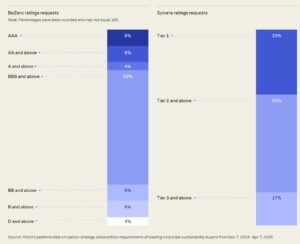
Recent research by Patch’s Hidden State of the Voluntary Carbon Market report shows that 79% of companies prefer projects with a BBB BeZero Carbon Rating or higher. Similarly, 83% of buyers seek projects with at least a Tier 2 Sylvera rating, highlighting the rising importance of third-party evaluations.
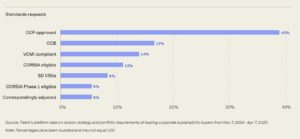
Another trend is the growing demand for Core Carbon Principles (CCP)-approved credits. Nearly 40% of buyers now prioritize credits from methodologies approved by the Integrity Council for the Voluntary Carbon Market (ICVCM).
These independent assessments reduce risks for buyers. They lower the chance that purchased credits won’t deliver promised emissions reductions. They also minimize reputational risks as companies face public scrutiny over climate claims.
However, experts warn that ratings shouldn’t be the only quality measure. They offer valuable insights into carbon integrity, but buyers often perform additional checks on project operations, technology, financial stability, and environmental impacts.
Regenerative Agriculture Gains Momentum
Agreena’s project emphasizes regenerative farming practices that enhance carbon storage in soils. Instead of engineered carbon removal technologies, farmers adopt methods that improve soil health and naturally capture more carbon.
Practices can include reducing soil disturbance, increasing crop diversity, and keeping soils covered year-round.
Beyond carbon removal, regenerative agriculture provides other environmental and financial benefits. They are:
- Healthier soils improve water retention, support biodiversity, reduce erosion, and enhance resilience during extreme weather.
- This approach also provides farmers with an additional source of income through carbon credit sales, helping offset the costs of transitioning to sustainable methods.
Agreena’s Expanding Soil Carbon Program
Agreena is now one of Europe’s largest soil carbon program developers. The company works with thousands of farmers across 20 markets, covering about 5 million hectares of agricultural land.
Its flagship AgreenaCarbon Project spans 1.6 million hectares of regenerative farmland across Europe and has issued 2.3 million Verified Carbon Units under Verra’s Verified Carbon Standard.
A key part of Agreena’s approach is its digital measurement, reporting, and verification (dMRV) platform. This system uses AI, satellite imagery, and field data to monitor carbon storage across large areas while ensuring accuracy.
This technology helps Agreena scale soil carbon projects while providing transparent monitoring for independent verification.
Building Buyer Confidence in Nature-Based Solutions
Nature-based carbon removal projects are gaining interest as businesses expand net-zero strategies. Buyers are becoming more selective, demanding solid evidence that credits reflect true climate benefits.
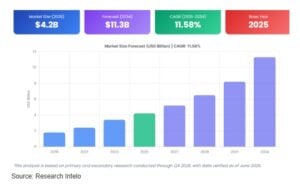
- The global soil and agricultural carbon credit market is worth $4.2 billion today. It is expected to grow to $11.3 billion by 2034, with an annual growth rate of 11.58%.
For Agreena, maintaining its BBB rating after credit issuance shows that verified performance meets earlier expectations, instead of relying on projections.
As voluntary carbon markets grow, buyers need transparency, scientific verification, and independent ratings. Projects with strict monitoring and clear benefits can attract corporate buyers looking for reliable carbon credits. In soil carbon initiatives, focusing on quality builds trust in regenerative agriculture. This trust helps farmers and ecosystems as important nature-based climate solutions.
MORE READING: