

Amazon is opening its carbon credit agreements to Climate Pledge signatories and chosen suppliers. This change allows more companies to access high-quality carbon credits, which are often hard to get.
The program allows participating companies to purchase carbon credits from three projects that Amazon has already helped finance, which include:
- a direct air capture (DAC) facility in Texas developed by 1PointFive,
- a methane reduction project for rice farming in India, and
- a landscape restoration initiative in South Africa.
Companies that signed Amazon’s Climate Pledge can join the program. Amazon suppliers and other partners in the value chain are also included.
The tech giant says that buyers can purchase as few as 100 carbon credits, and there’s no need for long-term contracts. This makes it easier for organizations to access high-quality carbon credits.
The Carbon Gold Rush: Why Future Credits Are Being Claimed Today
The move comes at a time when demand for premium carbon credits is rising rapidly. Many companies have set net-zero targets, but the supply of high-quality carbon removals remains limited. By sharing access to its long-term carbon deals, Amazon hopes to help partners reduce emissions while supporting the growth of new climate projects.
The initiative also marks a new phase in corporate climate action. Large companies are no longer just buying carbon credits. They are helping build the markets needed to scale carbon removal technologies.
Carbon credit offtakes have become an important tool for financing climate projects.
Unlike traditional carbon credit purchases, offtake agreements allow companies to commit to buying future credits before they are issued. These early commitments help project developers secure funding and expand operations.
This model has become increasingly popular as competition for carbon removals grows. Major buyers such as Microsoft, Google, Stripe, Shopify, and Amazon have all signed long-term agreements to secure future carbon credit supplies.
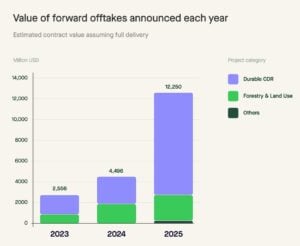
The need is growing quickly. According to CDR.fyi, buyers contracted more than 29.6 million metric tons of carbon dioxide removal credits in 2025. However, only a small share of those removals have actually been delivered so far. This gap between demand and supply is pushing companies to lock in future credits years in advance.
Amazon’s new program gives smaller companies access to opportunities that would otherwise be difficult to negotiate on their own.
Too Many Buyers, Not Enough Credits
Amazon’s announcement points out a key challenge in the voluntary carbon market (VCM): there aren’t enough high-quality credits to meet future demand.
Many companies have pledged to reach net-zero emissions between 2040 and 2050. As those deadlines approach, demand for carbon removals is expected to increase sharply.
McKinsey estimates global demand for carbon credits could reach between 1.5 billion and 2 billion metric tons annually by 2030. By 2050, demand could exceed 7 billion metric tons per year.

At the same time, analysts expect the voluntary carbon market to grow significantly. Some forecasts project that the market could be worth more than $50 billion by 2030 if corporate climate commitments continue to grow.
However, buyers are becoming more selective. Many now favor projects that remove carbon from the atmosphere or deliver measurable emissions reductions. This has increased interest in technologies such as direct air capture, biochar, and methane reduction.
As a result, future supplies of high-integrity credits are becoming increasingly valuable.
How the Program Fits Amazon’s Climate Goals
The new initiative supports Amazon’s broader climate strategy. Per Amazon’s Jamey Mulligan,
“Most of what will be left in our footprint in 2040 will be in our Scope 3. And so we need our suppliers to be participating.”
In 2019, Amazon co-founded The Climate Pledge, which commits companies to reach net-zero carbon emissions by 2040. The pledge now includes more than 550 signatories across 46 countries and over 60 industries.
Amazon has also invested heavily in renewable energy and low-carbon technologies. The company’s latest sustainability report shows it matched 100% of its global electricity use with renewable energy for the second year in a row.
The tech firm now supports more than 500 solar and wind projects worldwide. Together, these projects generate enough carbon-free electricity to power millions of homes each year.
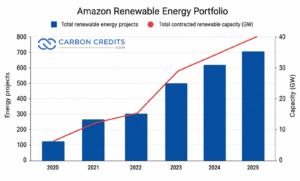
The company has rolled out over 31,000 electric delivery vans worldwide. It is also investing in sustainable aviation fuel, carbon removal tech, and supply chain decarbonization.
Amazon reported that its carbon footprint has fallen from its 2021 peak, showing progress toward its long-term climate goals.
- SEE MORE: Amazon Expands Its Carbon Credit Strategy with Lower-Carbon Fuel and Superpollutant Solutions
The Offset Debate Isn’t Over—It’s Evolving
While carbon credits play an important role in many net-zero plans, they remain controversial.
Critics argue that companies should focus first on reducing emissions directly rather than relying on offsets. Concerns about project quality and verification have also led to greater scrutiny across the carbon market.
As a result, many climate standards now emphasize that carbon credits should be used only after companies make deep emissions cuts. The Science-Based Targets initiative requires companies to cut at least 90% of their emissions. They can then neutralize the rest with carbon removals.
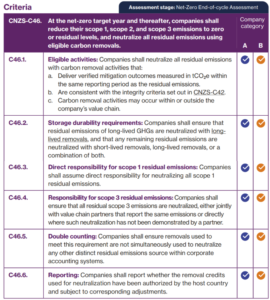
This has increased demand for higher-quality credits that can demonstrate measurable climate benefits.
Amazon’s push for projects like direct air capture and methane reduction shows a shift toward stronger carbon market standards.
Big Tech’s New Arms Race: Locking Up Carbon Removal Supply
Amazon is part of a growing group of technology companies investing heavily in carbon removals.
Microsoft is now the largest corporate buyer of carbon removal credits. They have contracted tens of millions of metric tons in recent years. Frontier, a coalition supported by Stripe, Shopify, Google, Meta, and McKinsey, has pledged almost $1 billion. This funding aims to boost new carbon removal technologies.
The competition is being driven by climate science. The Intergovernmental Panel on Climate Change (IPCC) and other researchers say the world has to remove billions of tons of carbon dioxide from the atmosphere each year by mid-century. This is key to meeting global climate goals.
Yet, many removal technologies are still in the early stages of development. Long-term purchase agreements provide the financial certainty needed to build new facilities and expand capacity. By opening its carbon credit pipeline to partners, Amazon is helping more companies to join this fast-growing market.
From Carbon Buyer to Carbon Market Builder
Amazon’s latest move is about more than carbon credits. The company is using its scale to help create demand for climate projects that may otherwise struggle to attract financing.
The giant e-commerce helps spread the risks and opportunities of carbon market participation by giving suppliers and Climate Pledge members access to its offtake agreements.
The strategy could speed up investments in projects that cut methane emissions, restore ecosystems, and directly remove carbon from the air.
Amazon’s new program shows how large companies are evolving from carbon credit buyers into carbon market builders. If more companies adopt this model, it could unlock the funds needed to grow the next generation of climate solutions.
READ MORE: Amazon (AMZN) Stock Slips as It Opens Carbon Credits to UK Firms and Secures $17.5B Loan for AI