


Amazon is boosting its clean energy investments by focusing on sustainable aviation fuel (SAF). The company has invested in Brazil-based biotechnology firm GranBio. This partnership aims to speed up the development of technology that turns forestry waste and construction debris into low-carbon aviation fuel.
Global airlines face a challenge: the supply of SAF is limited. Demand is rising, but production is not keeping pace with the industry’s net-zero goals. By backing GranBio, Amazon hopes to create a fuel pathway that helps its own transportation network and benefits the wider aviation sector.
Amazon Bets on Next-Generation SAF to Cut Transport Emissions
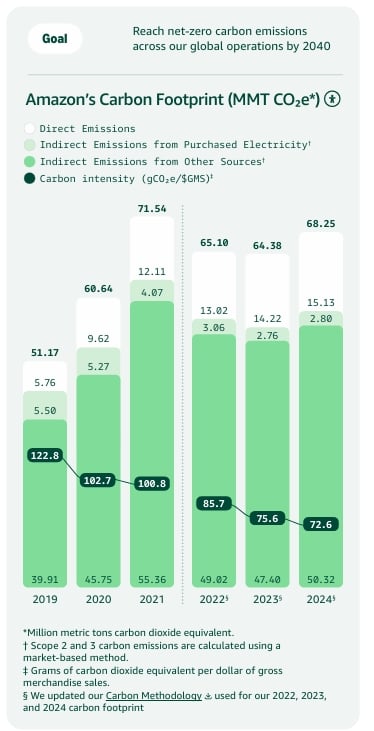
This investment is part of Amazon’s climate strategy, known as The Climate Pledge. The goal is to achieve net-zero carbon emissions by 2040.
Transportation is a major source of emissions for Amazon. While electric delivery vehicles are expanding, aviation and long-haul freight still need liquid fuels. Thus, sustainable aviation fuel is key to Amazon’s decarbonization efforts.
Sustainable Aviation Buyers Alliance
Amazon has taken steps to promote SAF adoption. It co-founded the Sustainable Aviation Buyers Alliance (SABA) and helped launch the SAFc Registry. This registry boosts transparency about emissions reduction claims and encourages broader SAF use.
Additionally, it has increased its use of cleaner fuels. In 2024, it procured 3.7 million gallons of blended sustainable aviation fuel, reducing emissions from its air cargo operations.
Investing in Technology
Beyond buying fuel, the retail giant is also investing in technologies that can increase future SAF supply. The company supports innovations that cut emissions across transportation, buildings, and packaging.
By investing in GranBio’s technology, Amazon aims to create fuel supplies that support its operations and enhance availability in the aviation industry.
Andreas Marschner, Amazon’s vice president of Worldwide Operations Sustainability, said,
“Aviation needs lower-carbon fuel, and the supply isn’t there yet,” said “GranBio’s technology can change that by turning waste materials into drop-in fuels. By investing now, we show the demand for solutions that can benefit the whole industry. That’s how we speed up this transition—together.”
- ALSO READ:
- Google and American Airlines Sign Record 35M Gallon SAF Deal to Cut Aviation Emissions
- Microsoft and IAG Extend SAF Deal to Slash 113,000 Tonnes of Scope 3 Emissions
GranBio Turns Waste Wood Into Drop-In Aviation Fuel
GranBio specializes in turning low-value biomass into renewable transportation fuels, avoiding food crops and vegetable oils.
Its process uses waste materials often discarded, like tree branches, crop residues, and construction waste. Much of this material ends up in landfills or increases wildfire risks.
Now, GranBio breaks down woody biomass to release carbon stored in plant fibers. It converts that carbon into fuel molecules identical to those found in conventional petroleum fuels.
The process yields renewable diesel, renewable gasoline, and sustainable aviation fuel that can be used in current aircraft engines and fuel infrastructure without changes. These drop-in fuels make it easier to cut emissions in sectors where electrification is tough.
GranBio’s method also generates heat as a byproduct, reducing external energy needs and boosting efficiency.
Why Waste Biomass Could Become a Valuable Fuel Source
GranBio’s production relies on low-carbon feedstocks like forestry and agricultural residues, not food crops.
This approach has several benefits. It doesn’t compete with farmland for food and lowers production costs. It also promotes forest management, nature conservation, and rural economies.
The carbon released when its sustainable aviation fuel is burned is biogenic, meaning it comes from recently grown plants rather than fossil fuels.
GranBio has years of experience with agricultural residues. Over the past decade, it has developed systems for harvesting, storing, transporting, and processing biomass, creating a supply chain specifically for advanced biofuel production.
Lowest Carbon Footprint SAF Available without costly Carbon Capture
Turning Old Paper Mills to SAF Biorefineries
GranBio plans to revive closed pulp and paper mills across the U.S. over the next decade.
The company aims to convert these mills into advanced biorefineries that produce sustainable aviation fuel from waste biomass. This could cut construction costs and bring jobs back to communities once reliant on the paper industry. It also utilizes existing sites with transport networks and skilled workers.
This strategy would not only speed up production but also support local economies.
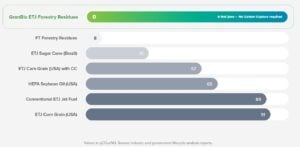
GranBio’s ETJ pathway achieves the lowest carbon footprint of competing ETJ technologies. Our process solves for net zero, here’s how:

Global SAF Supply Still Falls Far Short of Demand
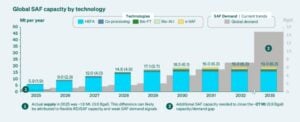
Despite growing investments, sustainable aviation fuel remains a tiny fraction of global jet fuel use.
- The International Air Transport Association (IATA) predicts worldwide SAF production will hit about 2.4 million tonnes by 2026, just 0.8% of total aviation fuel demand. Airlines are expected to spend around $4.3 billion on SAF this year.
Industry forecasts show slower-than-expected market growth.
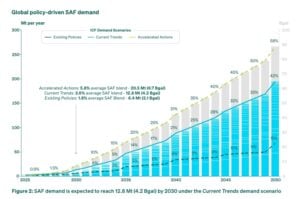
- According to the SkyNRG 2026 Outlook, projected global SAF demand for 2030 has dropped from 15.5 million tonnes last year to 12.8 million tonnes. This equals 3.6% of global jet fuel demand, down from the expected 4.5%.
Geopolitical tensions, trade issues, and energy security concerns are reshaping SAF development approaches. Europe focuses on demand guarantees and risk-sharing policies. The U.S. relies more on financial incentives, while Asia is rapidly increasing production through policy support.
The industry faces strong competition for traditional SAF feedstocks, such as used cooking oil and animal fats. As these supplies decrease, focus is turning to advanced biofuel technologies and synthetic eSAF pathways that use plentiful non-food biomass.
Amazon’s investment in GranBio shows this shift. By backing technology that converts waste into sustainable aviation fuel, the company thinks waste-based feedstocks can boost SAF supplies. This can lower aviation emissions and help the industry reach its long-term climate goals.