

Indonesia launched a carbon credit trading market as part of its goal to reduce carbon emissions and achieve net zero by 2060.
Southeast Asia’s largest emitter selected the Indonesia Stock Exchange (IDX) as the exchange for trading carbon credits. The carbon exchange will also promote energy transition and mitigate the climate impact of the country’s coal-dominated power sector.
More importantly, the world’s 3rd-largest rainforest nation aims to contribute faster to achieving the global Net Zero goal.
Carbon Market is Key For Indonesia’s Net Zero Push
President Joko Widodo is confident that Indonesia has a huge potential in advancing nature-based carbon reduction efforts, saying that:
“I am very optimistic that Indonesia can become the world’s carbon (market) axis as long as concrete steps are taken consistently and jointly by all stakeholders.”
The president further noted that their carbon credit market would reach the value of over $194 billion. The country’s leader has been clear about its faith in the carbon market and carbon pricing as “part of the efforts to address climate change”, he said at the COP26 in 2021.
Two years later, the market was launched under the oversight of the Financial Services Authority (OJK). OJK’s Head Mahendra Siregar said that they hope coal power plants will join the carbon trading exchange immediately this year.
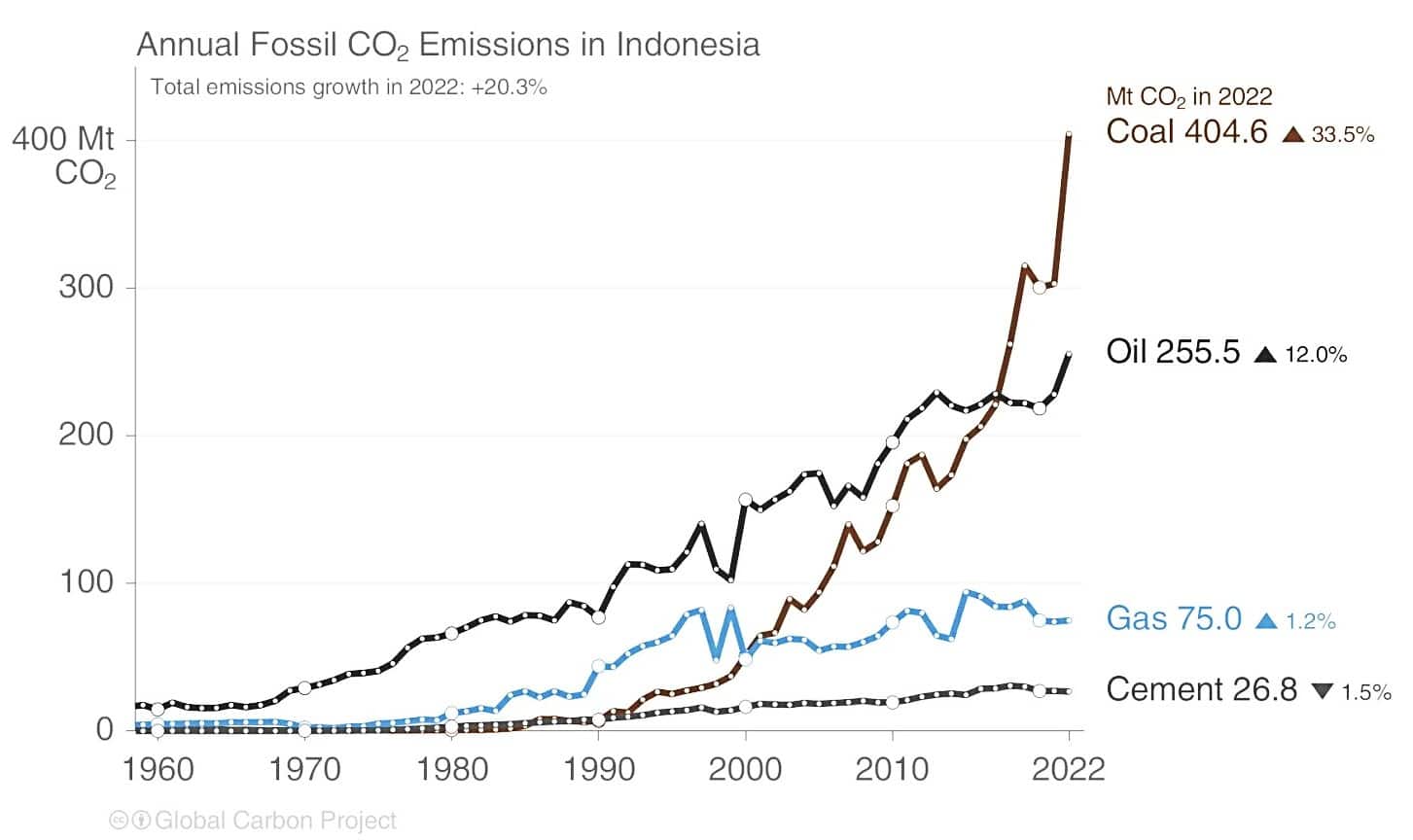
More than 99 coal-fired power plants will participate in trading carbon credits, representing 86% of Indonesia’s total active coal plants. The country has been intensely focusing on finding funds to decarbonize its power sector. It has seen the highest ever growth in coal emissions last year.
 After consistently negotiating the details of the climate finance package inked last year by President Jokowi and U.S. President Joe Biden, a final plan for the nation’s $20 billion climate deal could be up by next month.
A draft of the plan has been circulated to partner groups and will be open for public consultation.
However, the first batch of carbon credits traded during the launch were from carbon offset projects by PT Pertamina Geothermal Energy’s Lahendong power plant in Sulawesi island. They include nearly 460,000 metric tonnes of CO2.
Carbon prices started at $4.51/credit.
Buyers included the nation’s largest banks, Bank Central Asia and Bank Mandiri, mining firms, and state energy firm Pertamina.
Carbon Credit Projects Must Meet Regulations
Users of carbon exchange services include emissions trading companies, non-emission trading companies, project owners, and other entities approved by the OJK.
The Southeast Asian country has been strict in implementing its rules governing carbon projects. The Indonesian government has suspended the validation of its major carbon projects. These include the following projects:
- Rimba Raya Biodiversity Reserve: a project in Central Kalimantan that protects 91,215 hectares of rich, tropical peat swamp forests, preserves ecosystem diversity and endangered species.
- Sebangau National Park: protects 5,500 km2 of tropical peat forest home to >5800 critically endangered Bornean orangutans.
- Riau Ecosystem Restoration (RER): a private sector-led project that restore and conserve high conservation areas on Kampar Peninsula and Padang Island in Sumatra.
Validating these projects was suspended in April 2022 but in December, Rimba Raya was validated by Indonesia’s carbon registry, SNR.
Carbon projects in the country have to meet Presidential Regulation No. 98/2021 and other relevant laws first to start generating carbon credits. The Presidential Decree regulates carbon trading using emissions trading and offsets.
Other Plans to Back Up Carbon Trading
Initially, trading carbon credits in IDX can be voluntary. But the Indonesian government is also working on a plan for another regulation on carbon emissions. A senior government official said at the launch that it would include a carbon tax.
The carbon credit market was originally to incentivize the power sector emitters to limit their emissions. Some of the country’s largest coal power plants started trading emissions allowances earlier this year.
But apart from the power sector, the government will also place a cap on carbon emissions for other sectors. These include forestry, agriculture, waste management, and industrial processes and product use.
The rainforest nation also has plans to apply international standards for carbon trading and be recognized by other markets abroad. This is to bring its carbon credits to foreign buyers looking to offset their emissions at home.
The new emission trading system is using blockchain technology to record its carbon credit transactions.
Indonesia’s bold move to launch an emissions trading system is a significant step in its journey towards reaching its 2060 net zero goal. By encouraging emissions reductions across various sectors and promoting nature-based solutions, the country aims to play a pivotal role in the global carbon market.