

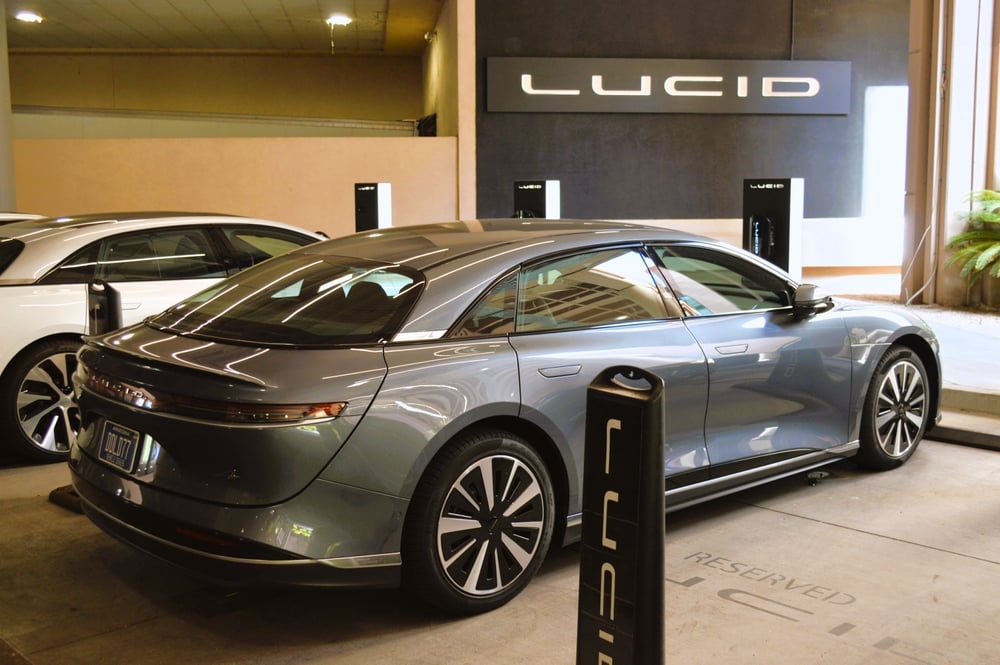
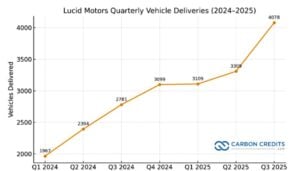
Lucid Motors reached a new milestone in the third quarter of 2025, sending its stock higher. The company delivered 4,078 vehicles, marking its best quarterly performance so far. This was a 46% increase from the same period last year.
Still, the result fell short of expectations. Analysts had forecast around 4,300 deliveries, so the actual number missed the mark by a small but important margin. Lucid also produced 3,891 vehicles during the quarter, below some estimates that predicted over 5,000.
By September 2025, Lucid had produced nearly 10,000 vehicles yea- to-date and delivered over 10,400 units to customers. Earlier this year, the company adjusted its full-year guidance to between 18,000 and 20,000 units, lower than earlier projections.
To meet even the lower end of that range, Lucid would need to produce more than 8,000 vehicles in Q4 — roughly double its previous quarterly output. It’s a tough target that will test Lucid’s ability to scale up production while managing costs and maintaining quality.
What’s Behind Lucid’s Q3 Numbers?
Several factors led to the carmaker’s Q3 achievements:
Tax Credit Surge
One big driver of Lucid’s record quarter was the rush to qualify for the U.S. $7,500 federal EV tax credit, which expired at the end of September. Many customers placed orders to beat the deadline, boosting short-term demand.
Some Lucid models didn’t meet the credit rules for direct purchases. However, buyers accessed the credit through leasing programs. This helped lift deliveries in the months leading up to the credit’s expiry.
New Model Momentum
Lucid’s Gravity SUV, expected to launch soon, helped renew consumer and investor interest. SUVs make up a much larger share of the EV market than luxury sedans, and Lucid’s entry into this segment could expand its customer base.
For now, the Lucid Air sedan remains the company’s main product. It is known for high efficiency, premium design, and long range. But strong SUV demand suggests Lucid’s future growth will depend heavily on Gravity’s success.
Supply and Production Challenges
Lucid still faces production challenges. Key components like permanent magnets and electronic chips remain hard to source. These supply constraints limit how quickly Lucid can ramp up output, even when demand is healthy.
The company added a second production shift in its Arizona plant this year to increase capacity. However, scaling a young EV factory takes time. Quality checks, supplier reliability, and workforce training all affect production rates.
Some of the production shortfall in Q3 came from Lucid’s focus on delivering existing inventory. The company focused on fulfilling customer orders instead of increasing stock. This decision slightly lowered new production figures.
Market Expectations
The shortfall also reflects how high investor expectations have become. Lucid is competing in a crowded and fast-moving EV market. When analysts expect more aggressive growth, even a record performance can look underwhelming. Yet, Lucid’s stock climbs up after reporting record growth.

Tariffs, inflation, and higher material costs also weigh on the company’s margins. As global trade changes, the costs of batteries and raw materials like lithium, nickel, and aluminum keep shifting.
Racing with Giants: How Lucid Stacks Up in the EV Arena
Lucid’s Q3 gains came during a strong period for the EV industry overall. Several automakers reported delivery growth in 2025 as consumer confidence in EVs improved and infrastructure expanded.
For comparison, Tesla delivered nearly half a million vehicles in the same quarter. General Motors also set records, delivering over 66,000 EVs across its brands. Lucid’s numbers are far smaller but still show steady progress for a newer company.
What sets Lucid apart is its focus on efficiency and technology. The Lucid Air remains one of the most energy-efficient electric vehicles ever built, capable of traveling over 800 kilometers on a single charge in some models.
That efficiency appeals to luxury buyers and plays into Lucid’s sustainability goals: lower energy use per vehicle helps reduce its carbon footprint and supports net-zero alignment.
Driving Green: How Lucid Builds Efficiency into Every Mile
Lucid Motors positions itself as a sustainability-driven automaker. The company aims to build some of the most efficient EVs in the world while cutting emissions at every stage.
Lower Energy Use and Emissions
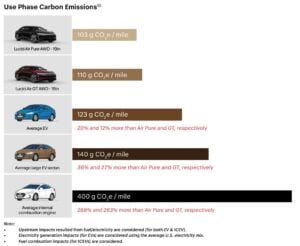
Lucid designs its motors, batteries, and software in-house. This vertical integration allows it to reduce energy losses and improve performance. The Lucid Air has up to 30% lower lifecycle emissions than some other luxury EVs. This is due to its lightweight materials and smart battery management.
Lucid’s production plant in Casa Grande, Arizona, uses some renewable energy. The company is also looking for more clean energy sources. As production scales, maintaining low emissions per vehicle will be critical.
Transparency and Reporting
Lucid publishes regular sustainability reports outlining its environmental performance and goals. It is a member of the United Nations Global Compact, which promotes corporate responsibility in areas like labor, human rights, and climate action.
Lucid also receives independent ESG risk ratings from firms that measure how well companies manage sustainability challenges. These ratings help investors understand the environmental and social impact of Lucid’s business model.
Circular Design and Materials
The company is working on a circular design approach — recycling and reusing materials wherever possible. For example, battery packs are made for easy disassembly. They can be reused in energy-storage systems after their automotive life ends.
Lucid’s engineers are also researching sustainable materials for interiors, such as plant-based leathers and low-impact textiles. These steps align with the growing demand for environmentally responsible luxury products.
The Roadblocks to Lucid’s Expansion
Lucid’s record quarter is encouraging, but major hurdles remain, including:
- Production Ramp-Up: To meet its 2025 goal of 18,000 to 20,000 vehicles, Lucid must roughly double quarterly production in Q4. That requires stable supply chains, smooth plant operations, and strong workforce coordination.
- Post-Incentive Demand: Now that the U.S. EV tax credit has expired, sales may dip temporarily. Lucid will need new marketing and financing options to keep the momentum going.
- Cost and Competition: Rising input costs and new EV competition could pressure prices. Established automakers like BMW, Mercedes, and Tesla are expanding their electric lineups. Price wars in the EV market are already common.
- Scaling Sustainability: As production grows, Lucid must ensure suppliers meet strict sustainability standards. Mining for battery materials, energy use in manufacturing, and logistics all add to its carbon footprint.
Maintaining ESG credibility will be key as the company expands globally. Investors increasingly favor automakers that combine growth with clear climate strategies.
Can Lucid Stay Luxurious, Profitable, and Green?
Lucid’s third quarter proves that its products are gaining traction. Deliveries are increasing, brand awareness is growing, and the company is gradually expanding its production.
But the missed forecasts show that growth alone isn’t enough. To win investor confidence and compete with larger players, Lucid must show consistent, predictable performance.
At the same time, its sustainability promise remains central to its brand identity. Lucid wants to create vehicles that are both luxurious and eco-friendly. The luxury carmaker focuses on using less energy, reducing emissions, and setting new efficiency standards.
If Lucid keeps a balance between high-end innovation and real-world sustainability, it can secure a lasting spot in the fast-changing EV market. But to succeed, it must show it can turn potential into steady, scalable success while also keeping its environmental promises.