

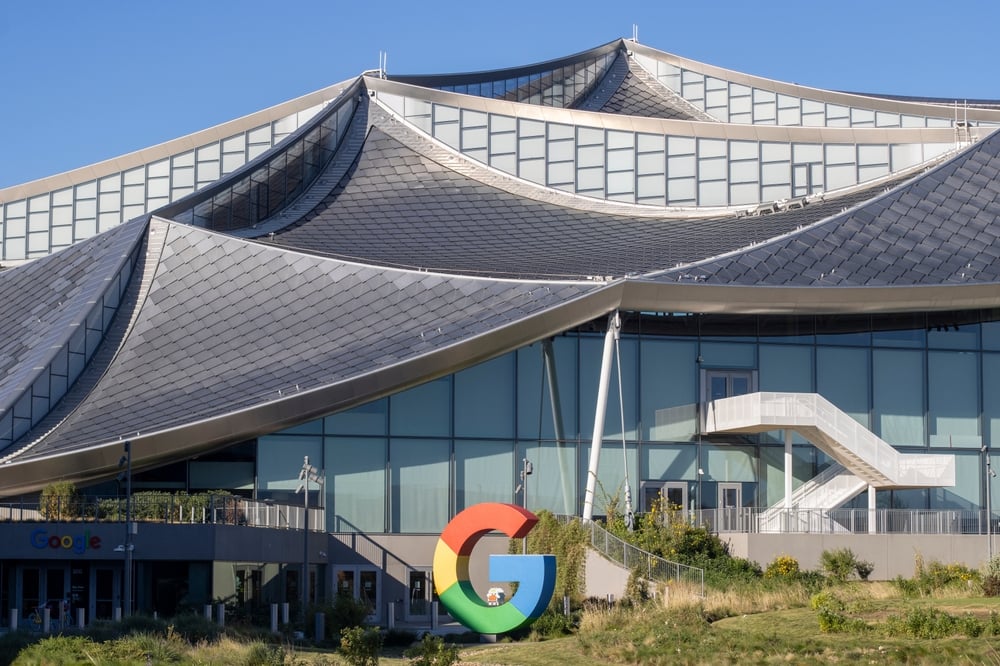
Google is making one of its biggest renewable energy investments yet as it works to balance the rising electricity needs of artificial intelligence (AI) with its ambitious climate goals.
The company will buy all the initial output from the Steel River Energy Center in Arkansas. This project is one of the largest solar-plus-storage developments in the U.S. It will help offset emissions from Google’s growing electricity use while supporting a cleaner U.S. power grid.
The tech giant stated in its publication:
“Steel River is a game-changer because it pairs massive solar arrays with advanced battery storage systems. This project can store the sun’s peak daytime output and feed it back into the grid exactly when it’s needed most, growing a more reliable, resilient grid that can meet rising electricity demand while keeping power affordable for everyone.”
AI Is Driving a New Wave of Renewable Energy Investment
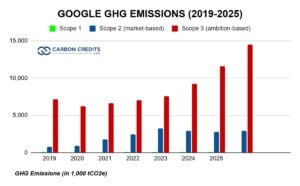
The move comes at a time when Google’s latest Environmental Report shows that its greenhouse gas emissions have continued to rise due to AI and cloud computing expansion.
Electricity use alone jumped 37% in 2025. This makes it harder for the company to meet its target of operating on 24/7 carbon-free energy by 2030 and reaching net-zero emissions across its operations and value chain.
Artificial intelligence is changing how technology companies buy electricity. Training and running AI models require enormous computing power. That has led Google, Microsoft, Amazon, and Meta to rapidly expand their data center networks, pushing electricity demand to record levels.
The U.S. Energy Information Administration (EIA) says that total electricity demand in the U.S. might grow by 25% to 50% by 2050. This increase will mainly come from data centers, electrification, and industrial growth. Meeting that demand without increasing fossil fuel use will require massive investment in renewable energy and energy storage.
The tech giant has acknowledged this challenge. In its 2026 Environmental Report, the company stated that AI is challenging its climate goals. This is because advanced computing needs significantly more electricity than standard digital services. Even with major improvements in data center efficiency, overall power consumption continues to rise as AI workloads expand.
Rather than slowing its AI investments, Google is increasing its renewable energy purchases to keep pace with demand.
One of America’s Largest Solar Projects
The Steel River Energy Center represents the scale of renewable infrastructure that large technology companies now require.
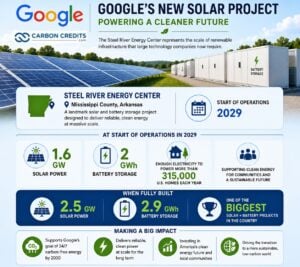
The project in Mississippi County, Arkansas, will provide 1.6 gigawatts (GW) of solar power and 2 gigawatt-hours (GWh) of battery storage. It is set to start operations in 2029. That is enough electricity to power more than 315,000 U.S. homes each year.
When finished, Steel River will have about 2.5 GW of solar power and 2.9 GWh of battery storage. This will make it one of the biggest solar and battery projects in the country.
Google signed a long-term virtual power purchase agreement (VPPA) for the project’s entire initial output. Under this model, Google does not directly receive the electricity. Instead, the agreement provides stable long-term revenue that helps finance construction while adding new renewable power to the regional electricity grid.
These agreements have become one of the main ways large companies accelerate renewable energy development. They lower the financial risk for developers. This makes it easier to get funding for projects that might otherwise face challenges.
A Stronger U.S. Clean Energy Supply Chain
The Steel River project is also designed to strengthen U.S. clean energy manufacturing. Most of the project’s key components will come from domestic suppliers:
- First Solar will provide solar panels made entirely with U.S.-sourced materials,
- Steel will be produced in Arkansas, and
- Battery systems will come from LG Energy Solution’s factory in Arizona.
The domestic supply chain has become increasingly important as U.S. policy encourages developers to reduce reliance on Chinese equipment. The International Energy Agency (IEA) estimates China controls about 85% of global solar manufacturing capacity and produces more than 80% of the world’s battery output in 2025.
Using more U.S.-made equipment can also help projects qualify for valuable federal tax incentives. As a result, large renewable energy developments like Steel River are not only adding clean power. They are also supporting domestic manufacturing and strengthening America’s energy supply chain.
Google Expands Clean Energy to Match AI Growth
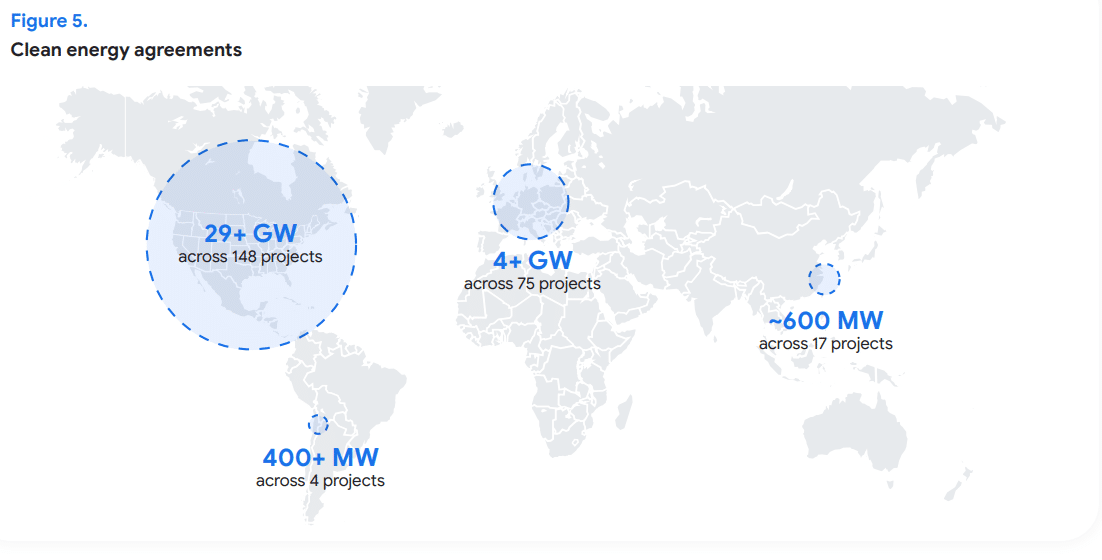
The Arkansas project is part of a much broader strategy. Google keeps investing in solar, wind, geothermal energy, and long-duration storage. It aims to provide carbon-free electricity for its operations 24/7.
The company says that simply buying renewable electricity is no longer enough. It is now focusing on building cleaner and more reliable electricity systems in the regions where its data centers operate.
That strategy is becoming increasingly important. According to BloombergNEF, Google, Microsoft, Amazon, and Meta accounted for 49% of all corporate clean energy purchase agreements signed worldwide in 2025. Few industries are investing in renewable electricity at the same pace as the world’s largest AI companies.
Google’s latest solar deal reflects that shift. The company is financing large-scale renewable energy projects. This supports AI growth and helps to cut emissions over time.
Can the Power Grid Keep Up With AI?
Google is not alone in facing rising electricity demand. The rapid growth of AI is reshaping the U.S. power sector. Data centers could become one of the country’s biggest new electricity users over the next decade.
According to the International Energy Agency (IEA), electricity use by data centers worldwide is projected to more than double by 2030, reaching about 945 terawatt-hours (TWh) each year. That is slightly more electricity than Japan uses today. AI-optimized data centers are expected to account for most of that increase.
The trend is already changing investment decisions. The U.S. EIA expects utilities to add a record 86 gigawatts (GW) of new utility-scale electricity capacity in 2026.
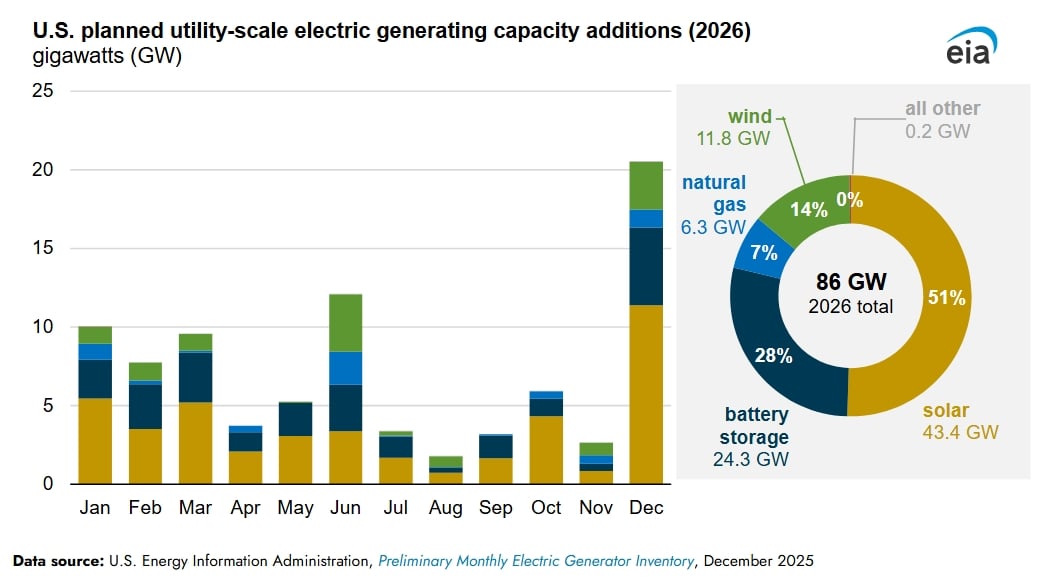
About 68 GW, or almost 80%, will come from solar power (43.4 GW) and battery storage (24.3 GW). Together, they represent the largest share of the new generation added to the U.S. grid.
Battery storage is becoming just as important as solar. Large batteries store excess electricity during the day and release it when demand peaks or the sun goes down. This helps stabilize the grid and reduces the need for fossil fuel power plants during periods of high electricity demand.
For technology companies that operate around the clock, combining solar with battery storage provides a more reliable source of clean electricity than solar alone. It also supports Google’s goal of supplying its operations with 24/7 carbon-free energy while meeting the growing power needs of AI.
Building the Grid for the AI Era
While Google still faces a difficult path toward its climate goals, the company is investing in advanced technologies that support its goal of running on carbon-free electricity all day, every day.
The Steel River project highlights a broader shift taking place across the energy sector. Projects that combine large-scale solar generation with battery storage can add clean electricity to the grid while improving reliability. They also reduce the need for new fossil fuel generation during periods of rising demand.
For Google, this investment is about more than buying renewable power. It is helping build the energy infrastructure needed to support the next generation of AI while limiting the environmental impact of that growth.
As electricity demand continues to climb, similar projects are likely to become more common. The companies that can expand clean energy alongside digital infrastructure will be better positioned to meet both business growth and climate goals in the years ahead.