


Google’s parent, Alphabet Inc., is expanding its artificial intelligence (AI) infrastructure strategy on two fronts: securing massive renewable energy supplies on Earth and exploring future data centers in space.
The company just signed a 500-megawatt (MW) solar power deal in Texas with Linea Energy. This will help meet the rising electricity needs of its U.S. data centers.
Moreover, reports say Google is talking to SpaceX. They are discussing launching orbital data centers. This move comes as AI computing strains global energy systems.
The moves show how big tech companies are competing for long-term energy and computing power. This is happening as AI workloads grow quickly around the globe.
Google Signs 500 MW Solar Deal to Power AI Growth
Google’s new renewable energy deal includes 500 MW of solar power. This capacity comes from projects by Linea Energy in Texas. The electricity will power Google’s growing network of data centers and cloud infrastructure in the U.S.
Will Conkling, Director of Energy and Power, Google, noted:
“By collaborating with Linea Energy to bring new low-cost power to the grid, we are helping to ensure the Lone Star State’s energy system remains affordable for local families and businesses.”
The deal reflects a broader trend among hyperscale technology companies. AI systems require enormous amounts of electricity to train and run advanced models. This is creating growing pressure on power grids and increasing demand for renewable energy.
According to the International Energy Agency, global data center electricity consumption reached about 415 terawatt-hours (TWh) in 2024. The IEA expects this figure to more than double to roughly 945 TWh by 2030 as AI adoption accelerates.
Google has been one of the largest corporate buyers of renewable energy globally for several years. The company says it has signed more than 7 gigawatts of clean energy agreements worldwide since 2010.

The company also aims to operate on 24/7 carbon-free energy across all its global operations by 2030. Google’s goal is different from traditional renewable targets. Instead of matching yearly electricity use, it aims to provide clean electricity every hour of every day.
Texas is now a key area for this strategy. Its renewable energy capacity is growing fast, and the data center market is expanding. The state leads the U.S. in utility-scale solar additions and remains a major hub for AI infrastructure investment.
AI Is Driving a Massive Surge in Power Demand, Impacting Google’s Emissions
The rise of generative AI is reshaping global electricity markets. Training large AI models requires huge amounts of computing power. Running AI services continuously also increases electricity consumption across cloud platforms and data centers.
Goldman Sachs estimates global power demand from data centers could rise as much as 165% by 2030 due largely to AI growth. McKinsey & Company estimates that global demand for AI-ready data center capacity could require up to $8 trillion in infrastructure investment by 2030.
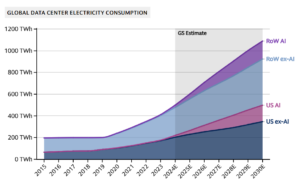
This has created a growing challenge for technology companies. Many regions already face delays in grid connections and shortages of reliable electricity supply.
As a result, companies such as Google, Microsoft, Amazon, and Meta Platforms are investing heavily in renewable energy, battery storage, nuclear power, and grid infrastructure.
- The push for clean energy is also tied closely to corporate climate goals.
Google said its total greenhouse gas emissions increased by almost 48% from its 2019 baseline. This rise is mainly due to higher energy use from AI and data centers.

The company noted in its recent sustainability report that AI growth is making it harder to cut emissions. This explains why securing large-scale renewable electricity agreements has become a strategic priority.
Google has matched all its global electricity use with renewable energy every year since 2017–2018. It has also signed over 75 clean energy agreements worldwide. These support more than 10 GW of renewable capacity from wind, solar, and other sources.
The tech giant also aims to use 24/7 carbon-free energy by 2030. This plan goes beyond yearly matching. It needs to align electricity demand with clean energy in real time.
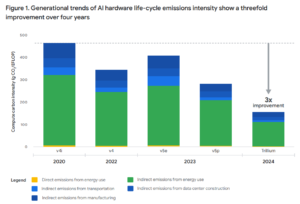
But Google has noted that the growing demand for AI is making it harder to reduce emissions in the short term. The company said that expanding data centers and increasing AI computing are raising electricity use. Still, efficiency gains and buying renewable energy are helping to lessen the effect.
A 2025 environmental update revealed that Google cut data center energy emissions by 12%. This happened even as electricity demand rose by 27%. The reduction came from new clean energy projects that were activated. The company also reported it has enabled 26 million tCO2e emissions reductions through five products.
Google Explores Orbital Data Centers With SpaceX
While Google expands renewable energy on Earth, it is also exploring a much more futuristic solution: moving part of AI computing into space.
Reports from The Wall Street Journal say that Google is talking to SpaceX. They are discussing possible launches for orbital data center infrastructure.
The talks involve Google’s internal research effort known as Project Suncatcher. The initiative centers on solar-powered satellites. These satellites have Google Tensor Processing Units (TPUs) and optical communication systems.
The idea is to put computing infrastructure in orbit. This way, satellites can gather constant solar energy above Earth’s atmosphere.
SpaceX plans to launch up to one million orbital data center satellites. These will orbit between 500 and 2,000 kilometers above Earth. Supporters say that orbital infrastructure might ease the load on land-based electricity grids. It could also provide a steady supply of solar power.
However, the technology remains highly experimental. Google’s research shows that launch costs must drop below about $200 per kilogram. Only then would orbital data centers be cheaper than Earth-based ones. Today, launch costs remain far higher.
Space-Based AI Infrastructure Faces Major Challenges
Despite growing interest, experts say orbital data centers still face huge technical and economic barriers. Most proposed systems rely on SpaceX’s Starship rocket. It needs to achieve fast, low-cost reusable launches. So far, this scale hasn’t been shown in commercial use.
Analysts at MoffettNathanson LLC estimate that thousands of Starship launches each year may be needed. This would support a large-scale orbital computing infrastructure.
Even SpaceX noted risks in its pre-IPO filings. It described orbital AI infrastructure as reliant on “unproven technologies.” Jensen Huang, CEO of NVIDIA, also called space-based AI infrastructure a “long-term engineering challenge.”
Still, interest across the technology sector is growing.
NVIDIA recently advertised positions focused on orbital computing systems. Startup Cowboy Space Corporation has also raised hundreds of millions to build rockets and infrastructure for space-based computing. These developments show how rapidly AI is pushing companies to rethink the future of digital infrastructure and energy supply.
Renewable Energy and AI Are Becoming Deeply Connected
The two Google stories, one focused on Texas solar power and the other on orbital data centers, reflect the same underlying issue.
AI growth is becoming closely tied to energy access. Technology companies now compete for more than just chips and software talent. They also seek electricity, grid access, renewable energy, and long-term power stability.
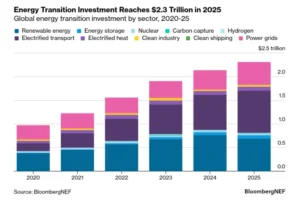
According to BloombergNEF, global investment in the energy transition reached $2.3 trillion in 2025. A large part of this growth came from electrification, AI infrastructure, battery storage, and renewable energy deployment.
At the same time, utilities and governments are increasingly concerned about whether power systems can keep up with AI demand growth. This is why companies are exploring multiple solutions simultaneously:
- large renewable energy projects,
- battery storage systems,
- small modular nuclear reactors,
- grid modernization, and
- even orbital computing infrastructure.
Google’s strategy reflects this broader shift. The 500 MW Texas solar agreement provides a near-term solution to rising electricity needs from AI data centers. Meanwhile, orbital computing research is a long-term effort. It aims to rethink where and how AI infrastructure works.
For now, Earth-based renewable energy remains the practical foundation of AI growth. But as power demand continues to rise, companies are increasingly exploring more unconventional solutions.