Carbon CreditsMeta and D. E. Shaw Renewable Investments Expand 2.5 GW Renewable Partnership...

Meta and D. E. Shaw Renewable Investments Expand 2.5 GW Renewable Partnership Across Nine U.S. States

Meta Platforms and US-based D. E. Shaw Renewable Investments (DESRI) signed new renewable energy agreements totaling 850 megawatts (MW) in 2026. The deals include 500 MW in Oklahoma, 200 MW in Texas, and 150 MW in Mississippi. These agreements are part of Meta’s broader effort to power its growing data center and AI operations with clean electricity.

The latest contracts push the total renewable energy partnership between Meta and DESRI to around 2,575 MW across nine U.S. states. The projects include solar power and battery storage systems that aim to strengthen grid reliability while lowering emissions from electricity use.

Hy Martin, Chief Development Officer of DESRI, said:
“Our energy infrastructure partnership with Meta now spans nine states and more than two and a half gigawatts across the country. These projects support Meta’s energy commitments, and they will generate significant economic development for local rural economies across the country. Our relationship with large companies like Meta is a cornerstone of DESRI’s long-term strategy of delivering cost-effective, reliable energy projects to power the U.S. economy’s growth.
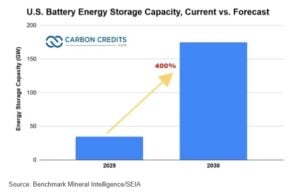
battery storage

DESRI Expands Renewable Footprint Across the U.S.

DESRI expects around 1,110 MW of these contracted projects to begin construction this year. Each project is likely to create hundreds of temporary construction jobs and generate long-term economic benefits for local communities through taxes, land lease payments, and operational spending.
The company has become one of the largest renewable energy developers in the United States.

  • Its portfolio now includes more than 80 solar, wind, and energy storage projects with a combined capacity exceeding 12 gigawatts. The company develops, finances, owns, and operates utility-scale renewable projects across the country.

Significantly, it also includes community programs in many of its agreements. DESRI regularly allocates funding for high school scholarships focused on clean energy careers. Similar education initiatives are expected in several states tied to the new Meta projects.

Amanda Yang, Head of Clean and Renewable Energy at Meta, noted:

“DESRI has been a valued partner as we work to bring new energy to grids across the United States. This expanded partnership — now spanning nine states — reflects our commitment to supporting the communities where we operate,” said 

Big Tech Continues to Dominate Clean Energy Buying

The announcement reflects a larger trend shaping global energy markets. Large technology companies have become the biggest buyers of renewable electricity as artificial intelligence infrastructure expands rapidly.

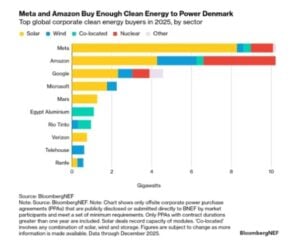
According to BloombergNEF, companies such as Meta, Amazon, Google, and Microsoft accounted for nearly half of all global corporate clean energy purchase agreements in 2025.

The report showed that global corporate clean power purchase agreement volumes reached 55.9 GW in 2025. Although that represented a 10% decline from the previous year, it still marked the second-highest year ever recorded. The slowdown ended eight consecutive years of growth in corporate renewable energy contracting.

Meta Tops the List

Meta emerged as the world’s largest corporate clean energy buyer in 2025. The company signed contracts for 10.24 GW of clean electricity, narrowly surpassing Amazon’s 10.22 GW. Most of Meta’s activity remained concentrated in the United States, where demand for AI-ready data centers continues to grow quickly.

meta

The report also revealed a major shift in energy procurement strategies. Instead of relying only on standalone solar or wind farms, large technology firms are increasingly moving toward “baseload-like” energy solutions. These systems combine multiple technologies to provide more stable electricity throughout the day and night

Smaller Companies Face Challenges

While large technology firms accelerated clean energy purchases, smaller companies slowed down significantly. BloombergNEF reported that the number of corporate clean energy buyers in the United States dropped sharply in 2025.

Despite U.S. clean energy agreement volumes reaching a record 29.5 GW, only 33 companies signed major contracts during the year. That number was nearly half the total recorded in the previous year.

Analysts linked the slowdown to policy uncertainty, changes in tax credit structures, and rising complexity in energy markets. Smaller businesses struggled to manage volatile electricity markets and long-term contract risks.

Nayel Brihi, lead author of BloombergNEF’s report, said corporate buyers are now operating at “two different speeds.” Large technology companies are signing bigger contracts and exploring advanced technologies, while smaller firms remain cautious about long-term commitments.

Hybrid Clean Energy Solutions Move into the Spotlight

Artificial intelligence has become one of the biggest drivers of electricity demand worldwide. Data centers require enormous amounts of constant power to support AI training models, cloud computing, and digital services.

As AI demand grows, companies are looking beyond traditional renewable projects toward systems capable of delivering electricity around the clock. This shift explains the rising interest in storage systems and hybrid renewable projects.

IRENA recently highlighted the growing role of firm renewable systems. It says hybrid projects can optimize grid connections, reduce exposure to price volatility, and deliver more stable electricity supplies.

Falling Battery Costs Make 24/7 Renewable Power More Viable

The economics of these systems are also improving rapidly. IRENA estimated the global average solar electricity cost at $0.043 per kilowatt-hour in 2024. Falling battery prices are making “anytime solar power” increasingly practical in regions with strong sunlight.

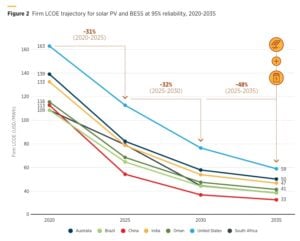
Studies now show that the levelized cost of electricity from hybrid solar-and-storage systems has dropped sharply over the past five years.

  • In strong solar and wind regions, costs fell from above $100 per megawatt-hour in 2020 to around $54–82 per megawatt-hour by 2025.

Analysts expect another major decline over the next decade. Under current technology trends, firm renewable electricity costs could fall by roughly 30% by 2030 and nearly 40% by 2035. In the best locations, costs may drop below $50 per megawatt-hour.

irena battery costs
Source: IRENA

Meta Expands Its Renewable Energy Strategy

Meta has steadily increased investments in renewable electricity over the past several years. The company uses long-term power purchase agreements to match its electricity consumption with clean energy generation.

Under these agreements, developers build and operate renewable projects while Meta purchases the electricity produced. These long-term contracts help developers secure financing and move projects forward.

  • By the end of 2024, 89 of the 128 renewable projects in Meta’s portfolio were already online and supplying electricity to the grid.

The company often focuses on projects connected to the same electricity grids as its data centers. Meta also prioritizes projects that improve grid reliability and reduce emissions during periods of high electricity demand.

Reducing Operational Emissions 

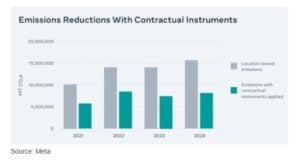
Meta reduced operational emissions by 6 million MT CO₂e in 2024. The company also uses Energy Attribute Certificates (EACs) to cut Scope 3 emissions linked to fuel use, consumer hardware, and remote work. This approach reduced value chain emissions by 1.4 million MT CO₂e in 2024.

To sum up, renewable energy procurement has helped Meta cut 23.8 million MT CO₂e emissions since 2021.

solar meta

Some of Meta’s major solar and battery storage partnerships, including:
  • 150 MW floating solar project in Singapore with Sembcorp Industries
  • Large solar power agreements in Ireland near Meta’s data center operations
  • Sky Ranch Solar Energy Center in New Mexico with NextEra Energy and PNM

AI Research Supports Energy Storage Innovation

Meta is also investing in advanced energy research using artificial intelligence tools. The company supports battery storage projects and scientific research focused on improving clean energy systems.

One major initiative is the Open Catalyst project, a collaboration between Meta’s Fundamental AI Research team and researchers at Carnegie Mellon University. The project aims to accelerate the discovery of new catalysts for clean energy production and storage.

Overall, Meta’s latest renewable agreements with DESRI show how quickly energy demand from AI infrastructure is reshaping electricity markets. Large technology firms are no longer simply buying renewable power to meet sustainability goals. They are increasingly driving the next phase of energy system development focused on reliability, storage, and round-the-clock clean electricity.


Most Popular


Ultimate Guide


Loading...


LATEST CARBON NEWS

Google’s Wild AI Strategy: 500 MW Solar Deal and Potential SpaceX Orbital Data Centers

Google's parent, Alphabet Inc., is expanding its artificial intelligence (AI) infrastructure strategy on two fronts: securing massive renewable energy supplies on Earth and exploring...

Alaska Energy Metals’ Nikolai Project Ranks Among Largest U.S. Nickel Resources After 2025 Estimate

Disseminated on behalf of Alaska Energy Metals Corporation The global race for critical minerals is entering a decisive phase. As countries accelerate clean energy adoption...

Ford’s New Energy Business Targets Tesla’s Storage Empire, Sending Stock (F) Upward

Ford Motor Company ( has officially launched Ford Energy, a new business focused on manufacturing battery energy storage systems (BESS) for utilities, data centers,...

Battery Storage Boom Is Accelerating Faster Than EVs, Redefining Lithium Demand

Disseminated on behalf of Surge Battery Metals. The story of lithium demand is changing. For many years, electric vehicles (EVs) were the main driver of...
CARBON INVESTOR EDUCATION

Planting Trees for Carbon Credits: Everything You Need to Know

As climate change intensifies, nations and industries are seeking innovative ways to cut carbon footprints. Carbon credits have emerged as a key tool in...

What is SMR? The Ultimate Guide to Small Modular Reactors

Energy is the cornerstone of modern life. We need electricity for healthcare, transportation, communication, and more. Many countries are choosing nuclear power because it...

What Is Carbon Dioxide Removal? Top Buyers and Sellers of CDR Credits in 2024

The world must remove 5–16 billion metric tons of CO₂ annually by 2050 to limit global warming to 1.5°C. But with emissions still rising,...

Top 5 Carbon ETFs for Sustainable Investing in 2025

Like stocks, investors can buy and sell Exchange-Traded Funds (ETFs) whenever the market is open. Often investing in carbon credits through ETFs offers a...