


Google has signed a 15-year agreement to purchase 200 megawatts (MW) of solar power from the Solstice Solar project in Oklahoma, developed by Enlight Renewable Energy.
The project will supply clean electricity to support Google’s growing data center operations in the region. The facility is planned as a 250 MWdc solar project and could eventually include 800 megawatt-hours (MWh) of battery storage.
Driving a New Wave of Electricity Demand
The agreement is about more than adding another renewable energy asset. It reflects a challenge facing the entire technology sector: how to power the rapid expansion of artificial intelligence (AI) while still meeting climate goals.
Across the industry, electricity demand is rising at a pace not seen in years. Data centers are expanding, AI workloads are becoming more energy intensive, and utilities are scrambling to add new generating capacity. In response, technology companies are signing larger and longer renewable energy contracts to secure future power supplies.
The Oklahoma deal is one example of how that shift is reshaping energy markets. AI is changing how much electricity technology companies need.
Google reported that electricity consumption at its data centers increased by 27% in 2024 compared with the previous year. The increase was largely driven by AI-related computing demand.
The company has also acknowledged the climate impact of this growth. Google reported greenhouse gas emissions of 11.5 million metric tons of carbon dioxide equivalent (CO₂e) in 2024. That is 51% higher than its 2019 baseline.
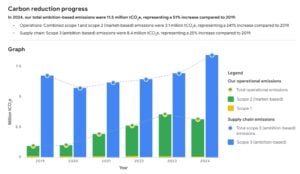
The challenge becomes more common across the sector. New AI models require large clusters of advanced chips operating around the clock. These facilities consume far more electricity than traditional computing workloads.
The impact is already visible at the grid level. According to the International Energy Agency (IEA), global electricity demand from data centers could more than double by 2030. AI is expected to be the largest driver of that increase.
In the United States, utilities and grid operators are preparing for a sharp rise in demand. The Southwest Power Pool (SPP), which serves Oklahoma and several neighboring states, expects peak electricity demand to increase by nearly 5 gigawatts between 2026 and 2029. During the same period, more than 5.7 GW of existing power generation is expected to retire.
This means new sources of electricity will be needed quickly. Solar energy is emerging as one of the fastest solutions.
Google Is Betting on Carbon-Free Energy, Not Just Renewable Credits
Despite growing energy demand, Google says its climate commitments remain unchanged.
In May 2026, company executives reaffirmed that Google’s goal of operating on 24/7 carbon-free energy by 2030 remains intact. The target was first announced by CEO Sundar Pichai in 2020 and remains one of the most ambitious energy goals in the corporate world.
Unlike traditional renewable energy programs, Google’s approach goes beyond annual energy matching.

Many companies purchase enough renewable electricity to offset their yearly power consumption. Google’s goal is harder. It aims to match every hour of electricity use with locally sourced carbon-free electricity.
This distinction matters because solar power is available mainly during daylight hours, while data centers operate continuously.
According to Google, carbon-free energy supplied 66% of the electricity consumed across its global operations in 2024. The company aims to continue increasing that figure throughout the decade.
To support this effort, Google has become one of the world’s largest corporate clean energy buyers. Since 2010, the company has signed agreements for more than 22 gigawatts of renewable energy generation capacity globally.
The Oklahoma agreement adds another piece to that portfolio.
Solar Is Becoming a Critical Tool for Industrial Decarbonization
The rise of corporate solar procurement extends far beyond the technology sector. Solar energy has become one of the fastest-growing sources of electricity in the world. Costs have fallen sharply over the past decade, making utility-scale solar one of the lowest-cost options for new power generation in many markets.
In the United States, solar accounted for a record 43.2 GW of new capacity installations in 2024. According to the Solar Energy Industries Association (SEIA) and Wood Mackenzie, this represented about 84% of all new electricity-generating capacity added during the year.
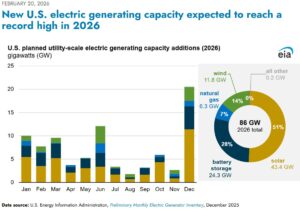
Renewables as a whole accounted for more than 90% of new generating capacity additions. The trend is expected to continue. SEIA forecasts total U.S. solar capacity could reach 739 GW by 2035, more than triple current levels.
This growth is becoming increasingly important for corporate decarbonization efforts.
Many industries are electrifying operations to reduce emissions. Manufacturers are replacing fossil fuel equipment with electric systems. Mining companies are increasing their use of renewable energy, as Rio Tinto’s renewable deal shows. Transportation firms are expanding electric vehicle fleets. Data centers are consuming more power than ever.
All of these trends increase demand for clean electricity. As a result, renewable energy is becoming a central part of net-zero strategies across the global economy.
Tech Giants Are No Longer Buying Power—They’re Building the Grid
Google’s Oklahoma agreement reflects a broader change in how companies think about energy.
In the past, corporations purchased electricity from utilities and treated energy as a routine operating expense. Today, large energy users are helping finance the construction of new generation assets.
Long-term power purchase agreements provide stable revenue for developers while giving companies access to future electricity supplies. This model is becoming increasingly important as AI expands.
Google has already committed about $9 billion toward cloud and AI infrastructure investments in Oklahoma. The company has also supported more than 700 MW of solar capacity in the state before this latest agreement.
The new contract strengthens both objectives. It helps Google secure electricity for future growth while supporting the development of additional clean energy infrastructure.
For developers such as Enlight Renewable Energy, these agreements create long-term certainty that can support financing and project construction. For the broader energy sector, they signal a larger transformation.
The 200 MW Oklahoma solar project is only one facility. Yet, it reflects a growing reality. As AI drives electricity demand higher, technology companies are becoming active participants in building the energy systems that will power the next phase of the digital economy.