

Green hydrogen could play a major role in cutting emissions from heavy industry, shipping, and aviation. However, producing it remains expensive because it requires large amounts of renewable electricity and costly infrastructure. A new project aims to change that.
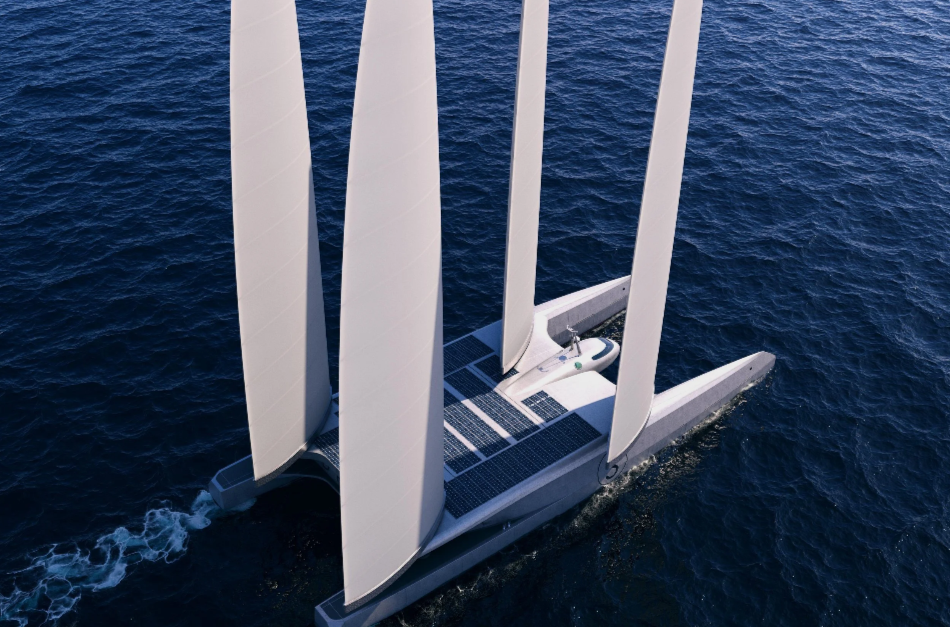
UK-based DRIFT Energy plans to deploy more than 50 wind-powered sailing vessels that will produce green hydrogen at sea instead of on land. With a $500 million investment from Commenda Capital Partners, this initiative could provide a new method for producing clean hydrogen and reduce costs.
Ben Medland, CEO of DRIFT Energy, remarked:
“Securing this financing framework with Commenda Capital is an important step in proving that DRIFT’s model is not only visionary, but bankable and scalable. It positions us to lead the deployment of the world’s first energy-harvesting vessels and to show how clean energy can be produced offshore and delivered directly to end users.”
Sailboats Could Become Floating Hydrogen Plants
DRIFT Energy is developing sailing vessels that use wind power to produce green hydrogen while at sea.
Each vessel will generate electricity using underwater turbines that spin as the boat moves through the water. That electricity powers an onboard electrolyzer, which splits desalinated seawater into hydrogen and oxygen. The hydrogen is compressed and stored onboard before being delivered to ports.
Unlike conventional offshore wind projects, the vessels do not need fixed foundations, undersea cables, or hydrogen pipelines. Instead, the boats sail to areas with strong winds, produce hydrogen, and transport it back to shore.
The company claims this method could lower capital costs and transmission losses. It also enables hydrogen production in remote areas where traditional offshore setups can’t reach.
To speed up deployment, DRIFT Energy has signed a $500 million framework agreement with Commenda Capital Partners. The financing will help build at least 50 vessels. This makes it one of the largest planned fleets for offshore hydrogen production.
Green Hydrogen Demand Is Rising, but Supply Still Lags
The project comes as demand for green hydrogen continues to increase. According to the International Energy Agency (IEA), global hydrogen demand reached almost 100 million tonnes (Mt) in 2024 and is expected to surpass that milestone in 2025.
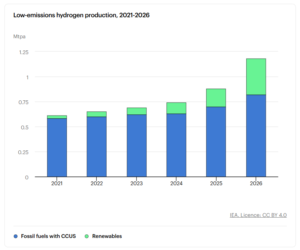
However, only around 1 million tonnes came from low-emissions hydrogen, such as green and blue hydrogen. Most hydrogen is still produced from natural gas and coal, creating significant carbon emissions.
The IEA estimates that hydrogen production emits about 900 million tonnes of CO₂ each year. That’s roughly the same as the yearly emissions of a large industrialized country.
Governments want to change that. Over 60 countries have adopted hydrogen strategies, says the Hydrogen Council. The challenge is turning those plans into commercial projects that can produce hydrogen at competitive prices.
The Cost Barrier Holding Green Hydrogen Back
Green hydrogen is produced using renewable electricity, making it one of the cleanest fuels available. It can take the place of fossil fuels in hard-to-electrify areas. This includes steel, chemicals, shipping, aviation, and heavy transport.
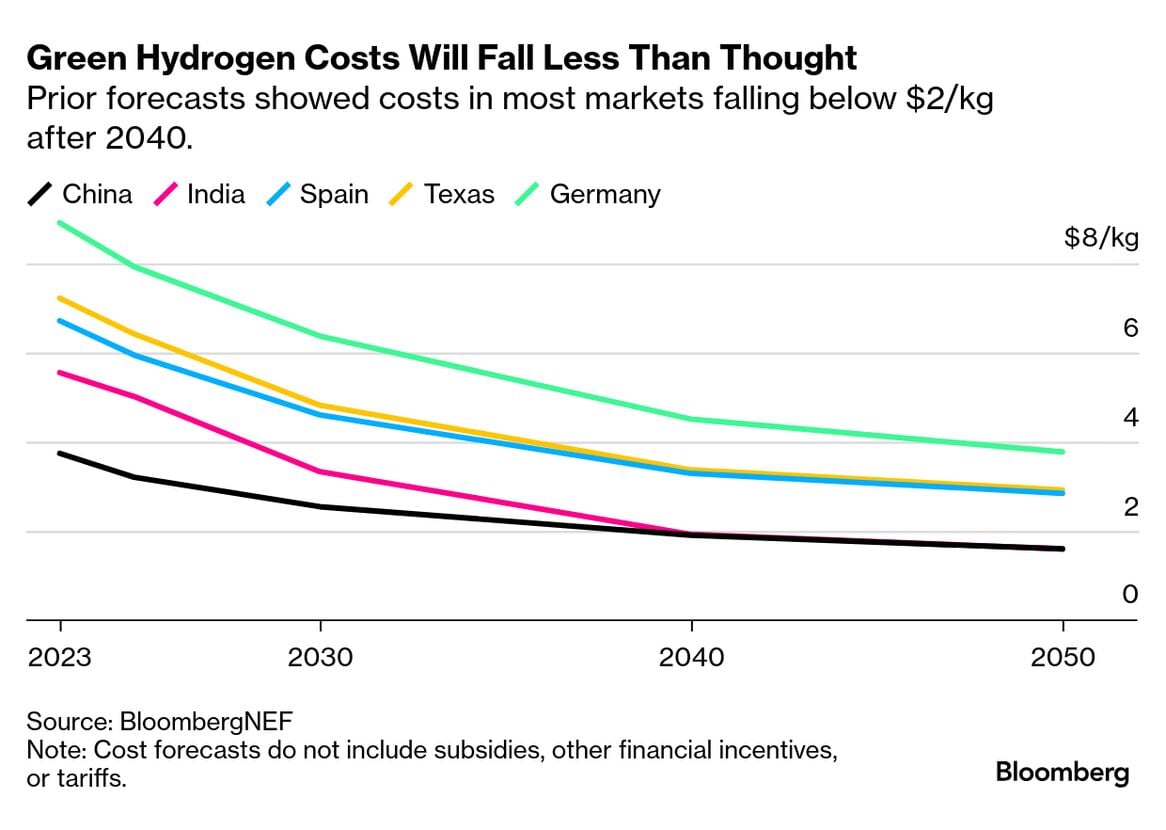
The problem is cost. BloombergNEF reports that the cost of producing green hydrogen will decrease less than what others initially estimated.
Moreover, the International Renewable Energy Agency (IRENA) estimates that renewable electricity makes up about 60% to 70% of the cost to produce green hydrogen. Developers must also invest in electrolyzers, transmission lines, pipelines, storage facilities, and export terminals.
These costs have slowed adoption, even as governments increase support.
DRIFT Energy believes producing hydrogen directly at sea could remove some of the most expensive parts of the supply chain. The company transports hydrogen from offshore wind farms to land. It uses the same vessels that produce the hydrogen.
If successful, the model could make green hydrogen more competitive while opening new renewable energy resources far from existing power grids.
Why Green Hydrogen Matters for Net-Zero Goals
Green hydrogen will be key in reducing emissions from industries that can’t easily switch to electricity.
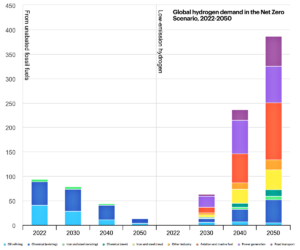
The IEA says that by 2050, hydrogen could supply around 10% of global final energy use in a net-zero scenario. It can replace fossil fuels in steelmaking, fertilizer production, chemicals, shipping, and aviation. It also works for other heavy industries.
Shipping alone shows why cleaner fuels are needed. The International Maritime Organization (IMO) estimates that shipping produces about 3% of global greenhouse gas emissions. As global trade grows, demand for low-carbon marine fuels is also expected to increase.
Green hydrogen can be made into fuels like green ammonia and green methanol. These are top choices for low-carbon shipping.
DRIFT Energy aims to produce hydrogen at sea to help supply growing markets and cut the need for expensive onshore infrastructure.
Billions Are Flowing Into the Hydrogen Economy
Despite high costs, investment in green hydrogen continues to grow.
The Hydrogen Council reports that global hydrogen investments will exceed $680 billion by 2030. Only a small number of these projects have reached the final investment decision stage. This shows that financing and project economics are still major challenges.
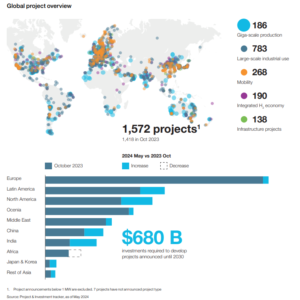
Governments are also stepping up support. The International Energy Agency reports that over 60 countries now have national hydrogen strategies. At the same time, the capacity for electrolyzer manufacturing is growing.
Technology is also improving. The IEA estimates that global electrolyzer manufacturing capacity now exceeds 25 gigawatts (GW) per year. As production scales up, equipment costs are expected to fall, making green hydrogen more affordable.
Projects that lower infrastructure costs could help speed up commercial deployment.
Floating Hydrogen Could Open New Renewable Resources
One of the biggest advantages of DRIFT Energy’s approach is flexibility.
Traditional offshore wind farms can only operate where transmission cables and grid connections are available. Floating hydrogen vessels are different. They can sail to areas with stronger and more consistent winds, produce hydrogen there, and return to port when their storage tanks are full.
This allows developers to capture renewable energy that would otherwise go unused.
The concept could also reduce the need for new pipelines, transmission lines, and export terminals. These facilities often account for a large share of project costs and can take years to build.
The technology is still new, but plans for over 50 vessels show rising confidence that offshore hydrogen production might soon be commercially viable.
A New Direction for the Hydrogen Industry
The DRIFT Energy project is more than an experiment with sailing vessels. It challenges how green hydrogen is produced and transported.
Instead of bringing electricity to hydrogen plants, the company brings hydrogen production to where renewable energy is strongest. If the model works at scale, it could lower costs, expand clean fuel production, and make better use of offshore wind resources.
The global hydrogen industry still faces major hurdles. Costs remain high, and most hydrogen today is still made from fossil fuels. But new ideas like floating hydrogen production show that the industry is looking beyond traditional solutions.
As countries work toward net-zero emissions, projects that combine renewable energy with lower-cost hydrogen production could play an important role in supplying clean fuel for heavy industry, shipping, and other hard-to-abate sectors.