

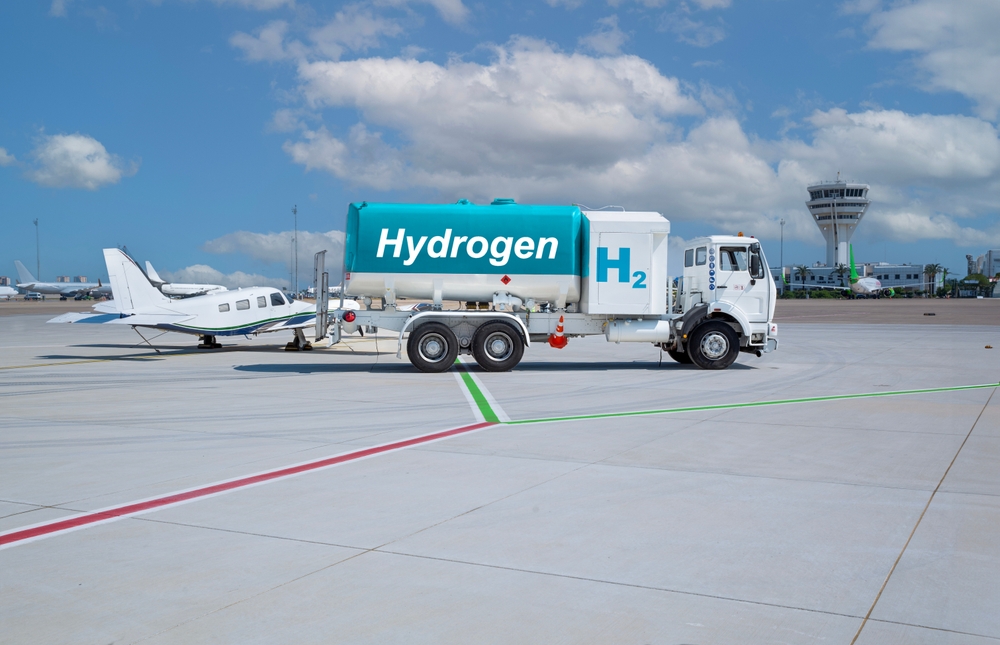
Rolls-Royce and easyJet have finished a hydrogen engine flight cycle test at a NASA facility. This is a big step for zero-carbon aviation research. The test looked at how a hydrogen-powered aircraft engine works in various flight conditions. This included changes in thrust and engine load. The results were shared through Aerospace Global News.
The work forms part of a wider collaboration between the aerospace industry, airlines, and research institutions to explore hydrogen as a future aviation fuel.
Rolls-Royce has been developing hydrogen combustion technology for several years. easyJet, a low-cost European airline, has also been investing in long-term decarbonization options as it targets net-zero emissions.
NASA’s involvement highlights the global nature of the project. The agency provides advanced testing facilities that simulate real-world flight conditions without leaving the ground.
The test does not mean hydrogen aircraft are ready for commercial use. However, it shows that hydrogen engines can operate through a full simulated flight cycle, which is an important technical milestone.
How Hydrogen Aviation Technology Works
Hydrogen aviation is being explored in two main forms: hydrogen combustion engines and hydrogen fuel cells. In this case, Rolls-Royce is focusing on hydrogen combustion, where hydrogen is burned in a modified jet engine instead of kerosene. The goal is to produce thrust while emitting only water vapor at the point of combustion.
Hydrogen has a major advantage. When used as fuel, it produces no direct carbon dioxide emissions. However, it also comes with major technical challenges.
Hydrogen has a very low energy density by volume. It must be stored at extremely low temperatures (liquid hydrogen at around -253°C) or under high pressure. This requires redesigned fuel systems and larger storage tanks.
Aircraft design must also change. Hydrogen takes up more space than jet fuel, which affects range and aircraft structure. Engine control systems also need adjustment. Hydrogen burns differently from kerosene, which affects combustion speed and temperature.
Despite these challenges, aerospace companies are continuing to develop because aviation is one of the hardest sectors to decarbonize.
Aviation’s Emissions Problem Is Getting Harder to Ignore
Air travel is a growing source of global emissions. According to the International Civil Aviation Organization (ICAO), aviation accounts for about 2–3% of global CO₂ emissions. However, its overall climate impact is higher when including non-CO₂ effects such as contrails.
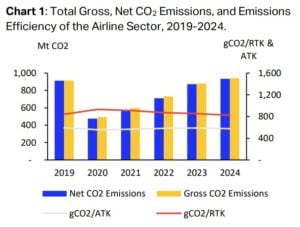
At the same time, demand for air travel continues to rise. The International Air Transport Association (IATA) predicts that global passenger traffic will nearly double by 2040. This growth will mainly come from Asia and emerging markets.
This creates a major challenge. Even with efficiency improvements, total emissions could rise without new fuel technologies.
Sustainable aviation fuel (SAF) is currently the main short-term solution. SAF can cut lifecycle emissions by up to 80% compared to regular jet fuel. This change depends on the feedstock and how it’s made.
However, SAF supply remains limited. IATA estimates that SAF production is still less than 1% of total jet fuel demand. The supply gap is driving the industry to look into new technologies. This includes hydrogen and electric propulsion for shorter routes.
NASA Testing Strengthens Hydrogen Development Path
NASA plays a key role in aviation research and decarbonization technology. Its testing facilities let engineers simulate extreme flight conditions. They can measure engine performance, fuel efficiency, and emissions.
The Rolls-Royce and easyJet hydrogen engine test is part of a broader push by NASA to support zero-emission aviation concepts. The agency has also worked with other aerospace companies on electric aircraft, hybrid propulsion systems, and advanced fuel technologies.
Hydrogen testing at this level is crucial. It checks if engines can run safely and reliably in various conditions. It also helps identify engineering gaps before full-scale aircraft development begins.
The aerospace industry typically moves slowly due to strict safety and certification requirements. Each stage of testing is required before commercial deployment is possible.
Rolls-Royce and easyJet Net Zero Goals
Both Rolls-Royce and easyJet have set long-term climate targets.
Rolls-Royce has committed to reaching net-zero carbon emissions by 2050 across its operations and products. The company is also investing in cleaner propulsion systems, including hydrogen, electric, and hybrid-electric technologies.
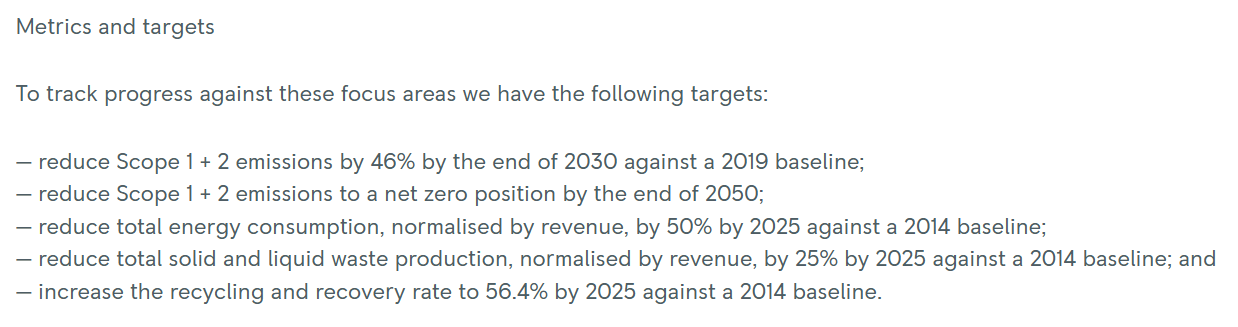
Its aerospace division focuses on improving engine efficiency and developing new power systems that can reduce fuel consumption and emissions. Here are the company’s net zero targets:
easyJet has also committed to net-zero emissions by 2050. The airline has cut carbon emissions per passenger-kilometer by over 30% since 2000. This change comes mainly from updating its fleet and improving operations.
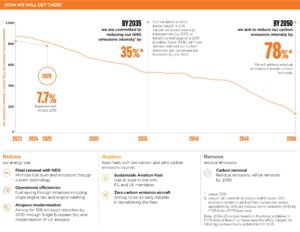
However, aviation remains difficult to decarbonize. Aircraft have long lifespans, often operating for 20–30 years. This slows the transition to new technology. To bridge this gap, airlines are investing in multiple solutions at the same time:
- Fleet renewal with more fuel-efficient aircraft,
- Use of sustainable aviation fuel (SAF), and
- Research into hydrogen and electric propulsion.
easyJet has also entered partnerships with aircraft manufacturers and technology companies to explore future zero-emission aircraft designs. Rolls-Royce, meanwhile, is positioning itself as a long-term supplier of advanced propulsion systems for next-generation aviation.
The Roadblocks Standing Between Hydrogen and Commercial Flight
Hydrogen aviation is still in the early development stage, but global interest is rising.
The European Union, the United States, and several Asian countries are funding hydrogen research programs. Governments see hydrogen as a potential solution for hard-to-decarbonize sectors, including aviation, shipping, and heavy industry.
Airbus has also launched its ZEROe program, aiming to develop a hydrogen-powered commercial aircraft by the mid-2030s. However, the company has recently adjusted timelines, reflecting technical challenges in hydrogen storage, infrastructure, and certification.
Industry forecasts suggest that hydrogen aircraft will likely enter the market first in regional or short-haul routes before expanding further. But key challenges remain, including:
- Lack of hydrogen production infrastructure at airports,
- High cost of green hydrogen compared to jet fuel,
- Need for redesigned aircraft and engine systems, and
- Certification and safety approval timelines.
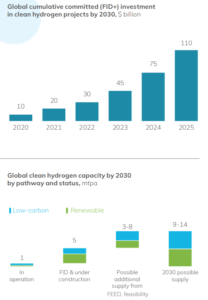
Despite these barriers, investment is increasing. According to the Hydrogen Council, global hydrogen investment commitments have reached $680 billion in announced projects through 2030, covering production, transport, and end-use applications.
As of the latest updates, this committed capital has passed $110 billion across more than 500 mature projects worldwide. Meanwhile, the current project pipeline could support up
to 14 mtpa of clean hydrogen capacity by the decade’s end.
Aviation is expected to be a smaller but strategic part of this broader hydrogen economy.
A Multi-Fuel Future for Aviation Is Taking Shape
The Rolls-Royce and easyJet hydrogen engine test reflects a broader shift in aviation. The sector is under pressure from governments, investors, and consumers to reduce emissions. At the same time, demand for air travel continues to grow.
This creates a structural challenge. Efficiency improvements alone are not enough to meet long-term climate goals. As a result, the industry is moving toward a multi-path approach:
- SAF for near-term emission cuts,
- Hydrogen for long-term zero-carbon flight, and
- Electric propulsion for short regional routes.
Each technology is still developing, and none is ready to fully replace jet fuel today. However, tests like the NASA hydrogen engine trial show that progress is moving from theory to real-world engineering.
For Rolls-Royce and easyJet, the results support long-term plans to transform aviation into a lower-carbon industry.
For the wider market, it signals that hydrogen is now entering practical testing inside real aerospace systems, even if commercial use is still years away.