


Apple is increasing its clean energy investments in India as the company moves closer to its 2030 carbon neutrality target. The tech giant plans to invest about Rs 100 crore (around $10.6 million) to boost renewable energy in India. The investment will support clean electricity projects linked to Apple’s operations and supply chain in the country.
The move comes as India becomes more important to Apple’s manufacturing and supply chain strategy. In recent years, the iPhone maker has grown its production partnerships in the country. They work with suppliers like Foxconn, Pegatron, and Tata Electronics.
Sarah Chandler, Apple’s VP of environment and supply chain innovation, posted:
“At Apple, our commitment to the environment is also a driving force for innovation — across the company and around the world. We’re proud to expand our efforts to invest in India’s clean energy economy and protect the country’s precious natural resources.”
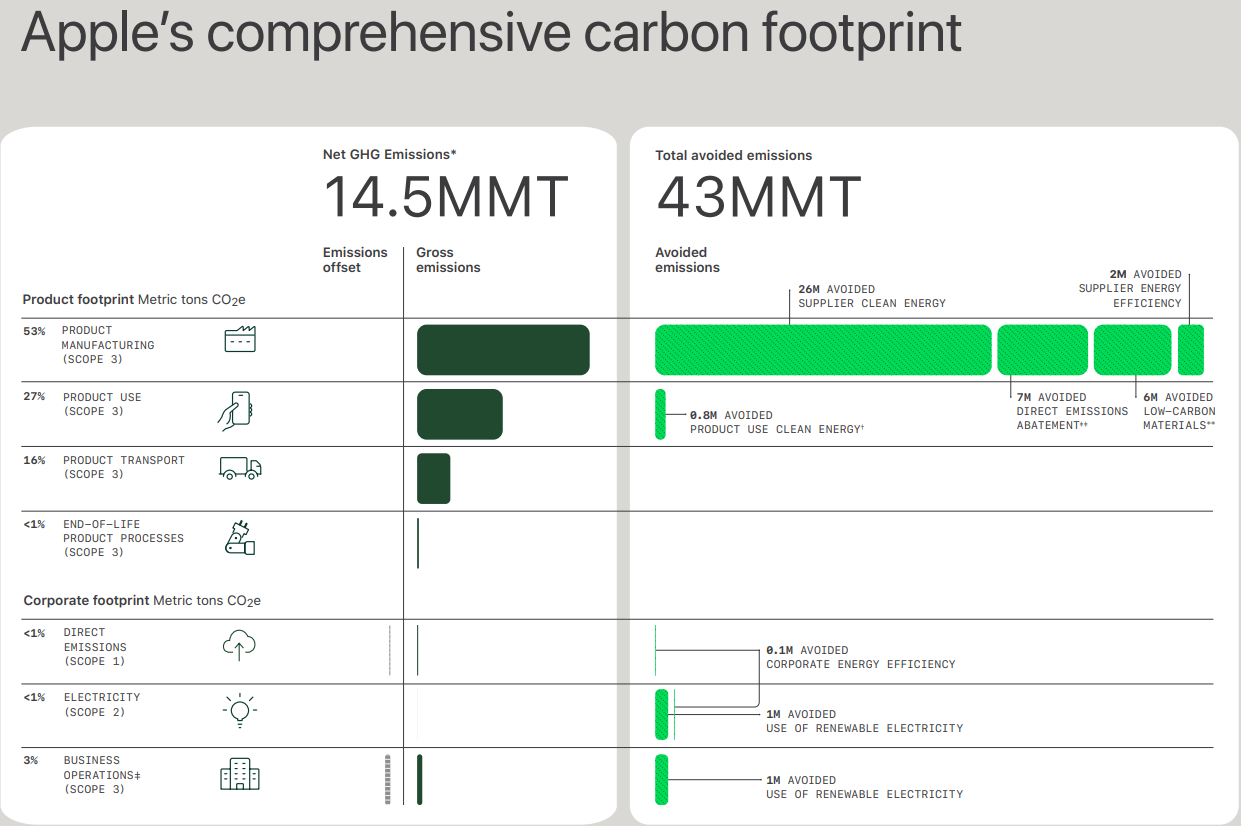
At the same time, Apple is under pressure to reduce emissions across its global value chain. Most of the company’s carbon footprint comes from manufacturing, logistics, and product use rather than its direct operations.
Why India Has Become Critical to Apple’s Global Supply Chain
India now plays a growing role in both challenges: manufacturing growth and emissions reduction. The new investment will help boost renewable electricity for suppliers and facilities linked to Apple’s growing operations in India.
Apple’s clean energy investment is closely tied to its broader manufacturing expansion in India. The company has steadily increased iPhone production in the country as it diversifies beyond China.
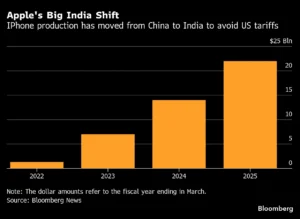
- India now makes up about 25% of global iPhone production. This is a big jump from just a few years ago, when the numbers were very low.
Bloomberg reported that Apple made about $22 billion in iPhones in India for the year ending March 2025. This is nearly a 60% rise from the previous year. This shows how fast India is growing in Apple’s supply chain.
India’s government has also supported electronics manufacturing growth through incentive programs such as the Production Linked Incentive (PLI) scheme. However, rising manufacturing activity also increases electricity demand.
India’s power grid still relies heavily on coal, which generated around 74% of the country’s electricity in 2024, according to the Ministry of Coal data. This creates a major emissions challenge for companies trying to expand manufacturing while meeting climate goals.
As a result, multinational companies are increasingly investing directly in renewable energy projects tied to their supply chains. For Apple, clean energy procurement in India is becoming both an operational and climate strategy.
The iPod maker is also expanding environmental programs beyond electricity procurement. The company has partnered with WWF India on conservation and sustainability initiatives focused on clean energy awareness and environmental protection.
Apple has also backed community programs focused on water care and sustainable jobs in areas linked to its supply chain. These initiatives reflect a broader strategy. Apple aims to reduce emissions from manufacturing. It also wants to boost environmental resilience in communities tied to its operations.
For Apple, clean energy investment in India is becoming both an operational strategy and a long-term climate commitment.
Apple’s 2030 Climate Strategy Depends on Supply Chain Emissions Cuts
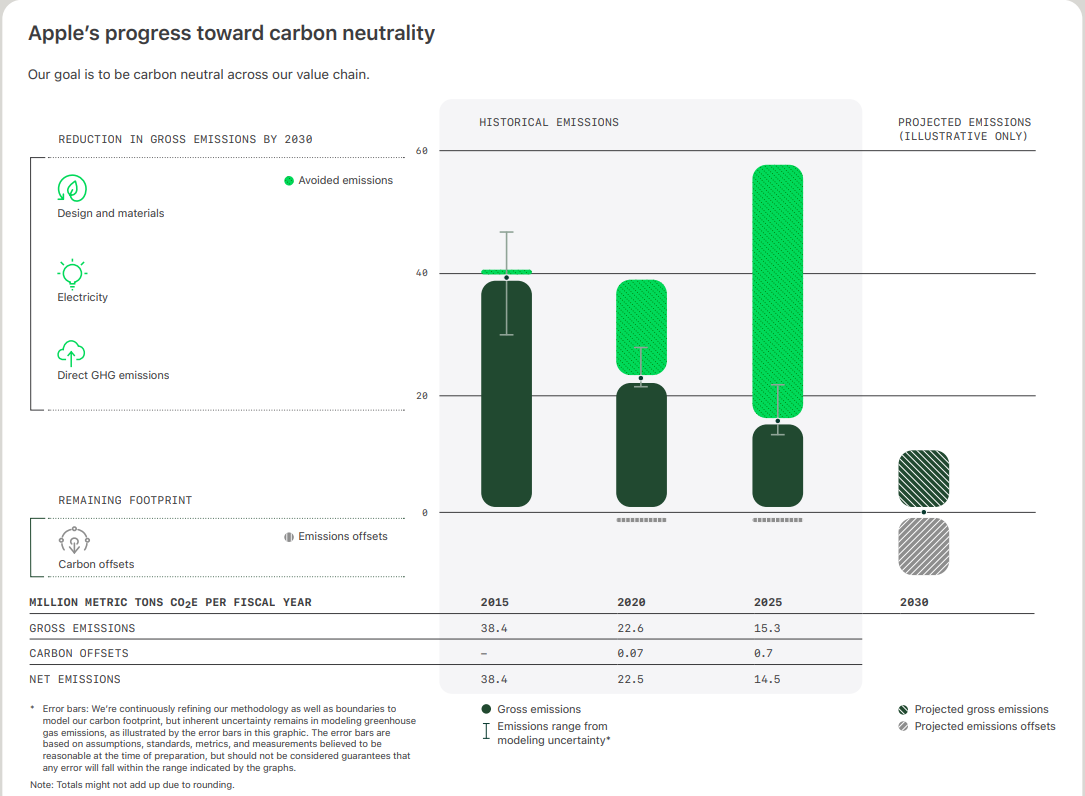
Apple aims to be carbon neutral in its business, manufacturing, and product life cycle by 2030. The company reports that over 75% of its carbon emissions come from making products, also called Scope 3 emissions. So, decarbonizing suppliers is key to meeting its climate goals.
Apple announced that its global greenhouse gas emissions have dropped by over 55% since 2015. This decrease happened while revenue and product shipments grew.
To speed up reductions, Apple started its Supplier Clean Energy Program. This program encourages manufacturing partners to switch to renewable energy. Over 320 suppliers worldwide have joined the program, based on Apple’s recent environmental report.
Together, these suppliers have committed to using 100% renewable electricity for Apple production. Several Apple suppliers in India are already participating.
The company has also increased the use of recycled materials in products and packaging. Apple reports that many new products now use recycled rare earth materials, aluminum, and cobalt in batteries.
In addition, the company aims to reduce emissions through:
- Lower-carbon shipping methods,
- Energy-efficient product design,
- Reduced packaging materials, and
- Expanded recycling systems.
These efforts form part of Apple’s broader environmental roadmap leading to 2030.
India’s Renewable Energy Boom Attracts Global Tech Giants
Apple’s investment also reflects the broader growth of India’s renewable energy sector. India is now one of the world’s fastest-growing clean energy markets. The country has set a target of reaching 500 gigawatts (GW) of non-fossil fuel electricity capacity by 2030.
India’s Ministry of New and Renewable Energy reports that renewable energy capacity has exceeded 190 GW. This includes projects in solar, wind, hydro, and biomass. Solar energy is leading much of the expansion.
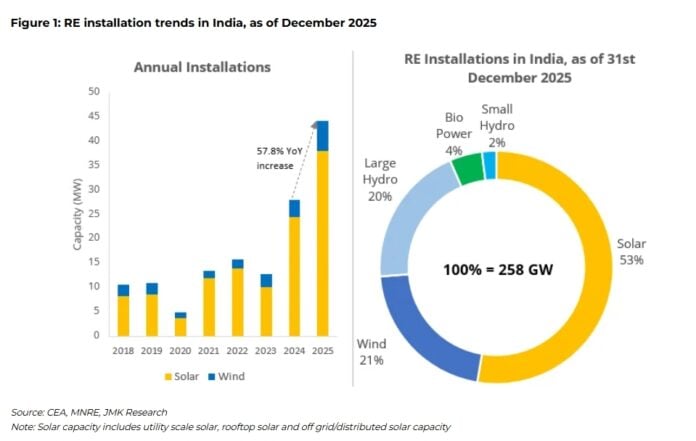
India added a lot of solar capacity in recent years. This happened as costs went down and demand for electricity from companies grew. Major global companies in India are signing more renewable energy deals. This enables them to cut down on emissions.
Meanwhile, electricity demand in India is rising. This is due to economic growth, more industrial activity, urbanization, and the expansion of digital infrastructure.
The International Energy Agency (IEA) expects India to have one of the biggest rises in global electricity demand over the next 10 years, averaging 6.4% annual growth rate through 2030. This creates both opportunity and pressure. The country must expand electricity generation rapidly while also reducing dependence on coal-fired power.
As a result, corporate renewable energy investments are becoming more important in supporting India’s energy transition.
- RELATED: India’s Solar and Renewable Energy Outlook to 2030: Impact of the US-India 18% Tariff Cut on Exports
Tech Companies Increase Focus on Clean Energy Procurement
Apple is not alone in expanding renewable energy investments in India and other emerging markets. Amazon, Google, Microsoft, and Meta are also boosting clean electricity purchases. This change comes as AI, cloud computing, and electronics manufacturing raise global power demand.
These companies are some of the largest buyers of renewable energy in the world. They achieve this through power purchase agreements (PPAs), solar projects, and grid partnerships.
Meanwhile, climate reporting standards are becoming stricter across the European Union, the United States, and Asia. Companies now need verifiable emissions reductions linked to their operations and supply chains.
Apple’s India Strategy Connects Manufacturing and Climate Goals
For Apple, expanding renewable energy access in India supports both its manufacturing growth and long-term climate goals. Its latest investment shows how closely manufacturing expansion and climate strategy are now linked.
India is growing as one of Apple’s top production hubs. However, its coal-heavy power system poses emission challenges for manufacturers. Renewable energy investments are now key to supply chain planning, not just sustainability efforts.
Challenges remain, including rising electricity demand, grid expansion, and energy storage needs. Still, investment momentum continues to grow.
For Apple, the Rs 100 crore investment is small compared to its global spending, but it shows a bigger trend: reliable low-carbon electricity is key for the future of manufacturing and tech infrastructure.