

Singapore and the Philippines have signed a major carbon credit agreement, which could reshape climate finance in Southeast Asia. The deal is the first bilateral carbon credit partnership between the two countries under Article 6 of the Paris Agreement.
The framework will allow Singapore to buy high-quality carbon credits from projects in the Philippines. In return, the projects will receive funding for emissions reduction and climate programs.
The deal shows how international carbon markets are becoming a larger part of global climate policy. Many countries now use carbon credits to help meet net-zero goals. The credits also help fund clean energy, forest restoration, and climate adaptation projects.
Southeast Asia will likely be one of the fastest-growing regions for these investments. This is due to its abundant renewable energy resources and natural carbon sinks.
Inside the Landmark Singapore-Philippines Climate Deal
Singapore and the Philippines both say the agreement will support emissions cuts while creating economic and environmental benefits. Grace Fu, Singapore’s Minister for Sustainability and the Environment and Minister-in-charge of Trade Relations, said:
“Singapore and the Philippines share a strong and longstanding partnership… This Agreement will deepen collaboration between our two countries, channel climate finance towards impactful projects in the Philippines, and unlock new opportunities in carbon markets for businesses and local communities.”
Juan Miguel T. Cuna, the Philippines’ Department of Environment and Natural Resources Secretary, remarked:
“The signing of our Implementation Agreement marks a significant step forward in our shared pursuit of a low-carbon and climate-resilient future for our region…For the Philippines, entering into this Implementation Agreement under Article 6.2 is a strategic decision – one grounded in our national priorities, our development aspirations, and our commitment to global climate action.”
The deal creates a legal framework for cross-border carbon credit trading under Article 6.2 of the Paris Agreement. Article 6 allows countries to cooperate on emissions reductions by transferring carbon credits between nations. These credits are called “internationally transferred mitigation outcomes” or ITMOs.
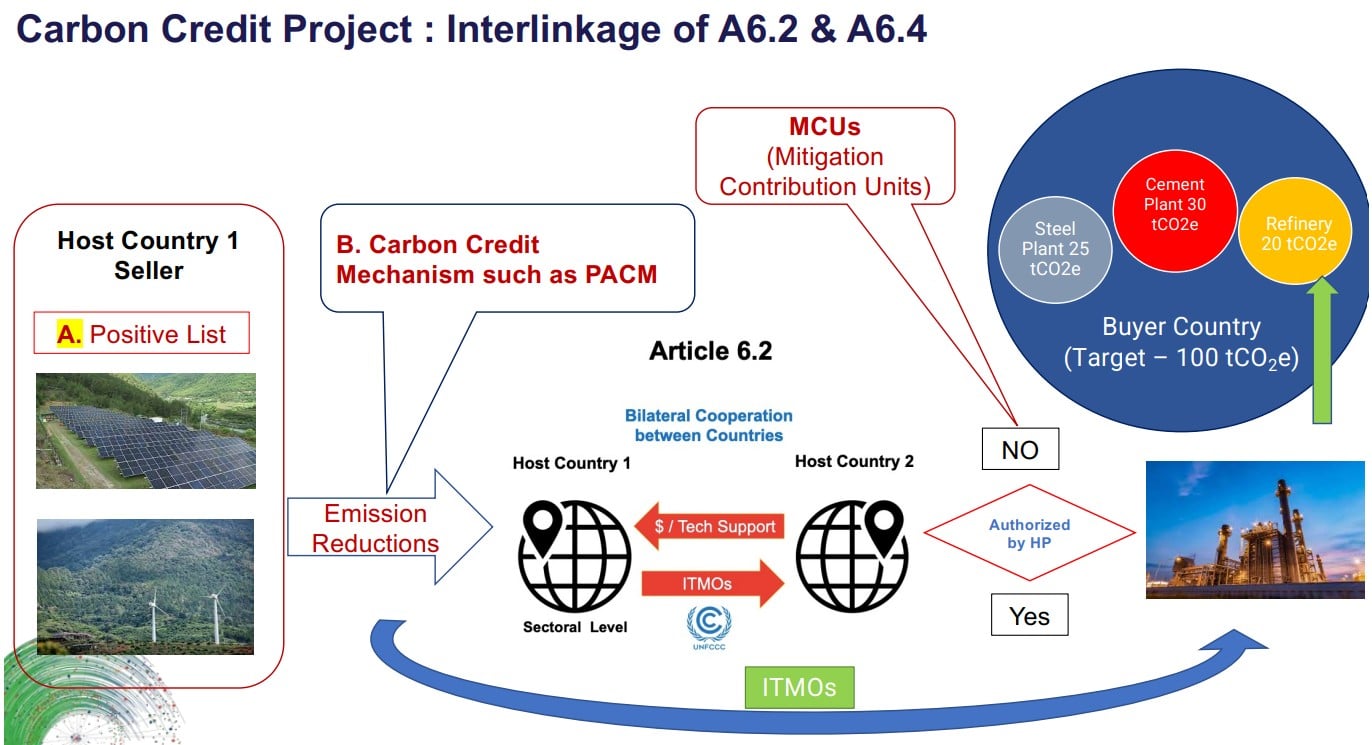
Under the agreement, Singapore-based companies can buy carbon credits from approved projects in the Philippines. These projects can include:
- Renewable energy,
- Mangrove restoration,
- Reforestation,
- Waste management, and
- Other actions that cut or eliminate greenhouse gas emissions.
The Philippine government will authorize selected projects. It will also oversee environmental safeguards and emissions accounting rules.
Singapore’s Ministry of Trade and Industry said this deal will diversify the country’s decarbonization strategy. It will also support climate action in the region.
This is Singapore’s sixth Article 6 agreement. The country already has similar partnerships with Ghana, Papua New Guinea, Bhutan, Peru, and Chile.
Singapore Is Expanding Its Carbon Market Strategy
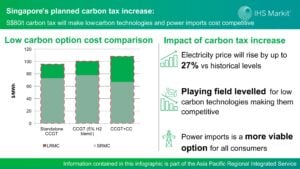
Singapore has become one of Asia’s largest carbon market hubs. The country introduced Southeast Asia’s first national carbon tax in 2019. The tax applies to large facilities that produce at least 25,000 tonnes of greenhouse gas emissions each year.
The Asian nation plans to raise the carbon tax from S$25 per tonne today to between S$50 and S$80 per tonne by 2030. To help companies manage costs, Singapore allows businesses to use eligible international carbon credits to offset up to 5% of taxable emissions.
That policy is increasing demand for high-quality carbon credits across Asia.
Singapore has also committed to reaching net-zero emissions by 2050. The government says carbon markets will help with other climate tools. These include renewable energy, energy efficiency, and low-carbon technologies.
The country faces significant energy constraints due to its small land area. Singapore imports most of its energy and has limited space for large solar or wind projects. Because of this, international carbon markets are becoming more important to its climate strategy.
Singapore is also trying to become a global center for carbon trading and climate finance. The country already hosts several large carbon credit exchanges and climate finance firms. These include Climate Impact X. It’s a global carbon marketplace supported by DBS Bank, Singapore Exchange, Standard Chartered, and Temasek.
Why the Philippines Could Become a Major Carbon Credit Supplier
For the Philippines, the agreement could bring new foreign investment into climate and environmental projects. The country is highly vulnerable to climate change. The World Risk Index shows that the Philippines often ranks among the world’s most disaster-prone countries. This is due to typhoons, floods, and rising sea levels.
At the same time, the Philippines has strong renewable energy and nature-based carbon potential. The country has one of the world’s largest geothermal industries. It also has major opportunities in solar, wind, mangrove restoration, and tropical forestry.
According to the Department of Energy, the Philippines aims to increase the renewable energy share of its power mix to 35% by 2030 and 50% by 2040.
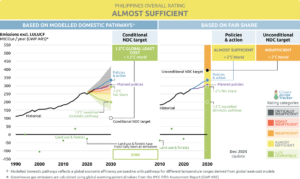
The government aims to cut greenhouse gas emissions by up to 75% by 2030. This goal is part of its Nationally Determined Contribution. However, much of that target depends on international financial support.
Carbon finance could help support those goals. Carbon market projects can create jobs, boost biodiversity, restore forests, and enhance climate resilience. Nature-based projects are expected to play a major role here.
The Philippines has vital mangrove and tropical forest ecosystems. These ecosystems absorb a lot of carbon dioxide. Mangroves are especially valuable because they store carbon more efficiently than many land forests.
Carbon Markets Are Expanding Across Southeast Asia

Carbon Finance Is Becoming Central to Net-Zero Strategies
The Singapore-Philippines agreement shows how carbon markets are becoming more connected to national climate strategies. The deal could also help increase climate finance flows into Southeast Asia. International carbon markets could help provide additional funding alongside public and private investments.
For Singapore, the agreement strengthens its position as a regional climate finance hub.
For the Philippines, this could attract new investment in renewable energy, forestry, and climate resilience projects. It would also help meet the country’s long-term emissions goals.
More importantly, the partnership reflects a larger global trend. Carbon markets are shifting from small pilot systems to larger, government-backed frameworks. These new systems connect directly to national net-zero goals and international climate efforts.