

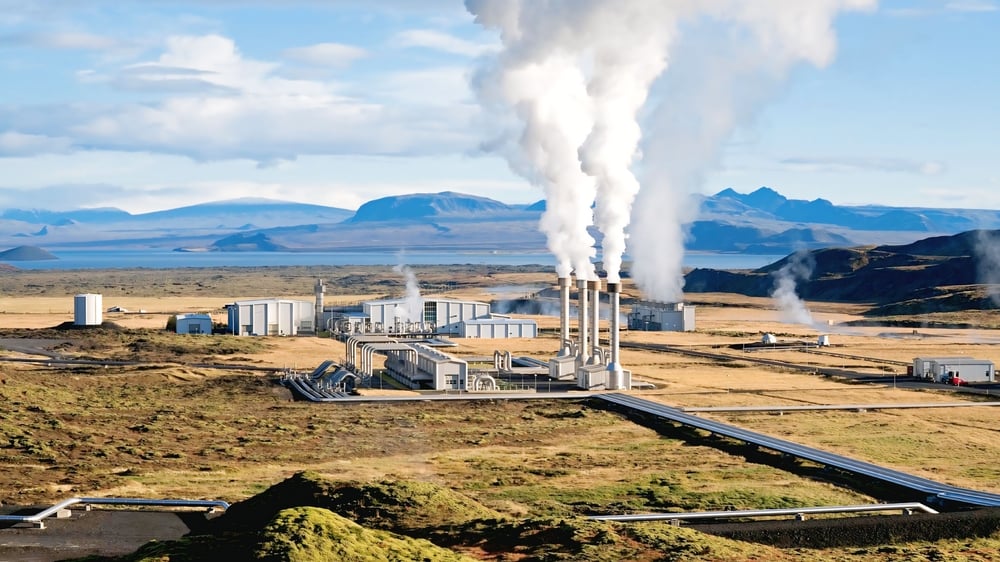
Geothermal energy is moving into the spotlight. Fervo Energy, a U.S. geothermal developer backed by major investors including Google, is preparing to raise up to $1.33 billion in one of the biggest clean energy initial public offerings (IPOs) of 2026. The company is targeting a valuation of as much as $6.5 billion as demand for reliable carbon-free electricity rises rapidly.
The planned public offering comes at a time when electricity markets are changing quickly. Artificial intelligence (AI), data centers, electric vehicles, and industrial electrification are driving power demand up in the U.S. That shift is creating new interest in energy sources that can operate around the clock.
Unlike solar and wind power, geothermal systems can generate electricity 24 hours a day, regardless of weather conditions. Reliability is becoming more valuable. Utilities and tech companies are looking for stable, clean power.
Fervo believes geothermal could become a major part of the next-generation energy system. Its SEC filing states:
“Fervo is working to build a different type of energy company—one that treats each geothermal power facility as a repeatable product, not a one-off, complicated project. We intend to deliver power in standardized, 50-megawatt ORC units, relentlessly reducing complexity with every well drilled and every turbine installed. With few locational constraints on our subsurface operations, we can develop sites to multi-gigawatt sites, harnessing learning curves to drive continuous improvement and make geothermal cheaper than it has ever been.”
Geothermal Is Gaining Momentum Again
Geothermal energy has been around for decades. It usually needs special geological conditions, like volcanic areas or natural steam reservoirs. Fervo is trying to change that.
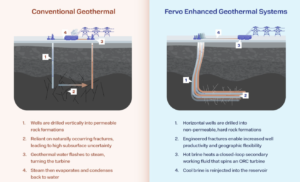
The company uses enhanced geothermal systems, also known as EGS. The technology uses horizontal drilling and hydraulic fracturing from the oil and gas industry. This helps access underground heat in many more places. This could dramatically expand geothermal development across the United States and other countries.
Fervo also uses fiber optic sensing and AI-enhanced monitoring tools to improve underground drilling precision and efficiency. The company says these technologies can help lower costs while making geothermal systems easier to scale.
Its flagship project is Cape Station in Utah. Fervo expects it to become the world’s largest next-generation geothermal development once completed. The project is scheduled to begin delivering electricity later this year.
According to company filings, Cape Station could eventually reach 500 megawatts of capacity. That would be enough electricity to power hundreds of thousands of homes. The company also revealed it has over 3.6 gigawatts of geothermal projects. These are in construction, development, or advanced planning stages.
AI Data Centers Are Reshaping Electricity Demand
Investors are increasingly focused on geothermal energy. This is largely due to the fast growth of artificial intelligence infrastructure.
AI data centers require enormous amounts of electricity. Unlike some industrial facilities, they also need highly reliable power every hour of the day. This is creating strong demand for “firm” clean electricity that can operate continuously.
Solar and wind remain important growth industries, but they depend on weather conditions. Geothermal systems offer stable baseload electricity like natural gas and nuclear power, without producing direct carbon emissions.
Rising electricity demand from AI data centers, electric vehicles, and domestic manufacturing growth is helping support investor interest in Fervo’s IPO.
Technology companies are already moving into the sector. Google previously partnered with Fervo on “Project Red” in Nevada and later joined the company’s major funding round in 2025.
Industry analysts say AI could become one of the largest new electricity demand drivers in decades. The International Energy Agency recently warned that electricity use by data centers might spike by 2030. This surge is linked to the growing adoption of AI worldwide.

That trend is changing how energy markets think about reliability.
Wall Street Bets Big on a $1.3 Billion Climate-Tech IPO
Fervo’s IPO is also part of a wider investment surge into advanced energy technologies. In December 2025, the company secured $462 million in private funding. Investors included B Capital, Breakthrough Energy Ventures, Devon Energy, and Google.
That funding round brought Fervo’s total equity and debt financing to roughly $1.5 billion since its founding in 2017. Now the company is preparing for an even larger capital raise through public markets under the FRVO ticker.
According to its SEC filing, Fervo plans to offer 55.6 million shares priced between $21 and $24 per share. If shares price is at the top of the range, the company could raise about $1.33 billion.
Several major institutional investors have already expressed interest in purchasing up to $350 million worth of IPO shares. These include Norges Bank Investment Management, Wellington Management, Capital Research, and Atlas Point Energy Infrastructure Fund.
Wall Street is closely watching the offering.
Recent climate technology IPOs struggled after the clean energy market slowdown of 2022 and 2023. But stronger electricity demand and renewed infrastructure investment are helping improve investor confidence again.
Axios described Fervo’s IPO as an important test for the broader climate-tech market.
Geothermal Moves From Niche to Mainstream Energy Play
The geothermal market is small compared to solar and wind energy. However, many forecasts expect strong growth ahead.
According to the International Energy Agency, geothermal currently provides less than 1% of global electricity generation. However, advanced geothermal systems could expand the technology far beyond traditional geothermal regions.
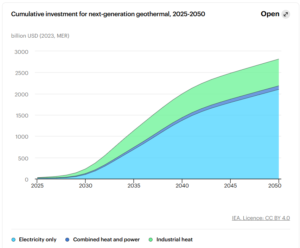
The U.S. Department of Energy estimates that enhanced geothermal systems could produce over 90 gigawatts of electricity in the U.S. under the right conditions. That would represent a major increase from today’s geothermal capacity.
Several trends are supporting that growth:
- Rising electricity demand,
- AI data center expansion,
- Industrial electrification,
- Energy security concerns,
- Decarbonization targets, and
- Need for stable renewable power.
Governments are also increasing support. The United States included geothermal incentives in the Inflation Reduction Act. Europe and parts of Asia are also exploring geothermal development as part of broader energy security strategies.
Why Investors Are Racing Into Next-Gen Geothermal
Fervo says its technology can help reduce emissions while supporting grid reliability. That matters because many countries and corporations now have net-zero targets.
The United States aims to achieve net-zero emissions by 2050. Major technology firms including Google, Microsoft, Amazon, and Meta are also pursuing aggressive climate goals. Many companies are finding that hitting those targets needs more than just occasional renewable energy.
Reliable low-carbon power is becoming increasingly important. Fervo’s geothermal systems provide continuous, carbon-free electricity. This helps reduce reliance on fossil fuels for backup power.
At the same time, geothermal projects usually need less land than big solar or wind farms. Supporters say this could make geothermal an attractive complement to other renewable energy systems.
The Energy Transition Enters a Reliability-First Era
Fervo’s planned IPO reflects a broader shift happening across energy markets. For years, most clean energy investments focused heavily on solar panels, wind turbines, and electric vehicles.
Now investors are increasingly looking at technologies that can support round-the-clock electricity demand. That includes geothermal, nuclear power, battery storage, and upgraded electricity grids.
That is helping reshape clean energy investment priorities. Fervo’s IPO arrives at a time when markets are beginning to place a higher value on reliability, not just renewable generation capacity.
If successful, the offering could become one of the most important geothermal financing milestones in years. It may also help determine whether geothermal energy can finally move from a niche technology into a larger part of the global clean energy system.