

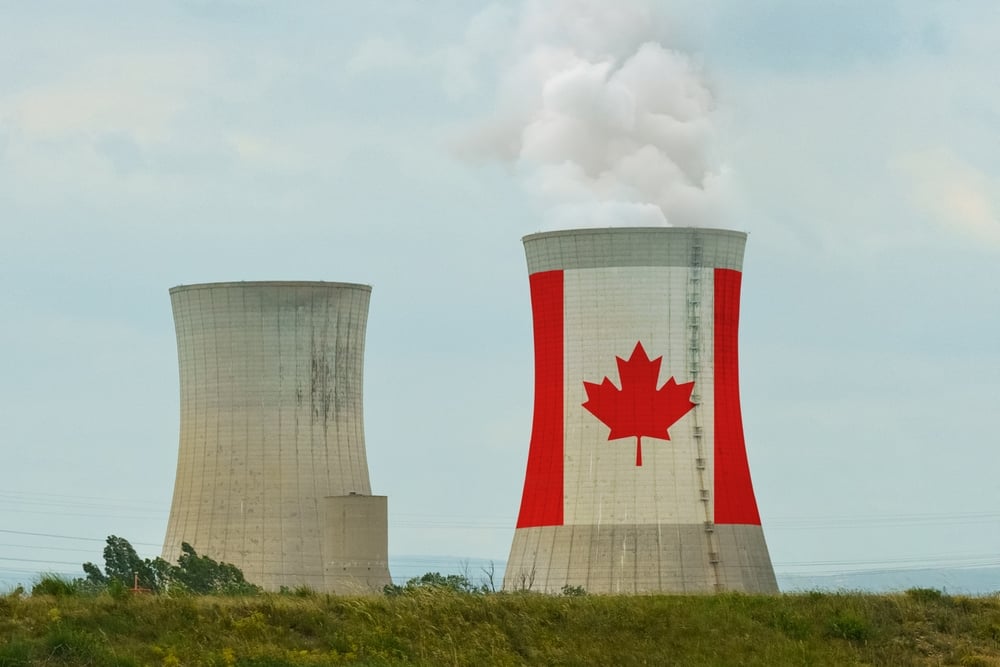
Canada is making a major new push into clean energy and climate finance. The federal government recently announced plans for a new national nuclear energy strategy. At the same time, it pledged C$13 billion ($9.4 billion) in international climate finance as part of its latest economic update.
These actions show how Canada aims to boost its role in the global clean energy shift. They also focus on enhancing energy security and industrial strength.
The announcements come as countries around the world increase spending on clean electricity, low-carbon industries, and climate infrastructure. Governments are racing for energy independence. This need grows as electricity demand surges from electric vehicles, artificial intelligence, and industrial electrification.
Canada wants to play a larger role in that future economy.
Canada Plans a New Nuclear Energy Strategy
The Canadian government says it will release a new Nuclear Energy Strategy before the end of 2026. The strategy will be led by Natural Resources Canada and will focus on expanding the country’s nuclear sector.
Energy and Natural Resources Minister Tim Hodgson announced the plan during the Canadian Nuclear Association conference. He stated:
“Canada has long been a nuclear leader — but we will not remain one by standing still. Our government is moving at speeds not seen in generations to get big things done, and nuclear energy is no exception. We must move urgently and strategically to remain at the forefront of innovation, working shoulder to shoulder with key partners to bring clean electricity, affordable bills and economic growth and security to all Canadians.”
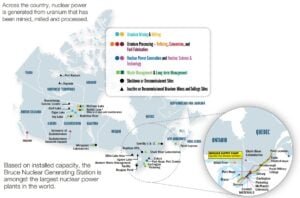
Officials said the strategy will build on Canada’s strong background in nuclear technology. This includes CANDU reactor systems, uranium production, skilled workers, and nuclear safety rules.
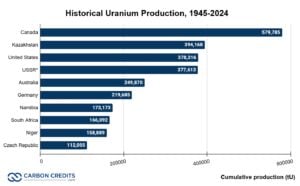
Canada is already one of the world’s largest uranium producers. According to the World Nuclear Association, the country supplied about 15% of global uranium output in recent years. Saskatchewan alone holds some of the world’s highest-grade uranium deposits, contributing around C$2.6 billion to Canada’s economy in 2024.
The government believes nuclear power can help Canada meet rising electricity demand while also cutting emissions. That demand is expected to grow quickly.
Currently, nuclear power supplies about 13% of the country’s electricity, generated by 17 CANDU reactors located in Ontario and New Brunswick.
Canada’s latest economic update says electrification could double in the next few decades. This will happen as more sectors move away from fossil fuels. Nuclear energy is becoming part of that solution.
- RELATED: Canada Approves First Uranium Mine in 20 Years as Tech Giants Eye Nuclear Fuel for AI Power
Why Small Modular Reactors Are Becoming Canada’s Big Bet
One major area of focus is small modular reactors, also known as SMRs. These smaller nuclear reactors aim to provide low-carbon electricity and heat. They are useful in remote areas, industrial sites, and smaller grids. Many countries now see SMRs as an important future clean energy technology.
Canada has been actively developing SMR projects for several years.
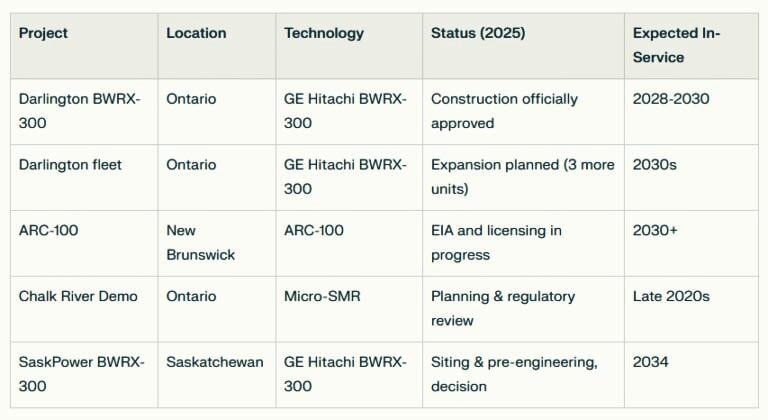
Ontario Power Generation is building a GE Hitachi BWRX-300 small modular reactor at the Darlington nuclear site in Ontario. It could become one of the first grid-scale SMRs in the G7. According to the Canadian government, the project could create thousands of jobs and support domestic supply chains. Below are some of the key project SMR projects and their timelines:
The government also announced C$40 million to explore whether microreactors can power remote military bases and northern operations. These reactors are even smaller than SMRs and could replace diesel generators in isolated regions.
- Canada sees nuclear energy as both an economic and climate opportunity.
The nuclear sector contributes about C$22 billion to GDP each year. It also supports around 89,000 jobs, based on industry estimates. Officials think that new reactor projects, uranium mining, fuel processing, and nuclear exports may boost the economy even more.
Climate Finance Commitment Reaches C$13 Billion
Alongside its nuclear strategy, Canada pledged C$13 billion for international climate finance over five years. This commitment comes alongside its nuclear strategy in the latest economic update.
The funding aims to help developing countries. It supports them in reducing emissions, building climate resilience, and investing in clean technologies.
Climate finance has become a major issue in global climate policy. Developing economies often say they can’t transition fast enough without help from richer countries.
Canada states that the funding will help create new markets for clean technologies. It will also attract private investment into climate projects. Several climate policy groups welcomed the announcement.
Rick Smith, president of the Canadian Climate Institute, said the funding could help lower emissions globally while supporting Canadian clean technology industries.
The pledge also aligns with broader international climate goals. At the COP29 climate summit, developed nations faced increasing pressure to scale up climate finance commitments for emerging economies. The United Nations says developing countries might need trillions for climate investments by 2030.
Canada Wants to Strengthen Its Clean Energy Economy
Prime Minister Mark Carney’s government is also trying to position Canada as a stronger clean energy and industrial investment destination. The economic update included several other measures tied to energy, infrastructure, and industrial policy.
Canada recently announced plans for a sovereign-style investment vehicle called the Canada Strong Fund. It will start with an initial C$25 billion commitment. The fund will invest in private companies in big national projects. These projects will focus on energy, mining, infrastructure, agriculture, and technology.
The government is also investing in skilled trades training. Nearly C$6 billion will train and hire up to 100,000 skilled workers by 2030. This effort aims to support major infrastructure and resource projects. Officials say these investments are necessary because energy systems are changing rapidly.
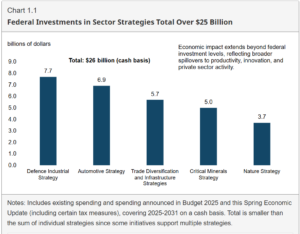
Canada’s electricity demand will likely grow. This is due to the rise of electric vehicles, hydrogen projects, battery manufacturing, and clean industries. At the same time, global competition for energy investment is becoming more intense.
The United States continues to offer major subsidies through the Inflation Reduction Act. Europe is increasing its renewable energy spending. China remains dominant in batteries, solar manufacturing, and critical minerals processing.
Canada does not want to fall behind.
Nuclear Power Is Becoming Part of Net-Zero Planning
Canada has committed to reaching net-zero emissions by 2050. To meet that target, the country will need large amounts of low-carbon electricity.
Hydropower already provides much of Canada’s electricity supply. However, experts say renewables alone may not fully meet future industrial and grid needs. Nuclear energy could help provide stable electricity when solar and wind output changes.
That is why Canada is placing nuclear energy back at the center of long-term planning. The government believes nuclear power can support economic growth while also lowering emissions from heavy industries, transport, and buildings.
At the same time, Canada’s climate finance pledge shows the country is also trying to strengthen its international climate role. Together, the two announcements show a broader shift in energy policy.
Clean energy is no longer viewed only as an environmental issue. Governments increasingly see it as a matter of economic security, industrial competitiveness, and geopolitical strategy.