

Uranium Energy Corporation (NYSE: UEC) has started production at its Burke Hollow project in South Texas. This is the first new uranium mine to open in the U.S. in over ten years.
The project started production in April 2026 after getting final regulatory approval. This marks a big step for domestic uranium supply. It’s also the world’s newest in-situ recovery (ISR) uranium mine, which shows a move toward less harmful extraction methods.
Burke Hollow was originally discovered in 2012 and spans roughly 20,000 acres, with only about half of the site explored so far. This suggests significant long-term expansion potential as additional wellfields are developed.
The mine’s output will go to UEC’s Hobson Central Processing Plant in Texas. This plant can produce up to 4 million pounds of uranium each year.
A Scalable ISR Platform Expands U.S. Uranium Capacity
The Burke Hollow launch transforms UEC into a multi-site uranium producer in the United States. The company runs two active ISR production platforms. The second one is at its Christensen Ranch facility in Wyoming; both are shown in the table from UEC.
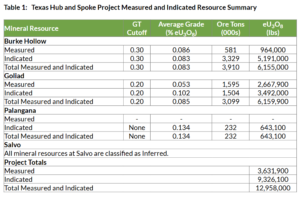
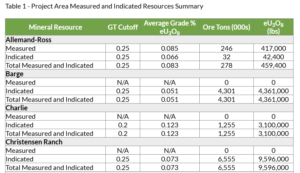
This “hub-and-spoke” model allows uranium from multiple wellfields to be processed through centralized facilities, improving efficiency and scalability. UEC’s operations in Texas and Wyoming are now active. This gives them a licensed production capacity of about 12 million pounds per year across the U.S.
ISR mining plays a key role in this strategy. Unlike conventional mining, ISR involves circulating solutions underground to dissolve uranium and pump it to the surface. This reduces surface disturbance and can lower environmental impact compared to open-pit or underground mining.
Burke Hollow is the largest ISR uranium discovery in the U.S. in the last ten years. This boosts its long-term value as a domestic resource.
Unhedged Strategy Pays Off as Uranium Prices Rise
UEC’s production launch comes at a time of strong uranium market conditions. The company uses a fully unhedged strategy. This means it sells uranium at current market prices instead of securing long-term contracts.
This approach has recently delivered strong financial results. In early 2026, UEC sold 200,000 pounds of uranium for $101 each. This price was about 25% higher than average market rates. The sale brought in over $20 million in revenue and around $10 million in gross profit.
The strategy allows the company to benefit directly from rising uranium prices, which have been supported by:
- Growing global nuclear energy demand
- Supply constraints in key producing regions
- Increased long-term contracting by utilities
Unhedged exposure raises risk in downturns, but offers more upside in strong markets. UEC is currently taking advantage of this.
Nuclear Energy Growth Is Driving Demand for Uranium
The timing of Burke Hollow’s launch aligns with a broader global shift back toward nuclear energy. Governments are increasingly turning to nuclear power as a reliable, low-carbon energy source.
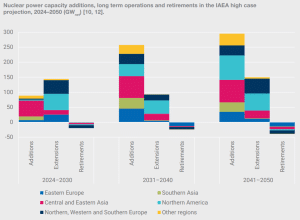
The International Atomic Energy Agency projects that global nuclear capacity could double by 2050, depending on policy and investment trends. This would require a significant increase in uranium supply.
In the United States, nuclear energy accounts for around 20% of electricity generation. It also produces zero carbon emissions during operations. This makes it a key component of many net-zero strategies.
There are several factors supporting renewed nuclear demand, including:
- Development of small modular reactors (SMRs)
- Extension of existing nuclear plant lifetimes
- Government funding to maintain nuclear capacity
- Rising electricity demand from data centers and electrification
As demand grows, securing a reliable uranium supply becomes increasingly important.

Reducing Import Risk: A Strategic Domestic Supply Push
The Burke Hollow project also addresses a major vulnerability in U.S. energy policy. The country currently imports about 95% of its uranium needs, leaving it exposed to global supply risks.
A large share of uranium production and enrichment capacity is concentrated in a few countries, including Russia and Kazakhstan. This concentration has raised concerns about supply disruptions and geopolitical risk.
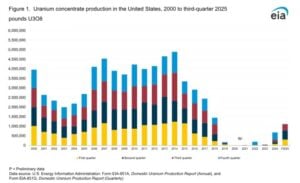
By expanding domestic production, UEC is helping to reduce reliance on imports and strengthen the U.S. nuclear fuel supply chain.
The company’s broader strategy includes building a vertically integrated platform covering mining, processing, and, eventually, uranium conversion. This approach aligns with U.S. government efforts to rebuild domestic nuclear fuel capabilities.
Federal programs have allocated billions to boost uranium production and enrichment. This shows how important the sector is.
Two Hubs, One Strategy: Wyoming Supports the Texas Breakthrough
While Burke Hollow is the main focus, UEC’s Christensen Ranch operation in Wyoming remains an important part of its production base.
The Wyoming site has recently received approvals for expanded wellfield development, allowing it to increase output alongside the Texas operation.
Together, the two sites form the foundation of UEC’s dual-hub production model. However, it is the Texas project that marks the first new U.S. uranium mine in over a decade, making it the central milestone in the company’s growth strategy.
Investor Momentum Builds Around Uranium Revival
The restart of U.S. uranium production is drawing strong attention from investors and industry players. Uranium markets have tightened in recent years, driven by rising demand and limited new supply.
UEC’s production launch has already had a positive market impact. The company’s share price rose following the announcement, reflecting investor confidence in its growth strategy.
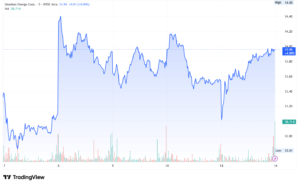
At the same time, utilities are increasing long-term contracting activity to secure fuel supply. This trend is expected to continue as new nuclear capacity comes online and existing plants extend operations.
Industry forecasts suggest that uranium demand will remain strong through the 2030s, supporting higher prices and increased investment in new production.
Lower Impact Mining, Higher ESG Expectations
The use of ISR mining at Burke Hollow reflects a broader shift toward more sustainable extraction methods. ISR typically reduces land disturbance and avoids large-scale excavation.
However, environmental management remains critical. Key issues include groundwater protection, chemical use, and long-term site restoration.
UEC has emphasized environmental controls and regulatory compliance in its operations. These efforts are important for maintaining social license and meeting ESG expectations.
From a climate perspective, uranium production plays an indirect but important role. Supporting nuclear energy, it helps enable low-carbon electricity generation and reduces reliance on fossil fuels.
The Bottom Line: A Defining Moment for U.S. Uranium Production
The launch of the Burke Hollow mine marks a major milestone for the U.S. uranium sector. It ends a decade-long gap in new mine development and signals renewed momentum in domestic production.
In the short term, it strengthens supply and supports rising uranium markets. In the long term, it highlights the growing role of nuclear energy in global decarbonization strategies.
UEC’s Burke Hollow shows that new uranium projects can advance in today’s market. There are still challenges, like scaling production and handling environmental risks, but progress is possible.
As demand for nuclear energy continues to grow, domestic projects like Burke Hollow will play a key role in shaping the future of energy security and low-carbon power.