

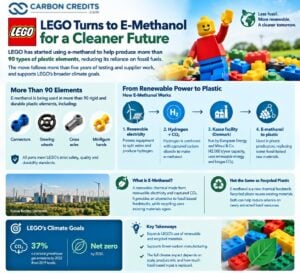
LEGO is turning to a renewable chemical to reduce its reliance on fossil fuels. The toy maker has started using e-methanol to help produce more than 90 types of plastic elements, including connectors, steering wheels, cross axles, and the hands of its famous minifigures.
The move marks a new step in LEGO’s effort to use more renewable and recycled materials. The company says the change follows more than five years of testing and work with suppliers to bring e-methanol into its manufacturing process.
The material offers an alternative to fossil-based ingredients used to make plastic. However, LEGO is not replacing all conventional plastic at once. The new material enters a shared production process where renewable and fossil-based sources are mixed.
The move comes as companies look for ways to cut emissions from materials that are difficult to replace. It also supports LEGO’s wider climate goals: cutting its total greenhouse gas emissions by 37% by 2032, compared with 2019, and reaching net zero by 2050.
LEGO Starts Using E-Methanol in More Than 90 Elements
LEGO’s new material is being used in more than 90 rigid and durable elements. These include small parts that connect pieces, steering wheels, cross axles, and minifigure hands.
These parts may be small, but making them requires plastic materials that meet strict safety and quality standards. LEGO products are made for repeated use. So, any new material needs to have the strength and durability LEGO demands.
The company noted in its release:
“This marks the latest step on our journey to increase the recycled and renewable materials we purchase to make Lego products, without compromising on safety, quality or durability.”
E-methanol gives LEGO another way to reduce its use of virgin fossil-based materials. Virgin fossil materials are made from newly extracted oil or gas rather than recycled or renewable sources. The company has not disclosed how many tonnes of e-methanol it will use, the share of each product made from it, or the expected emissions savings from this first rollout.
That makes the announcement an important manufacturing step, but not yet proof of a specific reduction in LEGO’s total emissions. The wider impact will depend on how quickly the company can increase its use of the material and how much fossil-based input it replaces.
From Renewable Power to Plastic: How E-Methanol Works
E-methanol is a form of methanol made using renewable electricity and captured carbon dioxide (CO₂). Methanol is a chemical used to make many products, including plastics and industrial materials.
The process begins with renewable electricity, which powers equipment that splits water to produce hydrogen. That hydrogen is then combined with captured CO₂ to make methanol.
LEGO’s e-methanol comes from the Kassø facility in southern Denmark. Developed by European Energy and operated with Japanese trading company Mitsui & Co., the plant began commercial production in 2025. The facility has an annual production capacity of 42,000 tonnes and runs on renewable energy. It uses CO₂ from a biogas facility as a key input.
The methanol can then be used to make plastic materials, replacing some of the fossil-based raw materials normally used in production. However, e-methanol is not the same as recycled plastic. It provides an alternative chemical feedstock, while recycling uses existing materials again. Both approaches can help reduce reliance on newly extracted fossil resources.
The climate benefits also depend on how the material is produced. Renewable electricity, the source of captured carbon, manufacturing emissions, and the amount of fossil-based material displaced all affect the final result.
A Shared Production System Helps Scale the Material
One challenge for LEGO is introducing new materials without disrupting its existing factories and supply chains. The company says its e-methanol enters a continuous production process where conventional fossil-based material is also present. This approach allows suppliers to increase the use of renewable inputs within existing production systems.
LEGO uses a method known as mass balance for some recycled and renewable materials. Under this system, suppliers mix certified renewable or recycled sources with conventional fossil-based inputs. They track the amounts entering and leaving the production system.
The approach can help companies increase the use of alternative raw materials without building an entirely separate manufacturing system.
However, it has an important limitation. LEGO cannot guarantee that each part has a specific minimum percentage of renewable or recycled material because the inputs are mixed. Instead, the company tracks the sources and quantities across the supply chain.
This distinction matters when assessing environmental claims. Using renewable feedstocks can reduce the need for fossil resources, but the exact benefit depends on the amount used and the accounting method.
LEGO says the e-methanol rollout is part of its wider effort to increase renewable and recycled materials without compromising product safety, quality, or durability. The toymaker is also using sustainable packaging materials and processes.
LEGO’s Material Shift Supports Its Climate Targets
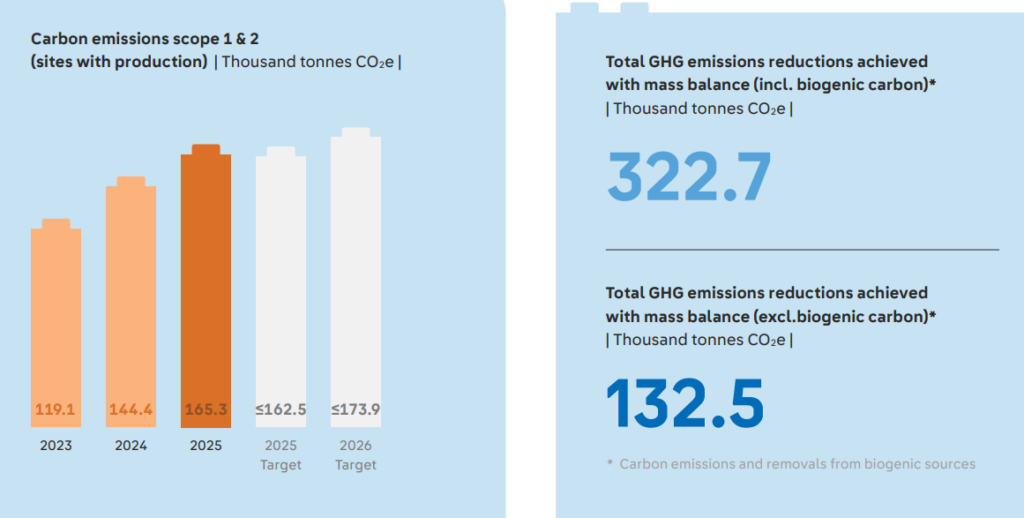
LEGO has set a science-based target to cut its total greenhouse gas emissions by 37% by 2032, compared with a 2019 baseline. It also aims to reach net zero by 2050. The targets cover emissions from its operations and wider value chain, including suppliers.
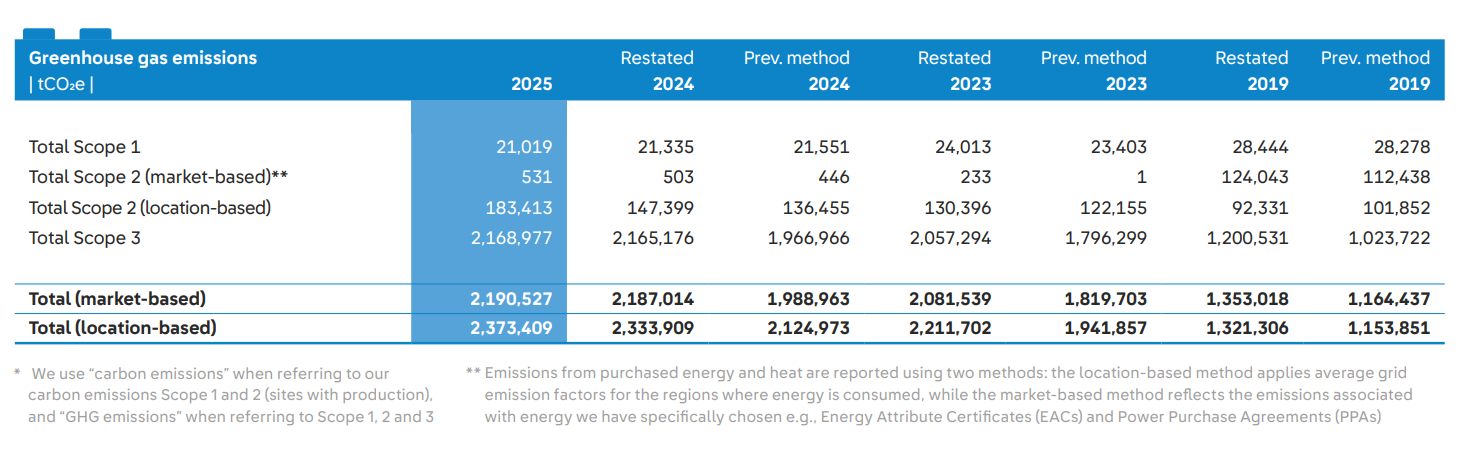
The latest figures show why further action is needed. LEGO reported 2.19 million tonnes of carbon dioxide equivalent (tCO₂e) in total greenhouse gas emissions in 2025. This is a small increase of 0.2% from 2024, based on its market-based reporting method. Most of these emissions came from its wider value chain, classified as Scope 3.
Scope 3 emissions include indirect emissions from activities such as producing purchased materials and transporting goods. These emissions can be harder to reduce because they occur outside a company’s direct control.
LEGO is working with suppliers to lower the impact of the materials it buys. It is also expanding renewable energy use at its factories and improving energy efficiency.
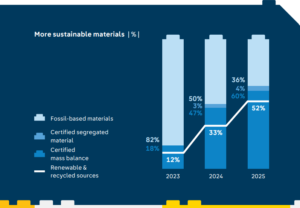
The company reported that 52% of the materials it purchased to make LEGO bricks and elements in 2025 came from recycled and renewable sources. These materials were used in more than 200 different elements, and around half of LEGO sets contained at least one such element. The figure relies largely on the mass-balance approach.
LEGO aims to keep raising that share by 2032, when the company celebrates its 100th anniversary. The e-methanol initiative adds another option alongside other renewable and recycled materials.
E-Methanol Faces a Cost Gap as Global Methanol Output Tops 100 Million Tonnes
LEGO’s move reflects a wider effort to replace fossil-based chemicals with lower-carbon alternatives, but renewable methanol remains a small part of the overall market.
European Energy says more than 100 million tonnes of methanol are produced worldwide each year, mainly using natural gas and coal. The Kassø plant can produce 42,000 tonnes a year. This shows how limited current commercial e-methanol production is compared to traditional supply.
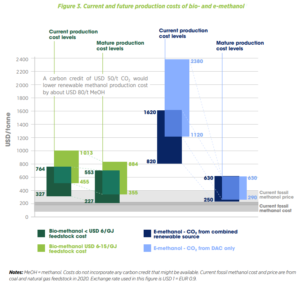
The International Renewable Energy Agency (IRENA) and the Methanol Institute have identified renewable methanol as a potential tool for cutting emissions in chemicals and transport. Their 2021 outlook said production costs were high and output was low. However, costs might decrease as technology and supply chains improve.
The International Energy Agency (IEA) has also warned that renewable fuel growth remains too slow to meet a net-zero pathway. The 2024 outlook predicts that e-fuel use must increase over ten times by 2030. This is necessary to meet the IEA’s Net Zero by 2050 Scenario. This applies to e-fuels broadly, not only e-methanol for plastics.
High production costs, the need for large amounts of renewable electricity, and limited supply remain major barriers. Companies also need clear ways to verify the source of materials and measure emissions savings.
For LEGO, the supply agreement offers access to a commercial source of e-methanol. Demand from manufacturers can boost investment in production capacity. However, the impact will depend on future contracts and prices.
Can Renewable Feedstocks Deliver Measurable Emissions Cuts?
LEGO’s e-methanol rollout will not immediately transform the materials used across its entire product range. The company has not yet announced the volume it will use or the emissions savings expected from the new material.
Still, the initiative shows how manufacturers can begin replacing fossil-based raw materials without redesigning every product or factory at once. The approach may also help suppliers gain experience with renewable feedstocks and improve production systems.
As LEGO works toward its 2032 emissions target and 2050 net-zero goal, e-methanol adds another tool to its materials strategy. Its long-term value will depend on scaling supply, reducing production costs, and proving that renewable inputs deliver measurable emissions cuts.