

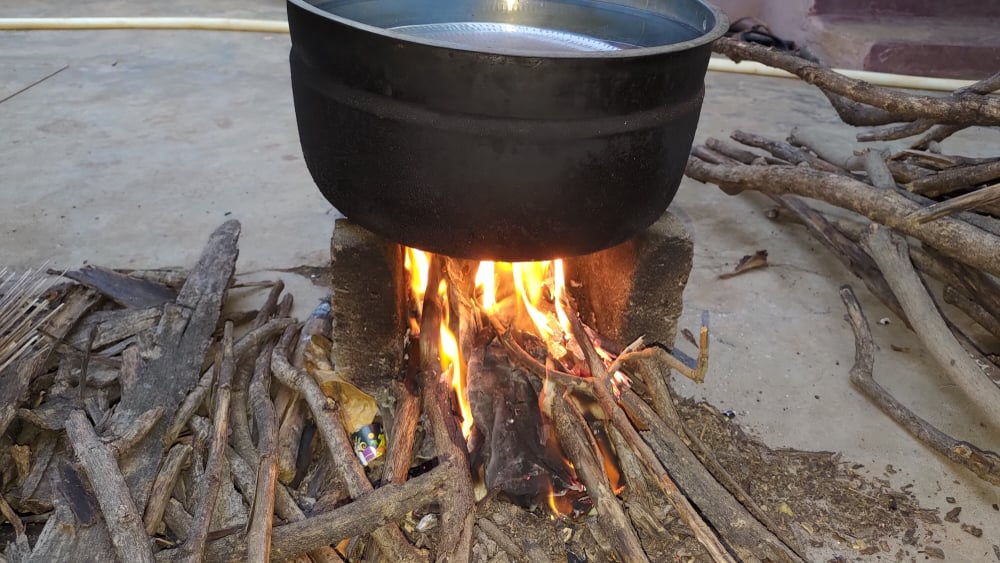
The United Nations has introduced a new safeguard for clean cooking carbon credits. Projects under its Paris Agreement carbon market must now set aside some credits to cover the risk of forest carbon losses. Approved by the Article 6.4 Supervisory Body in October 2026, the rules apply to projects that help households burn less firewood or charcoal, or switch to cleaner cooking fuels.
Under the system, developers must place a share of their credits in a reserve pool instead of selling them all. The reserve covers the risk that trees saved through lower fuelwood use could later be lost to wildfires, drought, logging, or land clearing.
The change comes as clean cooking gains attention as a climate solution and a source of carbon market funding. However, cookstove credits have faced questions about how projects calculate emissions reductions and prove their climate benefits.
The new rules address the risk of losing forest-related benefits over time. They could also reduce the number of credits available for sale and affect project revenues. Mkhuthazi Steleki, Chair of the Supervisory Body, remarked:
“This decision gives cleaner cooking projects a new pathway under the UN carbon market, with clear rules to ensure that each credit represents a real and credible emission reduction. We have a clear mandate from Parties to build a high-integrity mechanism that supports the goals of the Paris Agreement. These methodologies put that mandate into practice, combining pathways for cleaner cooking projects with robust safeguards that support confidence in the mechanism.”
Two UN Methodologies Set New Rules for Clean Cooking
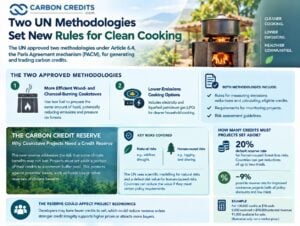
The UN approved two methodologies under Article 6.4, the Paris Agreement mechanism (PACM), for generating and trading carbon credits.
- The first covers more efficient wood- and charcoal-burning cookstoves. These stoves use less fuel to prepare the same amount of food, potentially reducing emissions and pressure on forests.
- The second covers projects that help households move to lower-emissions cooking options, including electricity and liquefied petroleum gas (LPG).
Both methodologies provide rules for measuring emissions reductions and calculating eligible credits. They also establish requirements for monitoring projects and assessing risks.
The methodologies matter because carbon credits can help finance the upfront costs of distributing cleaner cooking equipment. Revenue from credit sales can help expand projects. This is especially important in communities where families struggle to afford new stoves or fuels.
However, credits must represent genuine emissions reductions. If a project overestimates its benefits, it could issue more credits than its activities justify.
Why Cookstove Projects Need a Credit Reserve
The new reserve addresses the possibility that some climate benefits may not last. Using less firewood can reduce pressure on nearby forests. But the resulting forest benefits may be reversed if trees are later destroyed or cleared.
Under the UN rules, projects must contribute a portion of their credits to a common buffer pool. The pool acts as a safeguard against potential losses rather than allowing developers to sell every credit they generate.
The rules distinguish between natural and human-caused risks. Natural risks include events such as wildfires and drought. Human-caused risks include logging and land clearing.
The system uses scientific modelling to assess natural risks. It sets a default risk value for human-caused forest loss. Countries can reduce this value if they meet certain policy requirements.
The reserve does not mean every cookstove credit is expected to fail. Instead, it creates a financial and environmental safeguard against potential losses across projects.
However, the requirement could affect project economics. Developers may have fewer credits to sell, which could reduce revenue unless stronger credit integrity supports higher prices or attracts more buyers.
How Many Credits Must Projects Set Aside?
The reserve requirement varies according to risk and the conditions a project meets. For human-caused forest-loss risks, the rules establish a default reserve rate of 20%.
Countries can get reductions of up to two-thirds. To qualify, they need a forest emissions-reduction plan, a long-term climate strategy, and a REDD+ framework. REDD+ refers to efforts to reduce emissions from deforestation and forest degradation, alongside forest conservation and sustainable management.
A UN source told Climate Home News that improved cookstove projects might need a reserve of at least 9%. This is the case if all policy discounts are applied and risks are low. Projects in higher-risk areas or countries without the required frameworks could face larger deductions.
- Consider a project that generates 100,000 credits. If its reserve requirement is 9%, it would set aside 9,000 credits and have 91,000 available for sale.
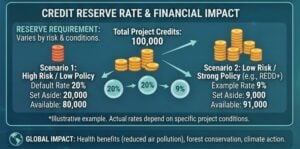
At an illustrative price of $10 per credit, the 9,000 reserved credits would represent $90,000 in potential gross sales revenue. This is an example, not a reported market price, and excludes project costs. The actual financial impact will depend on each project’s reserve rate, credit volume, sale price, and operating costs.
Clean Cooking Has a Large Global Climate Impact
The rules target a major global energy and public-health challenge. The UNFCCC estimates that around 2.1 billion people still cook over open fires or use inefficient stoves and polluting fuels. These practices contribute to household air pollution, fuel consumption, and pressure on forests.
The World Health Organization estimated that household air pollution led to around 2.9 million deaths in 2021. This included over 309,000 deaths of children under five.
Cleaner cooking can help reduce these risks. More efficient stoves use less fuel. Electric cooking lowers household emissions if powered by low-carbon electricity.
The climate benefits depend on the technology, fuel mix, local conditions, and how projects calculate emissions reductions. Switching fuels won’t automatically cut emissions. Developers need to consider the emissions from alternative energy sources.
Carbon finance can help expand access to cleaner cooking equipment, especially where household budgets and infrastructure limit adoption. Projects need reliable monitoring. This shows that the equipment is used correctly and achieves the promised reductions.
Cookstove Credit Controversy Puts Integrity Under the Spotlight
The new rules arrive amid wider debate about the quality of cookstove credits. In February 2026, the UN issued its first credits under Article 6.4 for a clean-cooking project in Myanmar. The project distributes efficient cookstoves intended to reduce firewood use, household air pollution, and pressure on forests.
The issuance marked an important step for the new UN carbon market, but it also drew scrutiny from civil society groups. In October 2026, 130 civil society organizations urged a pause on issuing, transferring, and using credits from the Myanmar project. They want this action until an investigation is complete.
Their concerns are about:
- The accuracy of emissions-reduction calculations,
- Independent verification,
- Human rights, and
- Community safeguards.
Campaigners also cited earlier analyses that estimated the project overstated emissions reductions under previous carbon crediting rules. Some estimates showed over-crediting of about 14 times under the Clean Development Mechanism.
Under Article 6.4, the over-crediting was about seven times. These are estimates cited by campaigners, not established findings that should be treated as settled conclusions.
The controversy highlights a central challenge for carbon markets: credits must reflect reductions that can be measured and independently verified. Stricter rules on forest loss address one problem, but they don’t solve all issues. Concerns about project design, monitoring, and community effects remain.
What the New Rules Mean for Carbon Markets
The reserve adds a safeguard to the UN carbon market but may reduce project revenue by limiting the credits available for sale.
Buyers gain a clearer framework for managing forest-loss risks, while developers with lower reserve requirements can sell more credits. Countries may also be encouraged to strengthen forest protection policies to qualify for lower deductions.
However, the reserve does not resolve all concerns about over-crediting, monitoring, or community safeguards. Its effectiveness will depend on consistent enforcement, transparent reporting, and updated risk assessments.
The challenge is to strengthen carbon-credit integrity while keeping clean-cooking projects financially viable, particularly in lower-income communities that rely on carbon finance.