

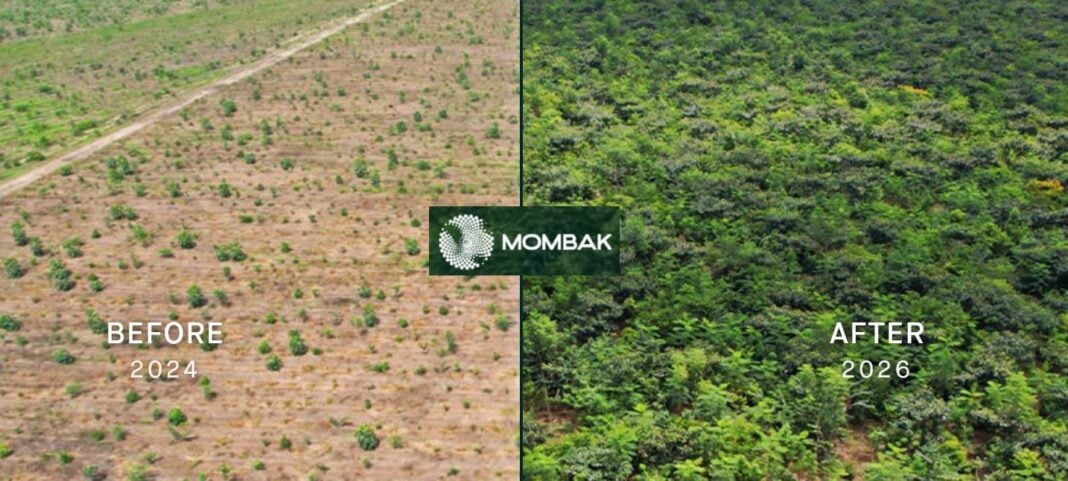
Brazilian carbon removal company Mombak has reached the first close of its second reforestation fund, targeting $150 million to finance restoration projects in the Amazon. At the same time, Mombak has signed a multi-year carbon removal purchase agreement with Salesforce, adding another major corporate buyer to its growing customer base.
The amount raised in the first close was not disclosed. The new fund also has access to a R$200 million credit line, worth about $38.9 million, from Brazil’s Climate Fund, operated by state development bank BNDES.
Mombak has already attracted major buyers including Google, Microsoft and McLaren Racing. The new Salesforce agreement is significant. It brings in another big corporate buyer and comes as demand for better carbon removals grows.
The company is starting its second major funding cycle. It used its first $120 million fund to support restoration in the Brazilian Amazon.
Mombak Opens Its Second $150M Amazon Fund
Mombak’s Amazon Reforestation Fund II will invest in projects that restore degraded land in the Brazilian Amazon. The company did not disclose the size of the first close or the investors involved. Its target is to raise up to $150 million.
The fund also has access to a R$200 million BNDES credit line. The funding comes through Brazil’s Climate Fund, a government climate-finance program managed through BNDES’s lending operations. The fund supports projects that reduce greenhouse gas emissions and help Brazil adapt to climate change.
Mombak could access nearly $189 million in potential capital from the equity fundraising target and credit facility. However, they haven’t raised the full $150 million target yet, and the credit line is debt, not equity.
The new funding comes as Brazil tries to expand forest restoration and attract more private capital into nature-based climate projects.
BNDES announced in June that R$834 million in new Climate Fund projects will help restore over 65,600 hectares. This includes planting more than 108 million native trees and creating over 27,000 green jobs.
Mombak is therefore part of a much wider push to use public finance to bring more private money into Brazilian forest restoration. Gabriel Haddad Silva, CEO of Mombak, noted:
“The market spent years asking whether high-integrity reforestation could actually deliver. We answered that with our first deliveries ahead of schedule. Now, we are scaling our operations, with renewed support from investors, customers and BNDES.”
The First Fund Planted Nearly 15 Million Native Trees
Mombak’s first reforestation fund raised $120 million from investors including an AXA fund, CPP Investments and Bain Capital. The funding supported restoration projects across 15 Amazon farms, where Mombak has planted nearly 15 million native trees.
The company has also begun delivering actual carbon removal credits.
In August, Mombak announced its first issuance of more than 21,000 tonnes of CO2 removals from native, biodiverse reforestation projects in the Amazon. The credits were certified by Isometric using a Core Carbon Principles-approved protocol. They were delivered over two years early.
Early delivery is notable because delivery delays have been a major problem in the voluntary carbon market. It also gives Mombak a track record to show potential investors and buyers before it scales its second fund.
Mombak expects a much larger issuance of about 80,000 tonnes of reforestation carbon removal credits by the end of 2026. These figures are issued or expected credits, not the total amount of carbon that the company’s new fund could eventually generate.
Salesforce Expands Its Carbon Removal Buying
The Salesforce agreement adds another major technology company to Mombak’s buyer base. The company has buyers like Google, Microsoft, and McLaren Racing. Earlier deliveries also went to McKinsey & Company, Bain & Company, Climeworks, Commons, and Union Square Ventures.
The financial value and volume of the new Salesforce agreement were not disclosed.
Salesforce is already an active buyer of carbon removals. Its FY2026 Stakeholder Impact Report says the company contracted 41,000 tonnes of carbon dioxide removal across six different pathways during the year. It also maintained a commitment to compensate for 100% of its annual emissions with high-quality avoidance and removal credits.
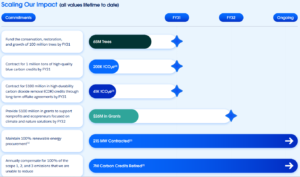
Salesforce’s climate strategy also includes direct emissions cuts. The company saw a 66% drop in Scope 1 and 2 market-based emissions compared to FY2019. It also achieved a 67% reduction in Scope 3 market-based emissions intensity.
That distinction matters. Carbon removals are being used alongside emissions reductions, not as a substitute for them.
Nature-Based Removals Are Scaling Fast
Mombak’s expansion comes as corporate demand for carbon removals is growing, although the market remains concentrated.
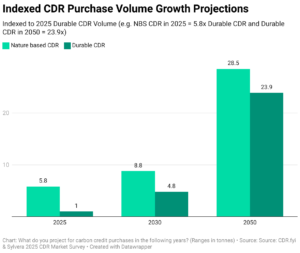
CDR.fyi reported that durable carbon removal purchases excluding Microsoft and Frontier-linked buyers grew at a 151% compound annual rate from 2021 to 2025. Deliveries grew at a 131% annual rate over the same period.
Nature-based removals remain a much larger market than many engineered carbon removal technologies.
CDR.fyi‘s 2025 market survey found that about 11 million tonnes of nature-based removal credits were retired in 2024, compared with roughly 200,000 tonnes of durable engineered CDR. It also found that buyers expected nature-based removals to remain the larger category in the near term.
The broader carbon market is also attracting more investment. MSCI estimates that capital in the global carbon credit market hit $22 billion in 2025. This is up 72% from 2024 and over five times the level in 2021. The research points to growing use of long-term financing and offtake agreements to secure future carbon supply.
That model is especially important for reforestation. Projects need large amounts of capital before trees grow and begin generating verified removal credits.
BNDES Sees Demand Broadening Beyond Big Tech
Mombak’s new fund also comes as the buyer base for carbon removals could become more diverse. Technology companies have been major early buyers because of their growing emissions from data centers and AI infrastructure. But BNDES officials said that demand is also increasing from oil, mining, and steel companies.
Mombak’s CEO, Gabriel Silva, said better reforestation methods and higher productivity are lowering costs. This could make carbon removals appealing to more buyers. This could be important for Brazil.
The country has large areas of degraded land that could potentially support restoration, while its emerging carbon market is creating new ways to finance climate projects.
But voluntary reforestation credits remain different from credits issued under Article 6 of the Paris Agreement. Mombak’s current business is focused on voluntary carbon removal purchases. Its credits should not automatically be treated as internationally transferred mitigation outcomes.
Can Mombak Turn Fresh Capital Into Carbon Removals?
Mombak’s new fund combines three important parts of the carbon market: long-term investment, corporate offtake agreements and physical restoration.
The first fund showed that Mombak could attract institutional capital, plant millions of native trees and deliver its first credits earlier than planned. The second fund aims to take that model to a larger scale.
The challenge now is turning financial commitments into measurable and lasting carbon removals. Forest projects need strong land rights, long-term monitoring, credible carbon measurement and safeguards against reversal from fire, drought and other risks.
The market also needs more buyers. The Salesforce agreement helps on that front by adding another major corporate customer to the sector. Mombak’s wider buyer base suggests that demand is beginning to spread beyond a small group of technology companies.
For Brazil, the opportunity is larger still. BNDES is using public financing to help attract private capital into forest restoration, while companies such as Mombak are building commercial models around carbon removal.
The key test will be whether Mombak and other developers can turn that capital into verified, durable carbon removals at scale while delivering wider benefits for Brazil’s forests and communities.