

The global aviation industry has launched a new effort to solve one of its biggest net-zero challenges. It is trying to secure enough high-quality carbon credits.
The International Air Transport Association (IATA) recently launched the Supporting Alliance for CORSIA Eligible Emissions Unit (EEU) Supply. It brings together airlines, governments, carbon market players, investors, and civil society groups.
- The goal is ambitious. The alliance aims to increase the supply of 225 million to 250 million CORSIA-eligible carbon credits by spring 2027.
The move shows a key reality in aviation. Sustainable aviation fuel (SAF) is still the main tool for cutting emissions, but supply is still limited. Because of this, airlines will depend more on carbon markets in the short term to meet climate rules under CORSIA.
The alliance is not only about carbon credits. It also shows how aviation, climate finance, and carbon markets are becoming more connected.
A $5 Billion Carbon Credit Race Takes Flight
CORSIA stands for the Carbon Offsetting and Reduction Scheme for International Aviation. It was created by the International Civil Aviation Organization (ICAO) in 2016. It is still the only global market-based offsetting scheme for managing aviation emissions.
Under this system, airlines must offset emissions that go above set limits. They do this by buying and canceling approved carbon credits called CORSIA Eligible Emissions Units (EEUs).
These credits must meet strict environmental rules. They also need approval from host governments. This helps avoid double counting under the Paris Agreement.
The main problem is supply.
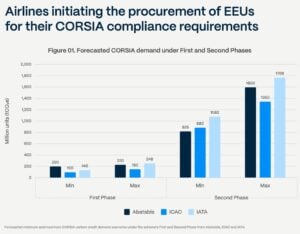
- IATA estimates airlines will need about 200 million CORSIA EEUs by January 2028. This represents a market worth about $4 billion to $5 billion. Demand could rise to nearly 2 billion EEUs by 2035 as rules expand.
Even with this demand, supply is still low. Many countries have not approved credits for CORSIA use. This creates a regulatory bottleneck. It is now one of the biggest risks for aviation’s climate plans.
According to Marie Owens Thomsen, IATA’s Senior Vice President Sustainability and Chief Economist,
“The Supporting Alliance will provide implementation assistance to clear this [double-counting] and other bottlenecks that prevent credits from coming to the CORSIA market. It should be noted that CORSIA will likely generate $4-5 billion of climate finance in the first phase, and potentially $100 billion by 2035, depending on market prices. This will help fund climate action, support remote communities, and spur economic development. We welcome all carbon market stakeholders and related organizations to join forces in the Supporting Alliance to help CORSIA realize its potential social, economic and climate benefits.”
The new alliance aims to fix this. It will help governments connect national climate goals with global carbon market rules under Article 6.2 of the Paris Agreement.
Aviation’s Net-Zero Path Is Becoming More Challenging
The launch comes at a time when airlines face growing pressure. They must cut emissions while air travel demand continues to rise.
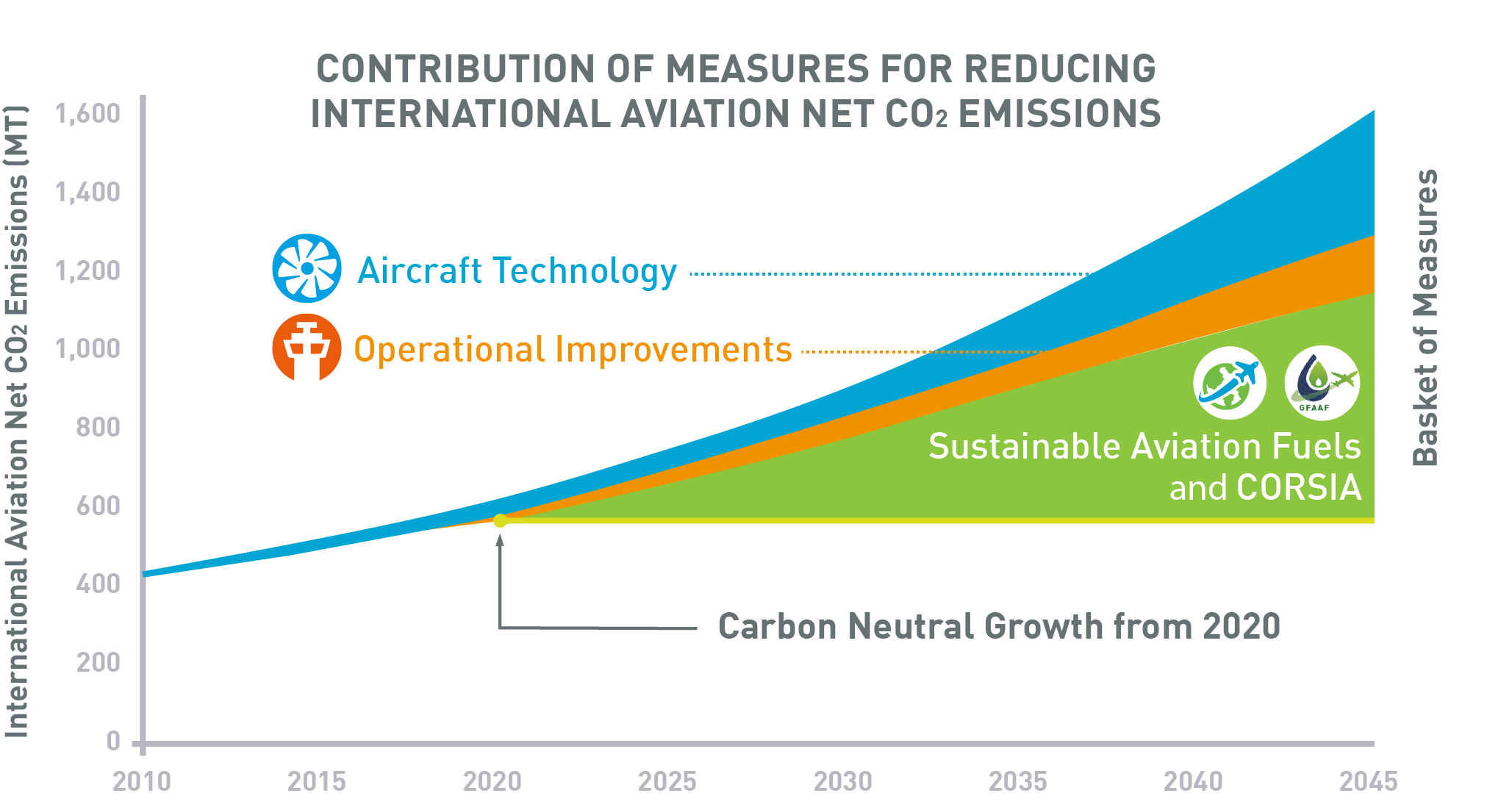
The aviation industry has pledged to reach net-zero carbon emissions by 2050. IATA says Sustainable Aviation Fuel could deliver about 65% of the emissions cuts needed. However, SAF production is still very low.
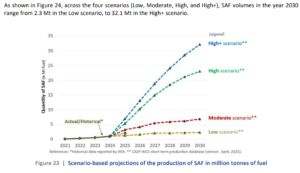
IATA expects global SAF production to reach over 2 million tonnes in a low-case scenario. But this is only 0.7% to 0.8% of total aviation fuel use. This gap is large. But it can also increase up to 32 million in a high-case scenario.
SAF can reduce lifecycle emissions by about 80% compared with regular jet fuel. This makes it one of the most important tools for decarbonization. But high costs, limited raw materials, and slow production growth are holding it back.
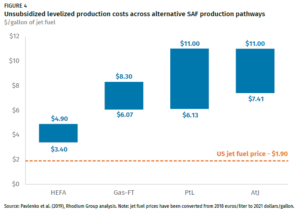
Because of this, carbon credits are still a key bridge solution. They help airlines reduce emissions while SAF production scales up. This is also increasing demand for CORSIA-compliant credits and stronger carbon market systems.
From Voluntary Offsets to Compliance-Driven Carbon Markets
The alliance launch also reflects wider growth in global carbon markets. Over the past decade, carbon pricing has become a major climate policy tool. Governments, companies, and investors now see carbon markets as a way to fund emissions cuts and support net-zero goals.
For aviation, carbon credits help cover emissions that cannot yet be reduced with technology.
This is important because aviation is one of the hardest sectors to decarbonize. Unlike cars or trucks, long-distance flights still rely heavily on liquid fuels.
As demand for CORSIA credits grows, carbon project developers may see new opportunities. These include nature-based solutions, renewable energy, methane reduction projects, and engineered carbon removal. All must meet CORSIA rules and get government approval.
The creation of a dedicated alliance for credit supply shows a shift. Carbon markets are moving from voluntary tools to more structured, compliance-based systems for aviation. This shift could bring more investment into high-quality carbon projects worldwide.
Why the World’s Biggest Airlines Are Backing the Alliance
The alliance already has strong support from the industry. It includes more than 32 founding organizations. These include major airline groups such as:
- Air France-KLM,
- Lufthansa Group,
- Qatar Airways,
- Singapore Airlines,
- Japan Airlines,
- International Airlines Group (IAG),
- AirAsia,
- ANA, and
- SWISS.
Their participation shows how important future credit supply is.
Many airlines already invest in sustainability programs. These include fleet upgrades, efficiency improvements, SAF contracts, and carbon reduction projects. At the same time, airlines are under growing pressure from investors, regulators, and customers to improve climate performance.
Access to high-quality CORSIA credits may become more important as airlines meet both regulatory and ESG goals.
The alliance also creates a space for cooperation between governments, airlines, project developers, and financial institutions. This may speed up credit approval and improve transparency in the market.
A Carbon Market Test for Aviation’s Future
The Supporting Alliance for CORSIA EEU Supply could become one of the most important carbon market developments for aviation in recent years. The industry’s net-zero plan depends on SAF, efficiency gains, new technologies, and carbon markets. But the supply of both SAF and CORSIA credits is still below what is needed.
By targeting up to 250 million credits by 2027, IATA is trying to close a growing supply gap before it becomes a bigger compliance issue.
More broadly, this shows how carbon markets are becoming part of real decarbonization strategies. They are no longer just voluntary tools. They are now part of regulated systems for hard-to-decarbonize sectors.
For the airline sector, the pressure is high. Passenger demand is rising while emissions pressure is also increasing every year.
Whether the alliance succeeds or not, its launch sends an important message. The future of aviation net zero will depend not only on cleaner fuels and better aircraft but also on strong and scalable carbon markets.