


Singapore-based companies FlyORO Technologies Pte. Ltd. and Aether Fuels have signed a non-binding Memorandum of Understanding (MOU) to develop sustainable aviation fuel (SAF) infrastructure. Their focus includes blending, logistics, and supply chain development.
This agreement supports Aether’s SAF initiative, Project Beacon, and future projects. The partnership will explore advanced fuel production, blending systems, storage, certification, and delivery networks.
The aviation industry needs to cut carbon emissions. Airlines worldwide seek cleaner fuel options to meet climate goals and reduce fossil fuel use. However, SAF production is still limited. Better infrastructure and scalable technologies are essential to meet future demand.
And this partnership aims to tackle these challenges.
FlyORO and Aether believe that advanced fuel production and modular blending systems can improve SAF availability and efficiency. They also want to enhance Singapore’s role as a hub for aviation innovation and sustainable growth.
Jonathan Yeo, Chief Executive Officer, FlyORO Technologies Pte. Ltd. said:
“Singapore is one of the few markets where advanced fuel production, airport demand, logistics capability and policy momentum can come together at meaningful speed. Through this MOU, we want to explore how smarter downstream infrastructure can complement next-generation SAF production and help make supply more flexible, transparent and practical for the local market.”
Project Beacon: Southeast Asia’s First Next-Generation SAF Facility
At the heart of this collaboration is Project Beacon, Aether’s planned facility at the Aster Pulau Bukom refinery.
Aether claims this project could be the first commercial-scale SAF facility in Southeast Asia. It will use advanced fuel conversion technology, applying its Aurora technology to convert industrial waste gas and biomethane into SAF.
The facility aims to produce about 50 barrels of SAF daily, or nearly 2,000 tonnes annually. Aether estimates this fuel could reduce lifecycle greenhouse gas emissions by over 70% compared to traditional jet fuel.
Why It Stands Out
Project Beacon is unique because it uses a different production method than many existing SAF projects. Most current SAF production relies on the HEFA pathway, which mainly uses waste fats, oils, and greases. While this method has grown the market, feedstock availability is still a concern.
Aether believes its Aurora technology can address this challenge.
Instead of relying on a single feedstock, Aurora can use various waste carbon sources, such as industrial off-gases and biomethane. This flexibility may boost fuel yields, lower costs, and support larger SAF production in the future.
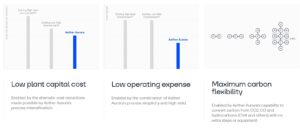
The gap between SAF demand and supply is a growing concern for aviation. Governments, airlines, and corporate customers are increasing their sustainability commitments, leading to strong long-term demand for cleaner fuels.
Conor Madigan, Founder and Chief Executive Officer, Aether Fuels, noted:
“Project Beacon is intended to demonstrate Aether’s breakthrough Aurora technology in commercial operation and unlock new and more abundant waste carbon feedstocks for SAF production. Working with FlyORO on this project gives us an opportunity to evaluate how downstream blending and supply-chain innovation can support commercialization in Singapore and accelerate overall SAF industry development.”
Aether Fuels: Pioneering Flexible and Scalable SAF Growth
Aether Fuels emphasizes that the future of SAF relies on scalable, flexible, and cost-effective production.
The aviation and shipping sectors may need nearly one billion metric tonnes of sustainable fuel annually by 2050 to achieve global net-zero goals. Replacing high-energy fuels for long-distance travel with battery technology is challenging.
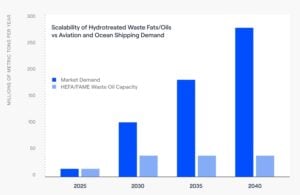
- Thus, sustainable liquid fuels will remain vital for reducing emissions in these industries.
However, the SAF industry faces a major hurdle. Demand is rising quickly, but supply is limited due to existing pathways that depend on restricted feedstock and costly infrastructure.
Aether believes next-generation technologies must leverage abundant waste-carbon sources to close this supply gap. Aurora was developed with this goal in mind.
Producing SAF is just one part of the process. The fuel must also flow efficiently through the supply chain to reach airports and airlines. That’s where FlyORO’s blending technology is crucial.
FlyORO: Innovating Blending Technology for the Partnership
FlyORO’s role in this collaboration focuses on blending and fuel logistics. The company will assess how its AlphaLite blending system can support Project Beacon and future Aether SAF initiatives.
AlphaLite is a modular SAF blending unit housed in a 40-foot container. It can integrate with existing fuel infrastructure and function at various points in the aviation fuel supply chain, including production sites, terminals, and airport fuel farms.
- One key advantage of AlphaLite is its flexibility. Operators can choose where blending is most efficient based on logistics, costs, infrastructure, or regulations.
FlyORO also highlighted AlphaLite’s “last-mile blending” capability. This allows blending closer to airports or final delivery points instead of transporting pre-blended fuel over long distances.
- This approach enhances traceability, transparency, and operational efficiency.
- It can also help airlines and fuel suppliers manage sustainability reporting and book-and-claim systems better.
The company designed the AlphaLite platform to align with evolving global SAF standards and regulations. As international SAF policies change, the company expects its technology to adapt while maintaining fuel quality and safety.
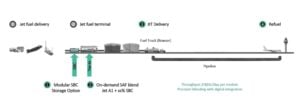
Real-World Airport Deployment Proves AlphaLite’s Effectiveness
FlyORO has already tested AlphaLite in a real airport setting. In 2025, the company deployed the system with Wagner Sustainable Fuels and Boeing at Toowoomba Wellcamp Airport.
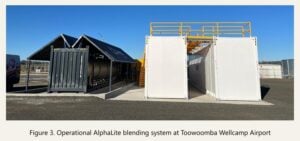
This project marked the world’s first SAF blending terminal at an airport. It showed that modular blending systems can operate effectively in live aviation conditions.
The deployment also helped AlphaLite achieve Technology Readiness Level 9 (TRL 9), confirming its success in commercial operations.
- As of May 2026, FlyORO reported blending over 500,000 liters of SAF through AlphaLite deployments.
This experience could help assess how modular blending systems might support Project Beacon and future Aether projects.
Singapore Strengthens Its Role in Sustainable Aviation
The proposed partnership highlights Singapore’s rising role in clean energy and sustainable aviation.
Singapore is already a global hub for aviation, shipping, and fuel trading. Now, it aims to be a center for low-carbon fuel technologies and sustainable projects.
Aether and FlyORO are joining forces. By combining Aether’s waste-carbon tech with FlyORO’s blending skills, they aim to boost SAF use in aviation.
Both firms believe this partnership could increase SAF availability. It may also enhance supply chain flexibility and support long-term aviation decarbonization goals.
However, the MOU remains non-binding and non-exclusive. Future commercial partnerships will depend on technical studies, regulatory approvals, negotiations, and final agreements.
The agreement shows that the aviation industry is dedicated to scalable and practical SAF solutions. Airlines are working hard for lower-carbon operations.