

Carbon removal buyer Senken and project developer Carbonsate have signed a 50,000-tonne carbon removal agreement tied to a biomass storage project in Namibia. The multi-year deal covers removals from 2026 through 2028, with deliveries starting this year.
Senken claims it’s the largest biomass storage deal in Europe so far. This agreement is also the second-largest buyer commitment worldwide in biomass geological storage and the biggest for a project in Africa.
The deal comes as companies look for more durable ways to remove carbon from the atmosphere. The project buries waste biomass underground. This prevents it from burning or decaying. It keeps carbon locked away for at least 100 years under the current certification.
A 50,000-Tonne Commitment Through 2028
The agreement covers 50,000 tonnes of certified carbon removal across the 2026, 2027 and 2028 vintages. Senken will procure the volumes for corporate buyers that need permanent carbon removal for their climate plans.
Senken says the deal is its third multi-year carbon removal supply commitment of 2026. Its other 2026 deal covered direct air capture, industrial biochar and regenerative agriculture for the aviation sector.
The companies also see room to expand the deal.
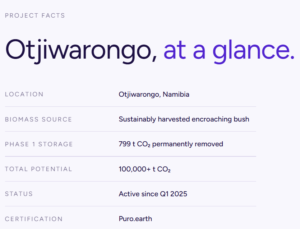
Carbonsate’s Namibia project could scale to more than 100,000 tonnes of carbon removal per year within the next few years, according to Senken. The two companies plan to expand their agreement as new capacity becomes available.
This matters because today’s carbon removal market still has limited supply. Senken says the wider permanent removal market has delivered about 1.5 million tonnes so far. The new 50,000-tonne agreement would equal roughly 4% of that amount.
How Namibia’s Waste Biomass Becomes Carbon Storage
Biomass storage is a form of carbon dioxide removal that uses plants as the first step. Plants absorb CO2 from the atmosphere as they grow. Normally, that carbon returns to the atmosphere when the plant material burns or decomposes.
Carbonsate takes a different approach.
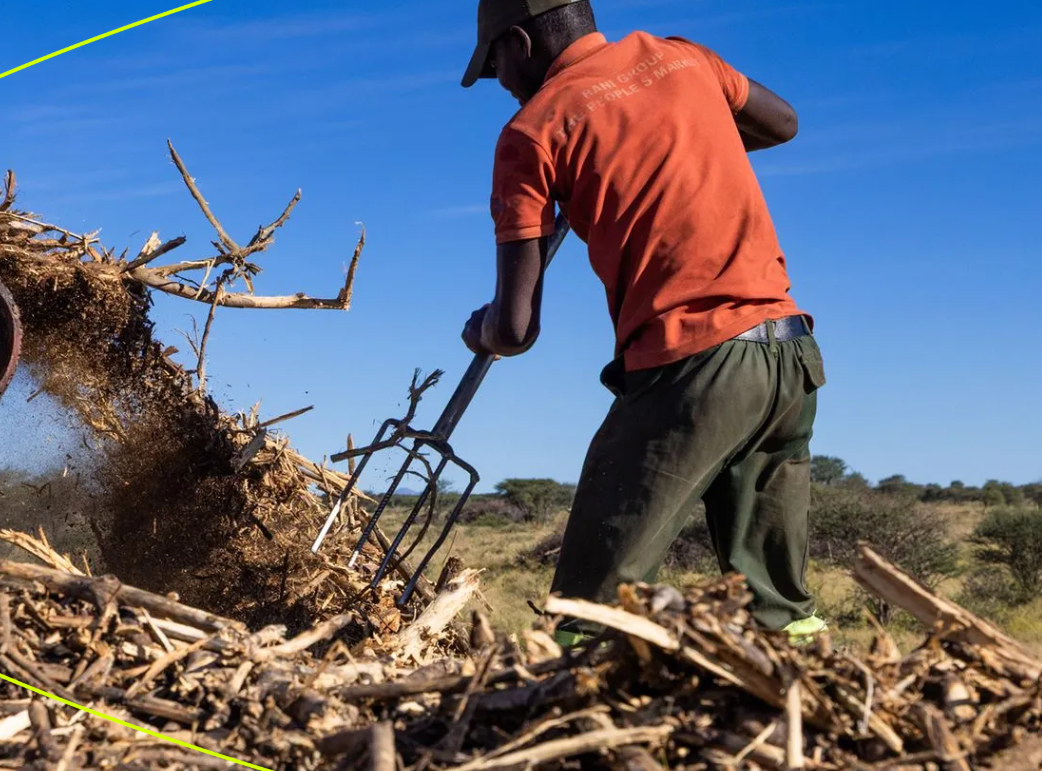
The company removes excess woody biomass from Namibia’s savanna and places it in specially designed underground storage chambers. The chambers limit oxygen and moisture, which slows decomposition and keeps the carbon stored.
The method does not use an energy-intensive carbon capture process. It also does not turn the biomass into biochar. Instead, the wood remains largely intact while the storage system prevents it from breaking down.
Senken says this can reduce the cost and energy needs of the removal process compared with some other engineered carbon removal methods.
The IPCC defines carbon dioxide removal as human activities that remove CO2 from the atmosphere and store it for a long period. It also stresses that carbon removal should support, rather than replace, deep emissions cuts.
Namibia Turns Bush Encroachment Into a Carbon Opportunity
Carbonsate’s project is located in the savanna around Otjiwarongo, Namibia. It focuses on encroaching bush, where woody plants have spread across grassland. Carbonsate says this can reduce biodiversity, limit grass growth, lower groundwater recharge, and reduce the productivity of grazing land.
The company selectively removes this excess bush as part of land management. Instead of burning the harvested wood or allowing it to decay, it stores the biomass underground. This creates a link between carbon removal and land restoration.
Carbonsate says the work can help restore grasslands, improve biodiversity and support healthier range lands. It also works with local landowners, farmers and service providers on harvesting, transport, site preparation and monitoring.
The approach therefore aims to deliver both carbon removal and local environmental benefits.
Project Uses Puro.earth Certification
The Carbonsate Namibia project has passed a third-party facility audit under Puro.earth‘s certification system and has received carbon removal certificates, or CORCs.
Puro.earth lists the project under its Terrestrial Storage of Biomass methodology. The standard requires projects to measure the amount of carbon removed and verify the results. Puro.earth says certified projects must pass facility and output audits before receiving CORCs.
The Carbonsate project has a minimum durability period of 100 years. The company uses engineered storage systems, along with a monitoring, reporting, and verification system, to track storage conditions.
Puro.earth‘s project listing shows that Carbonsate issued 799 CORCs in 2025. Senken says the project is scheduled to deliver about 10,000 credits in 2026.
That difference is important. The 50,000 tonnes covered by the deal are contracted future removals, not 50,000 carbon credits already issued.
Monitoring Is Key to Long-Term Storage
Biomass storage depends on keeping the stored material stable over time. Carbonsate uses sensors to monitor its storage sites. It also uses on-site measurements to track gas emissions and check storage performance.
Puro.earth says the project stores the biomass in engineered pits and covers it to limit oxygen and moisture. Namibia’s dry climate also supports the storage approach because of its low rainfall and high evaporation rates.
The need for monitoring is important because carbon removal is only useful if the stored carbon stays out of the atmosphere.
The Intergovernmental Panel on Climate Change (IPCC) notes that carbon removal methods differ in their storage periods, risks, and environmental effects. It also says strong governance is needed to manage these risks and maintain durable storage.
- For biomass storage, this makes the choice of feedstock, storage design, and monitoring system especially important.
Carbon Removal Market Moves Toward Longer Deals
The Senken-Carbonsate agreement also shows how buyers are helping new carbon removal methods to scale. Removal projects often need investment before they can produce large volumes. Multi-year offtake agreements give developers a clearer source of future demand.

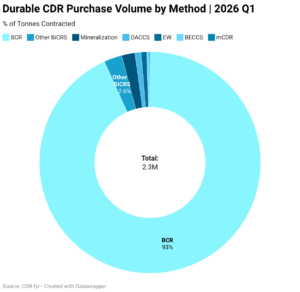
The broader durable carbon removal market is growing, but supply remains limited. CDR.fyi reported 2.3 million tonnes of durable carbon removal contracted in the first quarter of 2026, a record first quarter. It also recorded 145,000 tonnes delivered during the quarter.
Biomass-based methods were a major part of that market. Biochar alone accounted for 93% of durable carbon removal contracted in Q1 2026, according to CDR.fyi.
Biomass storage remains a much smaller market. Senken describes it as being at an early commercial stage, with supply concentrated among a small number of projects. That makes large multi-year commitments important for developers trying to move from early projects to larger operations.
A New Test for Biomass Carbon Removal
The 50,000-tonne Senken-Carbonsate agreement gives Namibia’s biomass storage sector a major new commercial commitment. The project combines excess bush removal, underground biomass storage, and long-term monitoring. Its Puro.earth certification also gives buyers a defined framework for measuring and verifying carbon removal.
However, scaling the method will depend on more than buyer demand.
Carbonsate must expand its storage capacity while maintaining the quality and monitoring standards behind its credits. The project must prove that the stored biomass stays stable. It should also show that carbon removal is significant, even after considering emissions from harvesting, transport, storage, and monitoring.
For Senken, the deal secures future removal volumes for corporate buyers. For Carbonsate, it provides demand that can help expand its Namibia operations.
If the project delivers the contracted volumes and maintains its removal standards, the agreement could help show how biomass storage can move from an emerging carbon removal method to a larger commercial-scale supply.