

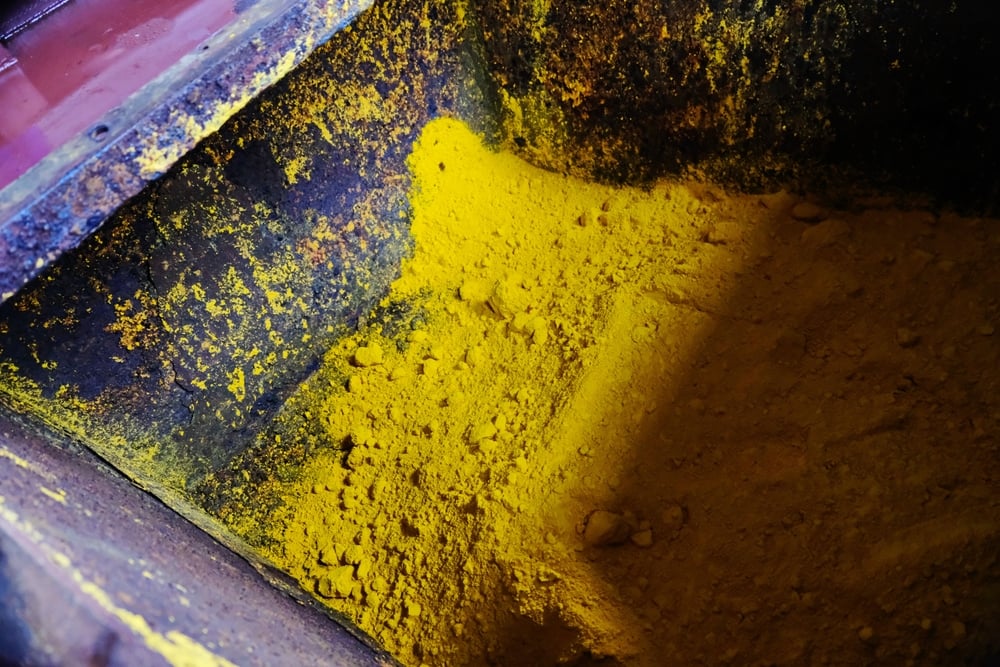
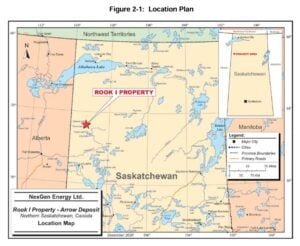
NexGen Energy has started building its Rook I uranium project in Saskatchewan, Canada. This marks a significant step toward creating one of the largest new uranium mines in the world.
It was reported that the C$2.2 billion ($1.6 billion) project focuses on the high-grade Arrow deposit. Once completed, Rook I is expected to produce around 30 million pounds of uranium each year. This would place it among the top uranium producers globally and make NexGen a key supplier for the growing nuclear energy market.
Uranium demand is rising sharply. Nuclear power is gaining traction as countries seek reliable, low-carbon electricity. The rapid growth of artificial intelligence is also increasing energy needs, NexGen revealed in a post on X.
Rook I Moves to Construction Phase
Major earthworks and surface infrastructure are in progress. The company has commissioned a 3,000-foot airstrip and completed expanded site accommodations, which are now in use.
NexGen plans to finish the full 5,840-foot airstrip by the end of 2026. Shaft development is set to begin in 2027.
Building the underground mine and processing facilities will take about four years. The project will use conventional underground mining, followed by processing the ore into uranium concentrate, known as yellowcake.
Importantly, the project has cleared major regulatory hurdles. The Canadian Nuclear Safety Commission approved the environmental assessment in March and granted NexGen a construction license for Rook I.
This approval allows the company to move forward after years of exploration and regulatory work.
A High-Grade Uranium Deposit
The Arrow deposit gives Rook I a major edge: exceptionally high uranium grades.
- The 2021 feasibility study outlined probable reserves of about 239.6 million pounds of uranium at an average grade of 2.37% U3O8.
- NexGen’s total measured and indicated resource stands at about 256.7 million pounds, including the reserves, plus another 80.7 million pounds in inferred resources.
These grades are well above the global average for uranium deposits.
As a result, the project needs to move less rock to produce a large amount of uranium. NexGen estimates only about three trucks per day will be needed to feed the mill, while roughly 1.5 trucks per day will remove processed material.
This relatively low movement could reduce the project’s infrastructure needs and environmental impact compared to lower-grade mining operations.
The geology supports conventional underground mining. Unlike some deposits that need complex methods like in-situ recovery, Arrow is located in hard rock at depth. The company says this setting allows for a more predictable mining operation.
A Large Production Profile
The scale of Rook I is critical for the uranium market.
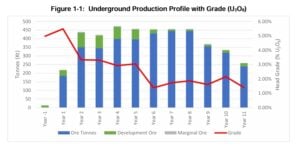
The 2021 feasibility study outlined an 11-year mine life and projected total production of about 233.6 million pounds of yellowcake. It estimated an after-tax net present value of C$3.5 billion at an 8% discount rate, a 52.4% internal rate of return, and a payback period of less than one year.
The planned annual production of about 30 million pounds would exceed the licensed capacity of Cameco’s McArthur River-Key Lake operations, which stands at 25 million pounds.
Cameco expects to produce between 14 million and 16.5 million pounds from those operations in 2026.
Thus, Rook I could significantly boost global uranium supply once it begins production.
Nuclear Power Is Driving Long-Term Uranium Demand
The timing of this project is crucial.
Around 80 nuclear reactors are under construction worldwide, adding about 88 gigawatts of new capacity. This could increase global nuclear capacity by roughly 20% by the early 2030s.
At the same time, 38 countries aim to triple global nuclear capacity by 2050.
If achieved, global nuclear capacity could rise from around 380 GW to about 1,200 GW. This expansion would require a substantial increase in uranium supply.
Artificial intelligence is further adding to the demand.
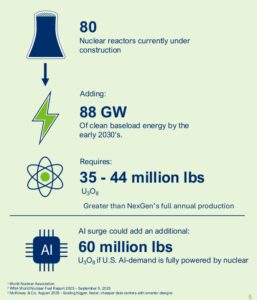
Data centers need a lot of electricity, and the global AI buildout is speeding up. If the U.S. meets its AI-related electricity needs entirely with nuclear power, uranium demand could reach as much as 60 million pounds annually by 2030, according to NexGen’s estimates.
This highlights the scale of the challenge facing the uranium industry.
The Supply Problem Could Be Even Bigger
Uranium supply cannot quickly respond to sudden demand increases.
Developing a new mine can take 15 to 20 years from discovery to production. Today’s investment decisions will affect uranium supply well into the 2030s and 2040s.
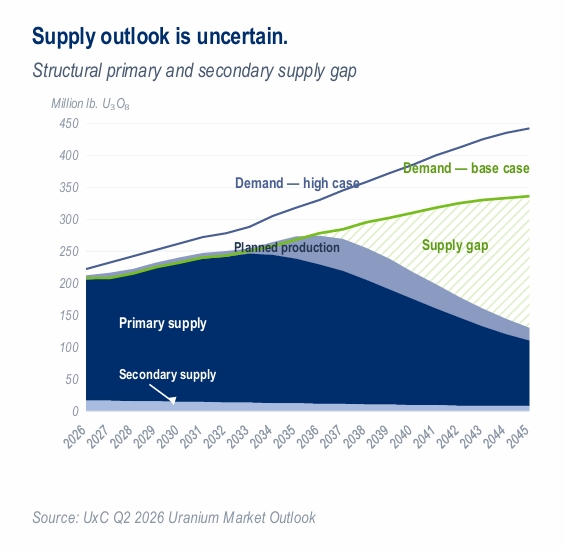
NexGen forecasts a potential uranium supply deficit of about 335 million pounds per year by 2040. Meeting projected demand of roughly 530 million pounds would require mine production to triple from current levels.
These numbers show why new projects like Rook I are increasingly important.
The industry has mined about 8.6 billion pounds of U3O8 since uranium mining began. Over the next 25 years, the world could need about 7.3 billion pounds. In short, the nuclear industry could consume nearly as much uranium in the next quarter-century as it has mined in the last 80 years.
Rook I Could Support a Low-Carbon Energy System
The project’s potential goes beyond just uranium production.
Nuclear power generates electricity with very low operational carbon emissions. Therefore, more uranium supply could help expand nuclear generation as countries aim to cut emissions while ensuring reliable electricity.
- NexGen estimates Rook I could produce enough uranium to power around 46 million homes with carbon-free electricity.
- The company also estimates that this nuclear generation could displace over 300 million tonnes of CO2 annually, equivalent to taking nearly 70 million cars off the road each year.
These figures depend on how the uranium is used and the assumptions behind the calculations. Still, they show why high-grade uranium projects are gaining attention as nuclear power returns to global energy discussions.
For NexGen, the next challenge is execution.
With construction now underway, Rook I is shifting from long-term development to a potential new source of uranium supply. If NexGen delivers on time, the mine could start production just as nuclear power, AI-driven electricity demand, and energy security concerns put more pressure on the global uranium market.