

The voluntary carbon market has seen another major milestone. According to Amy Merrill, Chief Executive of the Integrity Council for the Voluntary Carbon Market (ICVCM), at least 13% of newly issued carbon credits now carry the Core Carbon Principles (CCP) label. Recent market data suggests that share may already be closer to 15%.
The milestone shows how quickly the market is changing. Just a few years ago, only a small share of existing carbon credits met the new quality benchmark. Today, a growing share of newly issued credits is earning the CCP label as project developers adopt higher standards and buyers demand stronger environmental integrity.
For companies using carbon credits to support climate goals, quality is becoming just as important as quantity.
Merrill posted:
“I’m confident that H2 of 2026 will see more change: several CCP-Approved methodologies are approaching their first large-scale issuance cycles, and the pipeline of projects using CCP-Approved methodologies under CCP-Eligible Programs continues to grow.”
What Makes a Carbon Credit Truly High Integrity?
The CCP label was created to answer one simple question: Can buyers trust this carbon credit?
Developed by the ICVCM, the Core Carbon Principles set a global benchmark for high-quality carbon credits. Instead of creating another carbon registry, the council reviews existing crediting programs and project methodologies. Only those that meet strict scientific, environmental, and governance standards can issue CCP-labelled credits.
To earn the label, projects must show that their emissions reductions or carbon removals are:
- Real,
- Measurable,
- Independently verified, and
- Would not have happened without carbon finance.
They must also have strong monitoring systems, transparent accounting, and safeguards against double counting.
The goal is simple: help buyers quickly identify carbon credits that meet the market’s highest integrity standards, regardless of which registry issued them.
The Market Has Outgrown the Old 4% Narrative
For years, one number dominated discussions about the CCP label: 4%.
That figure referred to the share of all existing carbon credits that had earned the CCP label when the ICVCM first began approving methodologies. It included millions of older credits that were created long before the Core Carbon Principles existed.
Amy Merrill says that number no longer reflects today’s market. New data tells a different story.
According to CEEZER, CCP-labelled credits accounted for 13.1% of all new carbon credit issuances, up from 9.7% a year earlier. Allied Offsets reports a similar trend, estimating that about 15% of all new credits issued during the first half of 2026 carried the CCP label.
The growth goes beyond new supply.
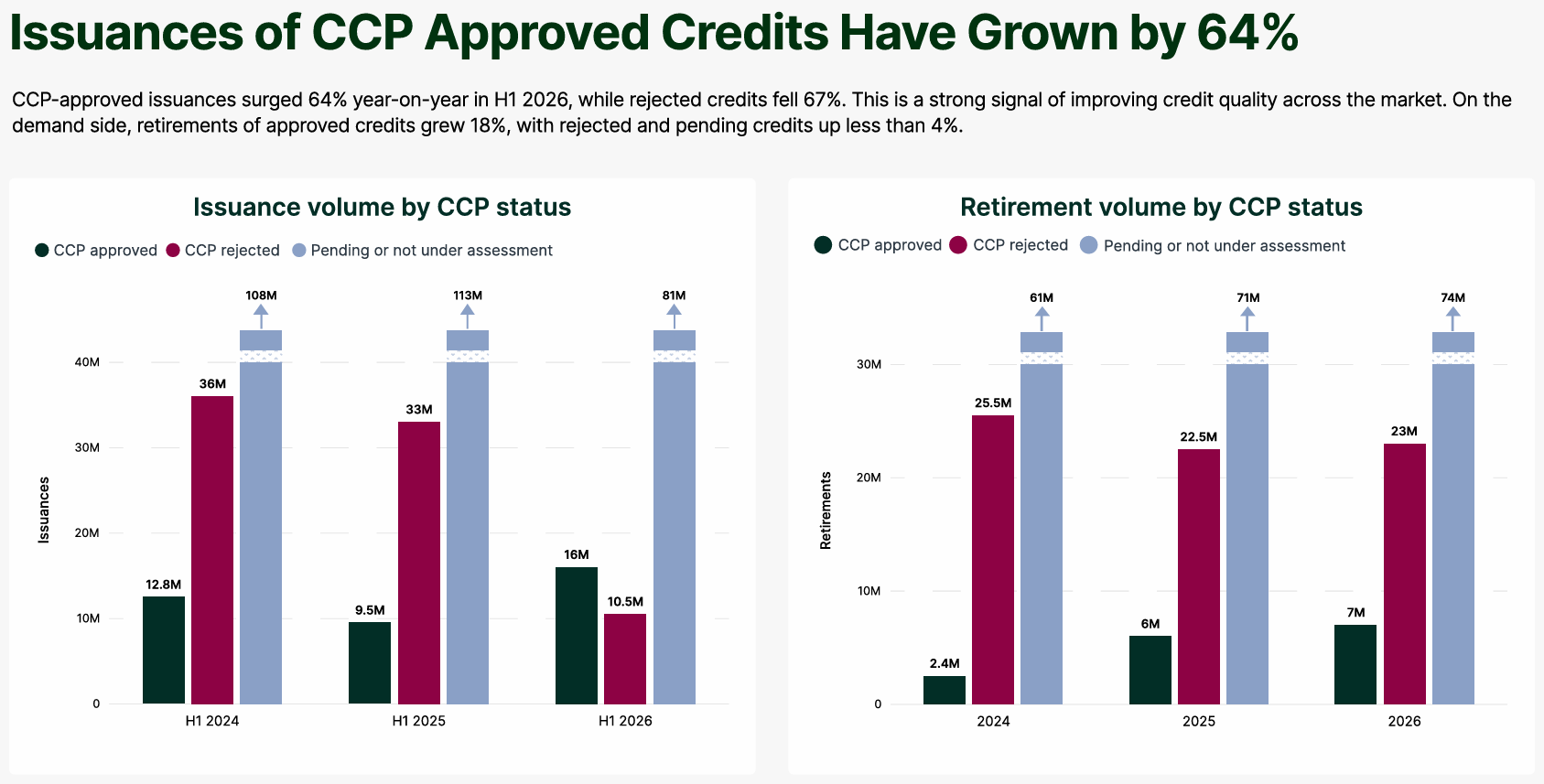
Allied Offsets found that CCP-approved credit issuances jumped 64% year over year in the first half of 2026. At the same time, issuances from rejected methodologies fell 67%. Retirements also favored higher-quality credits.
According to the same analysis, retirements of CCP-approved credits rose 18%, while retirements of rejected, pending, or unsubmitted credits grew by less than 4%.
The council has also approved methodologies that meet the higher standard. According to the ICVCM’s 2025 CCP Impact Report, the organization had approved seven major carbon-crediting programs and 36 methodologies by late 2025.
- More than 51 million unretired carbon credits had already become eligible to carry the CCP label, with hundreds of millions more moving through the assessment process.
Together, these figures suggest that both project developers and buyers are moving toward higher-quality carbon credits.
RELEVANT: ICVCM Adds New CCP-Approved Carbon Credit Methods for Isometric, Gold Standard and ACR
Why Buyers Are Paying More for CCP-Labelled Credits
The market is already placing a higher value on CCP-labelled credits. The ICVCM reports that CCP-labelled credits have earned an average price premium of about 25%, based on market data from ClearBlue Markets and Calyx Global.
That suggests many buyers are willing to pay more for credits backed by stronger environmental integrity rather than simply choosing the lowest price.
Carbon management company ClimeCo says the CCP label is becoming a baseline requirement for many corporate buyers because it makes purchasing decisions easier and builds confidence in credit quality.
Pricing reflects that shift. Since mid-2024, the MSCI Global CCP Carbon Credit Price Index has traded at an average premium of 19% to the broader voluntary carbon market. Buyers are increasingly willing to pay more for credits backed by stronger environmental integrity.
As Amy Merrill notes, the story is no longer about the original 4% benchmark. The real story is how quickly the market has moved from 4% to roughly 13–15% of new carbon credit issuance in just a few years.
With more CCP-approved methodologies entering the market, that share is likely to keep growing.
The Market Is Shifting Toward Better Credits
The voluntary carbon market is changing. In the past, many buyers focused on buying the cheapest carbon credits. Today, many companies are paying more attention to quality. They want credits that can stand up to investor reviews, public scrutiny, and stricter climate rules.
The CCP label helps meet that need. It gives buyers an independent way to identify credits that meet higher environmental and governance standards. Even governments and regulators worldwide are using the CCP standard in their regulated carbon markets.
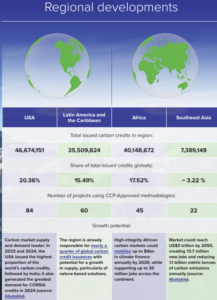
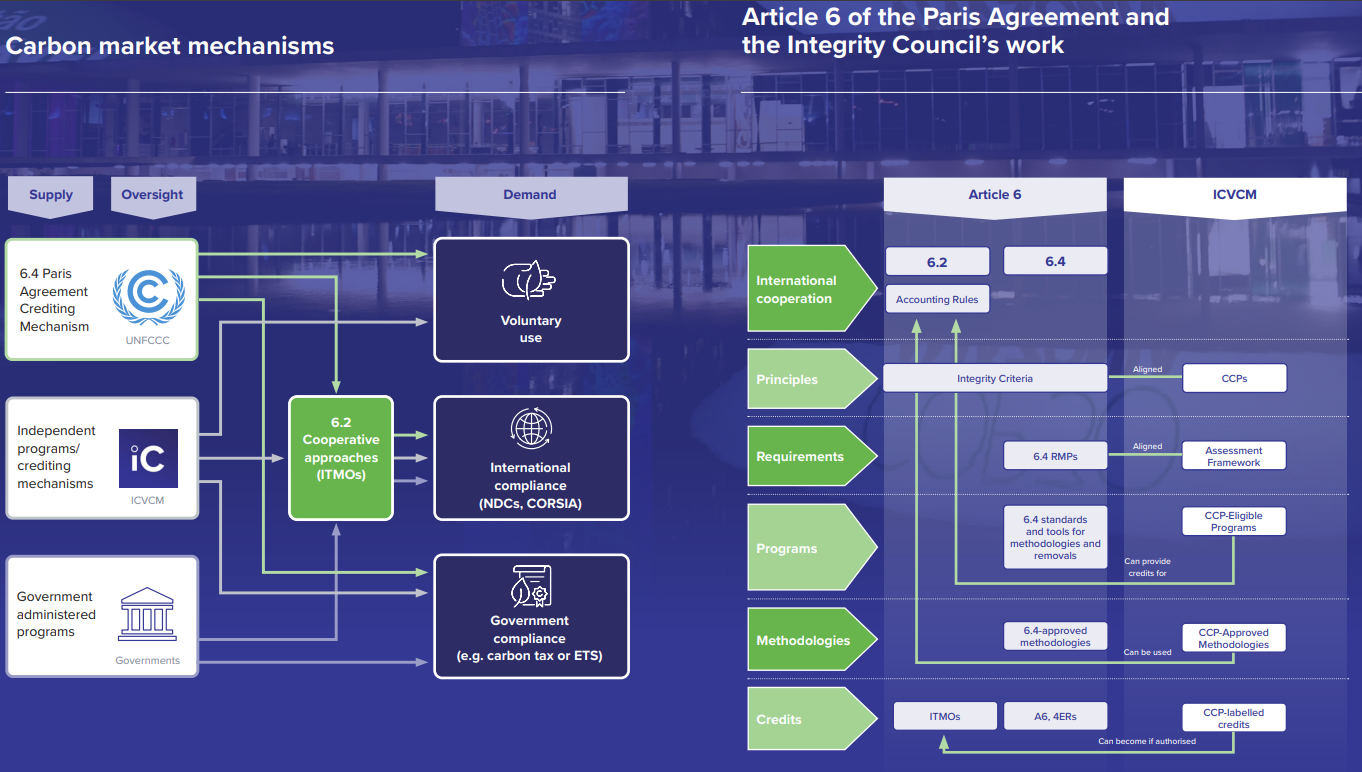
This shift is happening alongside other efforts to improve the market. The Voluntary Carbon Markets Integrity Initiative (VCMI) has introduced guidance for companies on making credible climate claims. Countries are creating carbon markets under Article 6 of the Paris Agreement. Meanwhile, the aviation sector is using CORSIA to manage international airline emissions.
Together, these initiatives are helping create a more consistent and transparent carbon market.
Higher Standards Can Unlock More Climate Finance
Better-quality credits do more than build trust. They can also attract more investment.
When buyers have greater confidence in carbon credits, they are more willing to sign long-term purchase agreements. That gives project developers more stable funding and helps finance new climate projects.
This is especially important for projects that protect forests, restore mangroves, remove carbon from the atmosphere, or help communities adapt to climate change. Many of these projects depend on carbon credit revenue to move forward.
The World Bank estimates that developing countries will need hundreds of billions of dollars each year to meet their climate goals. High-integrity carbon markets can help close part of that funding gap by directing more private capital toward verified climate projects.
The CCP Label Is Not the Whole Story
The CCP label is an important step, but buyers still need to do their homework.
The label approves crediting programs and methodologies. It does not certify every individual project. Buyers still need to review project documents, understand local conditions, and make sure a credit fits their own climate strategy.
In other words, the CCP label makes it easier to find high-quality credits, but it does not replace careful due diligence. That balanced approach is one reason many market participants see the label as a strong foundation rather than a final answer.
Quality May Shape the Market’s Next Chapter
The fact that 13% of new carbon credits now carry the CCP label is more than a market statistic.
It shows that the voluntary carbon market is moving toward a shared definition of quality. That helps project developers understand what buyers want. It also gives companies more confidence when investing in carbon credits.
As climate goals become more ambitious and scrutiny continues to grow, trust may become the market’s most valuable asset. The CCP label is helping build that trust—one high-integrity carbon credit at a time.