

Europe’s biggest power companies are investing heavily in electricity networks. This change is fueled by renewable energy, electric vehicles, AI, and data centers. A key deal this year is Iberdrola’s purchase of Finland’s largest electricity distribution company.
Iberdrola, a Spanish energy leader, will acquire an 80% stake in Caruna for around €5 billion, including debt. This deal highlights that electricity grids are now as important as renewable power generation in the clean energy shift.
Iberdrola’s Major Grid Investment in Finland
-
Iberdrola will pay around €2 billion for its 80% stake in Caruna. Finnish pension funds AMF and Elo will retain the other 20%.
The deal should close in the first quarter of 2027, pending regulatory approvals.
Caruna serves about 1.5 million people, over one-fifth of Finland’s population. It operates around 89,000 kilometers of distribution lines, with 67% underground, making it one of Europe’s most resilient systems.
The company covers areas near central Helsinki, the Joensuu region, and parts of western and northeastern Finland. These areas are seeing rising electricity demand due to new industries, housing, and data centers.
Why Iberdrola Wants More Electricity Networks
This acquisition fits Iberdrola’s long-term goal of growing regulated electricity networks in stable markets.
Earlier this year, Iberdrola sold its thermal power plants in Mexico. This allowed them to focus more on electricity infrastructure. Finland is appealing due to its AA+ credit rating and a regulatory framework lasting until 2031, offering returns of about 8%.
Regulated networks provide stable cash flows as utilities earn set returns instead of relying on fluctuating electricity prices. As demand rises, these assets gain value.
Iberdrola expects Caruna to boost earnings and its regulated asset base by about 7% annually in the coming years.
The company plans to invest €200 million to €300 million each year to enhance and digitalize Caruna’s network. Future investments may increase as Finland electrifies more sectors and develops new transmission infrastructure.
Strong Financial Position Supports Expansion
This acquisition comes as Iberdrola reports strong financial results. In June 2026, its market cap exceeded €140 billion, showing investor confidence in its growth strategy.
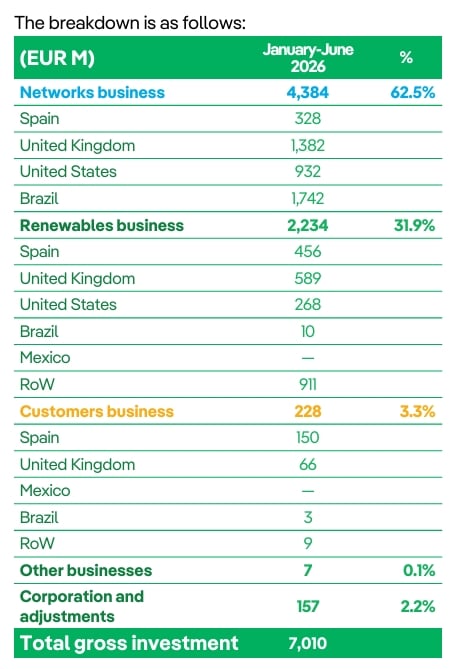
For the first half of 2026, Iberdrola announced a net profit of €4.34 billion, a 22% increase from the previous year. Much of this growth is due to investments in electricity networks in the UK, US, and Brazil.
- Gross organic investments reached €5.9 billion in the first half of 2026, up 5.3% year over year. Total investments rose 25% to €7.01 billion, including minority shareholder contributions to Neoenergia.
- Networks and renewable energy made up about 93% of total investments. Electricity networks alone accounted for roughly 63% of Iberdrola’s overall spending.
These numbers show how utilities now view grid infrastructure as key to future growth.
Europe’s Growing Data Center Demand Boosts Grid Investment
A major factor in expanding networks is the growth of AI and cloud computing.
Modern AI needs huge computing power, prompting tech firms to build larger, energy-intensive data centers across Europe.
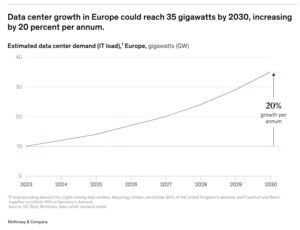
According to McKinsey, European data center capacity is expected to grow from about 10 gigawatts (GW) today to around 35 GW by 2030. Meeting this demand will require $250 billion to $300 billion in new infrastructure investment, not including electricity generation.
Power demand will rise quickly too.
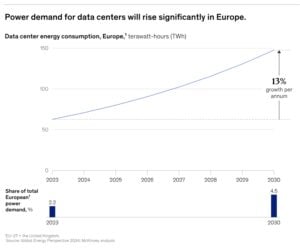
- McKinsey estimates that electricity use by data centers in Europe could jump from about 62 terawatt-hours (TWh) today to over 150 TWh by 2030.
By then, data centers may account for roughly 5% of Europe’s total electricity use, up from about 2% today. From 2023 to 2030, demand from data centers could increase by about 85 TWh, growing at around 13% per year.
The firm also projects that data centers could represent 15% to 25% of all new electricity demand in Europe by 2030.
Much of this demand will likely be met with renewable energy, supporting Europe’s decarbonization goals while increasing the need for stronger transmission and distribution networks.
Finland’s Clean Energy Advantage
Finland is well-positioned to meet this growing electricity demand. The country has one of Europe’s cleanest energy systems and continues to attract investment in renewables, manufacturing, and digital infrastructure.
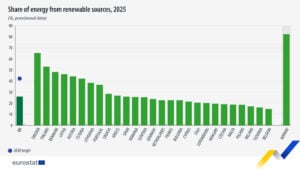
- Provisional EU data shows renewable energy made up 53% of Finland’s gross final energy consumption in 2025, the second-highest in the EU after Sweden.
Finland’s renewable mix relies mainly on biomass, wind, and hydropower.
Across the EU, renewables accounted for 26.2% of gross final energy consumption in 2025, up from 25.2% in 2024. However, the bloc still needs to make significant progress to meet its 42.5% renewable energy target by 2030, requiring an average annual increase of about 3.3 percentage points from 2026 onward.
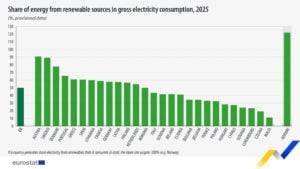
Renewable electricity generation has grown even faster. It made up 49.9% of the EU’s gross electricity consumption in 2025, nearly half of all electricity generated in the bloc.
A Growing Focus on Grid Infrastructure
The Caruna acquisition shows a change in utility investments. Companies focus more on electricity networks. These networks aid electrification, renewable energy, electric vehicles, industrial decarbonization, and AI-driven data centers.
Regulated grid assets provide steady, inflation-linked returns. However, these returns depend on regulation, financing costs, and effective infrastructure delivery.
In Finland, stronger electricity networks can alleviate grid bottlenecks. They help bring in more renewable energy. This boosts energy security by cutting down on imported fossil fuels.
This deal boosts Iberdrola’s presence in a top European economy and expands its regulated network. As Europe builds clean energy and digital infrastructure, modern electricity grids are essential. This positions Iberdrola at the center of this change.