


Japan’s Nippon Yusen Kabushiki Kaisha (NYK), one of the world’s largest shipping companies, strengthened its decarbonization push by purchasing carbon dioxide removal (CDR) credits from 1PointFive’s Direct Air Capture (DAC) technology.
This deal marked the company’s second credit purchase from 1PointFive, confirming its leadership in the maritime sector’s race to cut emissions.
Shipping’s Carbon Challenge
Since its founding in 1885, NYK Line has built one of the most extensive global logistics networks, operating car carriers, container ships, and bulk energy transport vessels. But the company also faces a clear challenge: shipping emits around one billion tons of CO2 every year.
Even if operators slash most emissions, about 10% will remain as residual output. That means the industry will need to remove roughly 100 million tons of CO2 annually to meet its climate targets. NYK acted on this reality by buying durable CDR credits, showing how it plans to balance reductions with removals.
Akira Kono, Representative Director, Executive Vice-President, Executive Officer of NYK.
“Together with 1PointFive, we aim to contribute not only to the decarbonization of international shipping, but to decarbonization worldwide. NYK is proactively driving decarbonization in the international shipping industry through a multifaceted approach that includes introducing fuel-efficient vessels, adopting low-carbon fuels such as biofuels, and improving each vessel’s energy and operational efficiency. Addressing the residual emissions that cannot be eliminated through operational or technological improvements alone requires CDR.”
1PointFive’s DAC Advantage
Backed by Occidental, 1PointFive draws on over 50 years of carbon management expertise and large-scale project experience to deliver DAC at commercial scale. The company uses Carbon Engineering’s DAC technology, sequestration hubs, and AIR TO FUELS® solutions to scale carbon removal.
Notably, NYK will source its CDR credits from STRATOS, 1PointFive’s first DAC facility in Texas, scheduled to begin operations this year.
They expect this facility to become the world’s largest DAC once operational. It can potentially capture 500,000 tonnes of CO2 per year. And future facilities will double that capacity.
1PointFive further highlights that their DAC system offers three clear benefits:
- Durability: Geologic sequestration locks CO2 away for thousands of years.
- Scalability: Companies can replicate DAC plants worldwide to meet demand.
- Measurability: EPA-approved monitoring and reporting verify every tonne of CO2 removed.
By securing credits from STRATOS, NYK ensured transparency and accountability in its climate plan.

Anthony Cottone, President and General Manager of 1PointFive, noted,
“We’re excited to expand our partnership with NYK who has taken a leadership approach in decarbonization, and to demonstrate how Direct Air Capture is uniquely positioned to deliver durable and verifiable carbon removal,” said “By working together, we’re building a pathway to help the maritime sector take actionable steps to further sustainable operations.”
NYK’s Commitment to Net Zero by 2050
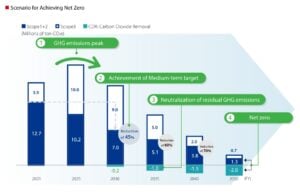
NYK pledged to reach net zero emissions by 2050 through a mix of reductions and removals. The two strategies include:
- Efficiency First (until 2030): NYK improved vessel operations and ship designs to maximize energy efficiency and reduce emissions from its fleet.
- Alternative Fuels (from 2030): The company plans to introduce zero-emission fuels like ammonia while ensuring they also meet safety and environmental standards.
For Scope 3 emissions, NYK works with partners to share data and build a low-carbon supply chain ecosystem. Significantly, it invests in Negative Emission Technologies (NETs) such as CCUS and carbon credits to eliminate unavoidable emissions. These steps support both decarbonization and marine biodiversity protection.
Driving Innovation in Marine Fuels
NYK accelerated research into fuels that can replace heavy oil. Liquefied natural gas (LNG) serves as a bridge, but ammonia shows strong potential as a zero-emission alternative.
Ammonia does not release CO2 when burned, but it poses safety risks due to toxicity. Scaling its use also requires a new global supply chain. NYK, backed by Japan’s Green Innovation Fund, is leading this effort.
The company is developing the Ammonia-Fueled Ammonia Gas Carrier (AFAGC) with Japan Engine Corporation, IHI Power Systems, and Nihon Shipyard. After securing approval in principle in 2022, NYK is refining designs to launch the ship in 2026.
Expanding Carbon Credit Projects
NYK also invested in carbon credit initiatives to expand its climate impact.
- Carbon-Neutral Shipping: In 2019, NYK became Japan’s first shipping firm to offer carbon offset services. In 2023, it launched the coal carrier Kagura for Chugoku Electric Power. The project used offsets to achieve theoretical zero GHG emissions for the entire voyage.
- Forest Fund: The company partnered with Sumitomo Forestry to back a forest restoration fund that generates credits while protecting biodiversity.
- Australian Projects: Through a joint venture with Mitsubishi Corporation, NYK invested in Australian Integrated Carbon Pty Ltd (Ai Carbon). By 2024, Ai Carbon absorbed 5 million tonnes of CO2 annually and set a goal of 100 million tonnes cumulatively by 2050.

These investments give NYK valuable expertise in the growing carbon credit market.
DAC Carbon Credits: Expensive but Essential for Net Zero
Direct Air Capture (DAC) represents only a small share of the global carbon removal market but is expanding rapidly. Market reports say that the DAC sector, valued at $97.6 million in 2024, could grow to $1.7 billion by 2030, rising at more than 60% annually.
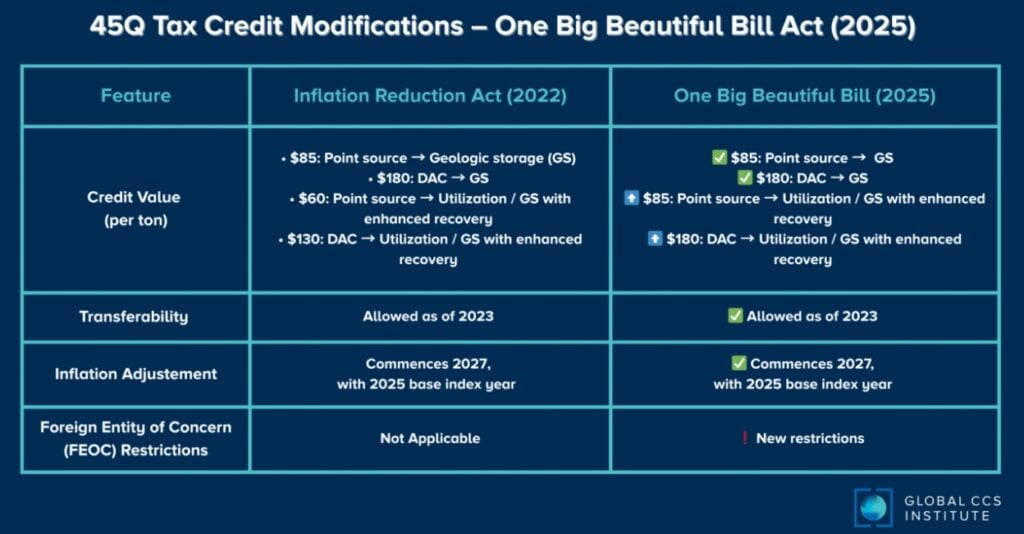
Governments are accelerating adoption with incentives and policy support. The U.S. offers 45Q tax credits of up to $180 per ton for DAC storage. Japan has already included DAC in compliance markets, and the EU is preparing carbon removal rules that may integrate DAC after 2030.
DAC credits remain costly, usually between $170 and $500 per ton, with some exceeding $1,000. The price reflects the difficulty of removing CO2 directly from the air and the long-term durability of storage. Despite the cost, buyers view DAC as the “gold standard” of offsets. Early demand helps scale projects, cut future costs, and strengthen climate action.
Most buyers purchase DAC credits directly from developers such as Climeworks and CarbonCapture, through platforms like Patch, or via advance agreements. Third parties verify credits, and buyers receive certificates and documentation once delivered.
Although expensive, DAC credits deliver measurable and durable removals, offering companies a reliable tool to reach net zero.
Now coming back to the maritime sector, it faces rising regulatory pressure and customer demand to decarbonize. However, NYK has set a clear roadmap to boost efficiency, adopt alternative fuels, and invest in carbon removal.
Through partnerships like 1PointFive for DAC credits, NYK is on the right track. Its actions show how shipping can pair innovation with carbon removal to achieve net zero and support global climate goals.