

Meta has signed a multi-year agreement with low-carbon cement producer Fortera to support the supply of approximately 200,000 tons of lower-carbon cement. The deal covers environmental attribute certificates (EACs) linked to Fortera’s cement production.
The agreement highlights growing corporate demand for cleaner building materials. It also shows how long-term purchase commitments can help new manufacturers raise money and expand production.
Under the deal, Meta will purchase EACs linked to the cement volume. These certificates allow companies to support the production of lower-carbon materials. They can also help reduce emissions linked to construction supply chains.
In addition, Meta has the option to use Fortera’s cement in its own building projects. Both companies can also increase the supply volume and extend the agreement in the coming years.
The deal will support Fortera’s planned cement plant in Ste. Genevieve, Missouri. It will also give the company greater revenue visibility as it works to secure funding for the project.
Meta Deal Supports Fortera’s New Cement Plant
Building a new cement plant requires significant investment. However, manufacturers often struggle to secure funding without long-term customers and clear demand.
Meta’s agreement could help address this challenge. By committing to purchase EACs over several years, the company gives Fortera a stronger business case for its planned facility.
Long-term agreements can make it easier for manufacturers to attract investors. They also give lenders more confidence that future customers will buy their products.
Ryan Gilliam, CEO of Fortera, said agreements of this size and length can help move projects from planning to production. He added that the deal shows growing interest in low-carbon cement among large corporate buyers.
For Meta, the partnership supports its efforts to cut emissions from the construction of its buildings and data centers.
Fortera Uses Captured CO₂ to Make Cement
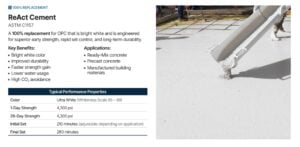
Fortera makes ReAct Cement using its proprietary ReCarb technology. The process uses captured carbon dioxide (CO₂) as a raw material for cement production.
The company says its cement produces up to 70% fewer emissions than ordinary Portland cement (OPC).
Traditional cement production releases large amounts of CO₂. Manufacturers heat limestone at high temperatures to make cement. This process releases emissions both from the fuel used and from the chemical reaction that breaks down limestone.
Fortera takes a different approach. Its technology turns waste CO₂ into a useful input for cement production.
The company has also designed its process to work with existing cement and lime plants. This means manufacturers can continue using their kilns, limestone supplies, and distribution networks. As a result, they may not need to replace their entire production systems to adopt the technology.
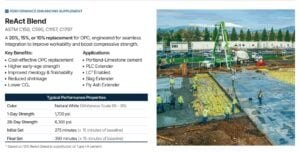
Fortera says its cement has passed extensive third-party testing and meets ASTM standards for use in concrete. The company also reports that it can produce cement at a cost similar to conventional Portland cement.
These factors could support wider adoption. Builders need lower-carbon materials that meet industry standards and perform well without adding major costs.
Fortera currently operates a facility in Redding, California, with an annual production capacity of 15,000 tons. The company is now working to expand its production capacity through a global commercial pipeline.
One of its main projects is the planned 300,000-ton-per-year cement plant in Missouri.
- SEE MORE: Microsoft (MSFT Stock) Doubles Down on Clean Materials: Low-Carbon Cement and Green Steel Deals
Missouri Plant Could Boost Domestic Cement Supply
The Meta agreement will help support the development of Fortera’s planned plant in Ste. Genevieve, Missouri.
The location offers access to the Mississippi River and established transport networks. This could help Fortera move its cement across the United States and into international markets at lower transport costs.
The project could also strengthen U.S. cement production. The country still depends on imports to meet part of its construction demand.
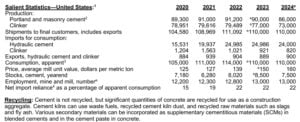
- According to the 2025 U.S. Geological Survey, imported cement accounted for 21% of U.S. cement consumption.
U.S. portland and blended cement production
Therefore, new domestic production could help reduce reliance on foreign suppliers. At the same time, Fortera aims to bring lower-carbon cement to more construction markets.
The project is also expected to create local jobs. These will include construction jobs during plant development and permanent positions once the facility begins operating.
Devon Lake, Meta’s Head of Net Zero Strategy, said the agreement could help move the Missouri plant closer to production. He also pointed to the potential for new construction and manufacturing jobs in the state.
Meta Steps Up Its Low-Carbon Construction Efforts
The Fortera deal supports Meta’s wider plan to reduce emissions across its operations and supply chain.
The company has set a target to cut its Scope 1 and Scope 2 emissions by 42% by 2031, compared with its 2021 baseline.
It also wants suppliers responsible for at least two-thirds of its supply chain emissions to set science-based reduction targets by 2026. Meanwhile, Meta aims to keep its Scope 3 emissions at or below 2021 levels by the end of 2031.
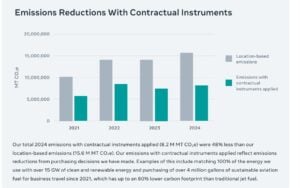
Construction materials play an important role in this effort. Cement and concrete create significant emissions before buildings even begin operating.
This is especially important for Meta because it continues to build data centers to support its digital services and artificial intelligence (AI) operations.
To address these emissions, Meta is testing and using lower-carbon concrete. One approach involves replacing part of the cement in concrete mixes with materials such as fly ash and slag.
The company is also supporting new technologies that can reduce or remove the need for traditional cement.
- For example, Meta has partnered with CarbonBuilt to expand the production of its lower-carbon concrete. It has also provided carbon finance to CarbiCrete to help manufacturers produce cement-free concrete.
- In addition, Meta is working with the Infrastructure Masons Climate Accord and more than 70 companies to reduce emissions from digital infrastructure materials.
The company is also using AI to develop better concrete mixes. In a project with Amrize and researchers at the University of Illinois Urbana-Champaign, Meta developed a new concrete formula that cut emissions by 40% compared with an industry baseline.
The mix also showed faster curing and higher strength. Meta has used the selected formula in some of its newer data center projects, including at its Rosemount, Minnesota, site.
Can Long-Term Deals Help Scale Low-Carbon Cement?
The Fortera and Meta agreement highlights a major challenge in industrial decarbonization. New technologies need more than technical success. They also need customers willing to buy their products.
Global cement emissions chart
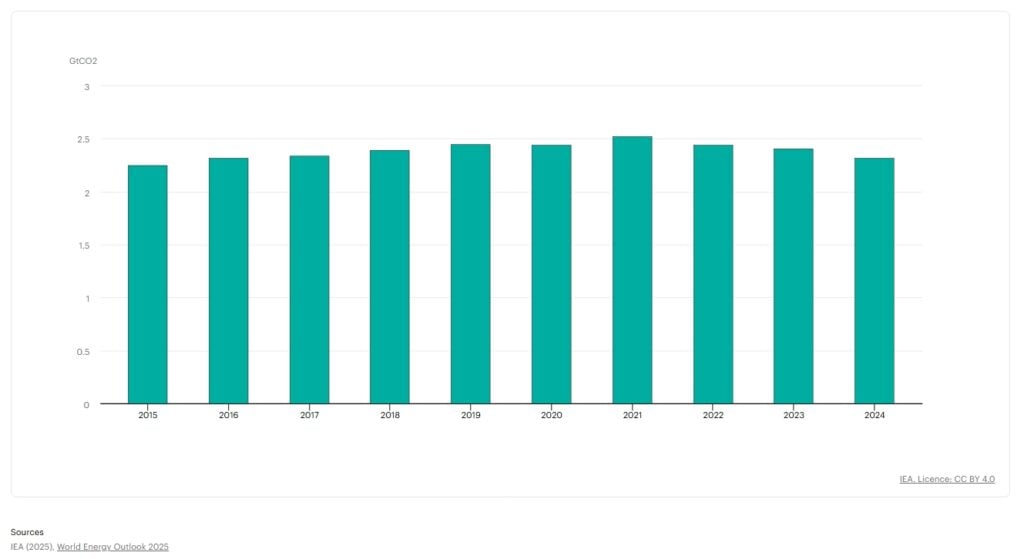
Cement manufacturers face high construction costs and long development timelines. Moreover, conventional cement remains widely available. This makes it harder for newer technologies to compete and attract investment.
However, long-term purchasing agreements can help change this situation. They give manufacturers a clearer picture of future demand and can make new projects more attractive to investors.
For Fortera, Meta’s commitment could help secure funding for its Missouri plant and expand its low-carbon cement business.
For Meta, the agreement offers another way to reduce emissions linked to construction. It also supports the growth of domestic production of cleaner building materials.
More broadly, the deal shows how large companies can help bring new industrial technologies to market. As demand for data centers, buildings and infrastructure grows, the need for lower-carbon cement will also increase.
Therefore, long-term corporate commitments could play an important role in scaling cleaner cement production and reducing emissions across the construction industry.