

Meta Platforms Inc., the owner of Facebook, Instagram, and WhatsApp, has signed a long-term power purchase agreement (PPA) with renewable energy developer MN8 Energy LLC. Under the deal, the tech giant will buy 100% of the electricity generated by MN8’s 80 megawatt (MW) Walker Solar Project in Juniata County, Pennsylvania. The agreement marks the first direct clean-energy contract between the two companies.
Meta will use solar power to help supply electricity to its data centers in the United States. The project is scheduled to begin operations by the end of 2026.
The Walker Solar project will supply power to the PJM Interconnection grid. This grid is the biggest wholesale electricity market in the U.S. It serves over 65 million people in 13 states and Washington, D.C.
Urvi Parekh, Director of Global Energy at Meta, said:
“We are thrilled to partner with MN8 Energy to bring new renewable energy to Pennsylvania and help support our operations with 100% clean energy.”
Inside the 80 MW Walker Solar Deal
The solar facility will generate about 80 MW of clean electricity when complete. Under the PPA, Meta will acquire all of the project’s output.
The agreement is a long-term contract. Meta will buy renewable power from MN8 Energy for years. This will help meet part of its data center electricity demand with clean energy.
MN8 Energy, a New York-based renewable energy and battery storage company, will develop and build the solar plant. It has about 4 GW of operational and under-construction solar projects nationwide. The company also operates 1.1 gigawatt-hours (GWh) of battery capacity and over 40 high-power EV charging stations in the U.S.
The Walker Solar project will supply energy to the regional grid and create local jobs during construction. It will also generate tax revenue for Juniata County and strengthen local energy infrastructure.
Powering AI Growth With Long-Term Solar
Meta has set a clear long-term climate goal. The company aims to reach net-zero emissions across its full value chain by 2030. This includes direct operations and supply chain emissions.
The tech giant has matched 100% of its global electricity use with clean and renewable energy since 2020. This covers its offices and data centers. To support this goal, Meta has helped add nearly 29 gigawatts (GW) of new clean energy capacity to power grids worldwide.

Since 2021, Meta reports that its renewable energy procurement has helped reduce emissions by 23.8 million metric tons of CO₂ equivalent (CO₂e). These reductions come from large-scale wind and solar projects tied to long-term power purchase agreements.
However, electricity demand continues to grow. Meta’s data centers are expanding to support artificial intelligence and digital services. The company notes that rising data center demand makes decarbonization more complex, even as renewable energy use increases.
Meta aims to go further. It wants to reach net zero across its full value chain by 2030. This means not only its own operations (Scope 1 and Scope 2 emissions) but also the emissions tied to its suppliers, hardware, and products (Scope 3). Scope 3 emissions, which are about 8.15 million metric tons of CO2e, account for 99% of its total carbon footprint.
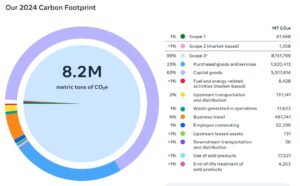
As of its latest report, 48% of its suppliers — based on emissions contribution — have set science-aligned emissions reduction targets. These supplier commitments are critical because Scope 3 emissions make up a large share of Meta’s total carbon footprint.
- The company has also set a goal to reduce Scope 1 and Scope 2 emissions by 42% by 2031, using 2021 as a baseline year.
Meta’s sustainability reports also show that electricity use remains central to its climate strategy. Since using 100% renewable energy in operations, Meta has helped avoid millions of tons of CO₂ emissions.
Beyond Carbon Emissions: Biggest Clean Energy Buyer
Beyond carbon reductions, Meta includes water and biodiversity in its ESG strategy. Since 2017, Meta has supported more than 40 water restoration projects.
In 2024 alone, these projects helped restore over 1.6 billion gallons of water in regions facing high or medium water stress. The company has committed to becoming water positive by 2030, meaning it plans to restore more water than it consumes.
The Facebook owner also supports biodiversity near its facilities. It has allocated more than 4,000 acres of land, over half of its owned data center campus footprint, for habitat protection and restoration using native species.
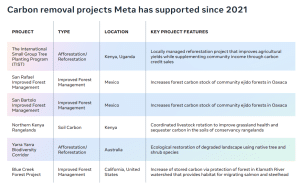
In addition, Meta invests in voluntary carbon removal. The company funds projects designed to remove carbon dioxide from the atmosphere to address emissions that are difficult to eliminate. It also works with industry groups and government initiatives to help scale high-quality carbon removal markets.
A recent BloombergNEF report highlights Meta’s role in large-scale corporate clean energy procurement. The tech company was the biggest corporate clean energy buyer in 2025. They signed over 10 GW in power purchase agreements (PPAs).
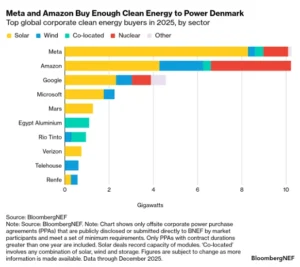
It also found that Meta and its peers, Amazon, Google, and Microsoft, accounted for nearly half of all corporate clean energy deals last year. This demonstrates Meta’s influence in driving new renewable capacity online.
These efforts show Meta is combining financial power with sustainability action. The Walker Solar PPA helps the tech giant meet the fast-growing electricity needs from its data centers and AI workloads. Data centers use a lot of power. Using renewables can help meet this demand and reduce carbon emissions from grid electricity.
New Solar Capacity Strengthens the PJM Grid
The solar project will deliver clean power into the PJM Interconnection market. PJM coordinates electricity flow across a broad region of the U.S. and manages one of the most complex power systems in North America.
Adding new generation capacity like Walker Solar contributes to grid resilience and supports broader decarbonization goals. Solar generation helps offset older fossil-fuel plants as they retire or reduce output.
Experts say utility-scale solar is key. As more sectors electrify, the demand for electricity keeps rising. More solar capacity means steady, low-carbon energy when the sun is out, which helps reduce overall system emissions.
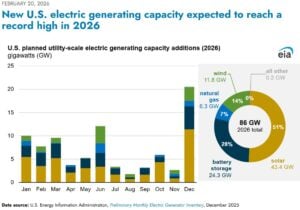
The Walker Solar project is part of a larger trend in U.S. solar growth. The U.S. Energy Information Administration (EIA) says 2026 will bring a record increase in utility-scale solar capacity. Over 40 GW is set to be added, marking a big jump from previous years.
Big Tech’s Expanding PPA Playbook
Meta’s solar PPA with MN8 reflects a broader trend in corporate renewable procurement. Many large technology companies have signed long-term deals to secure clean electricity for their operations.
Beyond Meta, firms like Google, Amazon, and Microsoft also regularly enter into PPAs for new solar and wind projects. These companies made up almost half of all corporate clean energy deals in 2025, based on market analysis.
Long-term solar PPAs give companies a way to lock in clean power at predictable costs. They also help developers secure financing for new projects, since a contracted buyer reduces risk for lenders and investors.
These corporate procurement strategies go beyond purchasing renewable energy certificates (RECs). They involve direct contracts tied to specific solar or wind projects. This practice supports actual builds of new clean capacity rather than shifting existing output on paper.
The Next Wave of Data Center Decarbonization
The Meta–MN8 Energy solar agreement highlights a shift in how major tech companies meet their clean energy goals. Long-term PPAs like this one are becoming a key tool for corporate decarbonization.
Analysts believe major data center operators will keep growing their PPA portfolios. This is due to increased electricity demand and investor expectations for ESG. This trend could help accelerate the broader deployment of solar and wind generation across the U.S. power system.
As the landscape changes, data center operators and renewable developers may look into hybrid solutions, which could mix solar power with battery storage, microgrids, and demand response systems. This approach aims to provide reliable, low-carbon power all day long.