


Microsoft has agreed to buy 2 million carbon removal credits from a forestry project in Northern Uganda. The credits come from the Kijani Forestry Smallholder Farmer Forestry Project. They will be delivered over about 9 years under a wider agreement with Rubicon Carbon. The deal supports Microsoft’s plan to cut its carbon footprint and invest in nature-based climate solutions.
These credits are known as Afforestation, Reforestation, and Revegetation (ARR) credits. They represent carbon that has been removed from the atmosphere and stored in trees and forests. This type of credit helps fight climate change while also supporting local farmers.
Phillip Goodman, Director of Carbon Removal at Microsoft, said:
“We are pleased to support Kijani’s work in strengthening farmer livelihoods while restoring ecosystems in Northern Uganda. The framework with Rubicon Carbon streamlines the contracting process, while ensuring project quality and unlocking financing for nature-based removals.”
Trees as Carbon Banks: The Uganda Deal
The Smallholder Farmer Forestry Project in Northern Uganda works with more than 50,000 smallholder farmers. Together, they plant and manage woodlots on land that was previously degraded. By early 2026, the project had planted over 30 million trees with the help of local growers.
Under the agreement, Microsoft will receive 2 million ARR carbon removal credits from the project. Rubicon Carbon could supply Microsoft with up to 18 million tonnes of high-quality carbon removal credits by 2035.
The Uganda forestry project is one of the first approved under Uganda’s Climate Change Mechanisms Regulations. This gives it official local recognition. Credits will be given as trees grow and take in carbon, following a science-based method to measure and verify results.
How Carbon Credits Work
Carbon credits represent measured reductions in greenhouse gas emissions or the removal of carbon from the air. One carbon credit usually equals one metric ton of carbon dioxide equivalent (CO₂e). In forest projects like ARR, credits are created as trees grow and store carbon in their wood, roots, and soil.
Companies can buy carbon credits to offset emissions they cannot yet eliminate. Microsoft uses credits as part of its wider climate strategy.
The voluntary carbon market (VCM) is where companies choose to buy credits. This market is different from compliance markets, where governments require companies to cut emissions. In the voluntary market, many project types generate credits. These include forestry, soil carbon, clean energy, and methane reduction.
The VCM has grown strongly over the past decade. More companies are making net-zero and climate pledges. Many rely partly on carbon offsets and removal credits to meet those goals.
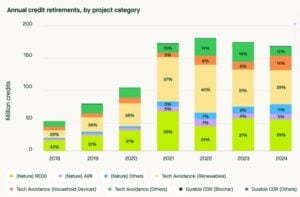
Forest projects that issue ARR credits must follow strict rules for measurement, reporting, and verification. These rules help ensure the carbon removals are real, additional, and long-lasting. Once verified, credits can be sold or retired by companies to meet climate commitments.
Why Microsoft Is Investing in Carbon Credits
Microsoft, the world’s biggest buyer of CDR credits, has set long-term environmental goals. These include becoming carbon negative by 2030 and removing more carbon than it has emitted since its founding by 2050.
To reach these goals, the tech giant invests in many types of carbon removal solutions. These include both nature-based and engineered approaches.
Microsoft’s removal credit commitments have surged. They’ve expanded from small contracts in 2023 to large, long-term deals by 2025. The largest commitments in 2025 include:
- Rubicon Carbon framework (18 million tonnes): nature-based forestry ARR credits over 15–20 years.
- AtmosClear BECCS (6.75 million tonnes): one of the biggest permanent engineered removal agreements.
- Anew Climate / Aurora Forestry (4.8 million tonnes): improved forest management, nature-based credits.
Other smaller contracts are:
- Agoro Carbon Alliance (2.6 million tonnes): soil carbon removal,
- CO₂ Limited (reported sector figure): ~3,685,000,
- Stockholm Exergi (2024–35 delivery): ~3,300,000,
- Exomad Green: 1,240,000,
- Arca: 300,000, and
- Carba: 44,000.
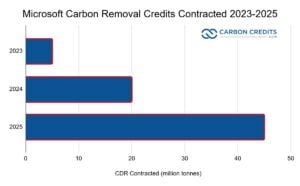
Total for 2025, including all major disclosed contracts: 45+ million tonnes. Some contracts span many years (up to 20 years) and may deliver credits over time. These numbers reflect contracted commitments of Microsoft, not necessarily credits delivered in a single year.
These actions make Microsoft one of the largest corporate buyers of voluntary carbon removal credits. Corporate demand funds various removal methods. These include better land use, soil carbon storage, engineered solutions, and forest restoration.
- SEE MORE: Microsoft’s Mega Move: 18 Million Carbon Credit Deal with Rubicon Carbon
- Microsoft’s $800M Carbon Removal Deal Sets Record in Climate Fight
Farmers in Focus: Local Benefits
The Uganda forestry project offers benefits beyond carbon removal. It supports smallholder farmers by helping them plant woodlots that generate income.
As trees mature, farmers can earn money from sustainable timber and charcoal. They may also benefit from future carbon revenues linked to the project.
The project also helps restore degraded land and expand forest cover. Healthy forests improve soil quality, help regulate water flows, and support wildlife. These environmental benefits are common in nature-based carbon projects.
The financing model behind the project also helps attract long-term investment. Microsoft’s purchase creates steady demand. This can lead to more funding for forestry and other nature-based solutions. This can help scale carbon removal efforts over time.
Scaling Up Nature-Based Solutions
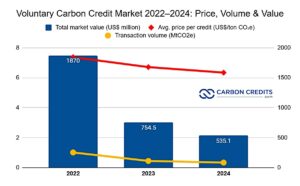
The global carbon credit market has expanded rapidly, though traded volume has gone down year-over-year since 2022. Companies bought more avoided-emission and carbon removal credits.
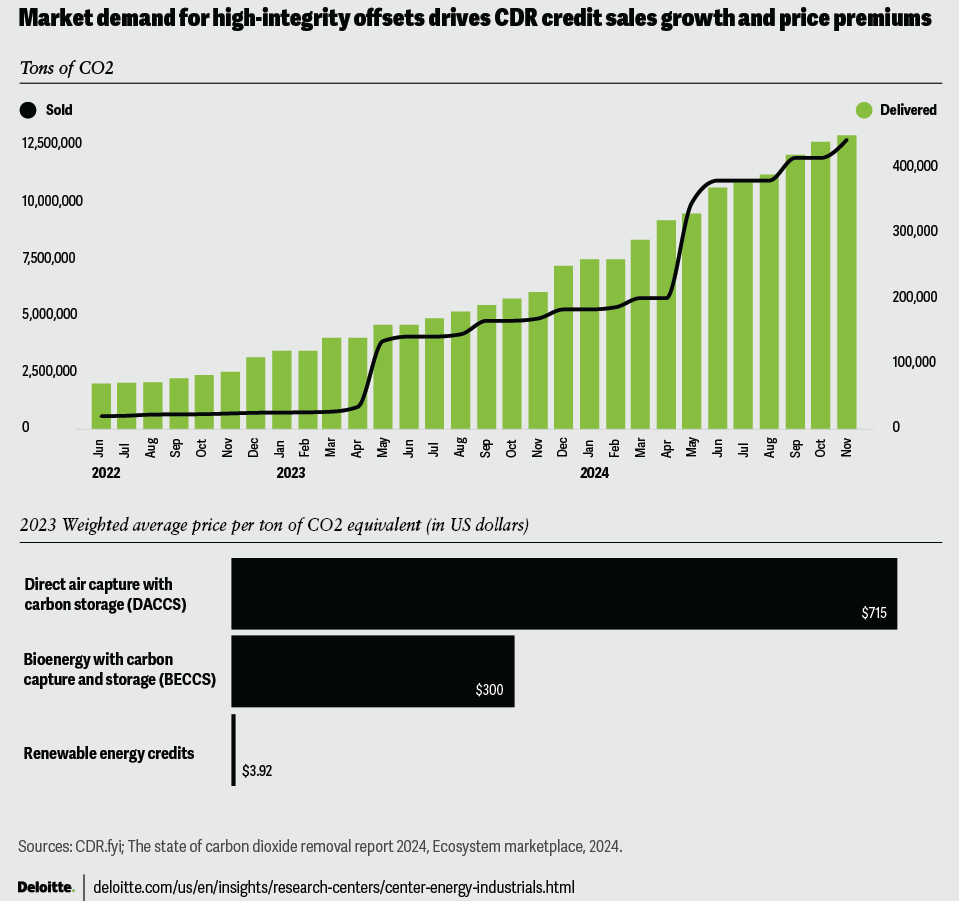
Removal-type credits (those that remove carbon from the atmosphere) were priced on average 381% higher than traditional emission-reduction credits in 2024. This reflects strong corporate interest in durable climate action.
Afforestation and reforestation remain among the largest categories in the voluntary market. Under the Verified Carbon Standard (VCS), more than 1.3 billion credits have been issued across sectors. These include forestry and other land-use projects, with over 776 million credits retired to date, showing heavy participation by land-based nature projects. These projects span regions across Africa, Latin America, and Asia.
Microsoft’s large ARR credit purchase reflects a wider trend. Many companies now include voluntary carbon credits in their climate plans. Major buyers include technology firms, airlines, consumer goods companies, and energy producers.
On the project level, a Rubicon Carbon spokesperson shares exclusive insights with the CarbonCredits.com team on the following questions:
- How does Rubicon Carbon ensure the long-term permanence of the carbon removals from the Kijani Forestry Project, and what monitoring or verification systems are in place to track carbon storage over time?
R: The project utilizes a comprehensive, site-specific monitoring technology stack. Each farmer’s plot of land is tagged with GPS coordinates and location-tagged photos for ongoing survival checks. In addition, Rubicon Carbon’s asset management approach includes regular monitoring of projects using remote sensing data to supplement the data shared by project developers.
- Can you provide details on how the smallholder farmers in Northern Uganda benefit financially from this project, and what percentage of project revenues is allocated to local communities?
R: The project is structured so that smallholder farmers directly benefit through shared carbon revenues, sustainable timber and sustainable charcoal offtake, and the provision of all planting inputs and training at no upfront cost. A portion of project revenue is reserved for long-term tree maintenance and stewardship, while farmers earn additional income through annual survival payments that begin in the first year and sustainable charcoal and timber production over time.
-
How does Rubicon Carbon plan to scale this model in other regions or forestry projects, and what challenges do you foresee in meeting large corporate demand for verified carbon removal credits?
R: The Kijani project is exceptionally well-tailored to meet the needs of farmers and communities in Northern Uganda, where illegal charcoal production is a driver of deforestation and a common income-generating activity in rural areas. The project offers multiple alternative revenue streams for farmers and clear benefits for carbon sequestration.
Its success has been driven by deep local relationships and strong farmer engagement, demonstrating how a community-based approach can succeed at scale. We see this project as a compelling example of what’s possible when we combine carbon finance with nature reforestation. We look forward to bringing similar project tools and capabilities to other parts of Africa with strong partners like the Kijani Forestry team.
Looking Ahead: Challenges, Outlook, and Scale
Despite this growth, challenges remain. High-quality credits require strong verification. Past reviews show that some credits did not always deliver real climate benefits without strict oversight. Thus, the volume of credits traded has fallen.
As the market grows, buyers and standards bodies are placing more focus on transparency, quality, and long-term monitoring.
The voluntary carbon market continues to change as expectations for quality rise. Forestry projects face risks such as fires, disease, and land-use changes. These risks can affect how long carbon stays stored in forests.
Policy changes may also influence future demand. Some governments are thinking about new climate rules. These rules might change how carbon credits are counted in national records and corporate reports. Such changes could impact prices and demand for nature-based credits.
At the same time, companies like Microsoft are expanding long-term carbon removal contracts. Many of these agreements last for years or decades. This helps projects secure early funding while trees and other systems take time to store carbon.
The deal shows how important nature-based solutions are becoming in corporate climate plans. It is part of a larger agreement with Rubicon Carbon that could deliver up to 18 million tonnes of removal credits over the coming decade. As demand for high-quality carbon credits grows, partnerships like this may support climate action while also driving local economic development.