Verra recently introduced the Verified Carbon Standard (VCS) Methodology VM0051 to reduce greenhouse gas emissions from rice farming. Under this guideline, farmers will practice improved water and crop management practices in flooded rice systems.
Verra began developing this methodology in late 2023. They held a public consultation in 2024 with ATOA Carbon and external reviewers to refine VM0051. The new standard, “Improved Management in Rice Production Systems, v1.0, replaces the old Clean Development Mechanism (CDM) method AMS-III.AU. The previous method ended in March 2023.
Verra’s VM0051: A New Approach to Reducing Rice Emissions
Rice is a staple for over half the world’s population. Rice fields cover around 168 million hectares. But they also release a lot of methane, which is a potent environmental pollutant.
As mentioned before, VM0051 promotes sustainable farming techniques. These methods reduce methane emissions from rice farming and improve water and fertilizer use. The standard also provides social benefits by raising farmers’ income and helping women get training and financial services in agriculture.
Generate High-Quality Credits
Verra’s VM0051 also aims to measure or quantify emission reductions more accurately. This method promotes actions such as enhancing rice varieties and using methanotrophic bacteria to cut down methane. By using VM0051, project developers can earn high-quality Verified Carbon Units (VCUs).
Subsequently, buyers or stakeholders will want these credits to help improve rice farming, boost food security, and meet their climate goals.
Verra highlighted that farming practices must reduce emissions by at least 5% to qualify as a significant change. Projects must show additionality. They can achieve this by proving a regulatory surplus, overcoming barriers, or showing that these practices are uncommon in the area.
This new standard targets agricultural land management (ALM) projects. However, VM0051 prohibits practices that significantly reduce soil organic carbon. So, projects that want to increase or decrease SOC storage must use the VCS Method VM0042 instead.
Some major improvements over the previous CDM methodology include:
Stronger Additionality Criteria: The methodology introduces stricter guidelines for proving additionality, including the use of remote sensing data.
Expanded Project Eligibility: Eligible activities now include using methanotrophic bacteria, shortening cultivation periods, avoiding residue burning, planting low-emission rice varieties, and optimizing nitrogen fertilizer use.
Soil Protection Measures: Safeguards prevent soil organic carbon (SOC) loss due to new farming methods.
Comprehensive Emission Tracking: Monitor and quantify nitrous oxide (N2O) emissions, along with CO2 from fossil fuels and energy use.
Dynamic Baseline Setting: The methodology adjusts baseline emissions based on actual weather conditions.
Improved Guidance: It provides clear instructions for project area classification and emission reduction calculations.
Flexible Measurement Methods: Project developers can choose from different quantification approaches, including biogeochemical models.
Digital Monitoring and Verification: Promotes advanced tools like remote sensing, artificial intelligence, and machine learning to streamline project validation and verification.
Biogeochemical Process-Based Models: These simulate how farming practices impact emissions.
Direct Measurement: Field studies gather data on actual methane emissions.
Default Equations and Emission Factors: Use standard emission factors for easy calculations. These are available for projects that emit less than 60,000 t CO2e per year.
How VCS Projects Can Transition
To switch from the discontinued AMS-III.AU method to VM0051, one can follow these steps. First, use the VCS Methodology Change and Requantification Procedure for past verification periods. Next, update the methodology through a Project Description Deviation for future monitoring.
Finally, ensure the project description aligns with VM0051 before applying for a new project registration.
Each project selects a method based on its size and emission sources. Table 4 in the methodology document lists all eligible quantification options.
Future Developments
Verra is creating a digital version of VM0051. You can find it on the Verra Project Hub. This tool will streamline project submissions with structured templates for data collection. Verra is also looking to integrate VM0051 into its upcoming Scope 3 Standard Program.
In conclusion, we can say that Verra’s new VM0051 helps cut greenhouse gas emissions from rice farming. As a result, it makes the industry more sustainable and, ultimately, supports climate goals.
United States data centers are consuming more electricity than ever before. In the third quarter of 2024, their power demand reached 46,000 megawatts. This is a huge increase driven by artificial intelligence (AI) and cryptocurrency mining.
According to forecasts, this demand will grow more by 2029. Digital services, cloud computing, and AI apps make data centers grow quickly.
Texas leads in data center power consumption, supplying nearly 8,000 MW to these facilities. Virginia follows closely with almost 7,000 MW, mainly powering cloud providers like Amazon, Microsoft, and Google. These states host the biggest hyperscale data centers. They need a lot of energy to run servers and cooling systems.
The Power-Hungry Digital Boom: What Fuels the Surge?
Three main culprits drive the energy demand of data centers in the U.S.
AI’s Insatiable Energy Appetite
The rapid development of AI is a major factor behind the increasing energy use. AI models require vast computing power for training and operations. OpenAI, Meta, and Google use powerful GPUs and servers, which require constant electricity. AI’s energy use will likely rise as more companies embrace machine learning and automation.
Training large AI models like GPT-4 requires thousands of GPUs, consuming up to 1 gigawatt-hour (GWh) per model. AI chatbots, image generators, and automation tools are increasing electricity demand.
Goldman Sachs Research projects that AI-driven data centers will consume an additional 200 terawatt-hours of electricity annually from 2023 to 2030.
By 2030, AI-driven data centers could account for 30% of all global data center power consumption.
Bitcoin and other cryptocurrencies require massive computational power to validate transactions through mining. In Texas alone, crypto miners contribute heavily to electricity demand. Despite price fluctuations, mining operations continue to expand, pushing energy grids to their limits.
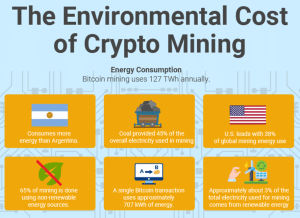
Bitcoin mining uses over 120 terawatt-hours (TWh) of electricity each year. This amount is more than what entire countries, like Argentina, consume.
The U.S. accounts for 37% of the world’s Bitcoin mining operations. Texas is emerging as a key hub due to its deregulated electricity market and lower energy costs.
Also, as crypto mining hardware gets better, miners are using liquid-cooled servers. This needs an extra cooling setup, which raises energy use even more. While some mining operations are adopting renewable energy, the majority still rely on traditional electricity sources.
Businesses and individuals store massive amounts of data online. Cloud computing providers such as Amazon Web Services (AWS), Microsoft Azure, and Google Cloud operate huge data centers that run 24/7. The rising demand for remote storage, streaming services, and real-time apps means these facilities must use more power.
By 2026, cloud computing workloads are expected to triple. This growth comes from enterprise applications, video streaming, and online gaming. 5G networks and edge computing are increasing the number of smaller data centers. These distributed centers add to the overall electricity demand.
Streaming platforms alone—such as Netflix, YouTube, and Disney+—consume over 200 TWh annually, with a large portion of this electricity coming from data centers. As demand for high-resolution video content, including 8K streaming, grows, the energy needs of these platforms will continue to rise.
Can the Grid Keep Up?
With data center energy needs skyrocketing, utility companies are adjusting their infrastructure and investments. Dominion Energy Virginia, for example, has 40.2 gigawatts (GW) of contracted capacity waiting for connection to the grid—almost double its 21.4 GW in July 2024. This reflects the growing interest in expanding data center operations in key states.
Southern Co., a major utility provider, raised its five-year capital plan by $14 billion. The new total is $63 billion. This increase will help enhance electricity generation and transmission. The company expects over 50,000 MW of additional power demand by the mid-2030s, with data centers accounting for 80% of this increase.
While energy companies prepare for rising demand, some experts warn of potential grid instability. The PJM Interconnection is the biggest electricity market in the US, serving 65 million customers. It expects data center power demand to rise to 26.7 GW by 2029. That’s a fourfold increase. Meeting this demand will require major infrastructure upgrades.
Despite concerns, industry leaders do not see an immediate energy crisis. Some experts argue that increased efficiency in AI and computing could balance demand. However, if data center growth continues at this pace, power shortages could become a real challenge in the coming years.
The Renewable Energy Race
To meet sustainability goals, many tech companies are investing in renewable energy sources. Microsoft and Google have committed to operating 100% carbon-free data centers by 2030. However, the speed at which renewables can replace traditional power sources remains uncertain.
Energy providers are also stepping up. Exelon Corp. plans to invest $38 billion over four years in grid enhancements, including renewable energy projects. However, some experts believe renewables alone cannot sustain the rapid growth of data center power needs.
Hyperscale data centers are increasingly signing long-term power purchase agreements (PPAs) with wind and solar farms. Google, for example, signed a 1.6-gigawatt PPA in 2023 to power its new AI-driven cloud regions. Amazon and Microsoft are also investing heavily in wind and solar projects to offset their growing data center footprints.
The surge in U.S. data center power demand is driven by AI, cloud computing, and cryptocurrency mining. AI training models, high-res video streaming, and global Bitcoin mining are stressing the power grid like never before. Utility companies are spending a lot on expanding the grid. However, it’s unclear if this growth will be sustainable in the long run.
Renewable energy solutions are in development. However, it’s unclear if they can fully meet the growing demand. In the next few years, we’ll see if upgrades to infrastructure and clean energy can meet the rising demand for digital services. If not, power shortages and environmental concerns could reshape the future of data center expansion in the U.S.
As demand for nickel rises, the Philippines can strengthen its role in the EV supply chain. However, a proposed ban on raw mineral exports could reshape its industry. At the same time, global trade tensions are adding uncertainty. New US tariffs on nickel imports, combined with an ongoing supply surplus, are keeping prices volatile.
While some experts predict that the long-term nickel price might increase as demand outpaces supply, near-term challenges remain. Can the Philippines capitalize on this shift, or will market instability hinder progress?
Nickel and Copper Demand Soars – Can the Philippines Capitalize?
The Philippines is the world’s second-largest producer of mined nickel. Copper and nickel both are essential for lithium-ion batteries used in electric vehicles (EVs). With the demand for these metals rising, thePhilippines has a unique opportunity to become a key supplier in the EV supply chain.
But on February 3, Senate President Francis Chiz G. Escudero approved the measure to ban the export of raw minerals.
He said,
“What we are looking at is to shift our policy from merely exporting raw minerals that will be utilized by other countries to produce higher value products, to developing our processing capabilities. This will result in added value for our minerals-related exports, provide a much-needed boost to our economy and generate employment for our people.”
Boosting Domestic Nickel Refining
If enacted, the ban will take effect in five years, giving mining companies time to establish processing plants. This policy shift is especially significant for key energy metals like nickel, which play a crucial role in the global battery and renewable energy sectors.
Escudero highlighted Indonesia’s 2020 ban on nickel ore exports as a successful example. He hopes that by processing nickel and copper within the country, thePhilippines can become a major supplier of battery materials and a key player in the global EV industry.
He also believes that building a strong refining industry will create jobs, reduce dependence on raw material exports, and boost the economy. In the future, this could even help the Philippines manufacture its electric vehicles.
The Chamber of Mines of the Philippines (COMP) and the Philippine Nickel Industry Association (PNIA) support Senate Bill (SB) 2826 but disagree with the ban. The bill introduces a new tax system based on profits, but the groups believe stopping ore exports will cause problems.
They argue that mining companies cannot build processing plants within five years because of high power costs, poor transport systems, and conflicting local rules. The Philippines also has some of the highest electricity prices in Asia, making local processing too expensive.
They said, “Unless these issues are fixed, processing minerals locally will remain just a dream. There are no shortcuts.”
To make this plan work, the government must improve infrastructure, cut energy costs, and help mining companies build processing plants. Without these steps, the export ban could hurt the industries it aims to support.
Supply Surplus and Investment Risks
Even though the Philippines wants to boost its nickel industry, the global market already has too much supply. Big companies have secured their nickel resources, and experts at the Shanghai Metals Market (SMM) predict this surplus will grow even more in 2025 and beyond.
As this decision takes shape, the Philippines may face challenges in developing a strong local processing industry. With too much nickel already available, demand may not be high enough to make processing profitable. This could make it hard to attract big investors, slowing down the country’s plans to move from raw ore exports to processed nickel products.
Impact on China’s Nickel Supply
According to SMM, the Philippines exported 54 million metric tons of nickel ore in 2024. Out of this, 43.5 million mt went to China, while 10.35 million mt was sent to Indonesia.
If the Philippines decides to ban ore exports, China could face serious supply disruptions. The country relies heavily on Philippine nickel, especially after Indonesia tightened its mining quotas in 2024. A ban would likely create shortages, pushing China to look for other suppliers or invest in processing facilities within the Philippines to secure its supply.
A Short-Lived Rally for Nickel Prices
So, what happened to nickel prices after the Philippine government’s announcement of considering banning nickel ore exports? Well, as reported by S&P Global, this news sparked optimism in the nickel market, helping prices climb back to $15,811 per ton on February 6.
However, further gains were limited. Between February 7 and February 21, prices remained within the $15,400 to $15,800 range, and fears of worsening trade tensions loomed large.
The Larger Picture: How the U.S Tariff War is Shaping Nickel Prices?
S&P Global has provided deeper insights into how U.S. tariffs could affect nickel prices and the broader American nickel market. In January, the White House announced new tariffs on imports from Canada, Mexico, and China. Following this, nickel prices tumbled to a one-month low of $15,210 per ton.
In early February, President Trump signed executive orders imposing a 10% tariff on imports from China and an even higher 25% tariff on goods from Canada and Mexico. These tariffs took effect on February 4, keeping nickel prices on the London Metal Exchange (LME) below $16,000 per ton throughout the month. As trade tensions escalated, market uncertainty overshadowed concerns about a possible nickel ore export ban in the Philippines.
Canada quickly responded. Trudeau announced a 25% tariff on $155 billion worth of US goods, set to take effect the same day. But just before the deadline, the US government delayed tariffs on Canada and Mexico by 30 days, temporarily easing market concerns.
Will it Backfire on the US EV Industry?
If the US moves forward with a 10% tariff on nickel imports from Canada after the 30-day delay, it could drive up costs for American industries. Canada supplied nearly one-third of the US’s primary nickel imports in 2024, making it the country’s largest source.
The bigger challenge? The US produces very little nickel. The only nickel-producing mine is Lundin Mining’s Eagle Mine in Michigan. It contributed just 0.21% of global output in 2024 and is set to close before the decade ends. On top of that, the US lacks refining capacity for class 1 nickel, a key material for EV batteries.
If tariffs on Canadian nickel remain in place, it could become harder for US manufacturers to access affordable supplies, especially for the EV and stainless-steel industries. The US had expected to depend on Canada to meet its rising demand for battery-grade nickel.
However, trade restrictions might create challenges for this plan. It can also affect the competitiveness of domestic EV companies in the global market.
The Bottom Line
At present, the global nickel market remains volatile, affected by trade tensions, excessive supply, and evolving policies. All these factors are driving prices down. However, this dim nickel environment is expected to shift in the future.
With a declining market balance and reduced oversupply, nickel prices are forecasted to rise. By 2030 and beyond, demand is projected to exceed supply, leading to a further price increase.
BP has announced a major shift in its strategy, cutting back on renewable energy investments and increasing its focus on oil and gas. The company plans to invest $10 billion annually in fossil fuels while slashing more than $5 billion per year from its energy transition spending.
This move marks a sharp reversal from its previous commitment to cut emissions and transition toward greener energy. So, what prompted the energy giant to go back on its climate goals?
Why Is BP Changing Its Strategy?
BP’s leadership cited slower-than-expected progress in the energy transition as a key reason for the shift. CEO Murray Auchincloss said the Ukraine war, the pandemic, and unstable energy markets have slowed the shift to renewables.
He acknowledged that BP was too optimistic in its early climate targets, saying,
“Our optimism for a fast transition was misplaced, and we went too far, too fast…We will be very selective in our investment in the transition, including through innovative capital-light platforms. This is a reset BP, with an unwavering focus on growing long-term shareholder value.”
The company also pointed to strong demand for oil and gas, which remains higher than expected.
As a result, BP now aims to increase oil and gas production to between 2.3 million and 2.5 million barrels of oil equivalent per day (boepd) by 2030—up from its current 2.36 million boepd.
BP’s New Investment Plans
BP plans to spend between $13 billion and $15 billion each year until 2027. Most of this money will now go toward traditional fossil fuels. The company has also announced that it will:
Cut energy transition spending to $1.5 billion to $2 billion per year, down from previous forecasts of $8 billion in 2025 and $9 billion in 2030. BP’s big cut shows it expects slower returns on renewables. So, fossil fuel projects are now its main focus.
Increase its dividend by 4% each year to draw in investors. This shows confidence in profits, even as green investments decline.
Reduce operating costs and divest $20 billion worth of assets by 2027, including parts of its renewables business. BP says these divestments will simplify operations and bring in cash quickly.
Sell a 50% stake in Lightsource BP, its solar business, and shift to a capital-light renewable energy model. BP will not fully develop its green energy projects. Instead, it will depend on outside capital and partnerships. This approach cuts its financial risk but keeps BP involved in renewables.
Dialing Down Climate Commitments
The energy major’s combined Scope 1 and 2 emissions were 32.1 MtCO2e in 2023. This is a decrease of 41% from its 2019 baseline. This means they’ve already surpassed their 2025 target of 20% emission reductions against the baseline.
Source: BP Sustainability Report
BP has changed its strategy. It has lowered its climate goals and moved away from its earlier decarbonization plans. The company’s revised targets include:
Cutting Scope 1 and 2 emissions (from its own operations) by 45%-50% by 2030, down from the original 50% goal. This slight reduction reflects BP’s decision to keep oil and gas production at higher levels than originally planned.
Reducing the carbon intensity of its products by 8%-10% by 2030, compared to the previous 15%-20% target. This weaker target shows that BP is focusing on short-term profits instead of making bigger cuts in emissions from its fuel products.
Eliminating its absolute Scope 3 emissions reduction target, which previously aimed for a 20%-30% cut by 2030. Scope 3 emissions make up most of an oil company’s total carbon footprint. They arise from how people use its products, not from the company’s direct operations. Critics say BP’s decision to remove this target signals a major retreat from its climate commitments and a lack of accountability for downstream emissions.
Note: This chart is intended to be illustrative of a range of contributions that individual aspects of our plans may make relative to others. They should not be taken to represent specific expectations of actual impacts of actions driving delivery.
BP’s aim 1 means to be net zero across its entire operations on an absolute basis by 2050 or sooner.
The energy giant’s new climate goals show a shift seen in many big oil companies. Many of them are slowing down their green efforts due to economic uncertainty. By abandoning absolute Scope 3 targets, BP avoids binding commitments to reduce emissions from its gasoline and diesel sales, which make up the bulk of its carbon footprint.
Investor Pressure: Chasing Profits Over Sustainability?
BP is reducing its focus on renewable energy. This change follows pressure from Elliott Investment Management. They want BP to boost its financial returns.
BP has also underperformed compared to competitors like Shell, Exxon, and Chevron, leading to dissatisfaction among investors.
Image from Reuters
Following the announcement, BP’s share price fell by 1.8%, reflecting mixed reactions from the market. Some investors like the new focus on profits. But others think BP is giving up on long-term sustainability.
BP’s move could also have regulatory implications as governments worldwide tighten emissions standards. With climate policies evolving, companies that fail to adapt may face higher compliance costs in the future.
Environmental Groups Call Out BP’s ‘Climate U-Turn
BP’s return to fossil fuels has angered environmental groups. It has also worried investors who care about sustainability. Greenpeace UK called the decision “proof that fossil fuel companies can’t or won’t be part of climate crisis solutions.”
Meanwhile, Global Witness criticized BP. They claimed the company cares more about quick profits for shareholders than protecting the environment in the long run. The group held a protest in London. They used mobile billboards to call out BP’s leaders for their “flip-flop” climate policy decisions.
BP’s move also raises concerns about its alignment with global climate goals. The International Energy Agency (IEA) states that new fossil fuel projects can’t help limit global warming to 1.5°C. By increasing oil and gas production, BP may stray from the global net-zero goal.
What This Means for BP’s Future
BP’s shift signals a clear return to traditional fossil fuel business models, with a reduced emphasis on clean and renewable energy. While this move may generate higher short-term profits, it raises concerns about BP’s ability to adapt to a decarbonizing world.
Many experts believe that, over time, stricter climate regulations and changing energy markets will force oil companies to prioritize renewables once again.
BP’s shift in priorities could also affect its reputation among environmentally conscious investors and consumers. Companies that continue investing in fossil fuels at the expense of renewables may struggle to attract younger, sustainability-focused investors who prioritize long-term climate goals over immediate financial returns.
For now, BP is betting on oil and gas—but whether this strategy pays off in the long run remains uncertain. As the world moves toward net-zero goals, its decision to step back from renewables could impact its standing in the energy sector in the years ahead.
The question remains: Will BP’s return to fossil fuels prove to be a wise financial move, or will it leave the company behind in an increasingly green-focused world?
NVIDIA posted record earnings for the fourth quarter of the fiscal year 2025. The company reported $39.3 billion in revenue. This is a 12% rise from last quarter and a 78% increase from last year. For the full year, the company made $130.5 billion, more than 2X its revenue from the previous year. The AI giant is committed to sustainability, aiming for 100% renewable energy by this year.
Data Centers Fuel NVIDIA’s Explosive Growth
Jensen Huang, founder and CEO of NVIDIA, expressed excitement, noting,
“Demand for Blackwell is amazing as reasoning AI adds another scaling law — increasing compute for training makes models smarter and increasing compute for long thinking makes the answer smarter. We’ve successfully ramped up the massive-scale production of Blackwell AI supercomputers, achieving billions of dollars in sales in its first quarter. AI is advancing at light speed as agentic AI and physical AI set the stage for the next wave of AI to revolutionize the largest industries.”
NVIDIA’s Data Center division was its biggest revenue source. It generated $35.6 billion in Q4, a 16% rise from last quarter and a 93% increase from a year ago. The data center revenue soared 142% for the year, reaching $115.2 billion, driven by strong AI demand.
Last month, NVIDIA saw the largest single-day market value loss in stock market history after the launch of DeepSeek AI. However, with strong earnings and ongoing AI demand, the company is recovering well.
NVIDIA will join the $500 billion Stargate Project as the main tech partner. This project aims to advance computing and boost NVIDIA’s AI leadership.
Source: NVIDIA
Mixed Performance in Gaming and Automotive
While NVIDIA’s AI business thrived, its gaming division faced challenges. Q4 gaming revenue fell to $2.5 billion, down 22% from last quarter and 11% from a year ago. However, gaming had a solid year overall, with full-year revenue climbing 9% to $11.4 billion.
In contrast, the automotive and robotics segment excelled. Q4 automotive revenue reached $570 million, up 27% from the last quarter and doubling (103%) from last year. The full-year total also showed strong growth, rising 55% to $1.7 billion.
NVIDIA also shared exciting partnerships and product launches:
Toyota will use NVIDIA DRIVE in its next-gen vehicles, boosting NVIDIA’s role in self-driving tech.
NVIDIA Cosmos™, a new AI platform for robotics, is gaining traction with companies like Uber, Waabi, Agile Robots, and 1X.
The company launched the Jetson Orin Nano™ Super, promising 1.7x better performance in AI applications.
With all these performance data, NVIDIA’s profits also surged. GAAP earnings per share (EPS) hit $0.89, a 14% jump from last quarter and an 82% rise from last year. On a non-GAAP basis, EPS remained at $0.89, up 10% from the previous quarter and 71% year-over-year.
What’s Next for NVIDIA?
NVIDIA is optimistic about another strong quarter with projected revenue of $43 billion for the Q1 fiscal year 2026. It anticipates gross margins of around 71%, showing continued profitability.
NVIDIA’s Commitment to Energy Efficiency and Sustainability
NVIDIA is focused on making its technology faster and more energy-efficient. From research to design, every step aims to improve performance while lowering power use. This helps customers work more efficiently and reduces their carbon footprint.
Blackwell GPUs: Faster AI with Lower Energy Costs
AI is growing fast and needs powerful computing systems. NVIDIA’s Blackwell GPUs are 20 times more energy-efficient than traditional CPUs for AI tasks. Meanwhile, NVIDIA’s DPUs cut power use by 25% by handling specific jobs better than CPUs.
The U.S. Department of Energy tested power use for AI applications on a supercomputer called Perlmutter. Systems with GPUs were five times more energy-efficient than those using only CPUs. This could save millions and prevent 588 megawatt hours of electricity use monthly.
Source: NVIDIA
Reducing Emissions with Clean Energy
NVIDIA plans to run all its offices and data centers on 100% renewable electricity by early 2025. This will eliminate its market-based Scope 2 emissions. It’s also working with key suppliers to help them set targets for reducing Scope 3 emissions.
In 2024, NVIDIA’s total emissions were 3.69 million metric tons of CO2 equivalent.
It continues to expand its renewable energy use, reaching 76% in FY24, with a goal of 100% this year
Source: NVIDIA
Green Buildings and Solar Energy
NVIDIA is upgrading its buildings for energy efficiency. Two headquarters buildings in Santa Clara, CA, and the campus in Hyderabad, India, earned LEED Gold certifications for sustainability.
In Santa Clara, a three-acre park links the headquarters. It has trellises with solar panels that produce 390 kW of power. Overall, NVIDIA’s headquarters’ solar capacity is now 846 kW. The Hyderabad campus also added solar panels.
NVIDIA’s performance signals a promising future. With soaring AI demand and strategic partnerships, the company is optimistic about maintaining its leadership in the industry. At the same time, its commitment to sustainability also remains strong.
The European Union has launched the €100 billion Clean Industrial Deal. It is a bold initiative aimed at accelerating decarbonization while strengthening the continent’s industrial competitiveness.
The deal aims to make clean energy and sustainable industries key to Europe’s future. It ensures that economic growth matches climate goals. This initiative is expected to play a pivotal role in achieving the EU’s net-zero targets by 2050.
President Ursula von der Leyen remarked on the announcement, saying,
“Europe is not only a continent of industrial innovation, but also a continent of industrial production. However, the demand for clean products has slowed down, and some investments have moved to other regions. We know that too many obstacles still stand in the way of our European companies from high energy prices to excessive regulatory burden. The Clean Industrial Deal is to cut the ties that still hold our companies back and make a clear business case for Europe.”
These industries are key to economic growth. However, they also release a lot of carbon emissions. The deal sets up a plan to help them transform. It focuses on electrification, improving energy efficiency, and growing renewable energy sources.
The EU aims to reach these goals by introducing new policies. They will reduce red tape, simplify financing, and provide clear rules for clean energy investments. The initiative shows the EU’s promise to create a sustainable economy. It also aims to keep a competitive edge in the global industrial sector.
More remarkably, it will help the region move closer to its 2050 net-zero trajectory:
Source: European Commission
Key Pillars of the Clean Industrial Deal
Powering Industry with Clean, Affordable Energy
Affordable energy is essential for a strong, competitive economy. Under the Clean Industrial Deal, the EU has introduced an Action Plan on Affordable Energy, which aims to lower industrial energy bills by expanding clean energy infrastructure, accelerating electrification, and reducing reliance on fossil fuel imports. The initiative will boost renewable energy use. It will help industries access clean and affordable power quickly.
Making ‘Made in Europe’ the Gold Standard for Green Products
A key part of the Clean Industrial Deal is the Industrial Decarbonization Accelerator Act. This act will boost demand for clean products made in the EU. It will introduce sustainability and “Made in Europe” criteria into both public and private procurement processes.
By 2025, steel products will be the first to carry a voluntary carbon intensity label, followed by cement and other materials. These measures will encourage industries to use cleaner production methods. They will also provide consumers with clearer information when making purchasing decisions.
Where Will the €100 Billion Come From?
The Clean Industrial Deal will mobilize over €100 billion to support decarbonization efforts. The funding will come from various sources, including:
A new State Aid Framework, simplifying and expediting approval for clean energy projects.
Strengthening the Innovation Fund to drive green technology advancements.
Setting up an Industrial Decarbonization Bank. Use available funds and emissions trading revenues to support industrial change.
Amending the InvestEU Regulation to boost investment in clean tech, mobility, and waste reduction. The goal is to raise up to €50 billion in both private and public funds.
The European Investment Bank (EIB) will launch new financing tools. These will help clean energy projects. They include counter-guarantees for SMEs and high-energy industries.
These financial mechanisms will help industries transition to greener operations without compromising their competitiveness.
Securing a stable supply of critical raw materials is vital for Europe’s clean energy transition. To reduce dependency on unreliable foreign suppliers, the EU will:
Establish an EU Critical Raw Material Centre to aggregate and manage the bloc’s raw material needs.
Enable European companies to jointly purchase critical materials, creating economies of scale and improving bargaining power.
Adopt a Circular Economy Act by 2026, ensuring that 24% of materials in the EU economy come from circular sources by 2030.
The EU focuses on resource efficiency. This helps minimize waste, strengthen supply chains, and reduce imports, supporting a sustainable economy.
Building Global Alliances for a Sustainable Economy
The Clean Industrial Deal goes beyond Europe. It promotes global clean trade and investment partnerships. These agreements aim to diversify supply chains, secure raw materials, and promote clean technologies worldwide.
To fight unfair competition, the EU will boost trade defense measures. This will help European companies compete fairly.
The EU will also simplify and strengthen the Carbon Border Adjustment Mechanism (CBAM). The mechanism adds tariffs on imports that have high emissions.
EU CBAM
This will help foreign manufacturers meet Europe’s carbon reduction standards. It will also protect EU industries from unfair competition.
Why the Clean Industrial Deal is Crucial for EU’s Net Zero Goals
The Clean Industrial Deal is more than just an industrial policy—it is a critical component of the EU’s climate strategy. By 2050, Europe aims to be the first climate-neutral continent, and this deal provides the foundation to achieve that target.
Decarbonizing industrial production and energy use is key. Over 75% of EU greenhouse gas emissions come from these areas, as seen in the chart. The EU is setting a clear path toward sustainability by integrating clean energy, electrification, circular economy principles, and industrial innovation.
Source: European Commission
The initiative boosts Europe’s role in clean tech and green innovation. It helps the continent stay competitive and cut its environmental impact.
The €100 billion Clean Industrial Deal is a landmark initiative that will reshape Europe’s industrial landscape. The EU is committed to reaching its net-zero goals. It is doing this by lowering energy costs, funding clean industries, increasing demand for sustainable products, and securing essential materials.
As industries shift to cleaner production, both businesses and workers will gain from a stronger, greener, and more competitive economy in Europe. The Clean Industrial Deal is not just an investment in sustainability—it is a strategic move toward long-term prosperity and global leadership in the green economy.
Zefiro Methane Corp. is teaming up with tech firms Geolabe and Keynum to find and repair old, leaking oil and gas wells. This effort will cut methane emissions using artificial intelligence. The partnership also aims to cut costs, speed up repairs, and share carbon credits better.
Zefiro Founder and Chief Executive Officer Dr. Talal Debs commented,
“With millions of orphaned and abandoned oil and gas wells spread throughout twenty-six different states, utilizing advanced solutions to locate and permanently plug more of these sites is essential. Both the Lifecycle Solution developed with CarbonAi and our partnerships with Geolabe and Keynum bring innovative technologies into this important endeavor, and our heightened ability to increase our project portfolio, reduce costs, and promote efficiencies throughout our operations solidifies Zefiro’s position as a market leader.”
Zefiro Invests in Smarter Methane Detection with AI
Satellites and AI are transforming how methane emissions are tracked. With real-time monitoring, companies can quickly detect and address leaks. Drones with infrared cameras further enhance detection at oil and gas sites, while automated systems improve data accuracy, reducing errors and increasing transparency. These tools make methane reduction efforts more effective and help strengthen carbon credit programs.
The press release mentions that Zefiro is betting on the advantage of these innovations by partnering with Geolabe and Keynum. On January 10, 2025, Zefiro signed an agreement with Geolabe to use its AI-powered satellite imaging system—the first fully automated tool for detecting methane emissions. This technology analyzes satellite images with unprecedented accuracy, and Zefiro will contribute real-world well data to further refine its capabilities.
Since December, Zefiro has also been working with Keynum, a firm specializing in AI and data science, to develop a dashboard that maps orphaned wells across multiple states. Keynum’s predictive modeling identifies wells with significant methane leaks, helping Zefiro prioritize repairs and accelerate carbon credit certification. These partnerships are positioning Zefiro as a leader in methane abatement, making the cleanup process faster, smarter, and more impactful
Turning Data into Climate Action
Zefiro already uses advanced monitoring and data analysis tools to detect and verify methane leaks. These technologies have been successfully used in multiple projects to improve detection and mitigation.
However, this time, it is taking a big step forward by launching Zefiro Lifecycle Solution. Developed with CarbonAi Inc., this new platform will simplify data collection and workflow management, making it easier and more cost-effective to seal abandoned wells. It will also speed up the certification of carbon offset credits by the American Carbon Registry, helping Zefiro maximize its impact in the fight against methane emissions.
Chief Technology Officer Richard Walker of Zefiro said,
“By harnessing the unique powers of artificial intelligence to process satellite imagery and the blockchain, Zefiro continues to find new ways to help stem the proliferation of orphaned and abandoned oil and gas wells. These innovative solutions will expand our operational footprint, enable best-in-class economics for our carbon credit initiatives, promote certainty in our methodologies, and ensure the integrity of our plugging measurements to help more communities reclaim critical air, water, and land resources.”
Methane Leaks from Oil and Gas Wells Are a Major Climate Threat
Old, abandoned oil and gas wells can leak methane. Methane is a greenhouse gas. It traps heat 25 times better than carbon dioxide. It has caused 30% of the global temperature rise since the industrial revolution. This impact worsens climate change. It also pollutes water and harms human health.
A study from the Environmental and Energy Study Institute (EESI) found that in 2018, the EPA estimated abandoned wells released 290 kilotons of methane. This equals burning over 16 million barrels of oil.
These unplugged wells leak methane and other harmful pollutants. This worsens the climate crisis and threatens public health. Sealing these wells quickly is vital for reducing emissions and protecting communities.
Zefiro Capitalizes on Growing Demand for Carbon Credits
According to Zefiro, each well releases about 78 cubic meters of methane yearly. This adds up to nearly 23 million tons of CO2 equivalent. However, sealing them would cost over $600 billion.
So, how does Zefiro tackle this challenge? The company has created a toolkit to stop methane leaks, protecting land, air, and water. It offers top-notch methane offset credits from the U.S. It partners with businesses, government, and environmental groups. This strategy reduces emissions and attracts more investment to address the orphaned well crisis.
Source: Zefiro
Methane Offset Credits in High Demand
Methane reductions have an immediate climate impact due to methane’s potency.
Carbon credits from methane abatement projects are valued for their strong environmental benefits.
Unlike other carbon offsets, methane projects also improve local air quality.
A report by Climate Wells shows that since 2004, methane credits have cut just 19 million tons of CO2e. That’s less than 1% of the 4 billion tons reduced in voluntary carbon markets (VCM).
Demand is rising. Over the past year, methane credit retirements grew by more than 70%. This makes them one of the fastest-growing credit types on the market.
Last year in November, Zefiro’s subsidiary, Plants & Goodwin, Inc. (P&G), successfully sealed its first gas well in Custer County, Oklahoma. This deep gas well reached 15,000 feet underground. To seal it permanently, we removed 5,000 feet of casing. The project will create carbon offset credits approved by the American Carbon Registry.
In conclusion, Zefiro’s partnership with Geolabe and Keynum is a game-changer. By using AI to pinpoint major methane leaks, the company can tackle emissions more effectively. These advancements are expected to cut costs and boost methane capture by 50%.
As Australia’s largest oil and natural gas producer, Woodside Energy faces growing pressure to reduce greenhouse gas (GHG) emissions while maintaining energy production. The company uses a carbon credit strategy to offset emissions. This supports its goals for decarbonization and reaching net zero.
In 2024, Woodside retired 1.3 million carbon credits. This was nearly double the amount from the year before. They also managed a portfolio of over 20 million credits. These credits came from several programs, like the Australian Carbon Credit Unit (ACCU) scheme, Gold Standard, and Verra.
Carbon Credits in Emission Reduction: A Shortcut or a Necessity?
Woodside uses carbon credits as a key component of its strategy to address Scope 1 and 2 emissions.
According to its 2024 Annual Report, the company offsets emissions that exceed its net reduction targets. Due to the high costs of big technologies like carbon capture and storage (CCS) or electrifying LNG facilities, carbon credits remain a good choice.
The company stated in the report that:
“The use of carbon credits as offsets remains an important part of Woodside’s approach to Scope 1 and 2 GHG emissions, due to the high potential cost of large scale abatement options. We both originate (i.e. invest in our own carbon projects) and acquire carbon credits, to maintain a diverse portfolio differentiated by underlying abatement method, geography and vintage.”
Some investors want Woodside to cut back on carbon offsets. However, Woodside believes carbon credits are essential for tackling hard-to-reduce emissions.
Source: Bloomberg
The company prioritizes direct emission reductions first, then uses credits for remaining emissions. Executive pay ties to gross Scope 1 and 2 reductions. Offsets don’t count. This approach ensures that abatement measures come first.
Net Zero Roadmap: Cutting Emissions While Powering Australia
Woodside’s net zero strategy focuses on three main areas:
Decarbonizing assets,
Improving energy efficiency, and
Investing in lower-carbon solutions.
Source: Woodside
The oil company has set the following emission reduction targets:
Scope 1 and 2 Emissions:Reduce net equity emissions through direct abatement and offsets. The Australian oil giant aims to cut net equity Scope 1 and 2 emissions by 15% by 2025 and 30% by 2030, using 2016-2020 as a baseline. Woodside aims to do this by using carbon capture and storage (CCS) at key sites. They will boost efficiency and use more renewable energy in their operations.
Scope 3 Emissions: Invest $5 billion in new energy products and lower-carbon services by 2030. This will help reduce 5 million metric tons per year (Mtpa) of CO2 equivalent. The company is focusing on hydrogen, ammonia, and renewable energy projects. These efforts aim to help customers decarbonize their supply chains.
Operational Efficiency: Launch emissions reduction projects to achieve a 15% efficiency gain in LNG operations by 2030. This involves electrifying some processes, cutting methane leaks, and improving fuel use.
Woodside reported Scope 1 and 2 gross equity emissions of approximately 6.78 million tons of CO2 equivalent (mt CO2e) in 2024, up from 6.19 million tons in 2023. The increase was largely attributed to the start of production at the Sangomar oil and gas field in Senegal.
Yet, its net equity Scope 1 and 2 emissions have fallen from 5.53 to 5.44 mt CO2e as seen below.
The company is working hard to cut emissions. It aims to improve equipment efficiency and optimize processes at its LNG facilities. Additionally, Woodside is evaluating partnerships to develop large-scale CCS projects that could store millions of tons of CO2 annually. It is also working more with renewable energy providers. This will help add clean energy to its supply chain and support its net-zero goals.
Carbon Offset Initiatives and Reforestation Projects
In addition to purchasing credits, Woodside develops its own carbon offset projects. The company has implemented several large-scale reforestation and conservation initiatives.
Australia: Planted 3.2 million biodiverse seedlings on 4,800 hectares in Western Australia. This brings the total to 8.9 million seedlings across 13,000 hectares.
Paraguay: Funding the reforestation of 7,400 hectares in the Chaco region. This project aims to generate about 2.4 million carbon credits over 40 years.
Senegal: They support mangrove restoration on 7,000 hectares in the Sine Saloum and Casamance regions. This project is expected to produce 1.8 million carbon credits over 40 years.
These projects boost biodiversity and store carbon for the long term. They also align with Woodside’s sustainability goals. The company estimates that its existing offset projects will generate around 10 million carbon credits by 2035, helping to balance emissions from fossil fuel production.
Challenges and the Future of Carbon Credits in Oil and Gas
While carbon credits offer a near-term solution for offsetting emissions, the long-term sustainability of this approach is debated. Some corporations have scaled back on offsets, citing concerns over credibility and effectiveness.
Voluntary carbon credit issuance declined by 4% in 2024 due to weaker demand. Woodside is still committed to its offset strategy. This is especially true for emissions that current technologies can’t yet eliminate.
The company sees the risks of offsets. And so, it wants to balance using them with cutting direct emissions. Technologies like post-combustion carbon capture, hydrogen fueling, and electrification are being studied. Their costs range from $200 to $500 per ton of CO2, making it hard to deploy them on a large scale right now.
Woodside has committed $500 million toward research and development of these technologies over the next decade.
Woodside has teamed up with industry and government groups to create a carbon storage hub. The goal is to capture up to 10 million tons of CO2 each year by 2040. This initiative aligns with broader national efforts to transition toward a lower-carbon economy while maintaining Australia’s energy security.
Industry and Investor Reactions to Woodside’s Carbon Strategy
Investor response to Woodside’s climate strategy has been mixed. Some shareholders want less reliance on carbon credits. They also urge a stronger focus on cutting emissions directly.
At Woodside’s 2023 annual meeting, almost 49% of shareholders rejected the company’s climate plan. This shows worries about its heavy reliance on offsets. However, others support the approach, provided it is complemented by clear abatement initiatives and cost-effective offset sourcing.
Regulatory bodies are also increasing scrutiny of carbon credit strategies. The Australian government is creating new rules for carbon credits. These rules will make sure that companies follow strict transparency and additionality standards. This may change how Woodside buys and uses offsets in the future.
Woodside Energy is weaving carbon credits into its sustainability strategy. They use offsets and also invest in emission reduction technologies. With 1.3 million credits retired in 2024 and over 20 million in its portfolio, the company remains committed to managing its carbon footprint.
However, as industry standards evolve and scrutiny on offsets increases, Woodside’s long-term success will depend on its ability to scale direct abatement efforts alongside its reliance on carbon credits.
The energy industry is changing fast. More people and businesses want cleaner and more sustainable energy to fight climate change. Countries are setting rules to cut pollution, and investors are putting money into green energy projects. This push is making oil and gas companies look for ways to reduce their impact on the environment.
Fossil fuels make up around 81.5% of the world’s total energy supply, according to the International Energy Agency (IEA). Many industries, such as transportation and manufacturing, still depend on oil and gas.
However, these industries are under pressure to cut emissions, and oil and gas companies must adapt. Some are shifting toward natural gas, which burns 50% cleaner than coal. Others are investing in technologies that reduce emissions while maintaining production.
How Oil and Gas Companies Are Becoming Greener
The renewable energy market was worth $1.21 trillion in 2023 and is expected to grow by 17.2% each year until 2030, according to Grand View Research. While renewables like wind and solar are growing, oil and gas companies are also finding ways to be more sustainable.
Some major oil and gas companies are working on reducing their carbon emissions. They are using new technologies, improving efficiency, and investing in cleaner energy sources. Here are some examples:
ExxonMobil is investing in carbon capture and storage (CCS) technology to trap carbon before it reaches the air. It has pledged to invest $17 billion in lower-carbon initiatives by 2027 and is also exploring hydrogen energy, which can be a cleaner fuel.
Chevron is funding projects on hydrogen energy and carbon capture to lower its emissions. It plans to cut methane emissions by 50% by 2028 and is improving energy efficiency at production sites.
Occidental Petroleum (Oxy) is using direct air capture (DAC) technology to pull carbon dioxide from the air. It aims to capture and store up to 1 million metric tons of CO2 per year through its DAC facility in Texas.
BP (British Petroleum) is working to cut emissions by 40% by 2030 and investing $5 billion annually in low-carbon energy projects like wind, biofuels, and sustainable aviation fuel.
These companies are proving that oil and gas can still play a role in energy while reducing their environmental impact. They are finding ways to lower emissions without completely stopping oil and gas production. Another company is making waves in the quest for sustainable energy. Let’s find out how.
Prairie Operating Co. (NASDAQ: PROP) is actively pursuing sustainability efforts in its oil and gas operations, with a focus on reducing emissions and implementing innovative technologies.
Prairie works to reduce methane emissions, use water more efficiently, and invest in cleaner technologies. It follows strict safety rules and uses advanced methods to drill in ways that limit harm to the environment. The company is also looking into carbon capture and storage to cut emissions and help the industry go greener.
Prairie is also working to increase efficiency in its operations. By using digital monitoring tools, it can detect gas leaks, improve fuel use, and reduce waste. This not only lowers costs but also reduces pollution. The company is exploring partnerships with technology providers to further improve sustainability efforts.
The company has taken significant steps to enhance its environmental performance and produce sustainable energy:
Electrified Operations: Prairie is actively working towards fully electrified operations throughout its production process:
Electric Frac Fleet: The company has partnered with ProFrac Holding Corp. to implement an electric frac fleet for operations in Colorado. This includes:
25 advanced 3000 HHP Single E-Pumps for fully electrified hydraulic fracturing and pump-down operations
Electric Blender units, hydration systems, and chemical additive units powered by 100% natural gas
State-of-the-art turbine generators, including two Solar – SMT130 Mobile Gas Turbines, each capable of generating 16.5 MWe ISO
Shelduck South Development: Prairie has implemented electrified drilling and completion technologies at its eight-well Shelduck South pad in the DJ Basin.
Emissions Reduction: The company is dedicated to upholding Colorado’s stringent emissions standards:
The Solar – SMT 130 Mobile Gas Turbines are expected to significantly reduce emissions across key metrics and stay below the Air Quality Control Commission’s stated NOx targets.
Prairie is using Precision’s E-rig 461, powered by natural gas generators with battery backup, demonstrating its commitment to reducing environmental impact.
Efficient Infrastructure: The company is focusing on minimizing its development footprint while maximizing infrastructure efficiencies. This includes:
Developing up to 42 three-mile lateral wells using a single, fully electrified production facility in their Genesis II OGDP
Implementing three-phase takeaway for produced oil, gas, and water
Sustainable Development: Prairie places sustainable development at the heart of its projects and operations. The company is dedicated to developing affordable, reliable energy to meet growing demand while protecting the environment.
These efforts demonstrate Prairie Operating Co.’s commitment to reducing its environmental impact while maintaining operational efficiency in the oil and gas sector.
Why Sustainability Matters in Oil and Gas
The oil and gas industry is one of the largest sources of greenhouse gas (GHG) emissions. In 2023, the sector was responsible for nearly 15% of global energy-related CO2 emissions, according to the IEA. In the same year, coal accounted for roughly 35.5% of global electricity production, while natural gas contributed about 23%.
Methane emissions from oil and gas operations also remain a major concern, contributing to 30% of global warming since pre-industrial times. The oil and gas industry emitted around 120 million metric tons of methane in 2023 alone, according to the Global Methane Tracker.
Source: International Energy Agency (IEA CC BY 4.0)
To address this, companies are scaling up efforts in carbon capture, methane leak detection, and renewable energy integration to lower their environmental impact. Governments worldwide are also pushing for stricter regulations, aiming for a 40% reduction in methane emissions by 2030 to align with global climate goals.
Thus, there is growing pressure on oil and gas companies to reduce emissions. Investors, regulators, and customers are all looking for businesses that prioritize sustainability. Companies that fail to adopt green strategies could face financial and reputational risks.
On the other hand, companies that focus on sustainability can benefit. By improving efficiency, reducing waste, and investing in cleaner technologies, they can lower costs and attract environmentally conscious investors. Many governments are also offering incentives for companies that invest in carbon reduction programs.
Can Oil and Gas Be Sustainable?
Even though renewables are growing, oil and gas are still needed. The key is making them cleaner. Companies are adopting new strategies to produce energy while lowering their environmental impact. Here’s how major companies are making energy production more sustainable:
Carbon Capture and Storage (CCS): This technology traps carbon before it reaches the air, reducing pollution. Many oil and gas companies are building CCS facilities to store carbon underground. The global CCS market is projected to reach over $5 billion by 2030.
Lower Methane Emissions: Methane is a strong greenhouse gas. Companies are using leak detection systems and better equipment to stop it from escaping. The U.S. Environmental Protection Agency (EPA) is introducing stricter rules to cut methane leaks from oil and gas operations by 80%.
Better Water Use: Extracting oil and gas uses a lot of water. Companies are improving recycling processes to reuse water instead of wasting it. Some firms, like Shell, have reduced freshwater use by 60% at specific production sites.
Cleaner Equipment: Many companies are switching to electric or hybrid-powered drilling rigs. These use less fuel and create fewer emissions. The oil and gas industry is expected to invest over $20 billion in electrification projects by 2030.
Mixing in Renewables: Some oil and gas companies are using wind or solar power at their sites. This helps reduce reliance on fossil fuels for operations. For example, TotalEnergies has installed solar panels at multiple refinery locations to cut emissions.
Governments are also playing a role in making oil and gas more sustainable. Many countries have introduced carbon taxes or incentives for companies to cut emissions. The European Union’s carbon price reached a record high of €100 per metric ton of CO2 in 2023, pushing companies to invest in cleaner technologies.
Prairie’s Future Vision
Prairie is working to stay ahead in the changing energy industry. It wants to reduce emissions, improve efficiency, and find greener ways to operate. The company is committed to staying competitive while also being environmentally responsible.
The future of energy is not just about switching to renewables. It’s also about making the oil and gas industry cleaner and more responsible. Prairie Operating Co. is showing that it is possible to produce energy in a sustainable way that protects the planet.
As the industry moves forward, Prairie is committed to delivering energy safely, efficiently, and responsibly. It proves that sustainability and energy production can go hand in hand.
Disclosure: Owners, members, directors, and employees of carboncredits.com have/may have stock or option positions in any of the companies mentioned: PROP.
Carboncredits.com receives compensation for this publication and has a business relationship with any company whose stock(s) is/are mentioned in this article.
Additional disclosure: This communication serves the sole purpose of adding value to the research process and is for information only. Please do your own due diligence. Every investment in securities mentioned in publications of carboncredits.com involves risks that could lead to a total loss of the invested capital.
Clearloop, the carbon solutions subsidiary of Silicon Ranch inked a multi-year solar deal with Microsoft to unlock 100 MWAC of renewable power This initiative targets about 20 underserved American communities and broadly aims to decarbonize the U.S. grid and boost economic growth.
According to EIA’s latest forecast, the US expects 63GW of new utility-scale power projects in 2025, with solar PV leading the way. Utility-scale solar PV will contribute 32.5GW, making up 52% of the total. In 2024, it set a record by adding 30GW, according to EIA data.
Source: EIA
Silicon Ranch: A Pioneer in Solar Solutions
Silicon Ranch started in 2011. It’s a top provider of solar energy, battery storage, and carbon solutions. The company helps expand clean energy. It has a portfolio of more than seven gigawatts of solar and battery storage projects in the U.S. and Canada.
Silicon Ranch owns and runs all its projects, showcasing a strong success record. It also leads the country’s largest agrivoltaics portfolio through Regenerative Energy®. This initiative blends regenerative ranching with land stewardship. It aims to improve soil health, boost biodiversity, and enhance water quality.
A key project in its portfolio is the large solar facility in Hattiesburg, Mississippi. It was developed with Mississippi Power. This project has a capacity of 50 MWAC. It includes 198,500 solar modules and covers 450 acres. Hattiesburg, Forrest County, and the Area Development Partnership collaborated to make it successful. Below is the onsite picture.
Source: Silicon Ranch
Clearloop: A Top Carbon Solution Provider
Clearloop, a Silicon Ranch company, provides carbon solutions for businesses, schools, and global companies. It accelerates the clean energy transition by creating solar projects in underserved communities. With this purpose, they believe that this initiative supports a fair energy shift.
It is collaborating with the environmental tech nonprofit organization WattTime which offers solutions by providing data and technical assistance about the potential projects.
Clearloop uses “emissionality” to find the best places or high-impact areas for new solar projects. These projects can cut carbon emissions and boost economic investment effectively.
Unlocking the Solar Agreement to Decarbonize Arkansas and Louisiana
Laura Zapata, Clearloop CEO and Co-founder said,
“We applaud Microsoft for using its purchasing power to pilot and scale innovative structures that accelerate grid decarbonization in a way that ensures all American communities can see themselves represented as we transform our economy with clean, innovative technologies. Community-centric climate action by forward-thinking companies like Microsoft—recognizing that not all megawatt hours have the same carbon impact—are making access to carbon-free energy by more Americans possible.”
The First Phase: Solar Projects in the Pipeline
The press release revealed that the first phase of this multi-year agreement includes four large-scale solar projects. They will begin construction in the coming months. These projects will be among the first to connect to local distribution grids and provide clean energy in Arkansas and Louisiana.
Specifically, they will be located in Poinsett County, Cross County, and Desha County in Arkansas, as well as Bienville Parish in Louisiana. All four sites are expected to be operational by the end of the year, bringing renewable energy infrastructure to regions with strong community ties and rich histories
Project Execution
Silicon Ranch will develop, own, and operate the new solar portfolio for its entire lifespan, just like all Clearloop projects. As part of the agreement, Clearloop will launch a Community Benefits Fund, managed by the nonprofit Sustain Our Future Foundation. This fund will support local communities facing environmental and social challenges.
WattTime will help to find the best locations for new solar projects using Clearloop’s emissions data. By placing solar installations where they can reduce the most carbon, this initiative is expected to prevent over 5 million metric tons of emissions in the next 40 years.
These projects will also boost energy diversity in Arkansas and Louisiana, helping create a cleaner and more sustainable power grid.
Microsoft Steps Closer to Its 2030 Carbon Negative Goal
Danielle Decatur, Microsoft Director of Environmental Justice noted,
“Clearloop helps Microsoft achieve its carbon negative goals by supporting renewable energy projects in communities across the country that might otherwise miss out on the economic and environmental benefits of the energy transition.”
Earlier Microsoft and Clearloop partnered in 2023 to launch a major solar project—a 6.6 MWDC facility in the Mississippi Delta. This project, which started operating in the summer 2024, is expected to cut 200,000 tons of carbon emissions. It also led Silicon Ranch to invest millions in Panola County, a region at the crossroads of the Mississippi Delta and the Appalachian Foothills.
Expanding Solar Portfolio to Cut Emissions
Microsoft is increasing its use of solar energy to reduce carbon emissions and support communities. Through a partnership with EKOenergy’s Climate Fund, the company helped bring solar-powered refrigeration to a Kenyan fishing village. This provides clean water and ice at lower costs for 2,000 households, reducing food waste and improving livelihoods.
Notably. It’s including community funds in its global renewable energy projects. Apart from investing in Clearloop it has also signed a 366-MW partnership in Ireland with developer Statkraft will help support local needs while expanding clean energy. Some other commitments include:
Oregon: Microsoft supports the Skyward Community Solar project, producing 3.6 million kWh of clean energy yearly to cut emissions.
Canada: Partnered with the 37-MW Deerfoot Solar Project, 51% First Nations-owned, providing clean energy and economic benefits.
Carbon Emissions
In 2023, Microsoft expanded its renewable energy portfolio to 19.8 GW across 21 countries. The company also signed agreements to remove 5 million metric tons of carbon over the next 15 years. To tackle emissions, Microsoft is balancing projects with different durability levels.
While Scope 1 and 2 emissions dropped 6.3% from 2020 levels, Scope 3 emissions increased 30.9% due to datacenter expansion and the materials used in construction, like semiconductors and servers. Thus, the tech giant is focusing on reducing Scope 3 emissions as part of its sustainability strategy.
Source: Microsoft
Microsoft is significantly investing in solar projects to move closer to its goal of becoming carbon-negative by 2030. And this newly announced solar deal with play a key role. Furthermore, these projects will match customer electricity use with clean energy. Subsequently, uplifting the communities with better air quality, public health, and economic growth.
To provide the best experiences, we use technologies like cookies to store and/or access device information. Consenting to these technologies will allow us to process data such as browsing behavior or unique IDs on this site. Not consenting or withdrawing consent, may adversely affect certain features and functions.
Functional
Always active
The technical storage or access is strictly necessary for the legitimate purpose of enabling the use of a specific service explicitly requested by the subscriber or user, or for the sole purpose of carrying out the transmission of a communication over an electronic communications network.
Preferences
The technical storage or access is necessary for the legitimate purpose of storing preferences that are not requested by the subscriber or user.
Statistics
The technical storage or access that is used exclusively for statistical purposes.The technical storage or access that is used exclusively for anonymous statistical purposes. Without a subpoena, voluntary compliance on the part of your Internet Service Provider, or additional records from a third party, information stored or retrieved for this purpose alone cannot usually be used to identify you.
Marketing
The technical storage or access is required to create user profiles to send advertising, or to track the user on a website or across several websites for similar marketing purposes.