Walmart Sees Revenue Boost in Q2, Emissions Nudge Higher

Americaโ€™s favorite retail outlet, Walmart, released its earnings on August 15, indicating a fantastic revenue and sales surge. However, its emissions slightly increased from the 2015 baseline. Nevertheless, the company is balancing its profits and sustainability in a commendable way.

Walmart’s Q2 2025: Revenue Up, eCommerce Soars!

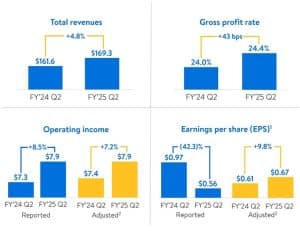
Walmart Inc. reported a solid 4.8% increase in revenue for Q2 2025, reaching $169.3 billion. eCommerce sales saw a remarkable 21% growth worldwide, reflecting Walmartโ€™s expanding digital reach. The company’s operating income rose by 8.5%, with adjusted operating income up 7.2%. This growth was driven by improved gross margins, higher membership income, and reduced e-commerce losses.

The press release further mentions, Walmartโ€™s GAAP EPS came in at $0.56. Adjusted EPS, which excludes a net loss on equity and other investments, was $0.67. This exceeded analystsโ€™ expectations of $0.65, marking a notable 3.08% surprise.
Walmartsource: Walmart

Key Performance Metrics

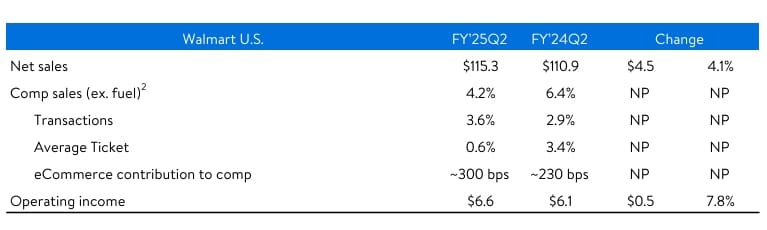
  • U.S. Comparable Store Sales: Walmart U.S. saw a 4.2% increase, outperforming the 3.5% average estimate.
  • Walmart International Sales Growth: Increased by 7.1%, slightly below the 7.7% estimate.
  • Samโ€™s Club Comparable Store Sales: Up 5.2%, surpassing the 4% estimate.
  • Total U.S. Comparable Store Sales: Grew by 4.3%, exceeding the 3.7% estimate.
Walmartsource: Walmart

Looking ahead, Walmart expects Q3 net sales to grow between 3.25% and 4.25%, with operating income rising by 3.0% to 4.5% in constant currency. For the full fiscal year 2025, net sales are projected to increase by 3.75% to 4.75%, with adjusted operating income growing by 6.5% to 8.0%.

Overall, Walmartโ€™s strong performance across various segments, including eCommerce and membership, highlights its robust business model and positive outlook.

Emissions Elevate Slightly Despite Bold Net Zero Ambitions

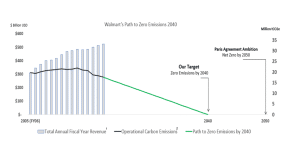
Walmart aims for zero emissions in global operations (Scopes 1 & 2) by 2040. The company targets a 1.5-degree Celsius trajectory for climate action, with interim goals to cut Scope 1 and 2 emissions by 35% by 2025 and 65% by 2030 from 2015 levels.
Walmart

source: Walmart

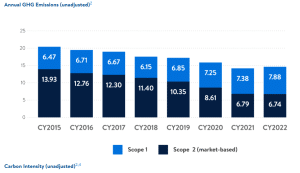
Since 2015, Walmart has reduced Scope 1 and 2 emissions by 21.2% and carbon intensity by 43.5%. However, in 2022, Scope 1 emissions rose by 7.6% and Scope 2 emissions rose by 0.3% (market-based), totaling to emission spike of 4.1%.ย  Emissions rose slightly due to increased use of onsite fuels, shifts in transportation, and slower renewable energy expansion. So how Walmart is planning to cut down its emissions? Discover below.

Renewable Energy and Energy Efficiency

By the end of 2022, Walmart had over 600 renewable energy projects across 10+ countries and plans to expand its solar generation in the coming years. It has secured PPAs for over 2 GW of renewable energy and has become the top retailer in terms of green power. It focuses on community solar projects for low-to-moderate-income areas and supports various renewable energy projects through coalitions.

Speaking of efficiency, they optimize energy use through real-time monitoring and upgrade old equipment with energy-efficient systems. Additionally, they aim to install energy meters in all stores across the U.S.

Electrification of its Transport

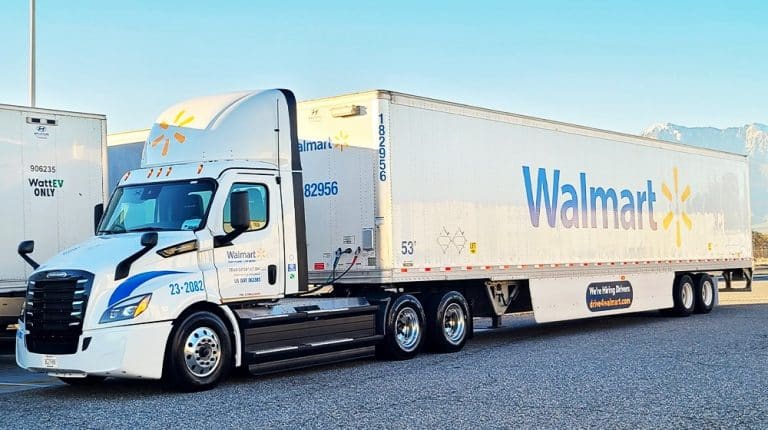
In 2022, Walmart’s fleet accounted for 24% of Scope 1 emissions. Thus, 100% electrification of its fleet including class 8 trucks became crucial to achieve the net zero goals. Although the company is not expecting to curb emissions massively, they are adopting zero-emissions technologies, scalable solutions, and implementing supportive policies.

Tackling Stationary Fuel Emissions

In 2022, stationary fuels made up 23% of Walmart’s Scope 1 emissions, rising 21% from 2021. Cold weather in the U.S., droughts in China, and power outages in South Africa increased their reliance on heating and backup generators. These challenges highlight the need for greater energy efficiency and cleaner power. Walmart is responding by adding electrical connections for refrigerated trailers to cut diesel use.

Mitigating Onsite Refrigerants

In 2022, onsite refrigerants made up 53% of Walmart’s Scope 1 emissions. Walmart reduced global refrigerant emissions by 2% through leak management using low-GWP (Global Warming Potential) systems. They took serious steps to maintain equipment to minimize leaks and replaced old systems with low-GWP alternatives like CO2 and ammonia.

Slashing Emissions through Project Gigaton

Through Project Gigaton, Walmart helps suppliers set and achieve their emissions reduction goals. Launched in 2017, the initiative offers guidance, workshops, and resources to support these efforts. Moreover, the company aims to reduce or avoid 1 billion metric tons of CO2e in product value chains by 2030. This is why they are working with groups like the World Wildlife Fund and Environmental Defense Fund. Notably, last year they avoided more than 175 MMT of CO2e through Project Gigaton.
Walmartsource: Walmart

In conclusion, Walmart President and CEO Doug McMillon applauded the efforts by remarking,

โ€œOur team delivered another strong quarter. They work hard every day to help our customers and members save time and money. Each part of our business is growing โ€“ store and club sales are up, eCommerce is compounding as we layer on pickup and even faster growth in delivery as our speed improves. Our newer businesses like marketplace, advertising, and membership, are also contributing, diversifying our profits and reinforcing the resilience of our business model.โ€

Metaโ€™s Bold Bet on Geothermal Energy and Carbon Footprint Reduction

Meta Platforms, the company behind Facebook, Instagram, and WhatsApp, isnโ€™t just about connecting people online anymore. Itโ€™s taking real, concrete steps to protect the planet, too.ย 

In a recent move that caught many by surprise, Meta announced a partnership with Sage Geosystems to power its U.S. data centers with geothermal energy.ย 

This is a calculated part of Metaโ€™s larger plan to hit net zero emissions by 2030. And with the increasing energy demands from artificial intelligence (AI) and data centers, this partnership is more crucial than ever.

Geothermal energy makes perfect sense for Meta. While solar and wind energy depend on the weather, geothermal taps into the Earth’s natural heat and provides a constant, reliable power source.

Sage Geosystems, a Houston-based startup, is bringing some serious innovation to the table with their Geopressured Geothermal System (GGS). This tech is differentโ€”it can generate clean energy in places where traditional geothermal methods just couldn’t reach.ย 

  • The project kicks off in 2027 with the first phase delivering 150 megawatts of power. That might sound technical, but it means enough clean energy to power around 38,000 homes.ย 

For Meta, itโ€™s a big step toward reducing the carbon footprint of their data centers. Those data centers are energy hogs, and as Meta continues to grow its AI capabilities, the need for energy will only rise. Geothermal energy helps ensure that this growth doesnโ€™t come with a side of increased emissions.

Geothermal Energy: The Secret Sauce Powering Metaโ€™s Data Centers

Metaโ€™s move to geothermal energy isnโ€™t just about reducing its carbon footprintโ€”itโ€™s also about showing whatโ€™s possible.ย 

Data centers are the beating heart of Metaโ€™s digital empire, supporting everything from your latest Facebook post to the newest Instagram Story. But theyโ€™re also energy guzzlers. Thatโ€™s where geothermal comes in as a savior, providing constant, clean energy to keep those centers running without burning more fossil fuels.

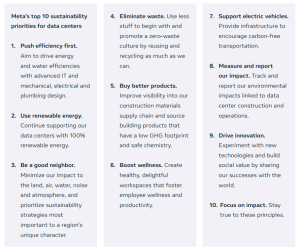
Meta sustainability priorities for data centers

Sage Geosystemsโ€™ Geopressured Geothermal System (GGS) is the star here. Traditional geothermal energy is limited by geographyโ€”you need naturally occurring underground reservoirs of hot water, which limits its use to places like Nevada or California. But Sageโ€™s technology breaks through those barriers.ย 

It can tap into geothermal energy in more places, including areas east of the Rocky Mountains where Meta plans to set up the new facility. This opens up new possibilities not just for Meta but for the broader adoption of geothermal power across the U.S.

The 150-megawatt project is just the start. As technology evolves, Meta could roll out more geothermal projects, cementing its place as a leader in the renewable energy space. Meta is pushing the envelope and setting a new standard for how tech companies approach sustainability.

Metaโ€™s Net Zero Journey: A Comprehensive Carbon Offset Strategy

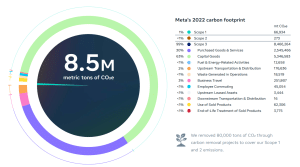
Metaโ€™s geothermal energy initiative is more than just a green headlineโ€”itโ€™s a vital piece of a much bigger puzzle. Since 2020, Metaโ€™s operations have run on 100% renewable energy. But the companyโ€™s ambitions are even higher: net zero emissions across its entire value chain by 2030.ย 

Meta 2022 carbon footprint

Thatโ€™s a tall order, especially when you consider that it includes everything from suppliers to employee commutes.

The shift to geothermal energy is a big step in that journey. With AI technologies and data centers consuming more power, Meta must find ways to meet those demands without adding to its carbon footprint. Geothermal energy provides a reliable, scalable solution that fits perfectly with Metaโ€™s goals.ย 

By integrating this clean energy source, Meta can continue growing while keeping its commitment to sustainability intact.

  • Meta has also invested in over 12,000 megawatts of renewable energy projects, including solar and wind.ย 

These efforts are all part of a comprehensive strategy to reduce reliance on fossil fuels and minimize the companyโ€™s environmental impact.ย 

On top of that, Meta is investing in carbon removal projectsโ€”initiatives designed to suck carbon dioxide out of the atmosphere, whether through reforestation or cutting-edge technologies like direct air capture.ย These projects are essential for tackling the emissions that are harder to eliminate.

Beyond Energy: Metaโ€™s Broader Vision for Emissions Reductions

Metaโ€™s commitment to sustainability isnโ€™t just about energy. Itโ€™s rethinking the entire way the company operates, from the materials used in its products to how it manages its supply chain. The company is taking a holistic approach, addressing everything from water use to waste reduction and even biodiversity.ย 

Take water, for example. Meta is on a mission to become water positive by 2030. That means the company will restore more water to the environment than it consumes in its operations. And itโ€™s not just talkโ€”Meta is investing in real projects that aim to make this goal a reality.

The same goes for waste. Meta is pushing for circular practices across its operations, focusing on reducing waste and reusing materials whenever possible. By extending the lifespan of products and reducing the need for new materials, Meta is cutting costs and reducing its environmental impact at the same time.

And letโ€™s not forget the supply chain. Metaโ€™s responsible supply chain program is all about collaboration. The company is working closely with its suppliers to help them set and meet their own sustainability goals. Itโ€™s a win-win situation: suppliers become more sustainable, and Meta reduces its overall carbon footprint.

Metaโ€™s leadership in sustainability is making waves across the tech industry. The companyโ€™s commitment to clean energy, water stewardship, and waste reduction sets a new standard for what corporate sustainability can look like.

In the end, Metaโ€™s partnership with Sage Geosystems is a bold step forward. Itโ€™s about more than just powering data centersโ€”itโ€™s about shaping a sustainable future for all.ย 

As Meta continues to innovate and expand, its commitment to the planet remains at the core of everything it does. This is the kind of leadership thatโ€™s needed to reduce emissions, and Meta is proving that itโ€™s up to the challenge, one geothermal project at a time.

Lithium Prices Hit New Lows: Can the Market Survive the EV Slowdown and Price Plunge?

Disseminated on behalf of Li-FT Power Ltd

The lithium market continues to face significant challenges as detailed in the S&P Global Commodity Insights report for August 2024. The report highlights the intricate interplay between global macroeconomic trends, shifting demand patterns in the electric vehicle (EV) sector, and the corresponding impacts on the supply and pricing of this critical battery metal.

Global EV Market Slows as Consumer Confidence Wanes

The global market for plug-in electric vehicles (PEVs) is experiencing notable fluctuations, with a 2.2% decrease in sales across major markets in July 2024 per S&P Global data. This decline is driven by several factors, including:

  • weakening consumer confidence,ย 
  • a seasonal demand lull in the Northern Hemisphere, andย 
  • the imposition of higher tariffs, particularly in the European market where sales fell by a steep 29.9%.ย 

The European marketโ€™s downturn is reflective of broader macroeconomic uncertainties, including concerns about the U.S. economy potentially slipping into recession and persistent sluggishness in Chinaโ€™s economy.


A MESSAGE FROM Li-FT POWER LTD.
This content was reviewed and approved by Li-FT Power Ltd. and is being disseminated on behalf of CarbonCredits.com.

Lithium Deposits That Can Be Seen From The Sky

lithium

Why Li-FT Power? One of the fastest developing North American lithium juniors is Li-FT Power Ltd (TXSV: LIFT | OTCQX: LIFFF | FRA: WS0) with a flagship Yellowknife Lithium project located in the Northwest Territories. Three reasons to consider Li-FT Power:

RESOURCE POTENTIAL | EXPEDITED STRATEGY | INFRASTRUCTURE

Learn more about this mineral exploration company engaged in the acquisition, exploration, and development of lithium pegmatite projects >>


EV Battery Blues

The global slowdown in PEV uptake has had significant repercussions for the battery production sector. This leads to the cancellation of several high-profile projects in the U.S. and Europe.ย 

Notably, General Motors Co. has suspended construction of its third battery plant in Michigan, a collaboration with LG Energy Solution Ltd., while Umicore SA has halted construction of a battery materials plant in Ontario and postponed investments in battery recycling plants in Europe. Umicore cited delays in the ramp-up of customer contracted volumes, which have been pushed back by at least 18 months.

The imposition of higher tariffs in various regions has further complicated the global PEV market outlook. The EU and U.S. tariffs, intended to encourage local production and reduce dependence on Chinese BEV imports, have dampened short-term sales potential and added to the costs passed on to consumers.ย 

Supply Cutbacks Sweep the Market as Lithium Prices Plummet

This significant lithium price drop has led to a wave of supply curtailments, as producers struggle to maintain profitability.

For instance, Albemarle Corp. announced it would only operate one of its two lithium hydroxide processing lines at its Kemerton refinery in Australia, effectively removing 22,000 metric tons of lithium carbonate equivalent capacity from the market. The company also halted work on expanding its production capabilities, deferring investments in new projects in Canada and Argentina.

The decline in lithium prices is being driven by a combination of factors, including growing demand headwinds and a persistent market surplus. Despite relatively mild supply cuts in the March quarter, ongoing project ramp-ups, particularly by emerging suppliers in Zimbabwe, Argentina, and Brazil, have contributed to the oversupply.ย 

July export data from major lithium-producing countries indicates a month-over-month drop in seaborne lithium and cobalt supply as producers respond to the market surplus.

The lithium carbonate CIF Asia price also fell by 9.8% in August, reaching $11,000 per metric ton, the lowest level since April 2021. At these price levels, many lithium producers are likely to reduce their output, as it becomes economically unviable to continue production.

Merchant lithium carbonate refineries, in particular, are expected to scale back their operations due to the negative margins in August, a sharp contrast to the small positive margins seen in July.

These price adjustments underscore the significant pressures facing the lithium and other electric metal markets, where producers are grappling with reduced profitability and market uncertainties. The downgrades reflect a cautious outlook for these critical battery metals as the industry navigates a complex economic environment.

The Pitfalls of Low-Quality Carbon Offsets: Are They a Threat to Our Planet?

Many companies have turned to cheap offsets or junk credits, resulting in a significant portion of their credits being classified as high-risk. So, what makes these offsets low-quality? These credits often come from forest conservation and renewable energy projects, which are prone to issues like over-crediting and exaggerated claims of emission reductions. Letโ€™s deep dive into whatโ€™s happening in the era of carbon credits.

Downfall of Industry Standards Amid Rise of Low-Quality Carbon Offsets

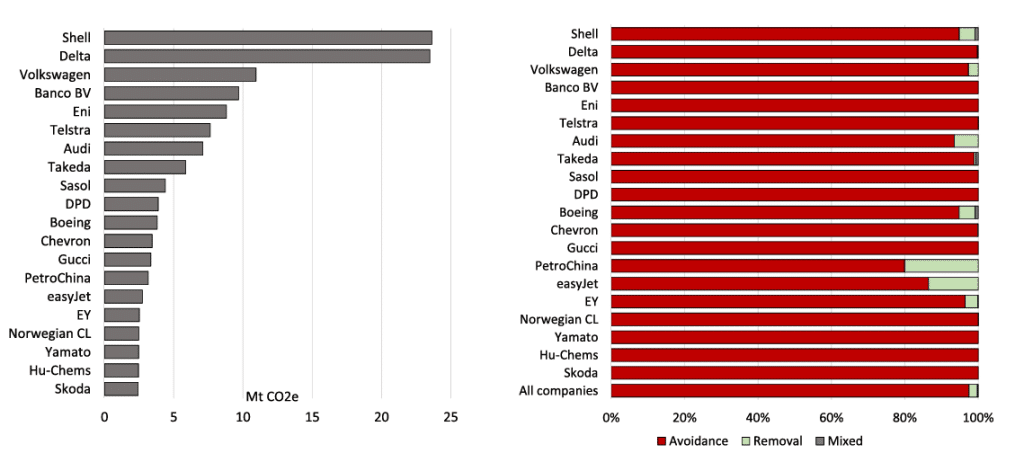
Offsets primarily come from two project categories: avoidance and removals. Avoidance projects, such as those focused on forest conservation and renewable energy, make up over 97% of the credits retired by these companies. However, these projects often fail to deliver genuine emissions reductions.

Many offsets come from redundant projects that do not meet the industry standards. This reliance on outdated credits further undermines the credibility of companies’ net-zero claims.

Carbon removal projects, which capture and store CO2, account for only 2.3% of the offsets retired. Companies show little interest in shifting towards these potentially more effective solutions. Only a few firms, like Audi and Takeda, have significantly increased their use of removal credits.

Last year an intriguing article by The New Yorker, exposed some major issues. For example, the Kariba project in Zimbabwe, which claimed to prevent deforestation and earned nearly $100 million, has been criticized for not achieving its goals. A report by Bloomberg also revealed that South Pole, cut ties with the project, potentially leading to its collapse. This situation could undermine the climate claims of big corporations like Volkswagen and Nestlรฉ.

Companies are reconsidering their trust on offsets. A survey from late 2022 found that 40% of corporate respondents were worried about the reputational risks associated with carbon offsets. As a result, firms such as Shell, Nestlรฉ, EasyJet, and Fortescue Metals Group have started to distance themselves from offsets and their associated claims of carbon neutrality.

Study the graphs to understand the absolute volumes of all offsets retired by each company and relative shares of avoidance or removal offsets retired over 2020โ€“2023carbon credits carbon offsetssource: Nature

Are Junk Carbon Offsets Masking Climate Goals?

Interestingly, Bloomberg highlighted the Kyoto study which pointed out that many offsets come from outdated projects. Furthermore, many corporations are fueling the problem with low-quality carbon credits. These offsets, intended to neutralize emissions by investing in projects like forestry and renewable energy, are failing to deliver real climate benefits. Additionally, around 75% of the credits were linked to projects started before 2016, diminishing their credibility. Many companies opted for the cheapest offsets rather than investing in more effective carbon removal strategies.

The study also revealed that between 2020 and 2023, top companies like Shell, Delta Air Lines, and Chevron purchased mostly ineffective offsets. A staggering 87% of these credits were deemed high-risk, often failing to achieve genuine emissions reductions. This marks a significant blow to the carbon offset market, which is already shrinking due to increasing scrutiny and legal challenges.

False Claims and Exaggerated Resultsย 

Forestry projects, which claim to capture carbon by protecting or planting trees, often fall short. Trees can be prone to wildfires, which release stored carbon back into the atmosphere. For instance, Green Diamond’s Forest carbon projects were ravaged by wildfires, releasing millions of metric tons of stored carbon back into the atmosphere. This problem is not isolated, as similar setbacks occurred in other Pacific Northwest forests.

Despite noble intentions, these projects often fail to compensate for fossil fuel emissions, leading to disbelief in their climate benefits. Furthermore, the benefits of these projects are often overstated. Trees may not be at risk of logging in the first place, making it questionable whether offsets for avoided deforestation are truly effective.

Renewable energy credits face similar issues. With clean energy becoming more cost-effective, the carbon credits often fund projects that would have been built regardless of carbon offset purchases. This raises doubts about whether such credits contribute new value to the global carbon balance. The Integrity Council for the Voluntary Carbon Market (ICVM) found that a significant portion of renewable credits failed to meet reliability standards.

Corporate Choices Signal Paradigm Shift and a Weak VCM

For real progress, companies need to focus on directly reducing their emissions rather than relying on dubious offsets. While carbon credits might play a role in a future net-zero world, the current marketโ€™s flaws hinder meaningful climate action. Without major reforms, the market might continue with its ineffective and even harmful practices.

Global carbon markets are facing growing scrutiny as more companies question the effectiveness of their offsets. Once hailed as a simple solution to balance out greenhouse gas emissions, offsets are now under fire for failing to deliver promised climate benefits. Subsequently, this also digs out a major problem. It shows how the voluntary carbon market (VCM) is weakened by the demand for low-quality offsets. As companies keep choosing cheap, ineffective options, the real impact of their climate efforts is doubtful. To make a real difference, they should shift to higher-quality carbon removal projects and stick to strict standards.

Carbon Directโ€™s recent report highlights a significant shift. The carbon management firm conveyed good news that the demand for traditional, riskier credits is falling, while interest in high-quality carbon removal projects is rising. Between 2021 and 2023, purchases of quality-focused removal credits multiplied five times.

Embracing Premium Carbon Credits

Moving on, carbon removal strategies like managed reforestation and biochar sequestration can create high-value credits. However, these methods are still niche and face technical and economic hurdles. For now, most companies prioritize directly reducing their emissions, which is more reliable than depending on questionable offsets to mitigate emissions.

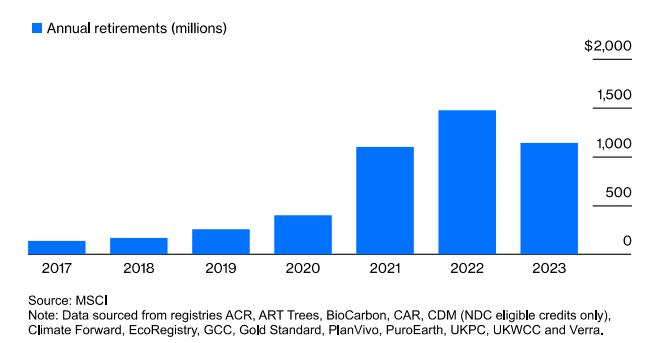
As companies continue to rely on cheap, ineffective options, the true impact of their climate strategies becomes doubtful. This graph further illustrates the contraction in the carbon credit market due to these loopholes.

carbon credits carbon offsets

To see real climate benefits, a shift toward higher-quality carbon removal projects and adherence to strict verified standards is crucial.

For instance, projects must prove that their emission reductions or carbon removals are real, measurable, permanent, additional, independently verified, and unique, as per standards like the Gold Standard and Verified Carbon Standard (VCS). Credits are issued only when these criteria are met. This approach ensures low-quality offsets are discarded, leading to more effective climate action.

FURTHER READING: ICVCM Reveals First CCP-Approved Carbon Credits Worth 27M Carbon Credits

Californiaโ€™s Carbon Auction Raises $950M, But Market Uncertainty Looms

The recent carbon credits auction in California raised significant funds for climate action, showing the state’s commitment to reducing greenhouse gas emissions. The auction proceeds will be reinvested into programs aimed at curbing climate change, including initiatives for disadvantaged communities.

California Carbon Credits Are Selling Out, But at What Cost?ย 

The Western Climate Initiative (WCI) has released the results of its latest cap-and-trade auction, highlighting a mix of achievements and emerging concerns. For the 16th consecutive time, the auction sold out, reflecting continued strong demand for allowances.ย 

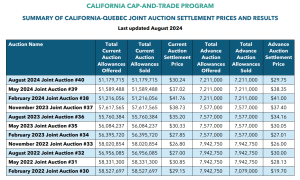
California carbon credit auction August 2024
Data from California Air Resources Board (CARB) website

However, the decline in settlement prices, particularly when compared to previous auctions, has sparked discussions about the future of California’s cap-and-trade program, with potential implications for the broader market.

Auction Details:

  • Current Vintage Allowances: The auction sold all 51,179,715 current vintage allowances. However, the settlement price of $30.24 was significantly lower than the $37.02 seen in May. This drop, while the auction still sold out, indicates that market participants might be cautious about future developments.
  • Future Vintage Allowances: Similarly, all 7,211,000 future vintage allowances were purchased, settling at $29.75, a decline from $38.35 in May. These allowances, which can be used for compliance starting in 2027, also reflect market uncertainty about the programโ€™s long-term prospects.

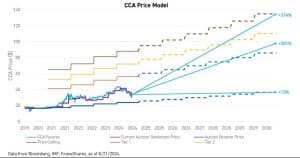
California carbon credit price model

Market Jitters Highlight Growing Concerns Over Californiaโ€™s Climate Program

The decline in CCA carbon prices suggests that there is growing uncertainty within the market regarding the design and future of California’s cap-and-trade program. The California Air Resources Board (CARB) is expected to play a crucial role in addressing these concerns through upcoming rulemaking processes.ย 

The market appears to be particularly uncertain about how and when CARB will tighten the program before 2030. Clarity from CARB is urgently needed to ensure that the program continues to function effectively and to provide the necessary confidence to market participants.

Beyond 2030, the uncertainty is even more pronounced. The cap-and-trade program is a key component of California’s strategy to reduce greenhouse gas emissions. Hence, its long-term viability is essential for meeting the stateโ€™s ambitious climate goals.ย 

The CCA auction results, though showing a decline in settlement prices, did not come as a major surprise to many compliance firms. These firms have strategically leveraged the lower futures prices to position themselves for their compliance obligations as the new three-year cycle begins. This strategic positioning may reduce the urgency to purchase carbon credits or allowances immediately, contributing to the softer auction results.

The outlook for California Carbon Allowances remains optimistic in the long term, despite the recent softness in auction prices. There is an expectation that the market for CCAs will stabilize over the next six months and potentially trend higher. This anticipated stabilization mirrors the recent performance of the European carbon market, which saw a significant reboundโ€”over 30%โ€”following February’s lows.ย 

Lessons from Across the Pond

The European market recovered as initial fears related to the Ukraine gas supply crisis and policy uncertainty began to ease, allowing the fundamental drivers of the cap-and-trade program to regain influence.

In the EU, Emissions Trading System (ETS) is witnessing a stabilization in European Union Allowance (EUA) prices after a volatile period driven by fluctuations in natural gas prices. Currently, prices are supported at around โ‚ฌ72.00, higher than the year-to-date average of โ‚ฌ66.59.ย 

Rising gas prices have made coal-fired power generation more competitive, particularly in Germany, leading to increased demand for EUAs from the power sector. As Europe approaches winter, the uncertainty surrounding natural gas supply, especially with the expiration of Ukraineโ€™s gas contract, underscores the need for a steady flow of LNG to meet energy demands.ย 

Meanwhile, industrial demand for carbon remains weak, keeping the focus on the power sector as a key driver for EUA demand.

Funds for the Future: Auction Yields $950M for Climate Projects

Despite the market’s concerns, the CCA auction is expected to generate around $950 million for Californiaโ€™s Greenhouse Gas Reduction Fund (GGRF). This fund is instrumental in supporting projects aimed at reducing greenhouse gas emissions and strengthening climate resilience across the state.ย 

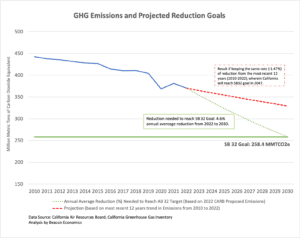
California emissions and projected reduction goals

Over the past decade, investments from the GGRF have been credited with cutting emissions by 109.2 million metric tonsโ€”the equivalent of removing more than 25 million cars from the road. The fund has supported a wide range of projects, including affordable housing near job centers and zero-emissions transportation options.

The outcome of CCA’s auction underscores the importance of CARBโ€™s upcoming rulemaking. To maximize emission reductions, CARB could consider removing at least 265 million allowances from future auctions, per the Environmental Defense Fund recommendation. Doing so would tighten the supply, increase carbon credit prices, and incentivize covered facilities to invest in emission-reducing technologies.

The auction results also highlight the need for a long-term strategy that ensures the durability of Californiaโ€™s cap-and-trade program, providing the necessary market confidence to drive significant investments in decarbonization.

Ultimately, the success of Californiaโ€™s cap-and-trade program will depend on its ability to reduce greenhouse gas emissions effectively. The recent auction results serve as a reminder of the importance of clear, decisive action from both regulators and legislators to secure the programโ€™s future and to meet the stateโ€™s climate goals.

Top 3 US Renewable Energy Deals Q2-2024: Trends and Analysis

According to The Energy Information Administration (EIA), โ€œthe US expects renewable energy to grow by 17% to 42 GW in 2024 and make for a quarter of electricity generation.โ€

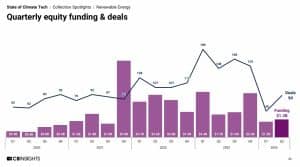
In Q2 2024, the renewable energy sector continued to experience significant investment activity, although it showed mixed results in terms of growth compared to previous quarters. The sector secured $1.3 billion in equity funding, reflecting a slight increase from Q1 2024, which saw $1.2 billion. However, this amount is lower compared to some previous quarters in 2022 and 2023, indicating a potential cooling in the pace of investments.

The overall trend in equity funding has seen fluctuations, with peaks in late 2021 and early 2022 when the sector experienced robust investment interest. The Q2 2024 funding level, while steady, is a reminder of the cyclical nature of investment in the sector.

renewable energy

Renewable Energy Deal Activityย 

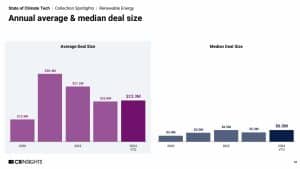
In the renewable energy sector, the average deal size has seen fluctuations over recent years, with a peak at $38.4 million in 2020, followed by a decline to $31.2 million in 2022. It further dipped to $23.3 million in 2024 year-to-date (YTD). Meanwhile, the median deal size has remained more stable, with figures showing $6.5 million in 2020, a slight drop to $5.0 million in 2022, and rebounding to $5.3 million in 2024 YTD. This data highlights a trend of mixed deal sizes ranging from both bigger and smaller deals in the industry over time.

Number of Deals: In Q2 2024, there were 82 deals, a slight decrease from Q1 2024’s 107 deals. This reduction in deal volume suggests a more cautious approach by investors, possibly due to broader economic conditions or market saturation in certain segments of renewable energy.

While the renewable energy sector remains a key focus for investors, Q2 2024 saw moderate investment levels compared to some previous quarters. The sector’s performance may be influenced by external economic factors and shifts in investor strategies.

RENEWABLE ENERGY

By Global Region

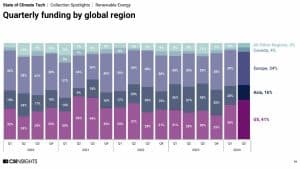
Analyzing the funding on basis of global region, US is the top player having 41% in renewable shares, followed by Europe and Asia. Other regions, including Canada and all other regions, have remained relatively small contributors, with Canada fluctuating around 4% and other regions around 4-8%.

Renewable Energy

According to CB Insights, Who Leads the Pack?

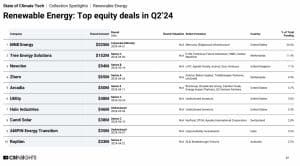
1. MN8 Secures $325 Million for Expansion

MN8, one of the U.S.’s largest independent renewable energy companies, closed its first private placement, raising $325 million in April. The funds will support the Companyโ€™s expansion and growth plans.

This $325 million investment includes $200 million from Mercuria Energy Group and $125 million from Ridgewood Infrastructure, a top U.S. infrastructure investor. Stockholders will have the option to convert their preferred stock into common stock in the future.

The news release also revealed that, as part of the deal, Mercuria will gain one board seat and an observer seat on MN8โ€™s board, while Ridgewood will receive an observer seat. The partnership will focus on discovering commercial opportunities to promote more sustainable, affordable, and reliable energy systems. It will merge MN8โ€™s renewable energy expertise with Mercuriaโ€™s deep knowledge of energy markets.

In May, First Solar, Inc. the. U.S. solar technology firm announced that MN8 Energy LLC has ordered 457 megawatts (MW) of advanced thin film solar modules. This order includes 170 MW of Series 6 Plus bifacial modules and 287 MW of Series 7 modules. The solar modules will be used to power projects across the northeastern and southern United States.

MN8’s 3.2 (GW) portfolio provides renewable energy solutions to over 40 corporations, 70 government entities, and 20 utilities. In the last 12 months, MN8 Energy had revenue of $326.69 million and earned $191.84 million in profits.

2. Tree Energy Solutions (TES) Raises $152 Million to Power Green Energy Projects

Tree Energy Solutions (TES), a global leader in green energy, concluded its third, series C fundraising round, securing $152 million on April 4. The funds will fuel the development of TESโ€™s global green energy projects, with a focus on e-NG (electric natural gas derived from green hydrogen). This round attracted top investors, including Azimut Group, Fortescue, E.ON, HSBC, O.G. Energy, and Zhero.

TES produces e-NG by combining green hydrogen with biogenic or recycled CO2, creating a green alternative to natural gas that uses existing infrastructure for transport and storage. The company has partnered with major energy firms like TotalEnergies, Osaka Gas, and ADNOC to build large-scale e-NG projects across North America, the Middle East, Australia, and Europe.

Additionally, TES is developing a green energy hub in Wilhelmshaven, Germany. This hub aims to decarbonize the German and neighboring energy markets by importing natural gas and e-NG, exporting CO2, and producing green hydrogen and power.

3. Newcleo’s Strategic Shift: Raising Funds and Expanding in Europe

Newcleo, a British nuclear startup, although new has made an impact in this space. The company recently raised around $528 million across three funding rounds, with the latest being a Series B round that secured $94 million in May 2024. They aim to tap into European Union resources by relocating their holding company from the UK to France. This move is part of their broader strategy to expand their operations within the EU.

While Newcleo shifts its focus to France, it still has big plans for the UK. The company intends to invest in and develop next-generation Small Modular Reactors (SMRs) to contribute to the UKโ€™s electricity grid. However, their UK ambitions faced a setback when the government denied private companies access to the Sellafield site, leading Newcleo to shelve a planned project there. Despite this, Newcleoโ€™s collaboration with France’s CEA to develop a lead-cooled fast reactor marks a significant step in their European expansion.

Here’s the complete list:

renewable energy

From this trend and analysis, it’s clear that 2024 has showcased substantial investment potential for renewable energy leaders. The significant funding, particularly in Asia and the U.S. highlights the demand and opportunity in the renewables.ย Media reports say, solar remains at the top while nuclear gaining a high momentum in the future.

Disclaimer: Data source CBInsights report

AIโ€™s Hidden Carbon Footprint: How Tech Giants Are Masking Their Emissions

Tech companies are increasingly adopting artificial intelligence (AI) technologies, but this surge in AI comes at a significant environmental cost, especially carbon footprint, that many of these companies are obscuring, according to a Bloomberg Green analysis. Major players like Amazon, Microsoft, and Meta are using unbundled renewable energy certificates (RECs) to make their operations appear greener than they actually are.ย 

Smokescreen RECs? How They Distort Big Tech’s Green Claims

Earlier this month, the Integrity Council for the Voluntary Carbon Market (ICVCM) announced that carbon credits issued under existing renewable energy methodologies will no longer qualify for its Core Carbon Principles designation. This ruling impacts about 32% of the voluntary carbon market, translating to about 236 million carbon credits.ย 

The ICVCMโ€™s decision reflects a shift in focus towards more stringent standards to ensure that carbon credits represent real, additional, and verifiable emission reductions. This move is expected to influence the market significantly, particularly for projects relying on existing renewable energy methodologies.

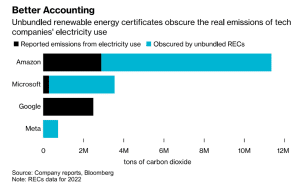
Per Bloomberg analysis, RECs allow companies to claim that their energy consumption is more environmentally friendly, even if they are still relying on fossil fuels. This practice significantly distorts the true carbon footprint of these tech giants.

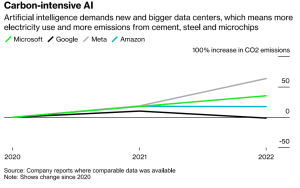
Microsoft, for instance, reported that its carbon emissions have increased by 30% since 2020, despite the company’s goal to become carbon negative. Microsoft and other tech firms have attributed this rise in emissions to the carbon-intensive materials used in building data centers, such as cement, steel, and microchips.ย 

They claim that the energy required for AI is largely sourced from zero-carbon resources like wind and solar power. However, experts argue that these claims are misleading and do not reflect the reality of energy consumption. Some said that there is no physical basis for the claim that AI is powered entirely by clean energy.

The Carbon Accounting Crisis

In 2022, Amazon, Microsoft, and Meta relied heavily on these unbundled RECs to report lower emissions. That is despite the fact that these carbon credits do not result in actual reductions in atmospheric greenhouse gasses.

The use of unbundled RECs is permitted under current carbon accounting rules, but many experts believe these rules are outdated and do not accurately reflect real-world emissions. If companies like Amazon and Microsoft did not use these carbon credits, their reported emissions would be significantly higher.

renewable energy carbon credits RECs of tech companies
Chart from Bloomberg Green

Take this example: Amazon’s 2022 emissions would be 8.5 million metric tons higher than reported, which is three times what the company disclosed. Similarly, Microsoft’s emissions would be 3.3 million tons higher, and Meta’s reported footprint could increase by 740,000 tons.

Some tech companies have recognized the flaws in using unbundled RECs and have moved away from them. Google, for instance, phased out its use of these credits several years ago after acknowledging that they do not lead to real emissions reductions. Instead, Google focuses on purchasing clean energy directly and aims to achieve carbon-free energy consumption on an hourly and location-specific basis.

Amazon, on the other hand, relied on unbundled RECs for 52% of its renewable energy in 2022. This makes the tech giant the most dependent on these instruments among the major tech companies. The company has stated that it plans to reduce its reliance on unbundled RECs as more of its directly contracted renewable energy projects come online.ย 

Meta, which used unbundled RECs for 18% of its renewable energy in 2022, claims that the majority of its renewable energy efforts are focused on projects that would not have been built otherwise.

Microsoft has also announced plans to phase out the use of unbundled RECs in the future.ย 

AI vs. Climate Goals

Microsoft’s ambitious goal to become carbon negative by 2030 faces significant challenges as its push for AI has led to a 30% increase in carbon emissions since 2020. The companyโ€™s president, Brad Smith, acknowledges the difficulty in meeting these targets, especially with the explosive growth of AI, which requires energy-intensive data centers built with carbon-heavy materials like steel and concrete. Despite this, Smith believes that AI’s benefits will outweigh its environmental costs.

Microsoft’s AI expansion is driving up electricity consumption, with the company’s energy use rivaling that of small European countries. The tech giant plans to spend over $50 billion on expanding its data centers in the coming year, further increasing its carbon footprint. While Microsoft claims to be 100% powered by renewables, this is achieved largely through the purchase of RECs.

Carbon intensive AI tech giants
Chart from Bloomberg Green

Microsoft’s leadership is aware that meeting its climate goals will require significant investment and innovation. If emissions remain high, the company may resort to purchasing carbon removal credits, though this is not seen as the preferred solution. Brad Smith remains optimistic, emphasizing that climate change is a solvable problem, but it will require sustained effort and investment.

The Global Impact of Big Techโ€™s Reliance on RECs

Tech companies are the largest buyers of unbundled RECs globally, and their continued use of these carbon credits could have far-reaching implications as more corporations seek to reduce their carbon footprints. The current accounting rules, established under the Greenhouse Gas Protocol, allow companies to use unbundled RECs to report lower emissions. However, these standards are due for an update, and experts are working to propose changes that better reflect actual emissions.

Thus, while tech companies are making bold claims about their efforts to power AI with clean energy, the reality is more complex. The use of unbundled RECs allows the tech giants to obscure the true environmental impact of their operations. This, in turn, raises questions about the effectiveness of current carbon accounting practices and the need for greater transparency in corporate climate reporting.

Canada’s Cobalt Cache: Pentagon Invests US$20 Million on Electra Battery Materials

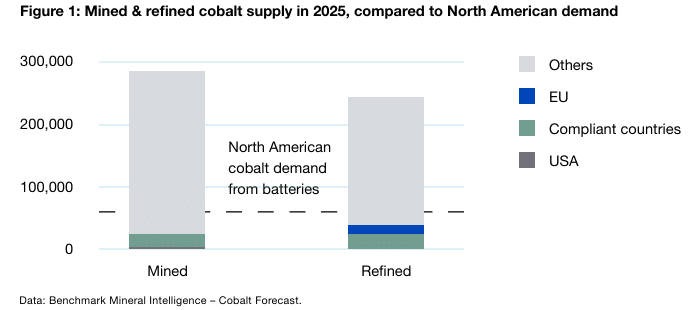
The U.S. military is ramping up its investment in Canadian mining with a significant new grant. On Tuesday, the Pentagon announced a $20 million U.S. grant to Electra Battery Materials Corporation to set up the cobalt refinery in Temiskaming Shores, Ontario.

Unlocking Pentagonโ€™s Funding Push for Electra Battery Materials

Electra Battery Materials has secured the investment from the U.S. Department of Defense (DoD) under Title III of the Defense Production Act, notes the press release.ย 

The award uses funds from the Ukraine Supplemental Appropriations Act of 2022. It supports the 2024 National Defense Industrial Strategy goal to boost domestic production of key minerals. Over the top, in June, the Canadian government also gave Electra USD 3.6M to advance a battery materials recycling project at the same refinery.

However, this grant is part of a broader initiative launched during President Joe Bidenโ€™s 2022 visit to Ottawa. Notably, the current one is the largest of several U.S. grants for securing critical mineral supplies in Canada. The DoD further added that the Ontario Cobalt Refinery’s construction will help Electra launch North America’s first cobalt sulfate hydrometallurgical plant.

Subsequently, this plant will produce cobalt sulfate which is a crucial component for lithium-ion batteries. These large batteries will consequently, support both defense projects and the growing EV supply chain in the U.S. and Canada.

Electraโ€™s Groundbreaking Cobalt Facility

The project features a hydrometallurgical facility with a proven track record. Notably, it is the only one in North America providing cobalt sulfate for EVs. Its modular design allows it to expand as the EV market grows. Additionally, the site is fully permitted and ready for future expansion. It also boasts 51% lesser greenhouse gas emissions compared to Chinese facilities, thanks to its hydroelectric power source. Ultimately, at full capacity, it could produce enough cobalt sulfate for over 1 million EVs annually.

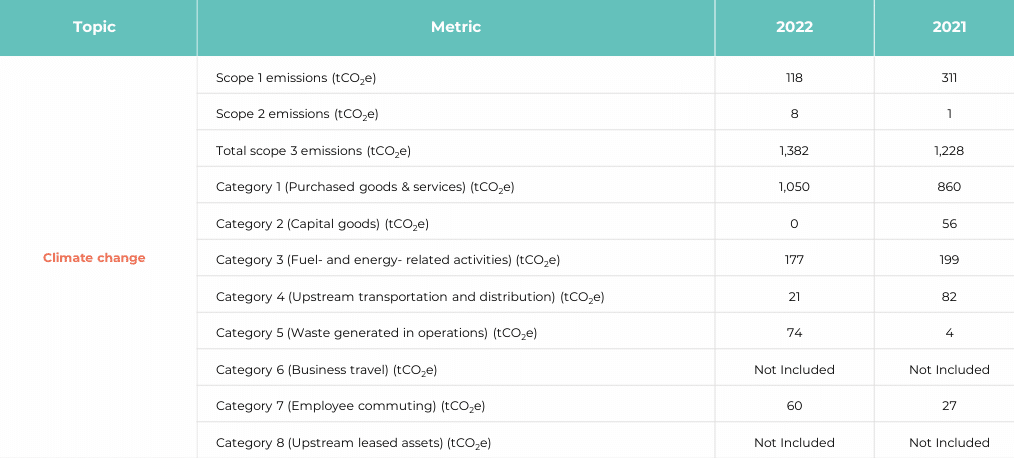
The company also manages its emissions effectively, we can estimate this in the table acquired from its sustainability report.

Electra Battery Materials cobalt

source: Electra Battery Metals

Whatโ€™s Driving this Cobalt Investment?

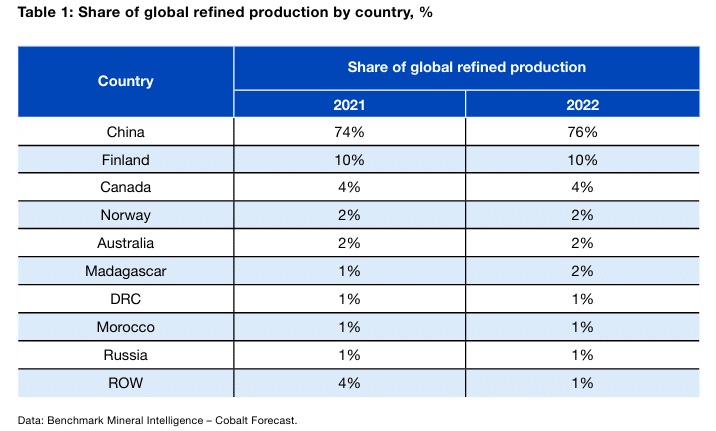
Media pundits have analyzed the investment from a different angle. They have explained that these investments reflect the growing concerns about reliance on China for essential minerals needed for EVs, electronics, and most importantly weapons systems.

Furthermore, with tensions over Taiwan, the U.S. seeks to diversify its supply chain and enhance its national security.

Canada Cobalt

The first two grants earlier this year targeted copper, gold, graphite, and cobalt projects in Quebec and the Northwest Territories, totaling under $15 million. These earlier grants had no repayment obligations or commitments to sell minerals exclusively to the U.S. military. However, in times of crisis, Canadian law allows Ottawa to prioritize raw material sales to NATO allies.

Dr. Laura Taylor-Kale, Assistant Secretary of Defense for Industrial Base Policy, said,

โ€œThis award will develop North American production of a key precursor material for large capacity batteries, helping to create a more robust industrial base capable of meeting growing demand across both the defense and commercial sectors.โ€

Canadaโ€™s Critical-Mineral Wealth

Global demand for critical minerals is set to rise sharply. IEA predicts a 6X increase in the energy sectorโ€™s needs by 2040. Notably, the North American zero-emission vehicle market alone has the potential to hit $174 billion by 2030, as reported by Canandaโ€™s Critical Mineral Strategy. Moreover, Canada is a key player in cobalt, graphite, lithium, and nickelโ€”essential for future batteries and electric vehicles.

Canada Cobalt

Therefore, investing in these minerals is crucial for a green energy transition in Canada and worldwide. This investment builds a sustainable industrial base, supporting emission-reducing supply chains and climate change solutions for future generations.

A Clean Energy Canada report suggests that a Canadian battery supply chain could contribute $5.7 billion to $24 billion to GDP by 2030.

Jonathan Wilkinson, Minister of Energy and Natural Resources Canada has given a long statement in the press release. He remarked,

โ€œFrom mining responsibly sourced critical minerals, to processing them here in North America, to building batteries for electric vehicles and other key technologies, and eventually to recycling them, there is enormous opportunity for both Canada and the United States from both an economic and a security perspective. Through our continued work with the United States, driven by the Energy Transformation Task Force and the Joint Action Plan on Critical Minerals Collaboration, and other allies, we are developing secure critical minerals value chains that will create good jobs in places like Temiskaming, Ontario and beyond, and will power prosperous economies and a future that works for everyone.

Overall, the US DoD’s investment would give a significant boost to cobalt production in Canada. With Electra Battery Materials as partner, we expect impressive results in the coming years.

India and Japan Strike a Green Ammonia Offtake Deal

Theย Ministry of New & Renewable Energy (MNRE) announced that India and Japan have signed a major offtake agreement for green ammonia exports. The deal, finalized on August 21, 2024, marks India’s first green ammonia export to Japan. This agreement bolsters India’s growing role in the global green energy market and the significance of long-term partnerships in sustainable energy.

The Key Players in This Agreement

The press release mentions, Sembcorp Industries, Sojitz Corporation, Kyushu Electric Power Co., and NYK Line signed a Heads of Terms (HoT) agreement, establishing a cross-border green ammonia supply partnership from India to Japan.

The Singapore-based energy company Sembcorp Industries will spearhead the production of green ammonia in India. Notably, the green ammonia will be produced using renewable energy sources, making it a cleaner alternative to conventional fuels.

Kyushu Electric Power, a renowned Japanese utility company, plans to use green ammonia in its energy mix. The company will partially replace coal with green ammonia at its thermal power plants, aiming to cut carbon emissions. Simply put Kyushu is the off-taker.ย  This step supports Japan’s larger goal of moving away from fossil fuels and adopting cleaner energy sources.

Sojitz Corporation, the Japanese trading company will mediate the business, playing a significant role in connecting Sembcorp with Kyushu. Sojitz’s involvement ensures that the transaction runs smoothly and efficiently, bridging the gap between production and consumption.

Japanese shipping firm, Nippon Yusen Kaisha (NYK), will handle the transportation of green ammonia from India to Japan. It will ensure the safe and timely delivery of the green ammonia, establishing a reliable supply chain between the two countries.

What Are the Broader Implications of This Deal?

Minister of New & Renewable Energy, Pralhad Joshi commented,

โ€œToday is a historic day as we mark the first-ever agreement for the supply of Green Ammonia from India to Japan. This agreement will help establish a robust supply chain from production in India to consumption in Japan, paving the way for future collaborations in the green energy sector.โ€

He further disclosed India has already launched a tender for 7.5 lakh tons of green ammonia and a surplusย of 4.5 lakh TPA capacity has also been floated.

Mr. Joshi also remarked that these efforts align with Indiaโ€™s larger plan to incentivize the production of over a million tons of green hydrogen annually. It showcases Indiaโ€™s commitment and ability to rapidly expand green energy production.

The Indian government, under the Ministry of New & Renewable Energy (MNRE), has been actively promoting green hydrogen and ammonia. It is quintessential of its broader strategy to reduce carbon emissions and achieve energy independence.

Last year in January, the Union Cabinet approved the National Green Hydrogen Mission with a budget of โ‚น19,744 crore. The mission aims to establish India as a global leader in the production, use, and export of Green Hydrogen and its derivatives. By 2030, the goal is to produce 5 million metric tons (MMT) of Green Hydrogen annually. As part of the mission, โ‚น600 crore has been allocated for 2024-25 under various categories. This is a clear testament to India’s commitment to achieving its net-zero goals.

Teaming Up for Green Ammonia Success

This agreement between India and Japan is expected to pave the way for future collaborations in the green energy sector. Both nations are committed to reducing their carbon footprints and transitioning to more sustainable energy sources. By working together, they can leverage each other’s strengths and expertise, creating a robust supply chain for green ammonia.

As India continues to expand its green energy capabilities, more such agreements are likely to follow. It would only bolster its position in the global market. Japan, on the other hand, will benefit from a reliable and sustainable source of green ammonia. This would help Japan mitigate carbon emissions, and reduce its dependence on fossil fuels.

ACME has built Indiaโ€™s first green hydrogen and ammonia plant, marking a significant milestone. They have operated a solar-to-ammonia pilot plant in Bikaner, Rajasthan, since November 2021. The projects in development target both the Indian market and the global ammonia energy market. By 2030, ACME aims to rank among the world’s top three renewable energy producers and produce 10 MTs of renewable ammonia annually from its global plants.

In conclusion, the India-Japan Green Ammonia Agreement is a significant step forward for both countries. Overall, this partnership highlights a shared commitment to sustainability and lays a strong foundation for future collaboration in the fast-growing green energy sector.

The Top 4 Venture Capital Climate Companies: How Are They Shaping the Green Future?

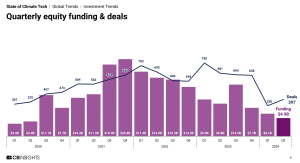
As climate change accelerates, venture capital climate companies are stepping up, directing billions into technologies that promise a sustainable future. However, climate tech funding experienced a significant decline in the second quarter of 2024, reaching its lowest quarterly level since Q2 2020, according to CB Insights report.

Funding dropped by 20% quarter-over-quarter (QoQ) to $4.9 billion, continuing a downward trend in the sector. Despite the decline, the number of deals saw a slight rebound, with 397 deals closed in Q2 2024, although this figure remained well below the quarterly totals observed in 2023.

Investors in climate tech are increasingly cautious, favoring smaller mid- and late-stage deals. However, they continue to seek opportunities in the early stages of funding, where strong prospects exist.

climate tech quarterly equity funding and deals

Notably, Q2 2024 marked the second consecutive quarter without any new unicorns (private companies reaching valuations of $1 billion or more) in the climate tech space. This absence of new unicorns coincides with the decline in late-stage deal sizes, further emphasizing the current caution among investors.ย 

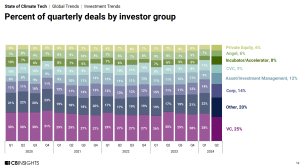
The overall decline in climate tech funding and the shift towards smaller deals reflect broader trends in the market, where investors are becoming more selective and cautious in their approach. Venture capital (VC) remains the largest group (25%) investing in the industry quarterly since 2020.ย 

percent quarterly deals by investor group

Here are the top four venture capital climate companies according to the CB Insights Report, which are worth noting in boosting green technologies that help in the fight against climate change.

SOSV: The Accelerator Driving Deep Tech and Planetary Health

Location: United States

SOSV is a global venture capital firm known for investing in early-stage deep tech startups with a focus on human and planetary health. Founded in 1995 by Sean O’Sullivan, SOSV has grown its assets under management to over $1.5 billion, supporting more than 500 startups worldwide. The firm operates several accelerator programs, including IndieBio and HAX, which provide startups with access to laboratories, office spaces, and mentorship.

Through these programs, SOSV has backed over 1,000 startups across various sectors, including health, food, and sustainability.

SOSV is deeply committed to environmental sustainability. The firm has made significant strides in supporting companies that are working to reduce carbon emissions and address climate change. For instance, it has invested in companies developing alternative proteins, carbon capture technologies, and other solutions aimed at reducing the carbon footprint of industries. SOSV’s portfolio companies have collectively raised billions in follow-on funding, and several have achieved unicorn status.

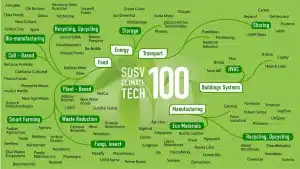
SOSV climate tech 100 map
Image from Medium.com

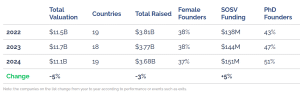
The VC firm created the “Climate Tech 100”, which highlights top climate-focused startups from SOSVโ€™s portfolio. The 2024 edition features 30 new companies, with an aggregate valuation of $11.1 billion and $3.68 billion raised in total, including $151 million from SOSV itself.

SOSV 2024 Climate Tech 100 Portfolio

SOSV climate tech 100 portfolio

SOSVโ€™s commitment and leadership in climate tech investment have been recognized by PitchBook, which ranks SOSV as the most active investor in climate tech, agtech, and carbon emissions technology since 2018.

Sean Oโ€™Sullivan, the Managing General Partner of SOSV, emphasizes that despite the recent downturn in climate tech funding, the sector is poised for a resurgence driven by critical global needs and favorable trends in industrial sustainability and reshoring U.S. production capabilities.

The investor is also increasingly focusing on critical minerals, recognizing their essential role in the renewable energy transition. The firm invests across the entire critical minerals value chain, from exploration to extraction and processing. These minerals are vital for the production of batteries, electric vehicles, and other clean energy technologies, making their sustainable sourcing a key priority for SOSV.

Global Brain: Fostering Global Innovation for a Greener Tomorrow

Location: Japan

Global Brain is a leading venture capital firm with a mission to foster innovation by investing in startups worldwide since 1998. With over $1.9 billion in assets under management, Global Brain has backed more than 1,000 startups, covering industries such as technology, sustainability, and critical minerals.ย 

The firm is particularly focused on supporting the transition to renewable energy, investing in companies that work on eco-friendly technologies and the sustainable sourcing of critical minerals essential for the clean energy sector.

Global Brain Climate Tech Portfolio Companies

Global Brain climate tech portfolio companies

Global Brain operates globally, with a presence in key innovation hubs like Tokyo, Silicon Valley, and London. The firm collaborates closely with large corporations through its corporate partnership programs, facilitating open innovation and helping startups scale more effectively. This collaboration has enabled Global Brain to drive advancements in critical industries, including the sourcing and processing of critical minerals crucial for renewable energy technologies such as batteries and electric vehicles.

The firmโ€™s notable investments include companies Orbital Marine Power, known for its pioneering tidal energy technology that promises to generate clean, renewable energy from ocean currents.

Global Brain has also played a significant role in expanding its portfolio internationally. The firmโ€™s global reach includes investments in high-growth markets such as the U.S., Europe, and Southeast Asia, contributing to its robust track record of successful exits and partnerships.

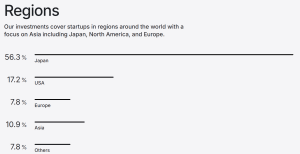
Global Brain investment by region

Global Brain is actively involved in supporting technologies that contribute to sustainability and carbon footprint reduction. The firm invests in startups that focus on renewable energy, energy efficiency, and environmental conservation. For example, their investment in TerraCycle, a company dedicated to recycling hard-to-recycle waste, reflects their commitment to tackling environmental challenges and promoting a circular economy.

Lowercarbon Capital: Fast-Tracking the Low-Carbon Revolution

Location: United States

Lowercarbon Capital is a prominent venture capital firm dedicated to accelerating the transition to a low-carbon economy. Founded by Chris Sacca and his team, the firm focuses on investing in innovative technologies and business models that address the climate crisis and reduce global carbon emissions.

Their portfolio includes startups pioneering innovations like zero-carbon cement, methane reduction in computing, fully electric planes, and advanced carbon removal technologies. Lowercarbon Capital is committed to supporting scalable solutions that can significantly reverse climate change while also delivering strong financial returns. This top VC company focuses on these three main areas:

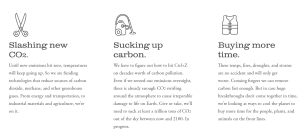
Lowercarbon Capital three areas of investment focus

Since its inception, Lowercarbon Capital has raised over $1 billion to invest in breakthrough climate technologies. The firmโ€™s portfolio includes pioneering companies in sectors such as carbon capture, renewable energy, and sustainable agriculture. Notable investments include companies like Charm Industrial, which is developing direct air capture and bioenergy with carbon capture and storage (BECCS) technologies with the potential to sequester millions of tons of CO2 annually.

Another key investment is in Nori, a platform focused on carbon removal through regenerative agriculture, aiming to sequester 10 million tons of CO2 per year.

Lowercarbon Capitalโ€™s strategic approach includes both early-stage and growth-stage investments. The firmโ€™s support has been instrumental in scaling technologies that have the potential to achieve significant emissions reductions. For instance, Lowercarbon Capital has helped fund innovations that could potentially reduce global carbon emissions by up to 5% over the next decade.

The firmโ€™s investment strategy is centered on high-impact climate solutions with a focus on scalability and effectiveness. Lowercarbon Capital targets technologies with the potential to cut carbon emissions across various industries, including energy, transportation, and agriculture. Their portfolio features technologies that aim to reduce carbon footprints by capturing and storing CO2, enhancing renewable energy integration, and promoting sustainable practices, which are crucial for achieving net-zero goals.

Breakthrough Energy Ventures: Billion-Dollar Bets on Net-Zero Technologies

Location: United States

Breakthrough Energy, founded by Bill Gates and a coalition of influential investors, is at the forefront of advancing technologies aimed at reducing global carbon emissions. The firm is dedicated to funding and scaling innovations that drive sustainable development and address climate change.

Breakthrough Energy Ventures (BEV), the firm’s investment arm, has invested over $2 billion in more than 60 high-impact startups. BEV has committed over $3.5 billion in capital to support more than 110 innovative companies, spanning from seed to growth stages.

Key investments include QuantumScape, which has developed a solid-state battery with the potential to increase energy density by 50% compared to conventional lithium-ion batteries, and Twelve, a company turning CO2 into valuable chemicals with a goal to reduce emissions by up to 50 million tons annually.

BEV’s investment strategy is guided by its focus on the Grand Challenges, which aim to:

  1. Develop Scalable Climate Solutions,
  2. Attract Additional Investment, and
  3. Address Critical Gaps in Climate Technology.

Breakthrough Energy Catalyst, another arm of the organization, supports large-scale projects with an investment goal of $15 billion to accelerate the commercialization of clean technologies. Catalyst projects include direct air capture systems and advanced hydrogen electrolyzers, with the potential to remove up to 1 billion tons of CO2 from the atmosphere annually by 2030.


Breakthrough Energyโ€™s portfolio emphasizes substantial carbon footprint reduction. Investments target areas with significant impact potential, such as energy storage and low-carbon fuels.ย Through strategic partnerships and collaborative efforts, Breakthrough Energy is driving systemic change and working towards a net-zero future.

Climate tech funding experienced a downturn in Q2 2024, with investor caution leading to fewer large deals and no new unicorns. Despite the decline, early-stage opportunities remain promising.

Top venture capital climate companies like SOSV, Global Brain, Lowercarbon Capital, and Breakthrough Energy Ventures continue to invest in innovative technologies that could shape the future of climate solutions. These firms are pivotal in driving progress towards a low-carbon economy through strategic investments and global partnerships.