CME Group plans to launch CBL Core Global Emissions Offset (C-GEO) futures in March. As such, it is currently pending review.
“CBL C-GEO futures are the latest in our suite of risk management tools to help bring standardized benchmarks to the rapidly evolving voluntary carbon markets,” said Peter Keavey, Global Head of Energy and Environmental Products at CME Group.
“As our clients closely follow the implications of Article 6 and other developments in this space, we are responding to demand for scalable market-based solutions that will allow them to execute their reduction strategies more effectively.”
What will C-GEO futures focus on?
C-GEO will deliver energy, renewables, and other technology-based offset credits based on the Core Carbon Principles. Also, credits will roll forward each year for new projects and markets.
“The CBL Core GEO spot contract has been tremendously well-received, with more than 1 million metric tons traded since its January launch,” said Xpansiv Chief Commercial Officer Ben Stuart.
“The launch of CBL C-GEO futures will bring expanded risk management and forward pricing capabilities to the market, the benefits of which have been clearly demonstrated by the introduction of futures on our GEO and N-GEO spot instruments.”
So, for every offset purchased, one metric ton of carbon is “offset” through an environmental project. Hence the term carbon offset. You are essentially neutralizing carbon emissions through something positive.
Many different projects count, like reforestation and agriculture. These projects are great for the environment and farmers, who receive compensation.
The world’s first “Air” mined diamonds could signal the end of the diamond industry as we know it.
Diamonds have been around for a long time, they were not a very important gem until De Beers began their successful marketing campaign in the 20th century.
De Beers began to convince people that diamonds were a show of love and that size matters. Over time celebrities and the global PR machine made diamonds extremely valuable and “rare”.
Traditional mined diamonds have a much larger environmental impact than lab-grown diamonds.
Lab-grown diamonds are nothing new, they are cheap and can produce the same quality as mined diamonds, the problem is perception.
It was ingrained in our minds that diamonds must be expensive to show how much you love someone, but that is changing fast.
Millennials and Generation Z, are now the main purchasers of diamonds for engagement rings. They are eco-conscious and 70% of them are considering buying lab-grown diamonds.
Climeworks has partnered with Aether Diamonds to produce Carbon-Negative Diamonds.
For every carat of diamond, Aether says it removes 20 metric tons of carbon dioxide from the air (i.e., 20 carbon credits). That is more than a year’s worth of emissions for the average American.
The costs are a lot more than traditional lab-made diamonds to produce, but then again diamonds are only expensive based on perception.
With Carbon set to become one of the biggest commodities of the future, maybe one day all diamonds will be graded by the 5 Cs: carat, cut, clarity, color, and carbon credits.
The carbon markets are heating up, so much so that Canada is getting two carbon credits ETF’s.
Both are claiming to be the “first” Canadian Carbon credit ETF.
Horizons ETFs Management (Canada) and Ninepoint Partners LP are launching their own respective carbon credit ETF’s on the TSX and NEO exchanges.
Horizons Carbon Credits ETF will trade under the ticker “CARB” and the goal is to replicate the performance of its Horizons “Carbon Credits Rolling Futures Index”. That index seeks to provide exposure to investments in cap-and-trade carbon allowances.
CARB will begin trading on February 10, 2022 on the TSX exchange.
The Ninepoint Carbon Credit ETF has a US and Canadian denominated ticker. The Canadian ticker is “CBON” & the US Dollar ticker is “CBON.U”. Both are set to launch on the Canadian NEO exchange around February 16th, 2022.
The Ninepoint offerings have a similar investment strategy as CARB, by investing in carbon emissions allowance futures in jurisdictions with cap-and-trade regimes such as Europe and California.
Both have claimed to be Canada’s first Carbon ETF’s and to check if these are “carbon copy” funds you will need to review their prospectus’ as both have a similar management fee structure of 0.75%.
Here’s the link to the official press releases here – CBON & CBON.U & CARB.
Investors are demanding more options to get exposure to the carbon credit sector which grew to over $850 billion last year.
Kyle Bass and Terry Anderson launched Conservation Equity Management, LP – a sustainability and conservation firm. Conservation Equity will buy large parcels of land in Texas. They are searching in other states nearby too.
They plan to protect ecosystems while raising their value. Plus, they will use the land they buy to create environmental credits.
How do environmental credits work?
Environmental credits are just like carbon credits. A company invests in an environmental project to offset its carbon emissions with carbon credits.
So, one carbon credit equals one metric ton of carbon. Pretty simple.
But environmental credits are a bit different.
Environmental credits restore wetland, water, and habitat resources. They also reduce air pollution.
So, they are not just focused on carbon.
However, Conservation Equity wants to do all the above.
They plan to mitigate wetland, stream, and endangered species habitat destruction. Plus, they want to generate sustainable income as well.
“There is a substantial opportunity to acquire larger timberland and rangeland parcels as ESG solutions to carbon capture, utilization or storage (CCUS), biodiversity offsets, and as hedges to inflation risk,” said Anderson, Principal.
Environmental credits and sustainability and conservation.
“As more companies and people move to Texas and other pro-business, low-tax states, there will be devastating environmental consequences, forcing firms to consider their physical environmental impacts, carbon footprints, and mitigation options,” said Bass, CEO.
So, environmental projects will be needed to promote sustainability and conservation efforts. Hence the need for environmental credits.
Bass continued, “This is the right moment for Conservation Equity.”
To date, Conservation Equity has successfully completed two transactions. One is in Cameron County, TX. The other is in Cherokee County, TX.
Per Bass, “The Bahia Grande and Cherokee Ridge properties are both outstanding opportunities to create value by employing various levels of conservation and mitigation strategies.”
Phillips 66 Aviation has partnered with 4AIR to launch a carbon credit program.
Phillips 66 is one of the largest refiners in the U.S. and a major contract jet and fuel supplier to private, commercial, and military aviation.
Through this program, flight operators and airports can offset carbon from jet fuel, gasoline, and diesel emissions. Emissions created by vehicles and operating are also included.
The 4AIR program has 4 different rating levels for clients to chose from:
Requires a 100% carbon dioxide (CO2) offset.
Requires a 300% offset to comprehensively offset emissions.
Requires a 5% direct emission reduction.
Requires a direct contribution to the Aviation Climate Fund.
“4AIR’s rating system is designed specifically for aviation and makes compliance with industry goals and sustainability efforts simple,” said Kennedy Ricci, president of 4AIR.
Lindsey Grant, Manager, Phillips 66 Aviation said, “We’re giving pilots and FBOs the right tools to help them on their carbon journey. We look forward to working alongside the 4AIR team to bring sustainable offerings to our customers.”
Sustainable Aviation Fuel (SAF) emits 80% less carbon than jet fuel. However, SAF is not easy to make. So, it is difficult to make the switch.
Phillips 66 Aviation hopes to change that by converting its San Francisco Refinery into a place to produce SAF. They would like it to be one of the most significant SAF production facilities in the world.
Verdox, a carbon capture start-up in Massachusetts, has raised $80 million from investors, including Bill Gates-backed Breakthrough Energy Ventures.
Increased interest in Verdox is due to a recent breakthrough in their technology.
According to CEO Brian Baynes, it involves a critical material used to trap GHG emissions.
What is carbon capture?
Carbon capture is when carbon is separated from the atmosphere and stored deep within the earth’s surface.
Most technology uses a liquid that attracts carbon like a magnet.
This takes a lot of time, energy, and, quite frankly, money.
Many do not feel it is an efficient or cost-effective way to reach net-zero.
How is Verdox’s technology different?
Verdox has developed a new plastic that can pull carbon from the air when charged with electricity. This could cut the total energy usage for direct air capture by more than 70% – which is a big deal.
Verdox hopes this technology will enable millions of tons of carbon to be captured at $50 per/tonne or less.
It is important to note that Verdox’s technology is still only operable at the lab scale.
What are carbon credits?
Carbon credits are permits that companies can buy to emit more carbon than regulated.
Each carbon credit represents an environmental project that helps offset carbon in the atmosphere.
One carbon credit = one metric ton of carbon.
So, carbon credits are different than carbon capture because carbon capture takes carbon out of the atmosphere (while credits just offset it).
Carbon credits have reached an all-time high of $851 billion. Much of that growth is due to the EU’s Emissions Trading System, now trading over 90 Euros per ton.
Verdox is now competing with Canada’s Carbon Engineering Ltd. and Switzerland’s Climeworks AG – which have raised more than $100 million each.
U.S. based Global Thermostat is another competitor.
According to analysts at Refinitiv, Global Carbon Markets grew 164% in 2021 – reaching $851 billion.
90% of the global value is due to the European Union’s Emissions Trading System (EU ETS) which opened in 2005. It is the world’s most established carbon market.
The EU ETS is currently worth 683 billion euros (approximately $769 billion).
Regional markets in North America have grown by 6% as well.
What are carbon markets?
Carbon markets are tools that are used to limit GHG emissions.
As countries cap emissions, companies can purchase carbon credits beyond the acceptable levels. These credits represent carbon offset through an environmental project (such as reforestation or renewable energy).
This allows companies to continue operating as they develop the technology needed to reduce their carbon output.
How do carbon markets differ from the voluntary carbon market (VCM)?
Simply put, voluntary carbon markets are just that – voluntary. So, individuals or organizations choose to purchase carbon credits to reduce their emissions (but are not regulated to do so).
Last year, the VCM was valued at $1 billion – up from just $300 million in 2018.
Per Refinitiv, “We expect interest in the VCM to keep growing, boosted by an increasing number of companies worldwide taking on carbon neutrality goals and other climate commitments that involve the use of carbon offsets.”
Why does the price of carbon keep increasing?
Because the EU’s goal is to reduce emissions by 55% by 2030, the price of carbon has doubled since the end of 2020.
Ingvild Sørhus, the lead-carbon analyst at Refinitiv, said, “More expensive emission permits hit coal power plants relatively harder than gas plants, but because of the soaring gas prices in the second half of 2021, coal generation was still more profitable.”
China is getting ready to relaunch the China Certified Emission Reduction (CCER) system, the voluntary carbon credit plan that was abandoned 5 years ago.
This coincided with the completion of the first compliance period for China’s new carbon trading market, the national Emissions Trading Scheme (ETS).
The CCER will play a crucial role in attaining carbon cost reductions and renewable energy goals as an important additional mechanism to the ETS.
CCER is projected to play a significant role in attaining carbon cost reductions and renewable energy goals.
CCER is carried out on a voluntary basis by firms and certified by the Chinese government. Projects such as renewable energy generation and waste-to-energy initiatives, as well as forestry projects, are set to benefit.
Carbon emitters must pay CCER owners, such as renewable energy generators, for their credits.
These voluntary CCER credits can be used to offset emissions by companies that are part of the compliance ETS.
The carbon credits can be used to offset China Emissions Allowances (CEAs) shortfalls or credits that companies participating in the national ETS can buy or trade under the program.
The offset rate of CCER credits is limited to 5% of emissions that exceed national ETS targets.
The earlier CCER plan was scrapped in 2017 due to low trading volume and a lack of standards in carbon audits.
Since China introduced its national ETS in July of last year, the concept of reinstating the CCER system has gained traction.
In a January interview, Lai Xiaoming, chairman of the Shanghai Environment and Energy Exchange, which manages the national ETS, stated that the government was actively planning for the relaunch of CCER in 2022.
Analyst Lin Yuan for Refinitiv believes the reintroduction of CCER will increase demand for offsets and that the supply volume of CCERs could be over 300 million tonnes.
Domestic and foreign institutions, companies, communities, and individuals are eligible to participate in transactions involving voluntary emissions reductions.
It is expected that in the future, Hong Kong-based and abroad enterprises will be able to participate in the CCER system by including CCERs that meet international criteria into their overall carbon-offsetting plan.
Last August, China’s carbon market saw its first cross-border transaction, with a Hong Kong-based organization and individual purchasing approximately 10,000 tonnes of CCERs from a solar power facility in the Kubuqi Desert.
The CCER relaunch finally started operation in 2023 under the management of China Beijing Green Exchange (CBGE).
These “carbon stocks” are doing their part to achieve a net-zero world. And catching investors’ attention.
KRBN, NETZ, OFSTF and BEP are stocks in focus in rising carbon markets.
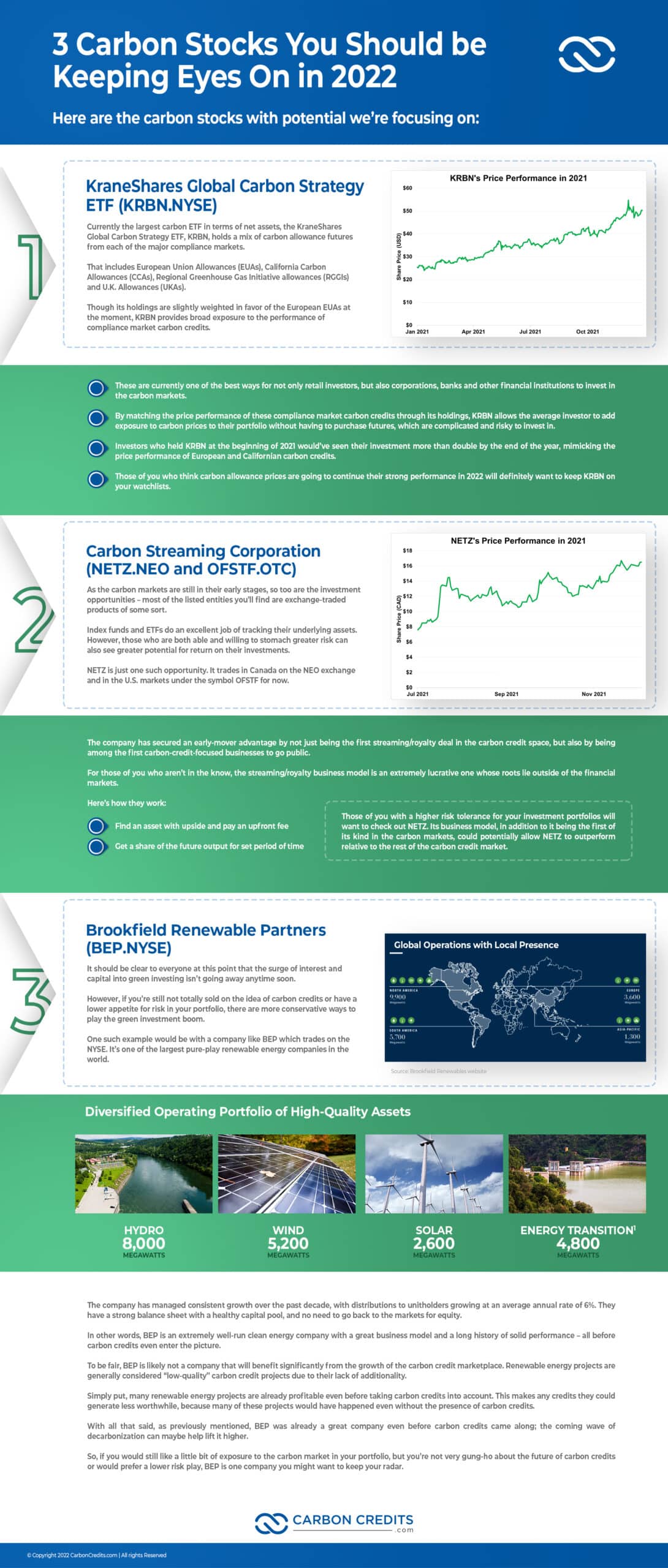
An infographic version of this post can be found here or by clicking the image below.
As most of you are probably aware, 2021 was a banner year for carbon investments around the world.
And 2022 is setting up to attract a lot of investor attention in the carbon markets. Especially as it relates to carbon stocks.
Carbon prices went on a tear in the wake of rising awareness of the dangers of climate change thanks to the many extreme weather events that took place last year.
Not to mention other events like the highly publicized COP26 United Nations climate change conference in Glasgow.
Future Carbon Prices
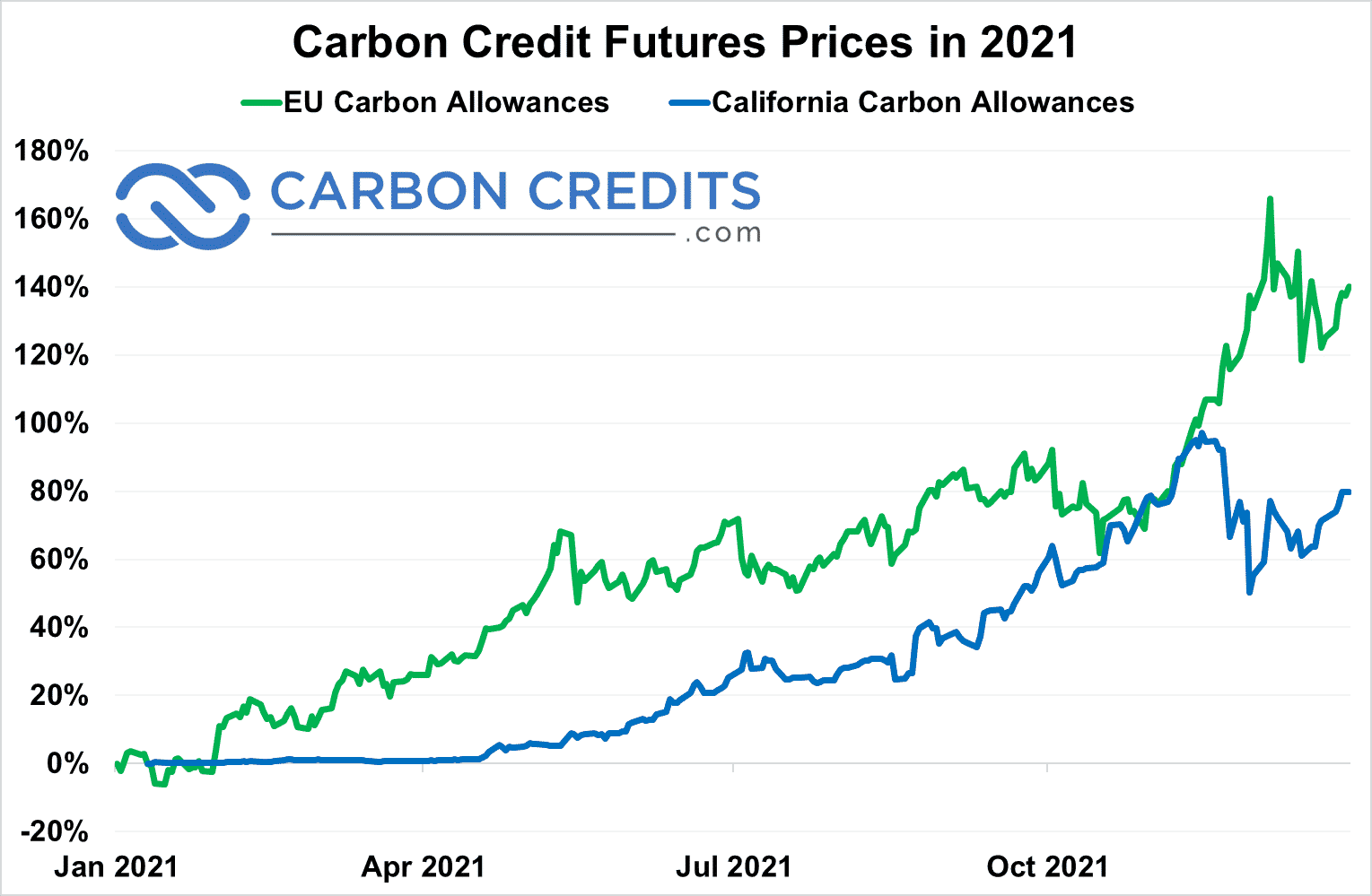
By the end of the year, European carbon allowances were up over 150%. Their Californian equivalents saw a more modest, but still impressive, 80% gain:
While these were impressive performances that might make you think you’ve already missed the boat, nothing could be further from the truth.
Carbon Markets Set to Soar In 2022
The carbon markets are still in their infancy and will need to see continued growth if the world is to meet the climate change target set out during the Paris Agreement.
This is the international accord to limit global warming to below 2 degrees Celsius, signed and ratified by all but four countries in the world.
Though the rough framework for a fully regulated global carbon market has already been laid out by the Article 6 agreement at COP26 last year, it could still be years before such a market actually comes into existence.
And when it does, it’s uncertain how it’ll interact with the current compliance and voluntary carbon markets. Will it merge with currently existing marketplaces or exist alongside them?
That’s why it’s the Wild West in the carbon markets right now. There are tons of unexplored territory with very little oversight. But opportunities abound, and there’s plenty of money to be made if you look in the right places.
So that brings us to the most important question of them all: where should we be investing right now?
3 Carbon Stocks You Should be Keeping Eyes On in 2022
Here are the carbon stocks with potential we’re focusing on:
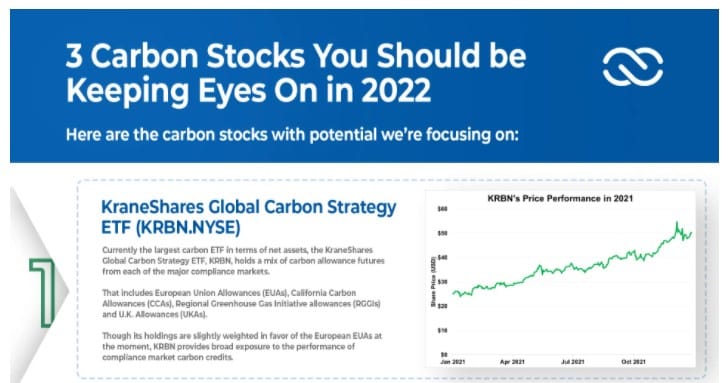
KraneShares Global Carbon Strategy ETF (KRBN.NYSE)
Currently the largest carbon ETF in terms of net assets, the KraneShares Global Carbon Strategy ETF,KRBN, holds a mix of carbon allowance futures from each of the major compliance markets.
That includes European Union Allowances (EUAs), California Carbon Allowances (CCAs), Regional Greenhouse Gas Initiative allowances (RGGIs) and U.K. Allowances (UKAs).
Though its holdings are slightly weighted in favor of the European EUAs at the moment, KRBN provides broad exposure to the performance of compliance market carbon credits.
These are currently one of the best ways for not only retail investors, but also corporations, banks and other financial institutions to invest in the carbon markets.
By matching the price performance of these compliance market carbon credits through its holdings, KRBN allows the average investor to add exposure to carbon prices to their portfolio without having to purchase futures, which are complicated and risky to invest in.
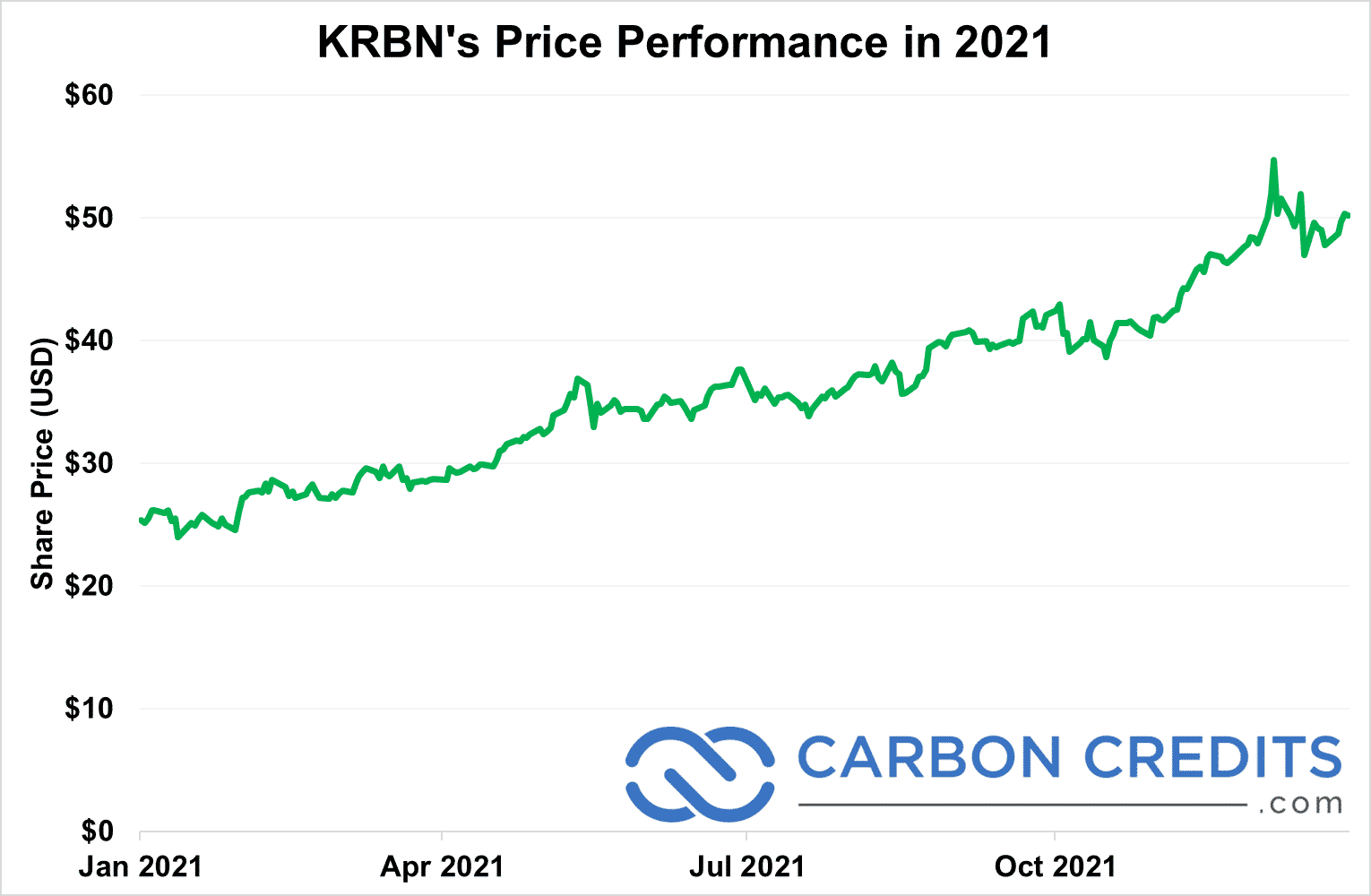
Investors who held KRBN at the beginning of 2021 would’ve seen their investment more than double by the end of the year, mimicking the price performance of European and Californian carbon credits.
Those of you who think carbon allowance prices are going to continue their strong performance in 2022 will definitely want to keep KRBN on your watchlists.
Carbon Streaming Corporation (NETZ.NEO and OFSTF.OTC)
As the carbon markets are still in their early stages, so too are the investment opportunities – most of the listed entities you’ll find are exchange-traded products of some sort.
Index funds and ETFs do an excellent job of tracking their underlying assets. However, those who are both able and willing to stomach greater risk will also see greater potential for return on their investments.
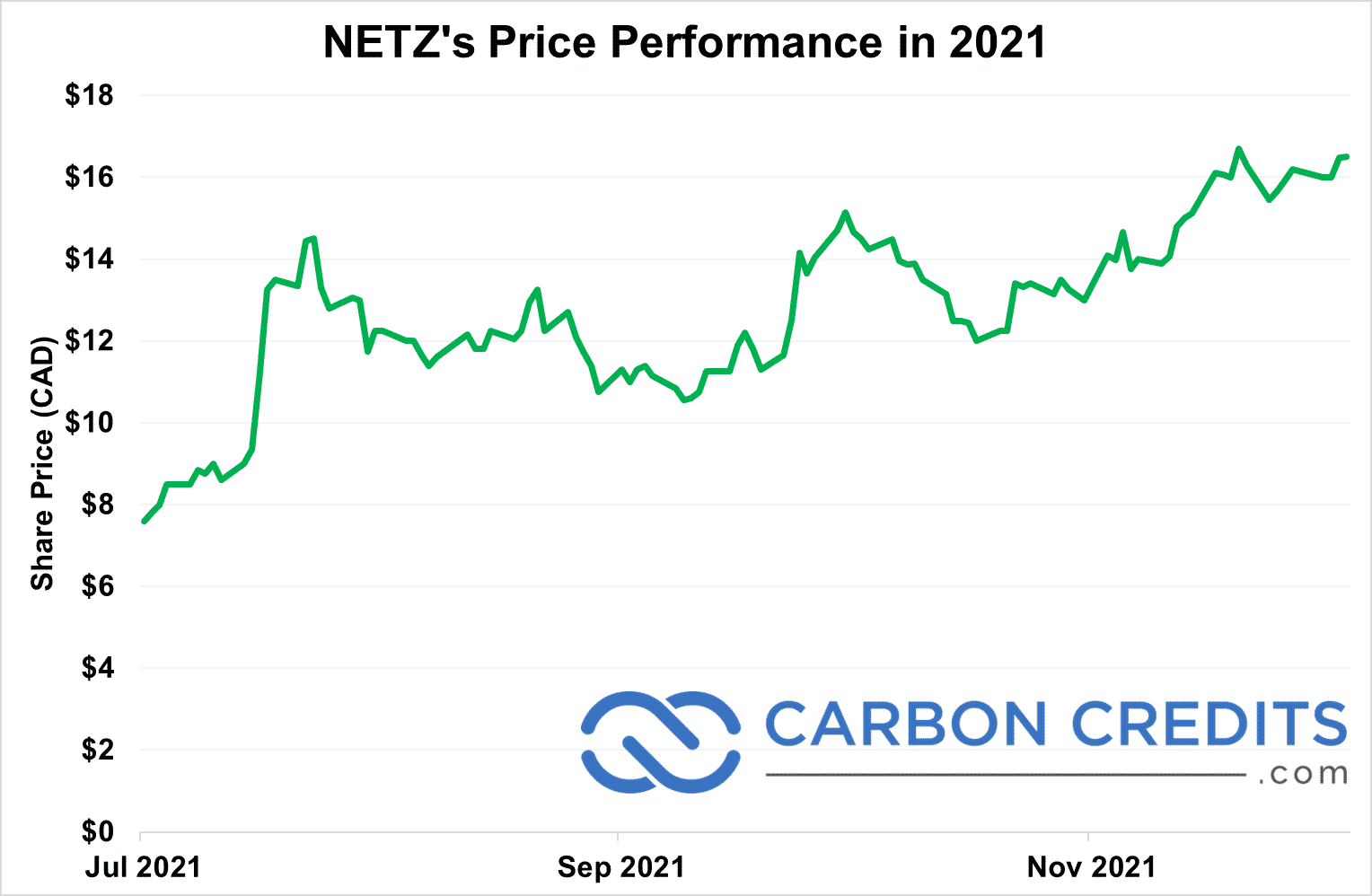
NETZ is just one such opportunity. It trades in Canada on the NEO exchange and in the U.S. markets under the symbol OFSTF for now.
The company has secured an early-mover advantage by not just being the first streaming/royalty deal in the carbon credit space, but also by being among the first carbon-credit-focused businesses to go public.
For those of you who aren’t in the know, the streaming/royalty business model is an extremely lucrative one whose roots lie outside of the financial markets.
Here’s how they work:
Find an asset with upside and pay an upfront fee
Get a share of the future output for set period of time
Music royalties, for example, are one of the oldest and most well-known examples. Artists can sell their catalog and rights upfront for $, the owners of the ‘royalties’ get a share in the profits in the future.
In the 1980’s Michael Jackson thought the Beatles catalog had upside paid over $50 million to secure the rights in the future (actually outbidding the actual Beatles).
Those assets grew over time and the value of the overall catalog grew alongside it.
The business model has since made its way into many different types of commodities, with gold and precious metals streaming and royalty companies being another prominent example.
And just like how Sony bought up the Beatles music catalog at a $1.5 billion valuation in 2016. NETZ is betting big to lock in agreements with some of the highest-quality carbon credit projects out there.
These include the Rimba Raya Biodiversity Project in Indonesia, one of the world’s largest REDD+ projects that’s expected to offset 130 million tonnes of CO2e over the next 30 years.
Those of you with a higher risk tolerance for your investment portfolios will want to check out NETZ. Its business model, in addition to it being the first of its kind in the carbon markets, could potentially allow NETZ to outperform relative to the rest of the carbon credit market.
It should be clear to everyone at this point that the surge of interest and capital into green investing isn’t going away anytime soon.
However, if you’re still not totally sold on the idea of carbon credits or have a lower appetite for risk in your portfolio, there are more conservative ways to play the green investment boom.
One such example would be with a company like BEP which trades on the NYSE. It’s one of the largest pure-play renewable energy companies in the world.
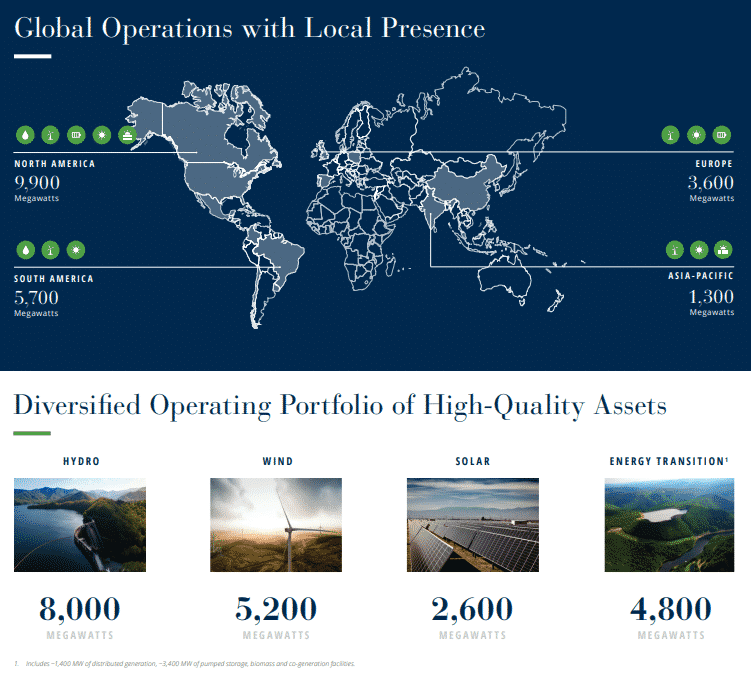
BEP has extremely diversified holdings, with nearly $60 billion in power assets located in over a dozen countries across four continents, split across hydro, wind, solar and energy transition projects.
Source: Brookfield Renewables website
The company has managed consistent growth over the past decade, with distributions to unitholders growing at an average annual rate of 6%. They have a strong balance sheet with a healthy capital pool, and no need to go back to the markets for equity.
In other words, BEP is an extremely well-run clean energy company with a great business model and a long history of solid performance – all before carbon credits even enter the picture.
To be fair, BEP is likely not a company that will benefit significantly from the growth of the carbon credit marketplace. Renewable energy projects are generally considered “low-quality” carbon credit projects due to their lack of additionality.
Simply put, many renewable energy projects are already profitable even before taking carbon credits into account. This makes any credits they could generate less worthwhile, because many of these projects would have happened even without the presence of carbon credits.
With all that said, as previously mentioned, BEP was already a great company even before carbon credits came along; the coming wave of decarbonization can maybe help lift it higher.
So, if you would still like a little bit of exposure to the carbon market in your portfolio, but you’re not very gung-ho about the future of carbon credits or would prefer a lower risk play, BEP is one company you might want to keep your radar.
The Best Carbon Stocks Should Generate a Lot of Interest from Investors
With a large number of public companies declaring their Net-Zero ambitions and disclosing carbon emissions, socially responsible investing is becoming a major theme in financial markets. There are trillions of dollars of investment going into renewable energy and the offsetting emissions.
Facebook (Now Meta Platforms), Apple and Netflix are among the major tech companies leading this charge to net-zero targets for 2030. And major mining (Barrick, Newmont) and energy companies (Exxon, Shell) are doing the same.
These factors will drive increasing investor interest in all things carbon related in 2022 and beyond. Expect things to accelerate as net zero targets for 2030 draw closer.
Rising tides can lift all boats, and the best carbon stocks should generate some of the best returns for investors. These carbon companies have shown themselves to be steady value drivers with the financial acumen to capture many opportunities for solid returns in the past, and should be on the top of any green investor’s watchlist for 2022.
Disclosure: Owners, members, directors and employees of carboncredits.com have/may have stock or option position in any of the companies mentioned: NETZ, BEP
Carboncredits.com receives compensation for this publication and has a business relationship with any company whose stock(s) is/are mentioned in this article: NO
Additional disclosure: This communication serves the sole purpose of adding value to the research process and is for information only. Please do your own due diligence. Every investment in securities mentioned in publications of carboncredits.com involve risks which could lead to a total loss of the invested capital.
To provide the best experiences, we use technologies like cookies to store and/or access device information. Consenting to these technologies will allow us to process data such as browsing behavior or unique IDs on this site. Not consenting or withdrawing consent, may adversely affect certain features and functions.
Functional
Always active
The technical storage or access is strictly necessary for the legitimate purpose of enabling the use of a specific service explicitly requested by the subscriber or user, or for the sole purpose of carrying out the transmission of a communication over an electronic communications network.
Preferences
The technical storage or access is necessary for the legitimate purpose of storing preferences that are not requested by the subscriber or user.
Statistics
The technical storage or access that is used exclusively for statistical purposes.The technical storage or access that is used exclusively for anonymous statistical purposes. Without a subpoena, voluntary compliance on the part of your Internet Service Provider, or additional records from a third party, information stored or retrieved for this purpose alone cannot usually be used to identify you.
Marketing
The technical storage or access is required to create user profiles to send advertising, or to track the user on a website or across several websites for similar marketing purposes.