Fentanyl – A National Security Crisis Demanding Prevention

0

* Disseminated on behalf of ARMR Sciences Inc.
* For Accredited Investors Only. Offered pursuant to Rule 506(c). Reasonable steps to verify accreditation will be taken before any sale.
PAID ADVERTISEMENT – SPONSORED CONTENT

Fentanyl is no longer just another opioid – it has become the single most lethal synthetic drug in the United States. Since 2000, it is estimated that more than 20 million nonfatal overdoses have occurred in the U.S.- surpassing deaths from COVID-19, HIV/AIDS, and even major wars.

Today, fentanyl is the leading cause of death for adults aged 18โ€“45, claiming an estimated 220 lives every single day.

A Silent, Rapid Killer

A minuscule amount โ€“ equivalent in size to just a few grains of salt – can be fatal. Fentanyl is fast-acting and often hidden in counterfeit pills or laced into drugs without the userโ€™s knowledge.ย 

Fentanyl is cheap to manufacture and covertly laced with counterfeit pills and recreational drugs. This stealth factor explains why the vast majority of overdose victims never intended to take fentanyl.

The financial toll is also staggering: the opioid epidemic costs the U.S. economy an estimated $2.7 trillion in 2023 alone, with cumulative losses exceeding $10 trillion over the past two decades.

Why Current Defenses Fall Short

Tools like naloxone (Narcan) have saved lives but remain purely reactive. They only work after an overdose begins and often fail against emerging analogs such as xylazine, nitazenes, or medetomidine, which Narcan cannot reverse. First responders, military personnel, and even families are left without effective long-term defenses.

ARMRโ€™s Preventive Approach

ARMR Sciences is advancing its novel immunotherapy, ARMR-100, designed to train the immune system to block fentanyl before it reaches the brain. In preclinical (animal) studies, ARMR-100 blocked 92% of fentanylโ€™s entry into the brain and eliminated its addictive behavioral effects (at this stage ARMR-100 is not FDA-approved, human safety and efficacy have not been established, and preclinical results may not predict clinical outcomes).ย 

Unlike reactive antidotes, this would provide months of protection – functioning like a biochemical shield.

The program is building on seven years of U.S. Department of Defenseโ€“funded research and is working to leverage proven vaccine components, such as carrier proteins already approved in licensed products and adjuvants tested in hundreds of clinical trials.ย 

The Market and ARMRโ€™s Mission

The potential reach is vast: 2.7 million Americans with opioid use disorder, over 2 million first responders and law enforcement officers, more than 18 million military personnel and veterans who experience higher rates of opioid use, chronic pain, and post-traumatic stress disorder, and more than 30 million high-risk young people.

A once or twice annual preventive shot could help transform national defense against fentanyl, making protection scalable across households, schools, hospitals, and security agencies.

The fentanyl crisis is no longer just a health issue – itโ€™s a national security emergency. And we believe prevention, not rescue, may be the only path to saving a generation.

Why Investors Should Pay Attention

ARMR is more than a biotech startup – it is working to tackle Americaโ€™s most urgent social and health crisis. This is a mission-driven company focused on building a preventive defense platform that could save thousands of lives each year:

  • $30M private raise launched
  • Seven years of DoD-backed research form the foundation
  • Lead candidate ARMR-100 blocked 92% of fentanyl from entering the brain in preclinical studies
  • A targeted exchange listing in the future

By investing in this round, investors have a chance to back a company whose mission is as much about impact as it is about growth potential.ย 

Invest now to help support ARMRโ€™s efforts to build the nationโ€™s first line of defense against fentanyl and other synthetic threats.

For Accredited Investors Only. This offering is made pursuant to Rule 506(c) of Regulation D. All purchasers must be accredited investors, and the issuer will take reasonable steps to verify accredited status before any sale.ย Investing involves high risk, including the potential loss of your entire investment.

This is a paid advertisement for ARMRโ€™s private offering. Please read the details of the offering at InvestARMR.com for additional information on the company and the risk factors related to the offering.

For investors from Canada: This advertisement forms part of the issuerโ€™s marketing materials and is incorporated by reference into the issuerโ€™s Offering Memorandum/Private Placement Memorandum under NI 45-106. Investors must receive and review the OM/PPM and execute the prescribed Form 45-106F4 Risk Acknowledgement before subscribing.

DISCLOSURES & DISCLAIMERS

CLIENT CONTENT: Carboncredits.com is not responsible for any content hosted on ARMR Sciences’ sites; it is ARMR Sciences’ responsibility to ensure compliance with applicable laws.

NOT INVESTMENT ADVICE: Content is for educational, informational, and advertising purposes only and should NOT be construed as securities-related offers or solicitations. All content should be considered promotional and subject to disclosed conflicts of interest.ย 

Do NOT rely on this as personalized investment advice. Do your own due diligence.

Carboncredits.com strongly recommends you consult a licensed or registered professional before making any investment decision.

REGULATORY STATUS: Neither Carboncredits.com nor any of its owners or employees is registered as a securities broker-dealer, broker, investment advisor, or IA representative with the U.S. Securities and Exchange Commission, any state securities regulatory authority, or any self-regulatory organization.

CONTENT & COMPENSATION DISCLOSURE: Carboncredits.com has received compensation of thirty thousand dollars from ARMR Sciences for this sponsored content. You should assume we receive compensation as indicated for any purchases through links in this article via affiliate relationships, direct/indirect payments from companies or third parties who may own stock in or have other interests in promoted companies. We may purchase, sell, or hold long or short positions without notice in securities mentioned in this communication.

RESULTS NOT TYPICAL: Past performance and results are unverified and NOT indicative of future results. Results presented are NOT guaranteed as TYPICAL. Market conditions and individual circumstances vary significantly. Actual results will vary widely. Investing in securities is speculative and carries high risk; you may lose some, all, or possibly more than your original investment.

HIGH-RISK: Securities discussed may be highly speculative investments subject to extreme volatility, limited liquidity, and potential total loss. The Securities are suitable only for persons who can afford to lose their entire investment. Furthermore, investors must understand that such investment could be illiquid for an indefinite period of time. No public market currently exists for the securities, and if a public market develops, it may not continue.

CAUTIONARY STATEMENT: Certain statements in this presentation (the โ€œPresentationโ€) may be deemed to be โ€œforward-looking statementsโ€ within the meaning of Section 27A of the 1933 Securities Act and Section 21E of the Exchange Act of 1934, as amended, and are intended to be covered by the safe harbor provisions for forward-looking statements. Such forward-looking statements can be identified by the use of words such as ”should,” ”may,” ”intends,” ”anticipates,” ”believes,” ”estimates,” ”projects,” ”forecasts,” ”expects,” ”plans,” and ”proposes.” Forward-looking statements, which are based on the current plans, forecasts and expectations of management of ARMR Sciences Inc. (the โ€œCompanyโ€ or โ€œARMR Sciencesโ€), are inherently less reliable than historical information. Forward-looking statements are subject to risks and uncertainties, including events and circumstances that may be outside our control.

Although management believes that the expectations reflected in these forward-looking statements are based on reasonable assumptions, there are a number of risks and uncertainties that could cause actual results to differ materially from such forward-looking statements. Risks and uncertainties that could cause actual results to differ materially include, without limitation, those risks identified in the Private Placement Memorandum. Forward-looking statements speak only as of the date of the document in which they are contained, and ARMR Sciences Inc. does not undertake any duty to update any forward-looking statements except as may be required by law.

Any forward-looking financial forecasts contained in this Presentation are subject to a number of risks and uncertainties, and actual results may differ materially. You are cautioned not to place undue reliance on such forecasts. No assurances can be given that the future results indicated, whether expressed or implied, will be achieved. While sometimes presented with numerical specificity, all such forecasts are based upon a variety of assumptions that may not be realized, and which are highly variable. Because of the number and range of the assumptions underlying any such forecasts, many of which are subject to significant uncertainties and contingencies that are beyond the reasonable control of the issuing company, many of the assumptions inevitably will not materialize and unanticipated events and circumstances may occur subsequent to the date of any financial forecast.


Disclosure: Owners, members, directors, and employees of carboncredits.com have/may have stock or option positions in any of the companies mentioned: None.

Carboncredits.com receives compensation for this publication and has a business relationship with any company whose stock(s) is/are mentioned in this article.

Additional disclosure: This communication serves the sole purpose of adding value to the research process and is for information only. Please do your own due diligence. Every investment in securities mentioned in publications of carboncredits.com involves risks that could lead to a total loss of the invested capital.


Please read our Full RISKS and DISCLOSURE here.

AI and Biodefense โ€“ Working to Stay Ahead of Synthetic Drug Threats

* Disseminated on behalf of ARMR Sciences Inc.
* For Accredited Investors Only. Offered pursuant to Rule 506(c). Reasonable steps to verify accreditation will be taken before any sale.
PAID ADVERTISEMENT โ€“ SPONSORED CONTENT

Artificial intelligence (AI) is helping transform medicine, finance, and logistics. But experts warn it could also be turned against us. With advanced modeling, AI can now generate chemical blueprints at a substantially faster rate than previously available processes. As a result, National security leaders and AI thought leaders (including OpenAIโ€™s Sam Altman), have voiced concerns that adversaries could weaponize AI to design new bioweapons.

The New Threat Landscape

Fentanyl already stands as the deadliest synthetic opioid in U.S. history, responsible for more than 220 deaths every day. But fentanyl itself is only the beginning.ย 

Analogs like carfentanil (100x stronger), xylazine (non-opioid threat), and nitazenes (40x stronger) are beginning to spread, many of which are not reversible with Narcan.ย 

The drug supply is becoming a testing ground for increasingly lethal compounds, some of which could be accelerated by AI-driven chemistry.

This dual challenge – lethal analogs on the street and the potential for AI-designed agents – has led federal agencies, including the Department of Defense and Homeland Security, to classify fentanyl and its cousins as chemical weapons of mass destruction.ย 

The crisis is no longer just a health issue; it is a national security emergency.

ARMRโ€™s Defense Labs Approach

ARMR Sciences is working to position itself to confront this next phase. Its Defense Labs initiative combines AI-powered drug discovery with seven years of Department of Defenseโ€“funded science with the goal of building a scalable biodefense platform.

The companyโ€™s lead candidate, ARMR-100,ย designed to train the immune system to block fentanyl before it reaches the brain. Inย preclinical (animal) studies, ARMR-100ย blockedย 92% of fentanylโ€™s entry into the brainย and eliminated its addictive behavioral effects (at this stage ARMR-100 is not FDA-approved, human safety and efficacy have not been established, and preclinical results may not predict clinical outcomes).

Unlike reactive tools such as naloxone, ARMR-100 is designed to provide months of protection – a biochemical shield against fentanyl and, eventually, other engineered analogs.

Beyond fentanyl, ARMR plans to develop additional immunotherapies for xylazine, nitazenes, and other emerging threats, creating a portfolio that evolves alongside the risks.ย 

By leveraging AI in its own labs, ARMR seeks to stay ahead of adversaries who might misuse the same technology. And in the battle between innovation and misuse, its proactive biodefense may prove to be Americaโ€™s strongest shield.

The Scale and the Urgencyย 

With more than 130 million people in the U.S. considered high-risk – from opioid use disorder patients to first responders and military personnel – the potential market is vast.ย 

For policymakers, the message is clear: synthetic opioids are no longer only a health crisis, but a recognized national security threat. Classified alongside terrorism and cyberwarfare, fentanyl and its analogs demand rapid action.ย 

This urgency is creating bipartisan momentum for federal funding, regulatory fast-tracking, and stockpiling of new countermeasures.ย 

Why Investors Should Pay Attention

For investors, we believe that ARMR represents an opportunity to back a company that combines social impact with growth potential. Its model combines biotechnology, AI, and biodefense – a convergence few companies are addressing:

  • Seven years of DoD-backed research formed the platformโ€™s foundation
  • Lead candidate ARMR-100 blocked 92% of fentanyl from entering the brain in preclinical studies
  • A $30M private raise is now open
  • A targeted exchange listing in the future

By investing in this round, investors have a chance to support ARMR as it works to build a category-defining role in AI-powered biodefense.

Invest now to help support ARMRโ€™s efforts to build the nationโ€™s first line of defense against fentanyl and other synthetic threats.

* For Accredited Investors Only.ย This offering is made pursuant to Rule 506(c) of Regulation D. All purchasers must be accredited investors, and the issuer will take reasonable steps to verify accredited status before any sale.ย Investing involves high risk, including the potential loss of your entire investment.

* This is a paid advertisement for ARMRโ€™s private offering.ย Please read the details of the offering atย InvestARMR.comย for additional information on the company and the risk factors related to the offering.

* For investors from Canada:ย This advertisement forms part of the issuerโ€™s marketing materials and is incorporated by reference into the issuerโ€™s Offering Memorandum/Private Placement Memorandum under NI 45-106. Investors must receive and review the OM/PPM and execute the prescribed Form 45-106F4 Risk Acknowledgement before subscribing.

DISCLOSURES & DISCLAIMERS

CLIENT CONTENT: Carboncredits.com is not responsible for any content hosted on ARMR Sciences’ sites; it is ARMR Sciences’ responsibility to ensure compliance with applicable laws.

NOT INVESTMENT ADVICE: Content is for educational, informational, and advertising purposes only and should NOT be construed as securities-related offers or solicitations. All content should be considered promotional and subject to disclosed conflicts of interest.ย 

Do NOT rely on this as personalized investment advice. Do your own due diligence.

Carboncredits.com strongly recommends you consult a licensed or registered professional before making any investment decision.

REGULATORY STATUS: Neither Carboncredits.com nor any of its owners or employees is registered as a securities broker-dealer, broker, investment advisor, or IA representative with the U.S. Securities and Exchange Commission, any state securities regulatory authority, or any self-regulatory organization.

CONTENT & COMPENSATION DISCLOSURE: Carboncredits.com has received compensation of thirty thousand dollars from ARMR Sciences for this sponsored content. You should assume we receive compensation as indicated for any purchases through links in this email via affiliate relationships, direct/indirect payments from companies or third parties who may own stock in or have other interests in promoted companies. We may purchase, sell, or hold long or short positions without notice in securities mentioned in this communication.

RESULTS NOT TYPICAL: Past performance and results are unverified and NOT indicative of future results. Results presented are NOT guaranteed as TYPICAL. Market conditions and individual circumstances vary significantly. Actual results will vary widely. Investing in securities is speculative and carries high risk; you may lose some, all, or possibly more than your original investment.

HIGH-RISK: Securities discussed may be highly speculative investments subject to extreme volatility, limited liquidity, and potential total loss. The Securities are suitable only for persons who can afford to lose their entire investment. Furthermore, investors must understand that such investment could be illiquid for an indefinite period of time. No public market currently exists for the securities, and if a public market develops, it may not continue.

DISCLAIMERS & CAUTIONARY STATEMENT: Certain statements in this presentation (the โ€œPresentationโ€) may be deemed to be โ€œforward-looking statementsโ€ within the meaning of Section 27A of the 1933 Securities Act and Section 21E of the Exchange Act of 1934, as amended, and are intended to be covered by the safe harbor provisions for forward-looking statements. Such forward-looking statements can be identified by the use of words such as ”should,” ”may,” ”intends,” ”anticipates,” ”believes,” ”estimates,” ”projects,” ”forecasts,” ”expects,” ”plans,” and ”proposes.” Forward-looking statements, which are based on the current plans, forecasts and expectations of management of ARMR Sciences Inc. (the โ€œCompanyโ€ or โ€œARMR Sciencesโ€), are inherently less reliable than historical information. Forward-looking statements are subject to risks and uncertainties, including events and circumstances that may be outside our control.

Although management believes that the expectations reflected in these forward-looking statements are based on reasonable assumptions, there are a number of risks and uncertainties that could cause actual results to differ materially from such forward-looking statements. Risks and uncertainties that could cause actual results to differ materially include, without limitation, those risks identified in the Private Placement Memorandum. Forward-looking statements speak only as of the date of the document in which they are contained, and ARMR Sciences Inc. does not undertake any duty to update any forward-looking statements except as may be required by law.

Any forward-looking financial forecasts contained in this Presentation are subject to a number of risks and uncertainties, and actual results may differ materially. You are cautioned not to place undue reliance on such forecasts. No assurances can be given that the future results indicated, whether expressed or implied, will be achieved. While sometimes presented with numerical specificity, all such forecasts are based upon a variety of assumptions that may not be realized, and which are highly variable. Because of the number and range of the assumptions underlying any such forecasts, many of which are subject to significant uncertainties and contingencies that are beyond the reasonable control of the issuing company, many of the assumptions inevitably will not materialize and unanticipated events and circumstances may occur subsequent to the date of any financial forecast.

ARMR Sciences Inc. takes no responsibility for any forecasts contained within the Presentation. None of the information contained in any offering materials should be regarded as a representation by ARMR Sciences Inc. The Companyโ€™s forecasts have not been prepared with a view toward public disclosure or compliance with the guidelines of the SEC, the American Institute of Certified Public Accountants or the Public Company Accounting Oversight Board. Independent public accountants have not examined nor compiled any forecasts and have not expressed an opinion or assurance with respect to the figures.

This Presentation also contains estimates and other statistical data made by independent parties and by management relating to market size and other data about our industry. This data involves a number of assumptions and limitations, and you are cautioned not to give undue weight to such estimates.

ARMR Sciences Inc. is currently undertaking a private placement offering of Offered Shares pursuant to Section 4(a)(2) of the 1933 Act and/or Rule 506(c) of Regulation D promulgated thereunder. Investors should consider the investment objectives, risks, and investment time horizon of the Company carefully before investing. The private placement memorandum relating to the offering of Securities will contain this and other information concerning the Company, including risk factors, which should be read carefully before investing.

The Securities are being offered and sold in reliance on exemptions from registration under the 1933 Act. In accordance therewith, you should be aware that (i) the Securities may be sold only to โ€œaccredited investors,โ€ as defined in Rule 501 of Regulation D; (ii) the Securities will only be offered in reliance on an exemption from the registration requirements of the Securities Act and will not be required to comply with specific disclosure requirements that apply to registration under the Securities Act; (iii) the United States Securities and Exchange Commission (the โ€œSECโ€) will not pass upon the merits of or give its approval to the terms of the Securities or the offering, or the accuracy or completeness of any offering materials; (iv) the Securities will be subject to legal restrictions on transfer and resale and investors should not assume they will be able to resell their securities; and (v) investing in these Securities involves a high degree of risk, and investors should be able to bear the loss of their entire investment. Furthermore, investors must understand that such investment could be illiquid for an indefinite period of time.

The Company is “Testing the Waters” under Regulation A under the Securities Act of 1933. The Company is not under any obligation to make an offering under Regulation A. No money or other consideration is being solicited in connection with the information provided, and if sent in response, will not be accepted. No offer to buy the securities can be accepted and no part of the purchase price can be received until an offering statement on Form 1-A has been filed and until the offering statement is qualified pursuant to Regulation A of the Securities Act of 1933, as amended, and any such offer may be withdrawn or revoked, without obligation or commitment of any kind, at any time before notice of its acceptance given after the qualification date. ย ย 
ย 
The securities offered using Regulation A are highly speculative and involve significant risks. The investment is suitable only for persons who can afford to lose their entire investment. Furthermore, investors must understand that such investment could be illiquid for an indefinite period of time. No public market currently exists for the securities, and if a public market develops following the offering, it may not continue. The Company intends to list its securities on a national exchange and doing so entails significant ongoing corporate obligations including but not limited to disclosure, filing and notification requirements, as well compliance with applicable continued quantitative and qualitative listing standards.

Tesla Rides High Before Q3 Earnings With (TSLA) Stock Rising, Record Deliveries, Gigafactory Growth, and Green Goals

Tesla, Inc. continues to show strong performance in 2025. In the third quarter alone, the company delivered 497,099 vehicles, close to half a million units. This figure is one of Teslaโ€™s highest quarterly delivery totals on record. At the same time, its Austin Gigafactory reached a key production milestone โ€” more than 500,000 vehicles built since opening in 2022.

These achievements confirm Teslaโ€™s steady expansion of its manufacturing network. The company now runs major factories in California, Texas, Nevada, Germany, and China. Each plant contributes to a growing global supply chain that supports its Model Y, Model 3, and the new Cybertruck.

Teslaโ€™s steady ramp-up shows how far it has come since its early production struggles. The company aims to reach 20 million vehicles a year by 2030. This plan is ambitious, but this quarterโ€™s numbers show steady progress toward that goal.

Gigafactory Texas Reaches a Key Milestone

Gigafactory Texas, near Austin, is Tesla’s biggest and most advanced U.S. facility. It makes the Model Y and is ramping up Cybertruck production. Hitting 500,000 vehicles in roughly three and a half years shows faster growth compared to Teslaโ€™s earlier plants.

Reports say around 100,000 vehicles were made from April to mid-October 2025. This strong pace helps meet annual growth targets. The plant uses Giga Presses, which are massive casting machines that replace dozens of smaller parts. This automation speeds up production, reduces costs, and minimizes material waste.

The Texas facility also plays a central role in Teslaโ€™s sustainability strategy. Much of its electricity comes from renewable energy, and its design reduces water use and waste. Over time, Tesla aims for all Gigafactories to operate with 100% clean energy.

Q3 Earnings Outlook: Revenue Growth, Margin Pressure

Analysts expect Tesla to post around $26.3 billion in revenue for Q3 2025, up about 4โ€“5% year-over-year. However, earnings per share (EPS) are projected to fall about 24%, to roughly $0.55 per share from $0.72 in the same quarter last year.

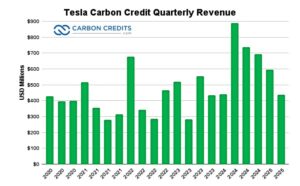
The decline is mainly due to lower vehicle prices and smaller contributions from carbon redit sales. These credits have been providing a huge revenue stream to the EV giant by selling it to its peers that don’t meet regulatory emission reductions.

Also, Tesla has cut prices on its main models in several markets to stay competitive, especially against Chinese EV makers. Those price cuts attract new buyers but reduce profit margins.

Teslaโ€™s operating margin averaged 9.2% in Q2 2025, down from 11.4% a year earlier. Automotive gross margin, excluding credits, was about 18%, compared to over 25% in 2022. Even with tighter margins, Tesla continues to benefit from software revenue through Full Self-Driving (FSD) packages and connectivity subscriptions.

The company’s results will likely depend on several key factors:

  • Vehicle deliveries โ€“ nearly half a million this quarter.
  • Energy storage deployments โ€“ reaching a new record of 12.5 GWh.
  • Software and services โ€“ providing recurring, higher-margin income.
  • Production costs โ€“ influenced by logistics and raw material expenses.

Despite margin pressure, Teslaโ€™s growth in energy storage and software could offset some of the decline in car profits.

The Global EV Race Accelerates

The global electric vehicle (EV) market continues to expand rapidly. The International Energy Agency (IEA) reports that global EV sales rose over 30% in 2024. They reached almost 14 million units. In 2025, sales could hit 17 million. Electric cars could represent about 22% of all vehicle sales globally by the end of this year.

global EV sales 2030 BNEF

Tesla remains a market leader, holding around 16% of global EV market share, but it faces rising competition. Chinese brands like BYD, NIO, and XPeng are growing in Asia and Europe. At the same time, Volkswagen, Ford, GM, and Hyundai are speeding up EV production.

Elon Musk’s company defends its position by improving efficiency and cutting costs. Its 4680 battery cells are key, aiming to lower production costs by up to 50%. They also enhance range and durability.

The company also benefits from the U.S. Inflation Reduction Act (IRA), which offers tax credits for EV buyers and incentives for battery production. However, these credits will gradually phase out, which could affect demand after 2026.

According to BloombergNEF, the average price of lithium-ion batteries dropped to $115 per kWh in 2024, down 20% from 2023. This decline helps Tesla maintain affordability while protecting margins.

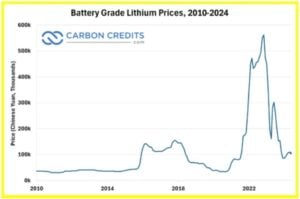
battery grade lithium prices

Wall Street Takes the Wheel: Tesla Stock Gains on Big Deliveries

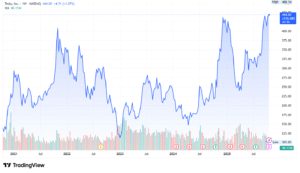
Teslaโ€™s stock rose modestly after its Q3 delivery report. On Monday, shares gained, surpassing $444, which doubled in six months. The rise reflects investor confidence in Teslaโ€™s production capacity and delivery strength, even with profit pressure.

Tesla TSLA stock price

Analysts remain split: some expect stronger earnings in 2026 as new models roll out, while others warn that price cuts and competition could slow growth.

Still, Teslaโ€™s ability to maintain high output while scaling its energy business supports its long-term outlook. The company is a top choice for big investors like BlackRock and Vanguard. They both focus on sustainability in their investment strategies.

Driving Clean: Teslaโ€™s Growing Role in a Net-Zero World

Teslaโ€™s business model directly supports global emission-reduction goals. Teslaโ€™s 2024 Impact Report shows that customers avoided almost 32 million metric tons of COโ‚‚e emissions. This is a 60% increase from last year. This figure includes emissions avoided by Teslaโ€™s vehicles as well as its solar and energy storage products globally.

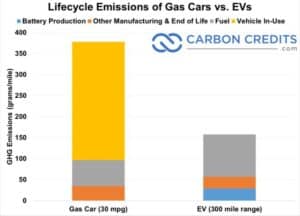
Since 2012, Teslaโ€™s fleet has avoided many millions of metric tons of COโ‚‚e. Each vehicle saves about 52 metric tons of COโ‚‚e compared to similar gasoline cars over an average lifespan of 17 years.

lifecycle emissions of gas cars vs EV

Tesla also focuses on sustainable manufacturing:

  • Gigafactory Nevada recycles more than 92% of production waste and reduces its water use intensity by 12% year-over-year.
  • The company sources lithium and aluminum from suppliers following responsible mining and low-carbon standards.
  • Its battery recycling program recovers up to 95% of nickel, cobalt, and lithium for reuse.

Beyond vehicles, Teslaโ€™s energy business is expanding fast. In 2024, the company deployed 15 GWh of energy storage through its Megapack and Powerwall systems โ€” enough to power over 4 million homes for one hour. These systems help utilities store renewable energy, stabilize grids, and reduce fossil fuel reliance.

Tesla aims to reach net-zero emissions across its value chain by 2040, covering factories, logistics, and product lifecycles. Investments in solar, wind, and carbon reduction projects are key to that goal.

Roadblocks and Roadmaps: Whatโ€™s Next for Tesla

Amid its strong momentum, Tesla still faces several challenges that could affect future growth:

  • Competition: Rivals are narrowing the gap in technology and cost.
  • Price pressure: Discounts to boost demand reduce profitability.
  • Regulatory risks: Autopilot and FSD remain under scrutiny in some markets.
  • Supply chain: Securing critical minerals like lithium and nickel remains essential.

To adapt, Tesla is diversifying. The company plans to launch a low-cost compact vehicle, often referred to as the Model 2, expected to be priced under $27,000 and launched in late 2026.

Itโ€™s also developing a robotaxi platform, codenamed CyberCab, expected to begin pilot operations in 2026 with Level 4 autonomy. Plus, Tesla Energy could exceed $10 billion in annual revenue by 2026, supported by growing Megapack demand in the U.S. and Europe.

Teslaโ€™s Q3 2025 milestones highlight both progress and pressure. Delivering nearly 500,000 vehicles and producing 500,000 at its Texas plant shows major strides in sustainable mobility. Revenue continues to grow even as profits tighten.

As Tesla prepares to announce its Q3 earnings, investors will look for signs of balance โ€” growth, profitability, and sustainability. If the company keeps expanding responsibly and investing in cleaner technologies, it will remain a central player in the global transition toward a zero-emission economy.

Fentanyl Threats, AI, and National Security – ARMR Sciencesโ€™ Unified Approach

0

* Disseminated on behalf of ARMR Sciences Inc.
* For Accredited Investors Only. Offered pursuant to Rule 506(c). Reasonable steps to verify accreditation will be taken before any sale.
PAID ADVERTISEMENT โ€“ SPONSORED CONTENT

Fentanyl is devastating American communities at a record pace, with more than 220 deaths every day. Synthetic opioids accounted for over 70,000 U.S. fatalities in 2023, and their impact now extends beyond public health into national security.ย 

At the same time, artificial intelligence (AI) is advancing in ways that could allow adversaries to design new synthetic drugs or bioweapons faster than regulators and security agencies can respond. Coupled with the political weight fentanyl carries in Washington, the U.S. faces a multidimensional challenge.ย 

ARMR Sciences underscores why prevention, innovation, and leadership can align to shield America from this emerging and evolving threat.

Escalating National Security Concerns

Fentanylโ€™s extraordinary potency – up to 50 times stronger than heroin – makes even trace exposure lethal. Its supply chains cross borders, complicating law enforcement and fueling instability at home.ย 

ARMR Sciences emphasizes that enforcement alone cannot resolve the crisis. Without proactive prevention strategies, the nation risks a deepening cycle of addiction, death, and weakened resilience.

Technology at the Crossroads

AI has the potential to transform healthcare and logistics, but also carries risks of misuse. Researchers showed that advanced AI models could generate tens of thousands of psychoactive compound blueprints in just hours – a dangerous acceleration of synthetic chemistry.ย 

National security leaders, including AI pioneers, warn that adversaries could exploit these tools. ARMR Sciences argues for robust biodefense strategies that include strict controls on sensitive algorithms, enhanced detection systems, and proactive investment in prevention technologies.

Political Pressure and Policy Response

The fentanyl crisis has become a defining issue in U.S. politics, shaping debates on border security, healthcare, and law enforcement funding. Deaths have risen by more than 20% annually since 2019, amplifying public and political demands for action.ย 

ARMR Sciences emphasizes that bipartisan cooperation and evidence-based policymaking are essential to prevent partisan gridlock. Recognizing fentanyl as both a health and security issue can unite leaders behind more effective prevention measures.

ARMR Sciences – A Prevention-Focused Framework

Across each dimension – fentanylโ€™s deadly toll, AIโ€™s potential misuse, and the political battle for solutions – ARMR Sciences underscores a common theme: prevention is the most effective defense. This means deploying early warning systems, advancing detection capabilities, integrating data-driven tools, and strengthening community resilience before crises escalate.ย 

It also means ensuring that AI innovation develops with responsible guardrails, while national security agencies adapt to evolving synthetic threats. Prevention is not passive; it requires deliberate action, investment, and leadership.

So, Why Should Investors Pay Attention to ARMRโ€™s Solution?

For investors, ARMR represents an opportunity to back a company working to address the convergence of fentanylโ€™s deadly impact, AIโ€™s potential misuse, and the urgent need for prevention.ย 

Its platform is built on years of defense-backed research and is advancing innovative biotechnology programs:

  • Seven years of DoD-supported science established the foundation of ARMRโ€™s platform
  • Lead candidate ARMR-100 blocked 92% of fentanyl from entering the brain in preclinical (animal) studies
  • A $30M private raise is currently underway
  • Plans for a targeted exchange listing in 2026 are in place, subject to market conditions

By investing in this round, investors have a chance to support ARMR as it works to build a potentially category-defining role in AI-powered biodefense.


* This is a paid advertisement for ARMRโ€™s private offering.ย Please read the details of the offering atย InvestARMR.comย for additional information on the company and the risk factors related to the offering.

* For Accredited Investors Only.ย This offering is made pursuant to Rule 506(c) of Regulation D. All purchasers must be accredited investors, and the issuer will take reasonable steps to verify accredited status before any sale.ย Investing involves high risk, including the potential loss of your entire investment.

* For investors from Canada:ย This advertisement forms part of the issuerโ€™s marketing materials and is incorporated by reference into the issuerโ€™s Offering Memorandum/Private Placement Memorandum under NI 45-106. Investors must receive and review the OM/PPM and execute the prescribed Form 45-106F4 Risk Acknowledgement before subscribing.


DISCLOSURES & DISCLAIMERS

CLIENT CONTENT: Carboncredits.com is not responsible for any content hosted on ARMR Sciencesโ€™ sites; it is ARMR Sciencesโ€™ responsibility to ensure compliance with applicable laws.

NOT INVESTMENT ADVICE: Content is for educational, informational, and advertising purposes only and should NOT be construed as securities-related offers or solicitations. All content should be considered promotional and subject to disclosed conflicts of interest.ย 

Do NOT rely on this as personalized investment advice. Do your own due diligence.

Carboncredits.com strongly recommends you consult a licensed or registered professional before making any investment decision.

REGULATORY STATUS: Neither Carboncredits.com nor any of its owners or employees is registered as a securities broker-dealer, broker, investment advisor, or IA representative with the U.S. Securities and Exchange Commission, any state securities regulatory authority, or any self-regulatory organization.

CONTENT & COMPENSATION DISCLOSURE: Carboncredits.com has received compensation of thirty thousand dollars from ARMR Sciences for this sponsored content. You should assume we receive compensation as indicated for any purchases through links in this email via affiliate relationships, direct/indirect payments from companies or third parties who may own stock in or have other interests in promoted companies. We may purchase, sell, or hold long or short positions without notice in securities mentioned in this communication.

RESULTS NOT TYPICAL: Past performance and results are unverified and NOT indicative of future results. Results presented are NOT guaranteed as TYPICAL. Market conditions and individual circumstances vary significantly. Actual results will vary widely. Investing in securities is speculative and carries high risk; you may lose some, all, or possibly more than your original investment.

HIGH-RISK: Securities discussed may be highly speculative investments subject to extreme volatility, limited liquidity, and potential total loss. The Securities are suitable only for persons who can afford to lose their entire investment. Furthermore, investors must understand that such investment could be illiquid for an indefinite period of time. No public market currently exists for the securities, and if a public market develops, it may not continue.

CAUTIONARY STATEMENT: Certain statements in this presentation (the โ€œPresentationโ€) may be deemed to be โ€œforward-looking statementsโ€ within the meaning of Section 27A of the 1933 Securities Act and Section 21E of the Exchange Act of 1934, as amended, and are intended to be covered by the safe harbor provisions for forward-looking statements. Such forward-looking statements can be identified by the use of words such as โ€should,โ€ โ€may,โ€ โ€intends,โ€ โ€anticipates,โ€ โ€believes,โ€ โ€estimates,โ€ โ€projects,โ€ โ€forecasts,โ€ โ€expects,โ€ โ€plans,โ€ and โ€proposes.โ€ Forward-looking statements, which are based on the current plans, forecasts and expectations of management of ARMR Sciences Inc. (the โ€œCompanyโ€ or โ€œARMR Sciencesโ€), are inherently less reliable than historical information. Forward-looking statements are subject to risks and uncertainties, including events and circumstances that may be outside our control.

Although management believes that the expectations reflected in these forward-looking statements are based on reasonable assumptions, there are a number of risks and uncertainties that could cause actual results to differ materially from such forward-looking statements. Risks and uncertainties that could cause actual results to differ materially include, without limitation, those risks identified in the Private Placement Memorandum. Forward-looking statements speak only as of the date of the document in which they are contained, and ARMR Sciences Inc. does not undertake any duty to update any forward-looking statements except as may be required by law.

Any forward-looking financial forecasts contained in this Presentation are subject to a number of risks and uncertainties, and actual results may differ materially. You are cautioned not to place undue reliance on such forecasts. No assurances can be given that the future results indicated, whether expressed or implied, will be achieved. While sometimes presented with numerical specificity, all such forecasts are based upon a variety of assumptions that may not be realized, and which are highly variable. Because of the number and range of the assumptions underlying any such forecasts, many of which are subject to significant uncertainties and contingencies that are beyond the reasonable control of the issuing company, many of the assumptions inevitably will not materialize and unanticipated events and circumstances may occur subsequent to the date of any financial forecast.

ARMR Sciences Inc. takes no responsibility for any forecasts contained within the Presentation. None of the information contained in any offering materials should be regarded as a representation by ARMR Sciences Inc. The Companyโ€™s forecasts have not been prepared with a view toward public disclosure or compliance with the guidelines of the SEC, the American Institute of Certified Public Accountants or the Public Company Accounting Oversight Board. Independent public accountants have not examined nor compiled any forecasts and have not expressed an opinion or assurance with respect to the figures.

This Presentation also contains estimates and other statistical data made by independent parties and by management relating to market size and other data about our industry. This data involves a number of assumptions and limitations, and you are cautioned not to give undue weight to such estimates.

ARMR Sciences Inc. is currently undertaking a private placement offering of Offered Shares pursuant to Section 4(a)(2) of the 1933 Act and/or Rule 506(c) of Regulation D promulgated thereunder. Investors should consider the investment objectives, risks, and investment time horizon of the Company carefully before investing. The private placement memorandum relating to the offering of Securities will contain this and other information concerning the Company, including risk factors, which should be read carefully before investing.

The Securities are being offered and sold in reliance on exemptions from registration under the 1933 Act. In accordance therewith, you should be aware that (i) the Securities may be sold only to โ€œaccredited investors,โ€ as defined in Rule 501 of Regulation D; (ii) the Securities will only be offered in reliance on an exemption from the registration requirements of the Securities Act and will not be required to comply with specific disclosure requirements that apply to registration under the Securities Act; (iii) the United States Securities and Exchange Commission (the โ€œSECโ€) will not pass upon the merits of or give its approval to the terms of the Securities or the offering, or the accuracy or completeness of any offering materials; (iv) the Securities will be subject to legal restrictions on transfer and resale and investors should not assume they will be able to resell their securities; and (v) investing in these Securities involves a high degree of risk, and investors should be able to bear the loss of their entire investment. Furthermore, investors must understand that such investment could be illiquid for an indefinite period of time.

The Company is โ€œTesting the Watersโ€ under Regulation A under the Securities Act of 1933. The Company is not under any obligation to make an offering under Regulation A. No money or other consideration is being solicited in connection with the information provided, and if sent in response, will not be accepted. No offer to buy the securities can be accepted and no part of the purchase price can be received until an offering statement on Form 1-A has been filed and until the offering statement is qualified pursuant to Regulation A of the Securities Act of 1933, as amended, and any such offer may be withdrawn or revoked, without obligation or commitment of any kind, at any time before notice of its acceptance given after the qualification date. ย ย 
ย 
The securities offered using Regulation A are highly speculative and involve significant risks. The investment is suitable only for persons who can afford to lose their entire investment. Furthermore, investors must understand that such investment could be illiquid for an indefinite period of time. No public market currently exists for the securities, and if a public market develops following the offering, it may not continue. The Company intends to list its securities on a national exchange and doing so entails significant ongoing corporate obligations including but not limited to disclosure, filing and notification requirements, as well compliance with applicable continued quantitative and qualitative listing standards.


Disclosure: Owners, members, directors, and employees of carboncredits.com have/may have stock or option positions in any of the companies mentioned: None.

Carboncredits.com receives compensation for this publication and has a business relationship with any company whose stock(s) is/are mentioned in this article.

Additional disclosure: This communication serves the sole purpose of adding value to the research process and is for information only. Please do your own due diligence. Every investment in securities mentioned in publications of carboncredits.com involves risks that could lead to a total loss of the invested capital.
Please read our Full RISKS and DISCLOSURE here.

Politics and Prevention – Fentanyl at the Center of U.S. Security and Leadership

0

* Disseminated on behalf of ARMR Sciences Inc.
* For Accredited Investors Only. Offered pursuant to Rule 506(c). Reasonable steps to verify accreditation will be taken before any sale.
PAID ADVERTISEMENT โ€“ SPONSORED CONTENT

Fentanyl is not just a public health crisis – it has become a defining political issue in the United States. The synthetic opioid is now the leading cause of death for Americans aged 18โ€“45, killing an estimated 220 people every day.ย 

As the toll rises, many political leaders, border agencies, and private innovators are converging on one message: fentanyl control is a matter of national security.

A Political Priority

President Donald Trump has made fentanyl control a centerpiece of his drug policy priorities. These priorities include attacking production and distribution networks, using both punitive (law enforcement) and economic tools. Trump has vowed that his โ€œhighest duty is the defense of the country and its citizens,โ€ promising to intensify measures against cartels and traffickers responsible for smuggling synthetic opioids across the southern border.

The bipartisan urgency is clear. Lawmakers across party lines now view fentanyl not only as a public health emergency but also as a national security threat on par with terrorism and cyberwarfare. This framing should open the door to expanded federal funding, new enforcement powers, and increased support for innovative countermeasures, such as immunotherapies.

Borders Under Pressure

Most illicit fentanyl in the U.S. is manufactured abroad, often in China, and trafficked through Mexico, where it enters across official and unofficial border crossings. U.S. Customs and Border Protection has reported record seizures in recent years.ย 

Canada, too, has experienced rising seizures and overdose deaths, underlining that this is not a U.S.-only crisis but a North American challenge.

Deployments of additional detection technology, canine units, and chemical sensors are underway at key border points. Yet border agents acknowledge they are overwhelmed: with traffickers mixing fentanyl into counterfeit pills or powder, even small gaps in enforcement can lead to mass fatalities.

ARMRโ€™s Role in a Political Landscape

The fentanyl crisis is a political flashpoint that blends public health, security, and foreign policy. Border enforcement will remain essential, but no interdiction strategy can stop every shipment.ย 

We believe that this climate creates fertile ground for ARMR Sciencesโ€™ preventive approach. Unlike Narcan, which only works after an overdose has begun, ARMR-100 (ARMRโ€™s lead candidate) is designed to block fentanyl before it reaches the brain. For policymakers, this aligns with national security goals: a proactive solution that reduces the burden on border interdiction and first responders.ย 

Why Investors Should Pay Attention

For investors, we believe that ARMR represents an opportunity to participate in a mission that is as much about impact as it is about returns. The company is working to translate 7 years of Department of Defenseโ€“backed science into a scalable biodefense platform:

  • Lead candidate ARMR-100 blocked 92% of fentanyl from entering the brain in preclinical studies
  • $30M private raise launched
  • A targeted exchange listing in the future
  • Direct alignment with political momentum on anti-fentanyl measures

With strong bipartisan focus and rising border enforcement pressure, companies like ARMR offering real solutions should be positioned to benefit from both government backing and investor interest.ย 

By investing in this round, investors have a chance to back ARMR as it works to build a preventive shield against synthetic drug threats.ย 

Invest now to help support ARMRโ€™s efforts to build the nationโ€™s first line of defense against fentanyl and other synthetic threats.

* For Accredited Investors Only. This offering is made pursuant to Rule 506(c) of Regulation D. All purchasers must be accredited investors, and the issuer will take reasonable steps to verify accredited status before any sale.ย Investing involves high risk, including the potential loss of your entire investment.

* This is a paid advertisement for ARMRโ€™s private offering.ย Please read the details of the offering atย InvestARMR.comย for additional information on the company and the risk factors related to the offering.

* For investors from Canada:ย This advertisement forms part of the issuerโ€™s marketing materials and is incorporated by reference into the issuerโ€™s Offering Memorandum/Private Placement Memorandum under NI 45-106. Investors must receive and review the OM/PPM and execute the prescribed Form 45-106F4 Risk Acknowledgement before subscribing.

DISCLOSURES & DISCLAIMERS

CLIENT CONTENT: Carboncredits.com is not responsible for any content hosted on ARMR Sciences’ sites; it is ARMR Sciences’ responsibility to ensure compliance with applicable laws.

NOT INVESTMENT ADVICE: Content is for educational, informational, and advertising purposes only and should NOT be construed as securities-related offers or solicitations. All content should be considered promotional and subject to disclosed conflicts of interest.ย 

Do NOT rely on this as personalized investment advice. Do your own due diligence.

Carboncredits.com strongly recommends you consult a licensed or registered professional before making any investment decision.

REGULATORY STATUS: Neither Carboncredits.com nor any of its owners or employees is registered as a securities broker-dealer, broker, investment advisor, or IA representative with the U.S. Securities and Exchange Commission, any state securities regulatory authority, or any self-regulatory organization.

CONTENT & COMPENSATION DISCLOSURE: Carboncredits.com has received compensation of thirty thousand dollars from ARMR Sciences for this sponsored content. You should assume we receive compensation as indicated for any purchases through links in this email via affiliate relationships, direct/indirect payments from companies or third parties who may own stock in or have other interests in promoted companies. We may purchase, sell, or hold long or short positions without notice in securities mentioned in this communication.

RESULTS NOT TYPICAL: Past performance and results are unverified and NOT indicative of future results. Results presented are NOT guaranteed as TYPICAL. Market conditions and individual circumstances vary significantly. Actual results will vary widely. Investing in securities is speculative and carries high risk; you may lose some, all, or possibly more than your original investment.

HIGH-RISK: Securities discussed may be highly speculative investments subject to extreme volatility, limited liquidity, and potential total loss. The Securities are suitable only for persons who can afford to lose their entire investment. Furthermore, investors must understand that such investment could be illiquid for an indefinite period of time. No public market currently exists for the securities, and if a public market develops, it may not continue.

DISCLAIMERS & CAUTIONARY STATEMENT: Certain statements in this presentation (the โ€œPresentationโ€) may be deemed to be โ€œforward-looking statementsโ€ within the meaning of Section 27A of the 1933 Securities Act and Section 21E of the Exchange Act of 1934, as amended, and are intended to be covered by the safe harbor provisions for forward-looking statements. Such forward-looking statements can be identified by the use of words such as ”should,” ”may,” ”intends,” ”anticipates,” ”believes,” ”estimates,” ”projects,” ”forecasts,” ”expects,” ”plans,” and ”proposes.” Forward-looking statements, which are based on the current plans, forecasts and expectations of management of ARMR Sciences Inc. (the โ€œCompanyโ€ or โ€œARMR Sciencesโ€), are inherently less reliable than historical information. Forward-looking statements are subject to risks and uncertainties, including events and circumstances that may be outside our control.

Although management believes that the expectations reflected in these forward-looking statements are based on reasonable assumptions, there are a number of risks and uncertainties that could cause actual results to differ materially from such forward-looking statements. Risks and uncertainties that could cause actual results to differ materially include, without limitation, those risks identified in the Private Placement Memorandum. Forward-looking statements speak only as of the date of the document in which they are contained, and ARMR Sciences Inc. does not undertake any duty to update any forward-looking statements except as may be required by law.

Any forward-looking financial forecasts contained in this Presentation are subject to a number of risks and uncertainties, and actual results may differ materially. You are cautioned not to place undue reliance on such forecasts. No assurances can be given that the future results indicated, whether expressed or implied, will be achieved. While sometimes presented with numerical specificity, all such forecasts are based upon a variety of assumptions that may not be realized, and which are highly variable. Because of the number and range of the assumptions underlying any such forecasts, many of which are subject to significant uncertainties and contingencies that are beyond the reasonable control of the issuing company, many of the assumptions inevitably will not materialize and unanticipated events and circumstances may occur subsequent to the date of any financial forecast.

ARMR Sciences Inc. takes no responsibility for any forecasts contained within the Presentation. None of the information contained in any offering materials should be regarded as a representation by ARMR Sciences Inc. The Companyโ€™s forecasts have not been prepared with a view toward public disclosure or compliance with the guidelines of the SEC, the American Institute of Certified Public Accountants or the Public Company Accounting Oversight Board. Independent public accountants have not examined nor compiled any forecasts and have not expressed an opinion or assurance with respect to the figures.

This Presentation also contains estimates and other statistical data made by independent parties and by management relating to market size and other data about our industry. This data involves a number of assumptions and limitations, and you are cautioned not to give undue weight to such estimates.

ARMR Sciences Inc. is currently undertaking a private placement offering of Offered Shares pursuant to Section 4(a)(2) of the 1933 Act and/or Rule 506(c) of Regulation D promulgated thereunder. Investors should consider the investment objectives, risks, and investment time horizon of the Company carefully before investing. The private placement memorandum relating to the offering of Securities will contain this and other information concerning the Company, including risk factors, which should be read carefully before investing.

The Securities are being offered and sold in reliance on exemptions from registration under the 1933 Act. In accordance therewith, you should be aware that (i) the Securities may be sold only to โ€œaccredited investors,โ€ as defined in Rule 501 of Regulation D; (ii) the Securities will only be offered in reliance on an exemption from the registration requirements of the Securities Act and will not be required to comply with specific disclosure requirements that apply to registration under the Securities Act; (iii) the United States Securities and Exchange Commission (the โ€œSECโ€) will not pass upon the merits of or give its approval to the terms of the Securities or the offering, or the accuracy or completeness of any offering materials; (iv) the Securities will be subject to legal restrictions on transfer and resale and investors should not assume they will be able to resell their securities; and (v) investing in these Securities involves a high degree of risk, and investors should be able to bear the loss of their entire investment. Furthermore, investors must understand that such investment could be illiquid for an indefinite period of time.

The Company is “Testing the Waters” under Regulation A under the Securities Act of 1933. The Company is not under any obligation to make an offering under Regulation A. No money or other consideration is being solicited in connection with the information provided, and if sent in response, will not be accepted. No offer to buy the securities can be accepted and no part of the purchase price can be received until an offering statement on Form 1-A has been filed and until the offering statement is qualified pursuant to Regulation A of the Securities Act of 1933, as amended, and any such offer may be withdrawn or revoked, without obligation or commitment of any kind, at any time before notice of its acceptance given after the qualification date. ย ย 
ย 
The securities offered using Regulation A are highly speculative and involve significant risks. The investment is suitable only for persons who can afford to lose their entire investment. Furthermore, investors must understand that such investment could be illiquid for an indefinite period of time. No public market currently exists for the securities, and if a public market develops following the offering, it may not continue. The Company intends to list its securities on a national exchange and doing so entails significant ongoing corporate obligations including but not limited to disclosure, filing and notification requirements, as well compliance with applicable continued quantitative and qualitative listing standards.


Disclosure: Owners, members, directors, and employees of carboncredits.com have/may have stock or option positions in any of the companies mentioned: None.

Carboncredits.com receives compensation for this publication and has a business relationship with any company whose stock(s) is/are mentioned in this article.

Additional disclosure: This communication serves the sole purpose of adding value to the research process and is for information only. Please do your own due diligence. Every investment in securities mentioned in publications of carboncredits.com involves risks that could lead to a total loss of the invested capital.

Please read our Full RISKS and DISCLOSURE here.

Apple (AAPL) Expands Renewable Energy Projects Across Europe to Power Its 2030 Carbon-Neutral Vision

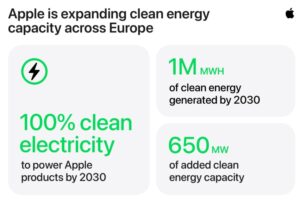
Apple (NASDAQ: AAPL) is ramping up its clean energy investments across Europe with new large-scale solar and wind projects in Greece, Italy, Latvia, Poland, and Romania. Alongside a newly operational solar array in Spain, these developments will add 650 megawatts (MW) of renewable capacity to regional grids and unlock more than $600 million in financing.

By 2030, they are expected to generate over 1 million megawatt-hours (MWh) of clean electricity annually, directly supporting its global users and its 2030 carbon-neutral goal.

Accelerating Toward Apple 2030

Lisa Jackson, Appleโ€™s vice president of Environment, Policy, and Social Initiatives, said:

โ€œBy 2030, we want our users to know that all the energy it takes to charge their iPhone or power their Mac is matched with clean electricity. Our new projects in Europe will help us achieve our ambitious Apple 2030 goal, while contributing to healthy communities, thriving economies, and secure energy sources across the continent.โ€

Under its โ€œApple 2030โ€ commitment, the company aims to be carbon neutral across its entire value chain by the end of the decade. A key part of that plan is addressing the emissions linked to product use โ€” the electricity consumed when users power and charge Apple devices. In 2024, these emissions accounted for about 29% of Appleโ€™s total carbon footprint.

To reduce this impact, the tech giant is enabling renewable projects that bring new clean power online in regions where Apple products are most used. The company plans to match 100% of its customersโ€™ global electricity consumption with renewable energy by 2030. This means that every iPhone, Mac, or Apple Watch charged anywhere in the world will effectively be powered by clean energy.

Appleโ€™s European clean energy expansion marks a major milestone toward that ambition. The company is facilitating construction that will add roughly 3,000 gigawatt-hours (GWh) of renewable electricity annually to European grids by 2030.

Expanding Clean Power Across Europe

In Greece, Apple has finalized a long-term power purchase agreement (PPA) with HELLENiQ ENERGY for a 110MW solar project. Now fully operational, the site supports Greeceโ€™s transition away from fossil fuels and adds significant solar capacity to its grid.

Apple renewable energy Europe
Source: Apple

Italy

Italy will soon host a 129MW portfolio of solar and wind developments. The first installation โ€” a solar farm in Sicily โ€” is coming online this month. These projects underscore Appleโ€™s approach of supporting diverse clean energy technologies across multiple regions.

Poland

In Poland, one of Europeโ€™s most carbon-intensive electricity markets, Apple has enabled Econergyโ€™s 40MW solar array, which is expected to begin operations later this year. By introducing renewable generation into a coal-heavy grid, the project will help cut emissions where it matters most.

apple poland
Source: Apple

Romania

In Romania, Apple is backing a 99MW wind farm in Galaศ›i County through a long-term deal with Nala Renewables, originated by renewable developer OX2. Once operational, the wind farm will deliver zero-emission electricity to local communities and businesses.

Apple romania
Source: Apple

Latvia

Latviaโ€™s contribution to Appleโ€™s portfolio will come from one of the countryโ€™s first corporate PPAs. Apple has signed a long-term agreement with European Energy to procure power from a 110MW solar farm, one of the largest in Latviaโ€™s history. The project will expand the countryโ€™s renewable capacity while supporting Appleโ€™s European energy goals.

Spain

In Spain, Apple has already completed a 131MW solar farm developed by ib vogt in Segovia. Operational since early 2025, the facility produces clean electricity for Spanish consumers and serves as a model for future corporate clean energy partnerships.

Together, these projects reflect Appleโ€™s regional approach to decarbonization โ€” targeting high-impact locations and using direct investment to accelerate renewable generation.

Appleโ€™s Supply Chain Goes All-In on Renewables

Apple and its suppliers now support over 19 gigawatts (GW) of renewable energy used to power manufacturing and corporate operations worldwide. Through its Supplier Clean Energy Program (CEP), Apple encourages its partners to switch to renewable electricity and adopt energy-efficient practices.

  • In 2024, supplier-procured renewable power reached 17.8GW, generating 31.3 million MWh of clean electricity.
  • This shift avoided 21.8 million metric tons of greenhouse gas emissions โ€” a 17% increase from 2023.

Its Supplier Code of Conduct now requires all direct manufacturing suppliers to use 100% renewable electricity for Apple-related production by 2030. To help achieve this, Apple offers access to technical guidance, renewable energy procurement options, and advocacy tools for policy reform.

Clean Energy with Local Impact

Appleโ€™s energy strategy recognizes that not all grids are created equal. Regions with high carbon intensity โ€” where electricity is still heavily dependent on coal or natural gas โ€” offer the greatest potential for impact. Thatโ€™s why the company prioritizes developing renewable projects in countries like Poland and Romania, where replacing fossil-based power can yield significant emission reductions.

By 2030, Apple plans to source 75% of renewable electricity from within the three regions where most of its devices are sold โ€” the United States, Europe, and the Asia-Pacific โ€” while retaining flexibility to invest in high-impact projects elsewhere.

Thus, beyond Europe, initiatives such as the China Clean Energy Fund support renewable projects totaling more than 1 GW. A second fund introduced in 2025 continues this momentum, enabling Apple and its suppliers to co-invest in clean generation.

Apple has also invested directly in nearly 500MW of solar and wind capacity in China and Japan to offset upstream electricity emissions from indirect suppliers.

This regional approach ensures that Appleโ€™s clean power investments not only match its customersโ€™ electricity use but also help decarbonize the broader energy system.

Balancing Growth and Accountability

Appleโ€™s latest energy push comes amid scrutiny of its environmental marketing. In August, a German court ruled that Apple could no longer advertise some Apple Watch models as โ€œcarbon neutral,โ€ citing potential consumer confusion and noncompliance with competition law. In California, similar lawsuits have challenged Appleโ€™s carbon-neutral claims for select products.

Apple product emissions
Source: Apple

Despite these legal challenges, Apple maintains that its strategy prioritizes genuine emissions reduction. Since 2015, the company has cut its overall carbon emissions by 60%. The renewable projects across Europe are part of its shift away from reliance on carbon offsets and toward direct decarbonization through clean electricity generation.

apple carbon emissions
Source: Apple

The company’s philosophy is to reduce emissions first, then neutralize what remains. That approach underpins the companyโ€™s ongoing transition to renewable energy across both operations and its vast supply chain.

Market Impact and Broader Outlook

As of October 20, 2025, AAPL stock traded at $252.29 per share, up nearly 2% over the past 24 hours. With a market capitalization of approximately $3.81 trillion, Apple continues to hold its position as one of the worldโ€™s most valuable public companies.

Its financial strength significantly gives it the leverage to scale sustainability initiatives without compromising profitability. Its growing renewable portfolio โ€” particularly in Europe โ€” shows how tech giants can align business expansion with climate responsibility.

Toward a Carbon-Free Future

Appleโ€™s clean energy projects across Europe highlight a broader shift in how global corporations approach decarbonization. Rather than relying solely on offsets or certificates, Apple is directly enabling new renewable infrastructure that supports regional grids and communities.

As the company progresses toward its 2030 target, its expanding partnerships, supplier engagement, and regional investment strategies demonstrate that clean energy is central to both its business model and brand identity.

By prioritizing real emissions reductions, Apple is setting a powerful example for the tech industry โ€” one that ties long-term corporate success to a cleaner, more sustainable energy future.

How NVIDIA, Microsoft, Muskโ€™s xAI, and BlackRock Are Driving the Next Wave of AI: $60 Billion in Mega Deals Explained

NVIDIA continues to cement its position as a leading force in the artificial intelligence (AI) industry. Its powerful chips are now the foundation of massive data centers and AI systems across the world. Recent deals worth more than $60 billion highlight how deeply the company is shaping the future of global computing.

Industries like healthcare and finance are turning to AI. NVIDIA’s hardware and software are now key to digital transformation. The company is both selling chips as well as designing the global infrastructure for smart technologies.

Growing Global Demand for AI Computing

Modern AI models demand enormous computing power. Training chatbots, autonomous driving systems, or image-recognition tools involves processing millions of calculations per second. NVIDIAโ€™s graphics processing units (GPUs) are built for this type of workload.

Unlike traditional chips, GPUs can handle many tasks at once, making them ideal for AI training and inference. NVIDIA’s efficiency has made it the go-to supplier for big cloud providers, research institutions, and AI startups.

In 2025, global demand for AI computing surged. Governments and private companies are building large-scale data centers around NVIDIAโ€™s technology. These facilities help create advanced AI models. They can be used for tasks like weather forecasting and logistics optimization.

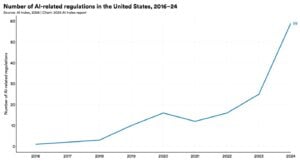
AI-related regulations US 2024
Source: Stanford University

Billions in Global Infrastructure Partnerships

NVIDIA has signed major partnerships worth about $60 billion in total. These include agreements across cloud services, chip deployment, and full-scale data center construction.

A key highlight is the $14 billion contract between Microsoft and Nscale, a British AI cloud company. This deal will deploy about 200,000 NVIDIA GB300 GPUs. The installations will span the United States and Europe, with 104,000 GPUs located at a 240-megawatt facility in Texas set to open in 2026. Additional sites include 12,600 GPUs in Portugal and 23,000 in England by 2027.

Another big deal includes BlackRock, Microsoft, NVIDIA, and Elon Muskโ€™s xAI. They just announced a $40 billion purchase of Aligned Data Centers. The company operates over 50 campuses with more than 5 gigawatts of total capacity across North and South America. This is the biggest data center purchase ever. It also boosts NVIDIAโ€™s role in the AI Infrastructure Partnership (AIP) initiative.

NVIDIA is more than a chip supplier now. These big collaborations show itโ€™s a key partner in creating and powering the next generation of AI infrastructure.

Musk Bets Big on NVIDIA in a $20B Chip Pact

One of the most ambitious projects tied to NVIDIA is xAIโ€™s $20 billion lease-to-own deal for AI chips. Led by Elon Musk, xAI plans to use the financing to build the Colossus 2 data center in Memphis, Tennessee.

The project will deploy 300,000 to 550,000 NVIDIA GB200 and GB300 chips, scaling up from xAIโ€™s current 200,000-processor facility. The arrangement involves about $7.5 billion in equity and $12.5 billion in debt, using a special purpose vehicle (SPV) structure.

In a unique twist, NVIDIA is investing up to $2 billion in the SPVโ€™s equity, effectively financing part of its own hardware. The debt is secured by the GPUs, not xAIโ€™s corporate assets. This gives lenders direct security linked to the equipment.

This five-year lease model helps xAI access cutting-edge computing power without taking on the full debt burden. It also ensures NVIDIA a steady income stream and longer-term control over chip distribution.

NVIDIA Stock Moving Up, Market Going Up

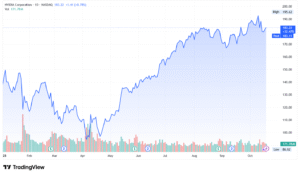
NVIDIAโ€™s stock went up a bit today. The market responded to corporate announcements and infrastructure deals. The gain shows that investors believe these big deals will increase future revenue and strengthen NVIDIAโ€™s position in the AI ecosystem.

nvidia nvda stock

Although the increase isnโ€™t dramatic, it shows that traders view this news as adding value. Stable stock gains can draw more interest from institutional investors. They look for long-term growth potential.

As news about these deals spreads, more people in the market may view NVIDIA as more than just a chipmaker. They might see it as a key player in AI infrastructure. That perception can help support longer-term stock strength.

The AI infrastructure market is growing fast and looks set to keep expanding for years. Analysts estimate the AI-infrastructure market hit $87.6 billion in 2025. It could almost double by 2030. This growth comes as companies invest in GPUs, networking, and cooling systems.

Data center power needs are rising fast. Forecasts suggest that by 2027, demand could hit about 92 GW. This growth is mainly due to AI workloads.

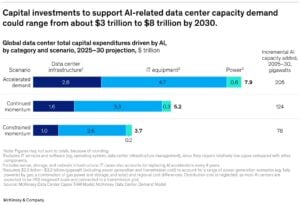
Firms and governments might need trillions in new capital to meet demand. One major study estimates that data-center investments could reach about $8 trillion by 2030 in a high-growth scenario.

investments for AI-related data center capacity 2030
Source: McKinsey & Company

Market research groups predict that AI data centers will grow at a compound annual growth rate of 25โ€“32% through 2030. This means strong ongoing investment in chips, facilities, and power.

ESG, Sustainability, and Environmental Impact

Large AI data centers, like those powered by NVIDIAโ€™s chips, have significant environmental footprints. The energy they consume and the cooling systems they require can contribute to greenhouse gas emissions and heavy water use.

In the xAI Colossus 2 project, the energy demand alone is over 1 gigawatt, comparable to the power needs of nearly a million households. Cooling will use millions of gallons of water daily. The facility uses methane turbines. This has led to complaints from environmental groups about air pollution and regulatory issues.

Because of this, NVIDIA and its partners will need to address sustainability. They may invest in cleaner power sources like solar or wind. They might also implement advanced cooling technology that uses less water or captures waste heat. Efficient chip designs that consume less power will be critical, too.

These sustainability efforts can influence public perception, regulatory approvals, and long-term cost structure. If NVIDIA proves it’s cutting emissions and lowering environmental impact, it boosts its role as a tech leader and a responsible partner for a greener future.

The Heat Is On: Rivals, Regulation, and Rising Power Costs

Despite its momentum, NVIDIA faces real challenges. Global demand for GPUs still exceeds supply, leading to long waiting times for deliveries. The company depends on semiconductor foundries like TSMC. So, any delays in production can affect big projects.

Competition is growing as well. AMD, Intel, and new AI-focused startups are developing their own advanced processors. These firms aim to capture part of the rapidly expanding AI chip market.

NVIDIA also faces regulatory and environmental risks. Export limits might cut sales in important areas. Also, AI data centers use more energy, which brings up sustainability issues. Meeting demand responsibly will require cleaner energy sources and more efficient chip designs.

Whatโ€™s Next: NVIDIAโ€™s AI Empire Expands

Looking ahead, NVIDIA is expected to continue expanding its global partnerships and data center influence. The company could move deeper into AI infrastructure services, offering combined packages of chips, software, and cloud capacity.

Future growth may also come from:

  • AI-as-a-Service platforms for governments and enterprises.
  • Cloud partnerships that give smaller developers access to advanced GPUs.
  • Next-generation chip designs with better performance per watt.
  • Sustainability initiatives to reduce energy use and emissions in data centers.

NVIDIAโ€™s new partnerships include $60 billion in infrastructure deals and $20 billion in chip leasing. These moves show its growing role in AI innovation. The companyโ€™s chips now support projects that define the next era of computing, from massive data centers to advanced autonomous systems.

While competition and environmental pressures will continue to test its leadership, NVIDIAโ€™s global reach and ability to adapt ensure it will stay a key player in the race to build the worldโ€™s AI infrastructure.

From Tokyo to New York: Xpansiv Strengthens Global Role in Climate Data and Carbon Market Innovation

Xpansiv, a leading climate technology company, is gaining worldwide attention for its work in carbon and environmental data systems. The company was recently chosen in the first stage of the Financial Innovation category at the Tokyo Financial Award. It was also selected by the State of New York to build the stateโ€™s new greenhouse gas (GHG) reporting platform.

These two milestones show how Xpansiv is expanding its global role in climate finance and sustainability data. They show how the company links digital finance to environmental reporting. This is important in todayโ€™s fast-changing market.

A Growing Global Reputation

The Tokyo Financial Award celebrates companies that introduce fresh ideas in financial services. It also values sustainability and transparency. Xpansivโ€™s selection in this category shows its success in creating trusted digital tools for carbon markets.

Founded in 2017, Xpansiv manages systems worldwide. These systems track and trade carbon credits, renewable energy certificates, and other environmental assets. Its technology helps buyers, sellers, and regulators follow every transaction safely and in real time.

The company runs key platforms like XMarkets Exchange and the Environmental Portfolio Management System (EPMS). It also runs the Open Exchange (OX) for spot trading. Additionally, it hosts registries for renewable energy and carbon offset projects. Together, these systems process tens of millions of environmental credits and data entries each year.

In recent years, banks, regulators, and large corporations have turned to Xpansiv for reliable climate data. Japanโ€™s financial sector recognizes that digital systems are crucial for transparency and efficiency in global climate finance.

Xpansiv was chosen after partnering with enechain, Japanโ€™s leading energy marketplace operator. The collaboration links enechainโ€™s Japan Climate Exchange (JCEX) with Xpansivโ€™s CBL spot exchange and Connectโ„ข infrastructure. This boosts access to global carbon markets. It also improves liquidity, price transparency, and product variety to help close Japanโ€™s J-Credit supply gap.

Ben Stuart, Chief Commercial Officer at Xpansiv, remarked:

“Through our partnership with enechain, weโ€™re expanding access to global environmental markets for Japanese companies, supporting their decarbonisation goals with transparent access to high-quality credits and efficient, secure market infrastructure.”

Building New Yorkโ€™s Digital Backbone for Climate Action

Xpansiv reached another major milestone in the United States. It was selected by the State of New York to power a new platform that will track and report GHG emissions. This project backs the stateโ€™s Climate Leadership and Community Protection Act (CLCPA). It is one of the most ambitious climate laws in the nation.

The platform will allow businesses to record, verify, and report their emissions across different industries. It will also link with carbon markets, letting companies use verified data when buying or retiring carbon credits.

This system is one of the first large-scale examples of a state using private digital technology for public climate reporting. It aims to make compliance easier and improve access to emissions data for both regulators and citizens.

Officials expect the system to go live by 2026. It will help thousands of companies in New York. It could also be a model for other states that want to update their climate data systems.

Katie Doyle, Senior Vice President, Registries, at Xpansiv commented:

“New York is again setting a national precedent by introducing a comprehensive, tech-enabled emissions reporting platform. Weโ€™re proud to support the stateโ€™s leadership in developing actionable climate policy through digital infrastructure.โ€

Turning Climate Data into Digital Currency

Accurate data is essential for real climate action. Governments, investors, and businesses need reliable information. This helps them measure emissions and track their progress toward goals.

Xpansivโ€™s platform turns verified project data, like power generation, carbon capture, or factory emissions, into Digital Environmental Assets (DEAs). These are standardized data units that can be traded, reported, or analyzed.

xpansiv benefits
Source: Xpansiv

The companyโ€™s system offers:

  • Audit-ready records for full transparency.
  • Integration tools (APIs) to link to carbon registries and reporting systems.
  • Data checks and verification are similar to blockchain tracking.

By digitizing this information, Xpansiv replaces paper-based or disconnected systems. This helps avoid errors, duplication, and confusion. The result is faster, clearer, and more trustworthy data. This is vital for governments, companies, and investors. It all helps scale up global decarbonization.

Riding the Wave of the $2 Trillion Energy Transition

The global clean-energy finance market is expanding fast. The International Energy Agency (IEA) and BloombergNEF estimate that investment in energy transition technologies hit $2.1 trillion in 2024. This marks a nearly 25% increase from the previous year.

Global investment in clean energy and fossil fuels, 2015-2024 IEA
Source: IEA

More funding is now directed to systems for measuring, reporting, and verifying (MRV) emissions. This is where Xpansiv works.

Analysts predict the digital carbon infrastructure market will hit $100 billion by 2030. This growth comes as more governments and companies invest in improved data systems.


Xpansiv partners with big banks, trading exchanges, and registries in North America, Europe, and Asia. It links voluntary and compliance carbon markets. This makes it easier to transfer verified carbon credits between systems.

Global demand for reliable climate data is rising. Xpansiv is ready as a platform operator and data provider. This role sets the stage for future growth.

Experts agree that accurate and verifiable data will be key to meeting net-zero goals. Without it, both voluntary and compliance carbon markets risk losing credibility.

Xpansivโ€™s Next Frontier: Linking Policy, Finance, and Data

Xpansivโ€™s recognition in Japan and its work with New York State show a growing link between finance and climate data worldwide.

Industry analysts see several ways the company could expand:

  • Public partnerships: more states and countries may adopt similar digital reporting systems.
  • Corporate integration: Big companies could use Xpansivโ€™s technology to meet the disclosure rules set by the International Sustainability Standards Board (ISSB) and the U.S. Securities and Exchange Commission (SEC).
  • Standardization: With the rising need for consistent carbon data, platforms like Xpansiv can link various markets into a single global system.

The companyโ€™s main focus areasโ€”Asia, North America, and Europeโ€”represent over 80% of carbon market activity worldwide.

Governments are tightening climate rules, and investors now want clear proof of sustainability claims. As a result, digital platforms that verify emissions data will play a larger role in both compliance and investment decisions.

A New Chapter in Climate Data

Xpansivโ€™s achievements in Japan and the U.S. show how technology and finance are working together to drive climate transparency.

Its platforms turn complex environmental data into reliable digital assets. These assets help connect markets, regulators, and companies in new ways.

As global climate policies evolve, accurate reporting will become even more important. The world needs systems that can measure, verify, and trade environmental data quickly and securely.

Xpansivโ€™s journey reflects this shift. Climate action now goes beyond cutting emissions. Itโ€™s also about tracking them clearly and connecting that data to financial systems.ย In this way, Xpansiv is helping to build a more transparent and accountable future for climate finance and environmental markets.

Forest Finance Hits Record Growth in 2025: Investment Doubles for Nature-Based Climate Action

Forests are regaining global financial attention. According to the UNEP State of Finance for Forests 2025 report, investment in sustainable forest management, restoration, and conservation is increasing after years of underfunding. Governments, private firms, and international institutions are now channeling more capital into nature-based solutions as part of global climate strategies.

The report highlights an encouraging shift: while current funding still falls short of whatโ€™s needed to halt deforestation, the pace of growth in forest finance has accelerated sharply since 2020. If the trend continues, forests could play a stronger role in both climate mitigation and green economic recovery.

A Rising Wave of Forest Investment

Between 2020 and 2024, global finance flowing toward forests and nature-based climate solutions nearly doubled. The report estimates that around $23.5 billion per year is now directed toward protecting and restoring forests worldwide, up from less than $12 billion annually just five years ago.

Public finance remains the largest source, accounting for roughly 60% of total flows. Governments and development banks fund reforestation, community forest management, and sustainable agriculture programs.

However, private capital is catching up fast. Private investments now represent 40% of forest-related finance, compared to about 25% in 2020.

Public and private finance flows to forests in 2023
Source: UNEP Report

Key drivers include growing corporate commitments to net-zero emissions and the expansion of carbon markets. The demand for verified forest carbon credits has encouraged companies to back reforestation and avoided-deforestation projects in Latin America, Southeast Asia, and Africa.

At the same time, emerging โ€œblended financeโ€ models โ€” which combine public risk guarantees with private investment โ€” have made nature projects more bankable. This mix has become crucial for attracting institutional investors who traditionally avoided forestry due to long payback periods and perceived risks.

Nature as an Economic Engine

The economic case for forest investment is becoming clearer. Forests absorb about 7.6 billion tonnes of COโ‚‚ every year, roughly one-fifth of global emissions. Yet they receive less than 2% of total climate finance, according to UNEP data.

The 2025 report argues that increasing forest investment could deliver major returns. Every dollar spent on forest restoration can yield up to $30 in ecosystem services, such as water regulation, soil protection, and biodiversity conservation.

Moreover, the jobs generated by sustainable forestry are rising. Forest-related sectors already employ over 30 million people worldwide, many in rural areas. Expanding restoration and reforestation could create an additional 15 million green jobs by 2030, based on projections from the International Labour Organization.

Several countries have made measurable progress. Brazil and Indonesia, once deforestation hotspots, are now expanding conservation incentives and attracting foreign funding for forest protection.

In Africa, Ghana and Gabon are scaling up REDD+ (Reducing Emissions from Deforestation and Forest Degradation) programs, linking carbon revenue directly to forest governance improvements.

Countries with highest public domestic expenditure on forests in 2023

Private Capital Steps Up

Private investment in forests has grown from niche to mainstream in recent years. Asset managers, corporations, and impact investors are increasingly allocating funds to forestry and land-use projects that deliver both profit and carbon benefits.

The State of Finance for Forests 2025 report notes that private flows reached nearly $9 billion in 2024, led by large climate funds, corporate carbon credit purchases, and green bonds.

Notably, sustainability-linked bonds and loans are emerging as key financial tools. These instruments tie interest rates or repayment terms to measurable sustainability outcomes, such as reforestation acreage or emissions reduction.

Some of the largest moves include:

  • Sovereign green bonds issued by countries like Indonesia and Chile, raising billions for forest protection.
  • Corporate reforestation partnerships, such as Nestlรฉโ€™s and Unileverโ€™s investments in agroforestry supply chains.
  • Investment funds like Mirova, Climate Asset Management, and the &Green Fund, which collectively manage more than $5 billion in nature-based assets.

Private actors are also entering carbon markets more actively. Voluntary carbon credit demand reached an estimated 250 million tonnes of COโ‚‚ in 2024, with forestry projects representing nearly 50% of total credits traded.

VCM Transaction Volumes, Values, and Prices by Forestry and Land Use Project Types

The Global Funding Gap

Despite progress, the funding gap remains wide. To meet global forest and land-use goals by 2030, annual investments need to reach $460 billion, the report finds. That is nearly 20 times current levels.

Forest finance flows and investment needed

The shortfall reflects structural barriers: unclear land tenure, lack of local project pipelines, and limited data on returns. In many regions, smallholders lack access to affordable finance for sustainable farming and reforestation.

However, international climate finance mechanisms are helping bridge the gap. The Green Climate Fund and the Global Environment Facility have both expanded forest-related programs. Since 2020, more than $6 billion has been committed through multilateral channels, supporting over 50 countries in their efforts to protect and restore forests.

The report also highlights that emerging markets โ€” particularly in Africa and Latin America โ€” could attract much larger investments if credit risks were reduced. Blended finance remains one of the most promising tools to make this possible.

Integrity and Innovation Take Root

A key focus of the 2025 report is ensuring that forest finance delivers real, measurable impact. This means improving transparency and strengthening safeguards against greenwashing.

New global standards are now being applied to forest projects. The Integrity Council for the Voluntary Carbon Market (ICVCM) and the Forest Stewardship Council (FSC) are working to align certification systems with climate integrity principles. This includes satellite-based monitoring, standardized carbon accounting, and stronger community engagement.

More than 70% of new private forest projects launched in 2024 adopted third-party verification standards, showing a growing shift toward credibility. These frameworks are helping investors gain confidence that their money is delivering genuine environmental and social benefits.

Technology also plays a growing role. Digital tools such as remote sensing, AI-powered forest monitoring, and blockchain-based traceability systems are improving project tracking and investor reporting.

From Billions to Trillions: The Next Frontier

The overall tone of the State of Finance for Forests 2025 report is optimistic. It finds that forest finance has entered a period of acceleration, with stronger collaboration between governments, investors, and communities.

If growth continues at the current pace, total annual forest finance could exceed $50 billion by 2030 โ€” more than four times the 2020 level. However, the report stresses that this is still below whatโ€™s needed to achieve global forest protection targets.

UNEP and the World Bank project that scaling up nature-based investment to the trillion-dollar range will require systemic changes:

  • Embedding forests in national climate plans and green recovery packages.
  • Expanding carbon pricing and nature credit markets.
  • Strengthening transparency and local governance.

As deforestation pressures persist, the momentum around forest finance offers hope. The sector is no longer seen as an environmental niche but as a pillar of global climate and economic strategy.

Forests store carbon, support livelihoods, and protect biodiversity. Mobilizing finance at scale can help unlock their full potential โ€” transforming them from victims of climate change into powerful drivers of climate resilience.

Brookfield and Bloom Energy’s $5B Pact Redefines How AI Gets Its Energy

Bloom Energy and Brookfield Asset Management announced a joint plan to invest $5 billion to build power and data infrastructure aimed at large AI workloads. The deal pairs Bloomโ€™s onsite fuel cell systems with Brookfieldโ€™s project development and financing muscle. They aim to create integrated โ€œAI factories.โ€ These will be sites that combine servers, cooling, and local power into one optimized system.

The partnership aims to solve two linked problems. First, AI data centers need huge amounts of steady power. Second, grid upgrades often lag behind where compute demand grows fastest. By putting low-emission power on-site, the partners hope to cut delivery delays and lower operating risk for large AI customers.

KR Sridhar, Founder, Chairman and CEO of Bloom Energy, remarked:

โ€œUnlike traditional factories, AI factories demand massive power, rapid deployment and real-time load responsiveness that legacy grids cannot support. The lean AI factory is achieved with power, infrastructure, and compute designed in sync from day one. That principle guides our collaboration with Brookfield to reimagine the data center of the future. Together, we are creating a new blueprint for powering AI at scale.โ€

The $5B Power Play Behind the AI Boom

Brookfield will provide capital in stages to fund the deployment of Bloom Energy fuel cells at AI data center clusters. Bloom will supply, install, and maintain the fuel cell systems, Bloomโ€™s Solid Oxide Fuel Cell (SOFC), and work with Brookfield on site design.

The two firms will co-develop sites in North America, Europe, and other regions. One pilot location in Europe is already in early development, with more sites planned as the program scales.

Bloomโ€™s fuel cells run on a range of fuels, including natural gas today and hydrogen or biogas in low-carbon scenarios. The systems generate power behind the meter. That means the power is made and used on-site. On-site generation cuts reliance on long transmission lines. It also speeds up project timelines, unlike waiting for big grid upgrades.

Brookfield will target locations with constrained grids or high energy costs. It will combine finance, real estate, and engineering to deliver turnkey AI campuses. Bloom will focus on power technology and operations. The joint model aims to sell access to compute capacity bundled with resilient, lower-emission power.

Each megawatt of Bloom Energyโ€™s fuel-cell power can help avoid about 4,000 tons of COโ‚‚ emissions per year when it replaces diesel generators. Fuel cells using renewable hydrogen can achieve net-zero emissions. This provides a cleaner option for energy-intensive AI infrastructure.

Over time, the company expects to make an even greater impact. Bloomโ€™s long-term goal is to cut millions of tons of COโ‚‚ annually across its growing network of AI campuses and data center projects.

AI Finding Its Own Power Source

AI compute growth is moving fast. Some industry estimates say U.S. AI data center demand could exceed 100 gigawatts by the mid-2030s. Global demand for compute and associated cooling and power could reach several times that level.

data center electricity demand due AI 2030

Hyperscale data centers still put heavy demands on local grids. This often leads to long waits for interconnections.

Data center power is measured in megawatts per facility. Large AI sites can require tens to hundreds of megawatts. For comparison, a 100-MW cluster needs roughly the same continuous power as a small city.

If many new AI sites come online in the same region, the grid must expand quickly. That expansion often takes years. On-site fuel-cell power can provide an interim or long-term solution in such cases.

Analysts value AI infrastructure as a major growth market. Some forecasts estimate that the AI infrastructure opportunity will reach trillions of dollars in the next decade. This includes costs for servers, cooling, power, and facilities. The $5 billion partnership is one of the earliest large, purpose-built plays aimed directly at that market.

Wall Street Takes Notice as AI Energy Heats Up

Markets reacted strongly when the deal was announced. Bloom Energy shares jumped in early trading. This rise shows that investors believe the company can land long-term orders from AI operators. Analysts raised revenue forecasts for Bloom based on expected project pipelines tied to AI data centers.

Bloom Energy BE stock

Brookfieldโ€™s move fits a wider trend of asset managers investing in digital infrastructure. These investors see steady, long-term cash flows from data center leases and embedded power contracts. The partnership blends that capital with a technology supplier that can deliver power where it is needed.

Economics relies on several factors: fuel prices, local power rates, incentives for low-carbon energy, and the costs of installing and running fuel cells at scale. If hydrogen or other low-carbon fuels fall in price, the climate benefits of onsite fuel cell power grow. If local rules penalize behind-the-meter generation, projects may need different commercial structures.

Can Fuel Cells Handle the AI Load?

The plan has real technical and market risks. Fuel cells must prove long-term reliability at the scale AI factories require. These systems also need supply chains for parts and fuels.

Project teams must integrate power with cooling, backup systems, and server infrastructure. That requires careful engineering and long maintenance cycles.

Regulatory and permitting rules vary by country and by city. Some utilities and regulators are cautious about large onsite generators. In some markets, onsite generation faces higher charges or must follow strict interconnection rules. The partners will need to adapt to local rules and often negotiate with utilities.

Another risk is demand timing. AI compute growth could slow or centralize differently than current forecasts assume. If demand grows more slowly, some planned projects could face lower returns. Conversely, very rapid demand could strain component supply chains and raise costs.

Clean Power Meets Compute: The Policy Advantage

Fuel cells offer lower local emissions compared with diesel generators and can reduce grid congestion. When paired with low-carbon fuels such as green hydrogen or biogas, they can cut lifecycle emissions further. The partners say they will pursue lower-carbon fuels as markets and supplies mature.

power system comparison fuel cell bloom energy

Policy incentives and carbon pricing will matter. Regions that reward low-carbon onsite power will make the business case stronger. Where grids decarbonize rapidly, the marginal benefit of onsite fuel cells shifts. The partners will likely target places where grid constraints and carbon rules create the greatest value.

The deal also signals a shift in how infrastructure is designed. Rather than treating power and compute as separate systems, the AI factory model integrates them. That can boost efficiency, but also concentrates physical and regulatory risk in single sites.

The Blueprint for Tomorrowโ€™s AI Factories

If Bloom and Brookfield execute well, they could set a new standard for AI infrastructure. The model could scale to dozens of sites and to hundreds of megawatts of deployed fuel-cell power over time. That would create a steady pipeline of orders for Bloom and steady cash flows for Brookfield-managed projects.

The partnership shows how private capital and specialized technology can combine to solve urgent infrastructure gaps. It also shows the complexity of the energy transition. New power sources, fuels, and commercial models need to fit with local rules and physical grids.

AI operators can benefit from bundled offers. These include compute power along with resilient, lower-emission energy. This can shorten build times and lower long-term risks. For investors, the play is a bet on both AI demand and the economics of onsite, low-carbon power.

The $5 billion Bloom-Brookfield partnership aims to knit together power and compute in the AI era. It responds to a clear need: massive, concentrated power for AI that sometimes outpaces grid upgrades. The move could accelerate new site builds and show a practical path to combine finance, power technology, and data center design.