Americaโ€™s Lithium Gap: How Surge Battery Metals Could Bridge the Supply Shortfall

Disseminated on behalf of Surge Battery Metals Inc.

Electric vehicles (EVs), energy storage systems (BESS), and clean energy technologies depend heavily on lithium. Yet even with fast-rising demand, the United States still produces far less lithium than it needs.ย 

In 2024, U.S. production reached only about 25,000 tonnes of lithium carbonate equivalent (LCE) – roughly 2% of global supply, which totaled around 1.2 million tonnes. That output is enough for only about 158,000 Tesla Model 3 battery packs per year.ย 

The gap between national demand and domestic production keeps widening. Most lithium used in the U.S. comes from imports, mainly from Chile, Australia, and China. This dependency exposes the country to supply disruptions, trade restrictions, and price volatility. If imports are interrupted, the U.S. battery and EV industries could face serious setbacks.

Growing Demand Creates a Structural Deficit

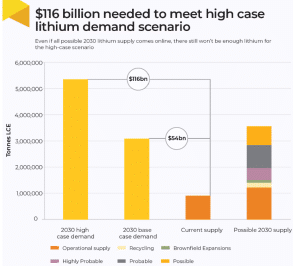
Global demand for lithium is growing quickly. Analysts expect it to quadruple by 2030 as more countries adopt EVs and build large-scale battery storage.ย 

investment needed for high case lithium demand scenario

According to Katusa Research (2025), global lithium demand is projected to climb from 1.04 million tonnes in 2024 to 3.56 million tonnes by 2035 โ€” a 3.5ร— increase. About 83% of that demand will come from EV batteries, while energy storage will account for another 11%.
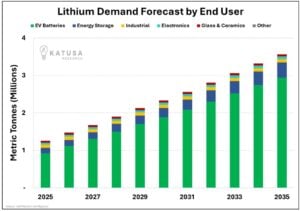
lithium demand forecast 2035 KR
Source: Katusa Research

Per the International Energy Agency, the U.S. alone may need over 625,000 tonnes of LCE per year by 2030, compared with only a small fraction produced domestically today.

Building new mines takes time – often 10 to 15 years from exploration to commercial production. This long timeline makes it difficult to ramp up supply fast enough to meet demand. Therefore, a lasting shortage is forming. If the U.S. does not accelerate new projects soon, it may depend on imports for decades.

Each EV battery pack uses large amounts of lithium. On average, an EV requires about 60 kilograms of LCE – or 8 to 10 kilograms per kilowatt-hour (kWh) of battery capacity. As automakers build more gigafactories, that adds up quickly.ย 

Katusaโ€™s data also shows that global EV sales jumped from 2 million in 2020 to 11 million in 2024, a 450% surge โ€” and could exceed 60 million units per year by 2040, more than half of all cars sold globally.
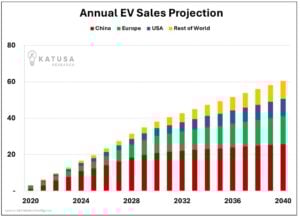
annual EV sales projection KR
Source: Katusa Research

The U.S. is expected to have 440 gigawatt-hours (GWh) of battery manufacturing capacity by 2025 and more than 1,000 GWh by 2030. That growth alone could double or triple national lithium demand.

Introducing the Nevada North Lithium Project

One company aiming to help close this gap is Surge Battery Metals. Its flagship asset, the Nevada North Lithium Project (NNLP) in Elko County, Nevada, is one of the few high-grade lithium clay deposits in the United States.ย 

The project has an inferred resource of 11.24 million tonnes of LCE, grading about 3,010 ppm lithium, making it the highest-grade lithium clay resource in the country.

NNLP 2024 resource estimate
Source: Surge Battery Metals

Surgeโ€™s Preliminary Economic Assessment (PEA) shows strong project fundamentals:

  • Post-tax NPV (8%) of US$9.21 billion
  • IRR of 22.8%
  • Operating cost โ‰ˆ US$5,243/t LCE
  • Mine life of 42 years

The project benefits from ideal logistics. NNLP is only 13 kilometers from major power lines and close to all-season roads. The Bureau of Land Management (BLM) has issued a Record of Decision and a Finding of No Significant Impact (FONSI), allowing expanded exploration over 250 acres. These factors make NNLP a leading U.S. candidate for large-scale lithium development.

How NNLP Helps Close the Supply Gap

Surge Battery Metalsโ€™ Nevada North project has features that position it well to help close Americaโ€™s lithium gap. Its high grade and large resource size suggest it could deliver significant output once in production. Higher-grade deposits typically allow lower extraction costs and shorter payback periods.

Because NNLP already has key permits and environmental clearance, it may reach production faster than many early-stage peers. That speed is critical as EV demand accelerates and the U.S. targets more domestic battery manufacturing.

Just as important, NNLP supports U.S. policy goals for supply chain security. Producing lithium domestically reduces reliance on imports, helping stabilize supply and pricing for American automakers. It also supports the Inflation Reduction Act, which requires that most EV battery minerals come from North America or allied countries by 2027.

In March 2025, the U.S. government took direct equity stakes in several lithium ventures, including Lithium Americasโ€™ Thacker Pass, signaling a strong federal commitment to reshoring critical mineral production. This policy backdrop reinforces projects like NNLP as part of a national security priority.

Strengthening NNLP Through Strategic Partnership

Moreover, Surge Battery Metals signed a joint venture letter of intent (LOI) with Evolution Mining (ASX: EVN), allowing Evolution to earn up to 32.5% ownership by funding C$10 million toward the Preliminary Feasibility Study (PFS) for the Nevada North Lithium Project (NNLP). Surge retains majority control and project management, keeping its long-term vision and stakeholder priorities front and center.

This partnership delivers big strategic value. By merging Surgeโ€™s lithium expertise and mineral rights with Evolutionโ€™s 75% stake in 880 acres of private land – and over 21,000 added acres nearby – the deal significantly increases the JVโ€™s land position. The expanded acreage boosts the overall exploration area and brings in mineral rights in key southern zones, possible clay unit extensions to the north, and territory in historic mining districts and key drainage areas.

Importantly, Evolutionโ€™s staged funding speeds up completion of the PFS and helps NNLP reach development milestones while lowering capital risk for Surge shareholders. If Evolution completes its full commitment, it will own 32.5% of the JV, but Surge remains the lead partner. This setup means Surge still directs the project, while using Evolutionโ€™s operations know-how and resources. With a larger land package and a joint operating committee, NNLP is well on its way to Tier 1 status and is strengthening its spot in North Americaโ€™s battery metals supply chain – vital for clean energy and EV growth.

Lithium Market Volatility and Project Risks

Like any mining venture, NNLP faces challenges. Lithium pricesย fell nearly 90% from their 2022 peak, but from June to September 2025, they rebounded 24%, showing early signs of recovery.
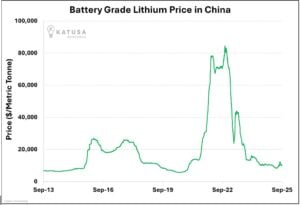
battery grade lithium price KR

This cyclical pattern reflects Katusaโ€™s โ€œcost floorโ€ concept โ€” production costs in China and Australia now average around $5,000โ€“6,000 per tonne LCE, while South American and U.S. projects need about $8,000/t to stay profitable. If prices fall near those levels, high-cost mines pause output, tightening supply again and stabilizing prices.

Another factor is resource expansion. NNLPโ€™s current resource is inferred, but the company expects to complete its current drilling program at NNLP by the end of October 2025. Once the results are released, the lithium resource will be upgraded from Inferred to Indicated and Measured categories. This step will strengthen confidence in the depositโ€™s scale and quality, supporting the upcoming Pre-Feasibility Study (PFS).

Permitting and community engagement also remain important; even in a mining-friendly state like Nevada, water use and land reclamation practices must meet strict environmental standards.ย 

Surge Battery Metals has emphasized sustainable practices, including water recycling and progressive site reclamation, as part of its exploration and development plan.

Competition is growing, too. Lithium projects across South America, Australia, and Canada are advancing quickly. Still, Nevadaโ€™s combination of stable governance, established mining laws, and proximity to major battery plants gives U.S. projects like NNLP a strong advantage.

A National View: U.S. Lithium Resources and Reserves

The U.S. is home to some of the worldโ€™s largest lithium reserves, but it still underdevelops them. According to the U.S. Geological Survey, global lithium reserves total around 21 million tonnes, with the U.S. holding roughly 12%. Nevada alone hosts the countryโ€™s biggest lithium resources, concentrated in the Thacker Pass region and the northern claystone belts – where NNLP is located.
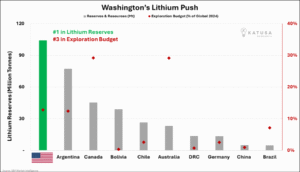
washington's lithium push

Unlocking these resources is vital. Every new project that moves forward strengthens the domestic supply chain and supports national goals to lead in clean energy technology.

MUST READ: Every Lithium Stock Just Woke Up From a 3-Year Coma

What to Watch in 2025 and Beyond

Surge Battery Metals plans to continue advancing NNLP through new drilling campaigns and metallurgical studies in 2025. These programs aim to expand and upgrade resources, optimize extraction processes, and confirm the potential to produce battery-grade lithium carbonate with 99% purity. The company is also evaluating potential offtake partnerships with battery and automotive manufacturers.

Analysts and investors will be watching for:

  • Updated resource estimates and grade expansion
  • Progress toward pre-feasibility studies
  • Partnerships or funding deals with strategic investors
  • Regulatory updates supporting U.S. critical mineral development

Positive results in these areas could accelerate NNLPโ€™s move toward construction and help it become one of the first next-generation lithium clay projects to enter U.S. production.

Powering the U.S. Energy Future

The U.S. faces a widening gap between lithium supply and demand that could slow its clean-energy transition. Katusa Research projects a 400,000-tonne global supply shortfall by 2035, roughly the worldโ€™s entire 2020 output – a deficit that could keep prices elevated long term.
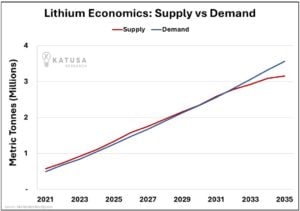
lithium supply and demand forecast KR
Source: Katusa Research

Surge Battery Metalsโ€™ Nevada North Lithium Project provides a realistic and timely opportunity to help close that divide. With its high-grade resource, strong economics, strategic location, and environmental focus, NNLP could play a central role in building a stable, self-sufficient lithium supply for the United States.

As the nation races to electrify transportation and decarbonize energy, projects like NNLP will be critical. They are not only about producing lithium – they are about powering the next chapter of American industry and ensuring that the clean-energy future is built on secure, sustainable ground.

DISCLAIMERย 

New Era Publishing Inc. and/or CarbonCredits.com (โ€œWeโ€ or โ€œUsโ€) are not securities dealers or brokers, investment advisers, or financial advisers, and you should not rely on the information herein as investment advice. Surge Battery Metals Inc. (โ€œCompanyโ€) made a one-time payment of $50,000 to provide marketing services for a term of two months. None of the owners, members, directors, or employees of New Era Publishing Inc. and/or CarbonCredits.com currently hold, or have any beneficial ownership in, any shares, stocks, or options of the companies mentioned.

This article is informational only and is solely for use by prospective investors in determining whether to seek additional information. It does not constitute an offer to sell or a solicitation of an offer to buy any securities. Examples that we provide of share price increases pertaining to a particular issuer from one referenced date to another represent arbitrarily chosen time periods and are no indication whatsoever of future stock prices for that issuer and are of no predictive value.

Our stock profiles are intended to highlight certain companies for your further investigation; they are not stock recommendations or an offer or sale of the referenced securities. The securities issued by the companies we profile should be considered high-risk; if you do invest despite these warnings, you may lose your entire investment. Please do your own research before investing, including reviewing the companiesโ€™ SEDAR+ and SEC filings, press releases, and risk disclosures.

It is our policy that information contained in this profile was provided by the company, extracted from SEDAR+ and SEC filings, company websites, and other publicly available sources. We believe the sources and information are accurate and reliable but we cannot guarantee them.

CAUTIONARY STATEMENT AND FORWARD-LOOKING INFORMATION

Certain statements contained in this news release may constitute โ€œforward-looking informationโ€ within the meaning of applicable securities laws. Forward-looking information generally can be identified by words such as โ€œanticipate,โ€ โ€œexpect,โ€ โ€œestimate,โ€ โ€œforecast,โ€ โ€œplan,โ€ and similar expressions suggesting future outcomes or events. Forward-looking information is based on current expectations of management; however, it is subject to known and unknown risks, uncertainties, and other factors that may cause actual results to differ materially from those anticipated.

These factors include, without limitation, statements relating to the Companyโ€™s exploration and development plans, the potential of its mineral projects, financing activities, regulatory approvals, market conditions, and future objectives. Forward-looking information involves numerous risks and uncertainties and actual results might differ materially from results suggested in any forward-looking information. These risks and uncertainties include, among other things, market volatility, the state of financial markets for the Companyโ€™s securities, fluctuations in commodity prices, operational challenges, and changes in business plans.

Forward-looking information is based on several key expectations and assumptions, including, without limitation, that the Company will continue with its stated business objectives and will be able to raise additional capital as required. Although management of the Company has attempted to identify important factors that could cause actual results to differ materially, there may be other factors that cause results not to be as anticipated, estimated, or intended.

There can be no assurance that such forward-looking information will prove to be accurate, as actual results and future events could differ materially. Accordingly, readers should not place undue reliance on forward-looking information. Additional information about risks and uncertainties is contained in the Companyโ€™s managementโ€™s discussion and analysis and annual information form for the year ended December 31, 2024, copies of which are available on SEDAR+ at www.sedarplus.ca.

The forward-looking information contained herein is expressly qualified in its entirety by this cautionary statement. Forward-looking information reflects managementโ€™s current beliefs and is based on information currently available to the Company. The forward-looking information is made as of the date of this news release, and the Company assumes no obligation to update or revise such information to reflect new events or circumstances except as may be required by applicable law.

For more information on the Company, investors should review the Companyโ€™s continuous disclosure filings available on SEDAR+ at www.sedarplus.ca.


Disclosure: Owners, members, directors, and employees of carboncredits.com have/may have stock or option positions in any of the companies mentioned: None.

Carboncredits.com receives compensation for this publication and has a business relationship with any company whose stock(s) is/are mentioned in this article.

Additional disclosure: This communication serves the sole purpose of adding value to the research process and is for information only. Please do your own due diligence. Every investment in securities mentioned in publications of carboncredits.com involves risks that could lead to a total loss of the invested capital.

Please read our Full RISKS and DISCLOSURE here.

Google Invests in First Carbon Capture to Power AI and Cut Emissions

Google announced a major new project: it will support a U.S. power plant outfitted with carbon-capture and storage (CCS) technology. The plant, owned by Broadwing Energy in Decatur, Illinois, will capture about 90% of its COโ‚‚ emissions. The tech giant agreed to buy most of the electricity the plant produces.ย ย 

By backing this plant, Google aims to help build a reliable, low-carbon power source for its data centers in the U.S. Midwest. It also hopes to speed up the use of CCS technology globally.

The Science of Trapping Carbon: How CCS Works

CCS stands for carbon capture and storage. It involves three main steps:

  • Capture: Pulling COโ‚‚ from a power plant or factory.
  • Transport: Moving the COโ‚‚, often via pipelines.
  • Store: Injecting the COโ‚‚ deep underground where it canโ€™t escape.

This technology is especially important for power plants that burn natural gas or coal. It is also key for factories in heavy industries, like steel and cement, which produce large emissions.

Global experts such as the International Energy Agency (IEA) and the Intergovernmental Panel on Climate Change (IPCC) say CCS will play a major role in reaching climate goals.

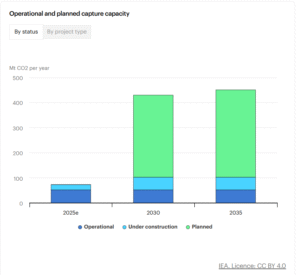
CCS operational and planned capacity IEA
Source: IEA

Googleโ€™s deal highlights this role. By linking a power plant deal to its own data center needs, the company is showing how big tech can strengthen the clean energy transition.

Inside Googleโ€™s Illinois CCS Project

The Illinois plant will be a natural 5gas power facility built by Broadwing Energy. It will capture up to 90% of the COโ‚‚ it produces. Google will buy the bulk of its electricity output.

The plant is sized at more than 400 megawatts (MW). It will include advanced equipment and a large carbon-capture unit. The deal was announced by Google and infrastructure partner Iโ€ฏSquared Capital (through its affiliate Low Carbon Infrastructure).

Google said the project will feed power to its data centers in the region, help reduce emissions, and make clean โ€œfirm powerโ€ (power available around the clock) more affordable. This is important because many renewable sources like wind and solar have variable output.

Google stated:

“Today we’re excited to announce a first-of-its-kind corporate agreement to support a gas power plant with CCS. Broadwing Energy, located in Decatur, Illinois, will capture and permanently store approximately 90% of its CO2 emissions. We hope it will accelerate the path for CCS technology to become more accessible and affordable globally, helping to increase generating capacity while enabling emission reductions.”

How Big is the CCS Market?

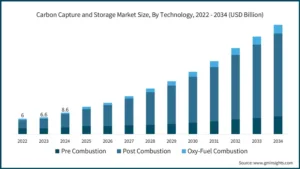
The CCS market has grown rapidly. One estimate values it at $8.6 billion in 2024, with a projected annual rate of 16% through 2034. At that pace, the market could reach $51.5 billion by 2034.

CCS market size, by technology 2034

Another estimate places the market size in 2024 at $3.68 billion, with growth to $5.61 billion by 2030. The power generation sector is a major part of the market. One report says 37% of the market was from power generation in 2024.

For data centers and tech companies like Google, CCS offers reliable low-carbon power. Given that global data center emissions may reach 2.5 billion tons of COโ‚‚ through 2030, major tech firms are under pressure to decarbonize.

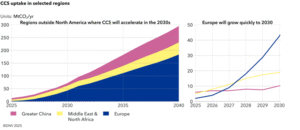
Experts also project that global CCS capacity will quadruple, reaching around 430 million tonnes of COโ‚‚ per year from todayโ€™s 50 million tonnes. Investments of about $80 billion are expected over the next five years. North America and Europe currently lead, holding roughly 80% of growth projects, while China and other regions also scale up.

DNV_CCS_forecast_2050_CCS_uptake_in_selected_regions
Source: DNV

CCS currently addresses only 6% of the emissions needed for net-zero by mid-century. Experts still see it as key for hard-to-decarbonize industries like cement, steel, and hydrogen production.

Breaking New Ground in Clean Firm Power

This is the first time a major tech company has agreed to buy electricity from a power plant using CCS at this commercial scale in the U.S.

The deal brings several important benefits:

  • Google secures โ€œfirmโ€ power for its data centers, reducing risks from intermittent renewable supply.
  • CCS gives a path to cut emissions from fossil fuel plants rather than shutting them down entirely.
  • It creates a business model for future CCS deals, making the technology more accessible and scalable.

For Google, the deal advances its goal of running on clean energy and especially 24/7 carbon-free power by 2030. For the broader industry, it sends a signal that large corporations support CCS and are willing to back it financially.

Hurdles Ahead for Carbon Capture

Despite the promise, CCS still faces hurdles. The upfront cost is high, and many projects require government incentives or strong contracts to make economic sense.

Another challenge is scale. According to a 2024 study, CCS capacity by 2030 may reach only 0.07โ€“0.37 gigatonnes (Gt) COโ‚‚ per year, which is just a small part of whatโ€™s needed to meet climate goals.

CCS capacity additions 2030
Source: DNV Report

For Googleโ€™s project and others like it to succeed, they will need strong regulation, clear carbon pricing, and reliable storage sites. Also, transparency and long-term monitoring are critical to ensure the COโ‚‚ stays underground.

The Illinois plant is a start. If it runs successfully, it could spawn many more projects in power generation and industry. Corporations, utilities, and governments may replicate the model.

The Big Picture: From Data Centers to Decarbonization

Tech companies are building ever-larger data centers to fuel artificial intelligence, cloud computing, and global connectivity. This drives huge electricity demand. Googleโ€™s CCS deal shows one way to manage that demand while cutting carbon.

CCS combined with clean power can help sectors that cannot easily switch to renewables. Power plants that run on natural gas or industries like cement and steel may use CCS to reduce emissions.

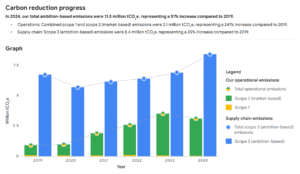
For Google, the new deal helps it reach its sustainability targets, supports its data-center operations, and sets an example for other firms. The chart below shows the companyโ€™s emission reduction progress. For the climate, it offers a template for building low-carbon power systems at scale.

Google carbon emissions 2024
Source: Google

Final Thoughts: A Pivotal Moment for Clean Power

Googleโ€™s agreement signals a shift: clean, firm power is becoming a business reality, not just a promise. By backing a CCS-enabled gas power plant, Google is aligning business needs with carbon reduction goals.

The global CCS market is expanding fast. Estimates show billions of dollars flowing into the technology. But scaling remains challenging โ€” cost, policy, and geology all play a role.

If the Illinois plant succeeds, it may influence how corporations, utilities, and governments design power systems in the future. It could help unlock CCS as one of the tools in the broader energy transition toolbox.

Bitcoin Mining Stocks Hit New Highs on AI Pivot with CleanSpark Leading the Pack

Bitcoin mining stocks jumped sharply this week after several big companies said they will expand into artificial intelligence (AI). Many miners now plan to use their computers and power systems for AI data centers, not just for Bitcoin.

CleanSpark led the rally after announcing its move into AI. The shift shows how fast the mining industry is changing as companies look for new ways to earn money.

CleanSpark Ignites the Rally

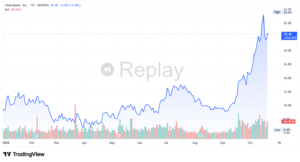
Las Vegasโ€“based CleanSpark saw its shares rise as much as 13% on October 21, 2025. The company said it will build and run data centers made for AI computing, in addition to mining Bitcoin.

CleanSpark stock AI

CleanSpark also hired Jeffrey Thomas, a veteran with more than 40 years of experience, as Senior Vice President of AI Data Centers. Thomas once led Saudi Arabiaโ€™s multi-billion-dollar AI data center program. He has helped create about $12 billion in shareholder value across 19 companies.

Thomas remarked:

“CleanSpark is at a pivotal moment in its journey. Together, we have a tremendous opportunity to deliver exceptional solutions for our customers while creating long-term value for shareholders and positioning CleanSpark at the center of the AI and intelligent computing revolution.”

The company already secured land and extra power in College Park, Georgia, near Atlanta, to build its first AI sites. It is also studying more possible locations in other U.S. states.

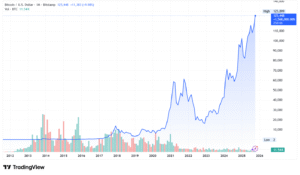
The news came as Bitcoin prices climbed back above $110,000, recovering from earlier drops when the price fell from highs above $126,000 in early October.

bitcoin price

More Miners Follow the Same Path

CleanSpark is not alone. Many mining companies are now trying to grow beyond Bitcoin. The reason is clear: mining rewards have fallen, and energy costs are rising.

After Bitcoinโ€™s 2024 halving, rewards for miners dropped from 6.25 BTC to 3.125 BTC. This made mining less profitable, pushing companies to look for other income sources.

Companies like Marathon Digital Holdings, Riot Platforms, Canaan, Core Scientific, Bitdeer Technologies, Hut 8, Cipher Mining, and TeraWulf have all announced similar plans. Their stocks also rose:

  • Marathon Digital gained 7.97% to $21.13.
  • Riot Platforms jumped 11.21% to $22.28.
  • Canaan, a hardware maker in China, surged about 28%.

Publicly traded Bitcoin miners raised more than $4.6 billion through loans and convertible notes in late 2024 and early 2025 to fund their AI projects.

The CoinShares Bitcoin Mining ETF, which tracks the sector, has soared 160% this year. Investors are clearly excited about the shift toward AI.

Why Miners Are Betting on AI

The move to AI computing makes sense for miners. They already own powerful hardware, data centers, and energy contracts. These can easily be used for AI instead of crypto.

AI systems need large amounts of electricity and fast processors to train and run models. Bitcoin miners already have this setup. By shifting to AI workloads, they can earn money even when Bitcoin prices are low.

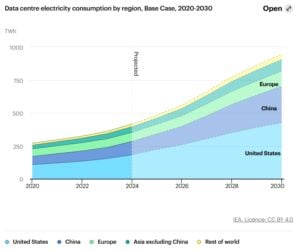
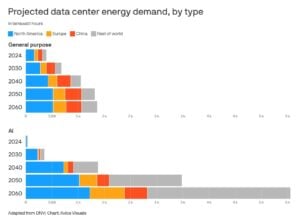
According to the International Energy Agency (IEA), global demand for AI data centers could reach over 1,000 terawatt-hours per year by 2030 โ€” about the same as all of Japanโ€™s electricity use today.

data center electricity use 2035
Source: IEA

The global AI infrastructure market could be worth $1.3 trillion by 2032, growing around 25% each year. That makes it one of the fastest-growing industries in the world.

For miners, the message is simple: if Bitcoin mining is less profitable, AI computing can fill the gap and create steady revenue.

From Mining Rigs to AI Powerhouses

AI computing and Bitcoin mining use similar technology. Both rely on high-performance processors to handle huge amounts of data.

Miners already operate powerful chips, cooling systems, and strong electricity connections. They can reuse all these to run AI and high-performance computing (HPC) jobs.

CleanSpark plans to build hybrid data centers โ€” some for Bitcoin, others for AI workloads. Likewise, Core Scientific said it will set aside part of its 1.3-gigawatt capacity for AI clients. Other companies are exploring similar plans.

This model could change the industry. Instead of just mining coins, these firms could become โ€œcompute providersโ€ โ€” selling power and computing to AI companies, research labs, and cloud platforms.

Investors See Opportunity Beyond Bitcoin

Investors like this new direction. It means miners no longer depend only on Bitcoinโ€™s price swings. They can earn a steady income from long-term contracts with AI firms.

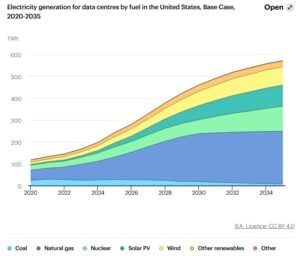
The IEA says global electricity use from data centers could double by 2030, largely because of AI. The U.S. has about 40% of the worldโ€™s data center capacity, but new projects face delays due to power and permitting issues.

data center electricity demand due AI 2030

Bitcoin miners already have access to large power sources. This gives them an edge when building new AI sites. They can repurpose their existing energy deals for AI computing, cutting startup time and costs.

Still, experts warn that running AI data centers is not easy. It needs new software, specialized equipment, and skilled workers. It also takes longer to make a profit compared to Bitcoin mining, which can adjust quickly to market prices.

Energy Use and the ESG Equation

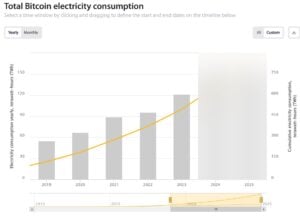
Energy use remains a key concern for both AI and Bitcoin mining. The Cambridge Centre for Alternative Finance estimates Bitcoin mining uses about 120 terawatt-hours of electricity each year, roughly equal to Argentinaโ€™s total use.

bitcoin electricity consumption 2025
Source: Cambridge Centre for Alternative Finance

Mining companies are trying to improve their environmental impact. CleanSpark says it sources most of its electricity from renewable or low-carbon energy. It plans to apply the same approach to its AI expansion.

Switching to AI could also make mining more efficient. Many AI centers use advanced cooling systems and can run on renewable energy more easily than older mining farms.

This could help miners meet environmental, social, and governance (ESG) goals while supporting the growth of clean digital infrastructure.

A New Era of Digital Infrastructure

The rise of AI has opened a new chapter for Bitcoin miners. What began as a niche focused on crypto now looks more like a digital infrastructure industry that powers AI, data analytics, and renewable energy systems.

If the transition succeeds, mining companies could become important players in the global computing market. They would supply power and servers for everything from AI model training to smart grid management.

For investors, this change offers both opportunity and risk. It provides exposure to two fast-growing industries โ€” crypto and AI โ€” but also depends on how well miners adapt.

Analysts say the key will be execution. Building AI centers takes time and money, and not all miners will succeed. But those who manage the shift well could become leaders in clean, high-tech energy and computing. They will shapeย the next phase of digital infrastructure โ€” one that connects blockchain, AI, and sustainable power.

Amazon and Cascade SMRs: Redefining America’s Clean Energy for AI and Cloud Computing

Amazon is taking a bold step toward the next frontier of clean energy. In Washington state, the company is helping to build one of the United Statesโ€™ first small modular reactor (SMR) facilities. This innovative nuclear energy project could redefine how big tech powers artificial intelligence (AI), cloud computing, and data centers.

The upcoming Cascade Advanced Energy Facility will be one of the first commercial SMR sites in the U.S. Developed by Energy Northwest and X-energy, this project represents a major milestone in the shift toward reliable, carbon-free energy for a rapidly digitizing world.

Bob Schuetz, CEO of Energy Northwest, said,

โ€œToday marks a pivotal step forward in bringing this transformative project to life. We are proud to be at the forefront of deploying advanced nuclear technology in the regionโ€”driving next-generation solutions that strengthen energy security and position the Pacific Northwest as a clean energy leader.โ€

global data center energy demand
Source: IEA

Cascade: The Nuclear Powerhouse Behind Amazonโ€™s Digital Future

Amazonโ€™s data centers are the digital backbone of modern lifeโ€”running AI models, streaming services, and e-commerce systems that demand massive amounts of electricity. As power needs grow, traditional renewable sources like solar and wind alone canโ€™t always meet 24/7 demand. Thatโ€™s where nuclear energy steps in.

  • The Cascade facility, located near Richland, Washington, will produce up to 960 megawatts (MW) of clean electricity using X-energyโ€™s Xe-100 advanced reactor design.

The project will start with four SMRs generating 320 MW, with expansion plans for up to 12 units. Construction is expected to begin before 2030, with operations commencing in the early 2030s.

Kara Hurst, Chief Sustainability Officer, Amazon, commented:

“Seeing these renderings is truly inspiring, and a reminder that innovation and sustainability go hand in hand. This project isn’t just about new technology; it’s about creating a reliable source of carbon-free energy that will support our growing digital world. I’m excited about the potential of SMRs and the positive impact they will have on both the environment and local communities.”

Here’s a snapshot of the project site:

cascade nuclear smr Amazon
Source: Cascade

SMRs: A Smaller, Safer, and Scalable Future

SMRs represent the next evolution in nuclear energy. Theyโ€™re designed to be smaller, safer, and faster to deploy than conventional reactors. The modular layout allows facilities like Cascade to scale as demand growsโ€”making it a perfect match for AI-powered data centers that require continuous, high-capacity electricity.

Xe-100 Advanced Reactor Featuresโ€‹

Each Xe-100 reactor will use a High-Temperature Gas-cooled Reactor (HTGR) and advanced fuel, improving safety and efficiency. The design minimizes the risk of overheating and eliminates the need for large water-cooling systems, which are standard in older nuclear plants.

Key advantages include:

  • 80 MW per reactor module with a 60-year design life.
  • Modular construction allows components to be built off-site and transported via rail or road.
  • Continuous online refueling, reducing downtime, and increasing efficiency.
  • Walk-away safe design with passive safety systems that eliminate the risk of overheating.
  • Fuel that cannot melt, further enhancing safety.

Unlike traditional gigawatt-scale reactors that occupy vast tracts of land, Cascadeโ€™s compact design will fit on a few city blocks. Each SMR is modular, which means parts can be factory-built and assembled on-site, reducing costs and construction time.

The environmental advantage is clear: SMRs provide round-the-clock, carbon-free electricity without the intermittency challenges of solar or wind. This makes them a critical piece of the clean energy puzzle for tech-driven economies.

According to J. Clay Sell, CEO of X-energy, said

โ€œThe support of Amazon has enabled us to accelerate progress on our technology, grow our team, and position the Cascade Advanced Energy Facility at the forefront of energy innovation.โ€

Jobs, Training, and Local Benefits

Once the Cascade project is complete, the facility will create over 1,000 construction jobs and more than 100 permanent positions in nuclear operations, engineering, and technical maintenance.

To build a skilled local workforce, Columbia Basin College in Pasco, Washington, is developing an Energy Learning Center with a sophisticated Xe-100 control room simulator. Think of it as a flight simulator for nuclear operators.

The press release also revealed that the simulator will train future plant operators, engineers, and technicians in collaboration with Washington State University Tri-Cities and is set to open in late 2025.

This initiative, funded by the U.S. Department of Energy (DOE), provides students with hands-on experience in advanced nuclear technologyโ€”bridging the gap between classroom learning and real-world careers.

Amazonโ€™s Growing Nuclear Portfolio

Amazonโ€™s investment in Cascade is part of a broader strategy to diversify its clean energy sources. The company has already invested billions of dollars in carbon-free technologies, including nuclear power, through its Climate Pledge Fund.

This fund supports companies developing scalable solutions to decarbonize energy systems. Amazonโ€™s capital investment in X-energy is expected to help bring over 5 gigawatts (GW) of new nuclear capacity to the U.S. grid by 2039โ€”enough to power 3.8 million homes.

Clean Energy Beyond Renewables

Amazon is the worldโ€™s largest corporate purchaser of renewable energy, with over 600 clean energy projects operating globally. It had already reached 100% renewable electricity worldwideโ€”seven years ahead of its 2030 goal.

However, as AI and cloud energy demands soar, renewables alone wonโ€™t suffice. Amazonโ€™s focus on nuclear underscores a key point: the data-driven future needs constant, scalable, carbon-free power.

According to a DNV report, AI-focused data centers could require 10 times more power over the next five years. Meeting that demand will require a mix of renewables, nuclear, and other carbon-free technologies.

Amazon AI energy demand
Source: Axios

Amazonโ€™s approach is clear: continue expanding renewable energy while also investing in stable, long-duration power sources like SMRs that can provide consistent baseload power. Nuclear energy complements renewables by filling the gaps when solar and wind output fluctuate.

Building the Energy Infrastructure of Tomorrow

The International Energy Agency (IEA) reported that global energy demand grew 2.2% in 2024, outpacing the decadeโ€™s average. Industrial activity now drives nearly 40% of global electricity use, and the rise of digital services and AI compounds this demand.

Amazonโ€™s nuclear investments aim to meet this target. The Cascade project will not only add clean power to the regional grid but also strengthen the U.S. energy infrastructure and reduce reliance on fossil fuels.

IEA nuclear
Source: IEA

Beyond decarbonization, these efforts create economic opportunities for local communities through job creation, tax revenue, and the establishment of a clean energy supply chain in the Pacific Northwest.

Thus, from renewables to nuclear, Amazonโ€™s energy strategy is redefining what it means for technology companies to lead in climate action. As the Cascade facility takes shape, it could become a model for how advanced nuclear energy powers the next phase of the global clean energy transitionโ€”fueling both innovation and sustainability, one reactor at a time.

Tesla (TSLA) Stock Slips After Q3 Results as Carbon Credit Revenue Plunges 44%

Tesla today released its third-quarter 2025 results. The company posted $28.1 billion in revenue, up 12 % compared with a year ago. Net income narrowed sharply to $1.4 billion, down roughly 37 % from the same quarter in 2024. The gross margin stood at about 18 %, down from 19.8 % a year earlier.

Vehicle deliveries reached a record 497,099 units, driven largely by strong demand ahead of the U.S. federal EV tax-credit expiration. Energy storage deployments grew, but Tesla reported a revenue drop.

More notably, sales from regulatory credits, also known as carbon credits, fell to $417 million, down 44% from last year.

Tesla highlighted operational strength in production and clean energy expansion. It also recognized outside pressures. These included falling carbon credit sales, higher costs, and a more competitive EV market. All of these factors affected profit margins.

CEO Elon Musk said Tesla is โ€œstaying focused on cost control and scaling clean energy.โ€ He added that the company is improving factory automation and AI systems while expanding into new markets.

Carbon Credits Lose Power

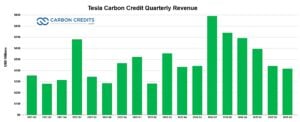
Teslaโ€™s carbon credit sales fell again in Q3. The company earned $417 million from selling credits, down 44% compared with $739 million a year earlier.

Tesla carbon credit quarterly revenue

For years, these credits have provided Tesla with extra income. The company makes money by selling zero-emission vehicles. Then, it sells the credits to automakers that don’t meet emission standards.

Major buyers include Stellantis (formerly Fiat Chrysler) and General Motors. They use Teslaโ€™s credits to reduce higher fleet emissions. In Europe, Toyota, Ford, Mazda, and Subaru have joined pooling arrangements linked to Tesla and other EV makers. These credit deals remain a key income source for Tesla, even as rival automakers expand their own EV lineups.

Between 2019 and 2024, Tesla made more than $11.8 billion in credit sales. But as other automakers launch more electric models, demand for Teslaโ€™s credits is declining. Analysts say this trend will continue as the EV market matures and countries tighten credit systems.

However, expected revenues will gradually decline. This will happen as global manufacturers meet stricter carbon standards and depend less on external credits.

Teslaโ€™s CFO noted that while carbon credit income still helps overall results, it is now a smaller part of the companyโ€™s total revenue. The companyโ€™s goal is to rely on vehicle and energy product sales instead of external credits in the long run.

ESG Edge: Teslaโ€™s Ongoing Climate Impact

Tesla continues to lead in cutting transportation-related emissions through its EVs and renewable energy systems. In 2025, the company estimated that its global fleet helped avoid more than 20 million tons of COโ‚‚ compared with gas-powered vehicles.

Its Gigafactories use renewable power where possible. For example:

  • The Nevada Gigafactory sources most of its electricity from solar panels and nearby renewables.
  • The Texas Gigafactory plans to reach 100% renewable electricity by 2026.
  • The Berlin-Brandenburg Gigafactory uses energy from wind and solar farms in Germany.

In 2024, Tesla said its operations emitted around 1.6 million tons of COโ‚‚-equivalent, mostly from manufacturing. However, it aims to reach net-zero operations by 2030, partly through on-site renewables and energy efficiency upgrades.

The companyโ€™s battery recycling program also expanded this year. Tesla said it processed over 10,000 tons of battery materials in 2025, recovering more than 90% of key metals such as nickel, lithium, and cobalt. This helps reduce both mining demand and production costs.

Market Reaction and Stock Outlook

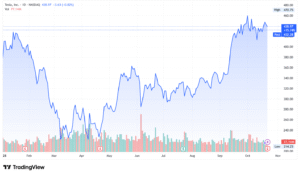
Teslaโ€™s stock traded lower after the Q3 results. Investors focused on shrinking profit margins and weaker credit income. Shares fell about 4% in after-hours trading following the announcement.

Tesla TSLA stock price

However, analysts noted that Teslaโ€™s strong vehicle deliveries and growing energy business remain long-term positives. The company still holds about $29 billion in cash, giving it flexibility for new factory investments and product launches.

Tesla is also developing new products that could shape its next growth phase:

  • Cybertruck deliveries are ramping up, with full-scale production expected in 2026.
  • The next-generation โ€œRedwoodโ€ compact EV is under development, targeting a lower-price market.
  • The Dojo AI supercomputer continues to expand to improve autonomous-driving systems.

Analysts project that Teslaโ€™s annual deliveries could reach 1.9 million units in 2025, up from 1.8 million in 2024. But the company must maintain cost control and increase battery supply to stay competitive.

Tesla remains the top global EV brand, but its market share is shrinking. Companies like BYD, Hyundai, Volkswagen, and GM are expanding fast. BYD alone sold over 3 million EVs in 2024, close to Teslaโ€™s total deliveries.

BYD vs Tesla EV sales

Costs are another challenge. Prices for lithium and nickel, key battery metals, have been volatile. Benchmark Mineral Intelligence reported that lithium carbonate prices rose nearly 25% in early 2025 after a sharp fall in 2024.

Tesla is working to reduce these risks through in-house battery production and supply deals. It is also developing its โ€œOptimusโ€ robot and expanding its Full Self-Driving (FSD) software, which could bring new recurring revenue in the future.

Policy Shifts and the Carbon Economy

Teslaโ€™s position in carbon markets is also tied to global climate policy trends. The federal EV tax credits ended in 2025 after new legislation. The change removed the $7,500 credit for many new EV buyers and the $4,000 used-EV credit.

This shift reduces a key buyer incentive in the U.S. and may affect EV demand and pricing going forward. Meanwhile, in Europe, new carbon border taxes could make manufacturing outside the region more costly.

Globally, voluntary carbon markets are growing by about 20% each year. However, regulators are pushing for stricter verification standards.

Teslaโ€™s carbon credit decline fits a broader patternโ€”many automakers are now earning their own credits instead of buying them. The shift signals progress toward wider EV adoption but also limits a once-steady source of profit for Tesla.

Beyond Cars: Teslaโ€™s Clean Energy Expansion

Beyond cars, Teslaโ€™s energy division remains a major growth area. The company is scaling up battery-storage products like Powerwall for homes and Megapack for utilities.

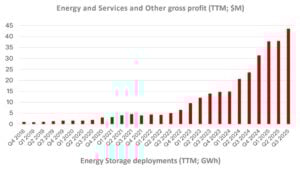
In 2025, global installations of Teslaโ€™s energy storage exceeded 40 GWh, up 16% year over year. These systems help stabilize power grids and integrate renewable energy.

Tesla energy storage deployment Q3 2025
Source: Tesla

Tesla also said its solar installations reached 280 MW in the quarter, a 9% increase. Although still a small part of total revenue, solar and storage help diversify the business as the company moves closer to its clean-energy mission.

Looking forward, Tesla plans to:

  • Increase battery recycling capacity by 50% by 2026.
  • Expand Megapack production in California and China.
  • Develop lower-cost energy products for homes and small businesses.

These steps aim to make Tesla not just an automaker but a full-scale clean energy company.

Bottom Line: Growth Meets Reality

Teslaโ€™s Q3 2025 results show solid growth but shrinking profits. Vehicle deliveries set a new record, and the energy business expanded. Yet, weaker margins and falling carbon credit sales highlight growing challenges for Tesla.

From an ESG perspective, Tesla remains a major player in global decarbonization. Its EVs and clean energy systems continue to reduce emissions worldwide. But maintaining that leadership will depend on cost discipline, stable policies, and innovation in both batteries and AI systems.

As the company enters the final quarter of 2025, investors will watch closely for signs of margin recovery and progress on new product lines. The next few quarters will show whether Tesla can balance fast growth with profitability, while staying true to its sustainability mission.

FURTHER READINGS:ย 

BlackRock, ExxonMobil Lead New Global Coalition to Fix Carbon Accounting

A new coalition of major global companies has launched an effort to fix how the world measures and reports carbon emissions. The group, called Carbon Measures, includes BlackRockโ€™s Global Infrastructure Partners (GIP), ExxonMobil, and Banco Santander. They aim to build a clear and dependable global system. It will track carbon emissions in various industries and supply chains.

The coalition wants to solve the long-standing issue of “double counting.” This happens when several organizations claim the same emissions or reductions. It will also create new standards for measuring carbon intensity at the product level, from electricity and steel to cement and fuels.

The Need for Better Carbon Accounting

Carbon accounting measures greenhouse gas emissions. Itโ€™s essential for corporate climate action. Yet, many experts say current systems are weak and inconsistent.

Recent studies show that most corporate carbon data lacks accuracy. Less than 16% of carbon credits show real emission cuts, based on multiple independent reviews. Other reports show that over half of companies misreport or underreport their Scope 3 emissions. These emissions come from suppliers, customers, and logistics.

Even with growing corporate climate pledges, global emissions hit a record 37.4 billion metric tons in 2024, up 1.1% from the previous year. The gap between reported progress and real emissions continues to widen. This makes reliable data more important than ever.

Carbon Measures wants to address this problem by using verified data and financial-style rules. If it works, the coalition might change how companies, investors, and regulators see carbon performance.

How Carbon Measures Works

The coalition plans to design a ledger-based accounting system modeled on financial reporting. Each emission entry will be tracked and verified to prevent overlap or duplication. The approach takes ideas from finance. It uses consistent documentation, audits, and clear transparency standards.

Amy Brachio, the CEO and former global sustainability head at EY, says the new system will make carbon data clear, comparable, and precise. Her leadership brings over 30 years of experience in corporate sustainability and accounting systems. She said:

โ€œFor decades, precise and comparable data has been something of a holy grail in emissions tracking. Carbon Measures wants to build a system that unleashes competition, investment, and faster emissions reduction.โ€

The organization will start by developing standards for carbon intensity in major industrial sectors, such as:

  • Electricity and energy generation

  • Steel and cement production

  • Chemicals and fuels

These sectors are major greenhouse gas emitters. They account for nearly 70% of global industrial emissions. Consistent metrics could greatly impact the worldโ€™s decarbonization goals.

Industry Leaders Join Forces: Whoโ€™s Backing the Plan

Carbon Measures has attracted companies from across energy, finance, and manufacturing. Founding members are ADNOC, Air Liquide, BASF, Bayer, Honeywell, Linde, Mitsubishi Heavy Industries, NextEra Energy, Nucor, and Vale.

ExxonMobil CEO Darren Woods said that better data will help the industry manage emissions more effectively, saying:

“If you canโ€™t measure it, you canโ€™t manage it. A standard carbon accounting system will create a foundation for fair competition and effective climate action.”

Banco Santanderโ€™s Executive Chair Ana Botรญn added that the framework aims to make carbon reporting globally comparable.

The group includes both financial institutions and industrial companies. This mix shows how broad the impact of carbon measurement has grown.

For investors, accurate emissions data is now part of assessing financial risk. Manufacturers may face market access issues. More countries are adding carbon border taxes and product labeling rules.

A Booming Market for Carbon Truth

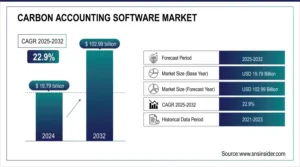
Carbon Measures launches at a time when both regulation and demand for transparency are rising. The carbon accounting software market is set to rise from $18 billion in 2024 to over $100 billion by 2032. This growth shows how companies feel the pressure to track and report accurately.

Carbon-Accounting-Software-Market

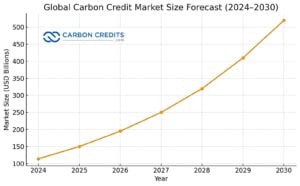
The compliance carbon credit market, which has government regulations, was valued at around $113 billion in 2024. It could grow to over $500 billion by 2030, based on industry estimates.

global carbon credit market size 2030
Source: Industry reports; BloombergNEF

Despite these investments, inconsistencies in carbon tracking have limited real progress. Many offsets used by firms have failed verification tests. For example, research found that only about 11% of forestry offsets delivered the emission cuts they claimed. Such findings have weakened confidence in voluntary carbon markets.

Carbon Measures seeks to rebuild that trust. The group aims to help investors and regulators by blending financial accuracy with science-based metrics. This way, they can tell real emission reductions from exaggerated claims.

The Hard Road to a Global Carbon Standard

Building a global standard will not be easy. Carbon data is complex, and each company collects it differently. Many developing countries also lack the technology or infrastructure for detailed measurement.

To succeed, Carbon Measures must:

  • Align with existing frameworks like the Greenhouse Gas Protocol and the Science-Based Targets initiative.

  • Ensure independent verification to maintain data credibility.

  • Encourage participation from both the private and public sectors to avoid fragmented systems.

The group is expected to release its first set of draft standards in 2026, starting with the power and steel industries. Analysts say regulators will closely watch the coalition’s progress. They are preparing new climate disclosure laws.

Another challenge lies in data integration. Companies must track emissions throughout long global supply chains. These chains often include hundreds of smaller suppliers. This requires advanced digital tools, including blockchain systems and artificial intelligence. They ensure traceability from raw materials to finished products.

Toward Transparent and Comparable Carbon Data

If Carbon Measures succeeds, it could redefine how the world values carbon performance. Clear, verifiable data could direct trillions of dollars toward clean technologies and efficient production.

Reliable accounting helps companies avoid accusations of “greenwashing.” This means they won’t make false or exaggerated environmental claims. It may also enable regulators to design better carbon pricing systems, linking policy and data more effectively.

Experts believe this kind of market transparency could speed up the global energy transition. The International Energy Agency says we need over $4 trillion each year for clean energy to hit net zero by 2050. Accurate carbon data can help guide where that money goes.

IEA new net zero roadmap 2050
Source: IEA

As global supply chains decarbonize, accurate tracking will become a competitive advantage. Investors and consumers increasingly prefer companies that can show measurable and verified progress.

Carbon Measures, backed by some of the worldโ€™s largest firms, signals that carbon accounting is moving from theory to execution. It shows that data โ€” not just pledges โ€” will define the next phase of corporate climate action.

Microsoft (MSFT) Buys 28,900 Tonnes of COโ‚‚ Removal from UNDO in Landmark Multi-Million-Dollar Deal

Microsoft (NASDAQ: MSFT) has taken another major step toward its 2030 carbon-negative goal by expanding its partnership with carbon removal company UNDO. The tech giant has agreed to purchase 28,900 tonnes of permanent COโ‚‚ removals, backed by an innovative financing structure from Inlandsis, a Canadian climate fund managed by Fondaction Asset Management.

The dealโ€”estimated to be worth over $5 million based on current Enhanced Rock Weathering (ERW) credit pricesโ€”marks Microsoftโ€™s third and largest purchase from UNDO to date.

It follows earlier commitments in 2023 and 2024, bringing the companyโ€™s total removals with UNDO to nearly 49,000 tonnes.

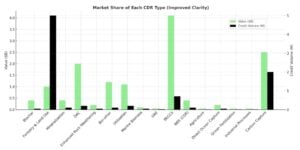
carbon removal ERW
Data Source: Allied Offsets Q1 2025 Carbon Dioxide Removal (CDR) Market Update

Financing the Next Frontier of Carbon Removal

To keep global warming below 1.5ยฐC, the world must remove billions of tonnes of COโ‚‚ from the atmosphere by mid-century. But achieving that scale requires more than promising technology. It demands financing structures that can fund large-scale deployment and reward verified results.

Thatโ€™s where Inlandsis plays a crucial role. The fund has developed a first-of-its-kind debt financing model to fully support UNDOโ€™s latest ERW project. The structure ensures that capital is deployed in sync with verified progress, effectively tying funding to real-world delivery.

UNDOโ€™s CEO Jim Mann described the model as a turning point for the industry:

โ€œInnovative financing is the catalyst for unlocking gigatonne-scale carbon removal. The support of Inlandsis shows how financial backers can help transform carbon removal into a genuine asset class, one that is scalable, tradable, and investable. By combining financial innovation, strategic partnerships and bleeding-edge science, UNDO is accelerating deployment and delivering both climate and agricultural benefits in Ontario and beyond.โ€ย 

By blending financial innovation, strategic partnerships, and rigorous science, UNDO is proving that enhanced rock weathering can be both a credible carbon removal method and an investable business model.

Additionally, the companyโ€™s focus on transparent MRV (measurement, reporting, and verification) ensures that every credit sold is backed by evidence and durability.

Microsoftโ€™s Evidence-Backed Commitment

Microsoftโ€™s partnership with UNDO has evolved gradually but strategicallyโ€”each stage built on verified outcomes and increasing scientific confidence.

  • 2023: Microsoft made its first-ever ERW purchase with a 5,000-tonne agreement.
  • 2024: The company followed up with 15,000 tonnes and additional funding to strengthen scientific measurement and monitoring.
  • 2025: This latest deal for 28,900 tonnes represents the companyโ€™s largest ERW investment yet.

The steady growth signals Microsoftโ€™s confidence in the integrity and scalability of enhanced rock weathering. It also reflects a shift in the carbon removal market, where buyers are moving from pilot projects to multi-year, performance-based partnerships.

Phillip Goodman, Director of Microsoftโ€™s Carbon Removal Portfolio, underscored the importance of science-led delivery,

โ€œEnhanced rock weathering is a promising pathway to gigatonne-scale carbon removal. UNDOโ€™s commitment to scientific rigour gives us confidence in both the durability of these credits and their role in helping Microsoft achieve its goal of being carbon negative by 2030.โ€

For Microsoft, this approach ensures that every tonne purchased represents verified, durable removalโ€”not speculative offsets. The companyโ€™s portfolio strategy emphasizes transparency, permanence, and continuous improvement.

READ MORE:

Backing UNDO: Insurance-Enabled, Bankable Carbon Solutions

For Inlandsis, the UNDO deal marks two significant milestones: it is the fundโ€™s first ERW investment and its first Canadian project under its second climate fund. These achievements underscore how carbon finance is evolvingโ€”shifting from traditional offset models to evidence-backed removal financing.

David Moffat, Managing Director at Inlandsis, said the project highlights a new direction for climate investment:

โ€œThis strategic and innovative deal strengthens the growing relationship between Microsoft and UNDO while advancing the critical fight against climate change. It also reflects our commitment to financing credible, scalable carbon solutions in Canada and beyond.โ€

Adding another layer of security, the deal is underwritten by CFC, a specialized insurance provider for the carbon markets. CFCโ€™s involvement de-risks the transaction by ensuring compensation if project milestones arenโ€™t metโ€”an emerging best practice in carbon finance.

Such insurance-backed financing is becoming a cornerstone for scaling carbon removal. It gives both investors and lenders the confidence to fund long-term projects, accelerating deployment and making climate solutions bankable.

A Replicable Model for the Carbon Market

This financing structure is designed to meet the needs of all players in the carbon ecosystem:

  • Buyers like Microsoft get verified, durable credits with transparent evidence.
  • Lenders gain confidence through milestone-based repayment tied to credit issuance.
  • Farmers benefit from predictable, low-disruption operations that align with agricultural cycles.

By ensuring that capital flows only after verified results, the model turns projected tonnes into measured, issued removals. Itโ€™s a practical, transparent framework that can be replicated across regions and scales.

UNDOโ€™s growing list of partnersโ€”Microsoft, Barclays, British Airways, and McLarenโ€”illustrates strong corporate demand for high-integrity removals. Each new deal builds capacity for UNDOโ€™s operations, allowing it to scale faster while maintaining scientific rigor.

Ground-Level Action: Every Rock, Every Acre, Every Record

Under the new agreement, UNDO will deploy 90,000 tonnes of crushed wollastonite, a calcium silicate rock, across 30,000 acres of Canadian farmland. The operation is designed to fit seamlessly within normal farming practices, using existing machinery and scheduled around planting and harvest.

The delivery process is transparent and data-rich:

  • Equipment is calibrated and GPS-tracked.
  • Every load of rock is logged and verified.
  • Soil and porewater samples are collected at multiple intervals and analyzed in accredited labs.
  • Each sample follows a strict chain of custody from field to lab to final data report.

These steps ensure that every credit issued represents real, measured carbon removal. UNDOโ€™s system links field operations with verified outcomes, providing partners with full traceability from quarry to credit.

UNDO’s ERW process

Science-Led, Evidence-Based Removals

Enhanced rock weathering accelerates a natural process where COโ‚‚ reacts with silicate minerals in rock, forming stable carbonates that lock away carbon for thousands of years.

UNDOโ€™s science-first approach ensures that every aspectโ€”from sampling design to lab analysisโ€”is statistically sound and auditable. Sampling plans are written in advance for accuracy, include control plots, and specify precise locations and timing for collection.

Once samples are analyzed, results go through multiple quality control checks, and data are tied to GPS coordinates and timestamps. Life-cycle emissions from quarrying, transportation, and spreading are subtracted, and uncertainty margins are conservatively applied before credits are issued.

Issuance happens only after independent verification, meaning each credit represents net carbon removed, not just projected outcomes. This evidence-led methodology helps ensure transparency and credibility, both essential for scaling trust in the carbon market.

A Blueprint for Scalable Carbon Removal

This partnership between Microsoft, UNDO, and Inlandsis represents a powerful new model for how the carbon removal sector can grow. It combines long-term purchasing commitments, performance-linked finance, scientific validation, and insurance-backed assurance into one scalable framework.

The collaboration also offers a clear path for other companies and investors: pair proven carbon removal science with structured, delivery-based finance to accelerate real climate impact.

As UNDO expands operations, its combination of practical field deployment, scientific transparency, and financial accountability will serve as a blueprint for scaling carbon removal across geographies.

The next phase is focused on steady executionโ€”planning rock supply, coordinating farm deployments, and sharing verified progress through public reporting. Each season adds data, strengthens methodologies, and builds confidence in the durability of ERW as a global climate tool.

The Surge in Verified Removals Signals Market Maturity

Microsoftโ€™s (MSFT stock) $5 million partnership with UNDO is a signal of market maturity. It shows how science-based removal, innovative finance, and transparent delivery can work together to build a credible, investable carbon market.

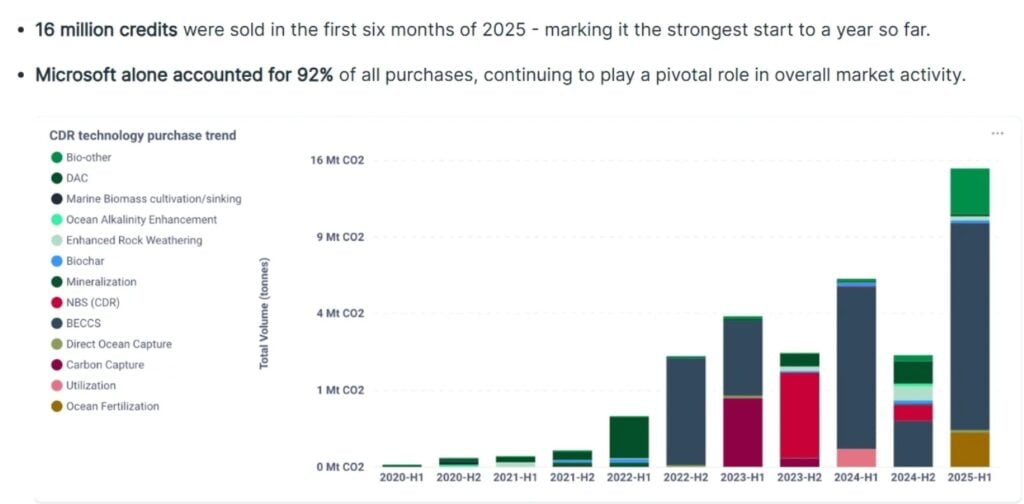
Allied Offsetsย dataย showed that in the first quarter of 2025, around 780,000 CDR credits were contracted โ€” a surge of 122% compared to the same period in 2024.

Additionally,ย 16 million credits were sold in the first six months of 2025 โ€“ marking it the strongest start to a year so far. The momentum is fueled by major buyers like Microsoft, aiming to be carbon negative by 2030. Also rise in biomass-based removal methods that are reshaping corporate offset strategies is contributing to the growth.

Market Highlightsย 

carbon removal Microsoft
Source: Allied offsets

As the world races to reach net zero, this deal stands out as a real-world example of progress: a partnership that delivers measured, permanent carbon removal, financed and verified with integrity.

ALSO READ:

Waymo Eyes London Launch in 2026 as Alphabetโ€™s Q3 Momentum Boosts Global Robotaxi Race

Alphabetโ€™s, Google’s parent company, self-driving car division, Waymo, has announced plans to launch its autonomous ride-hailing service in London in 2026. This marks the companyโ€™s first expansion into Europe and a major milestone for the global robotaxi industry.

The service will use all-electric Jaguar I-Pace vehicles equipped with Waymoโ€™s self-driving technology. Public road testing will begin in the coming weeks, with human safety drivers behind the wheel. Pending regulatory approval, commercial operations are expected to begin next year.

A Major Step in Autonomous Mobility

Waymoโ€™s move into London shows its growing trust in the safety and reliability of self-driving cars. The company has driven over 20 million miles fully autonomously. This includes public roads in cities like Phoenix, San Francisco, and Los Angeles.

In the U.S., Waymo currently provides more than 250,000 paid rides each week across five major cities. These services run on their own. They use artificial intelligence, sensors, and detailed maps.

The company is launching its driverless ride-hailing model in London. This city has one of the most complex traffic systems in the world. Londonโ€™s narrow streets and busy pedestrian areas make it great for testing self-driving cars. Its unpredictable weather adds to the challenge.

UK Opens Fast Lane for Driverless Innovation

Waymoโ€™s announcement follows the UK governmentโ€™s push to fast-track autonomous vehicle deployment. In June 2025, Transport Secretary Heidi Alexander confirmed that pilot programs forย robotaxisย wouldย start in spring 2026. This is a year earlier than planned.

This move matches the Automated Vehicles Act of 2024. This law says self-driving cars must meet or beat human safety standards. Full implementation of the law is expected by 2027, but early pilots will allow companies like Waymo to start operations sooner.

The UK government thinks the autonomous vehicle sector could bring 38,000 new jobs and add ยฃ42 billion to the economy by 2035. London, Manchester, and Birmingham are expected to be early hubs for testing and commercial deployment.

Alexander stated that the government wants the UK to be โ€œa global leader in self-driving technology.โ€ This will help improve accessibility, cut emissions, and draw in private investment.

Growing Competition in Londonโ€™s Ride-Hailing Market

Waymo will not enter Londonโ€™s market alone. In June, Uber teamed up with Wayve, a British AI startup supported by Microsoft and Nvidia. They plan to launch their own self-driving taxi service in the capital.
Wayveโ€™s vehicles are already testing in central London, where traffic conditions are among the most challenging in the world. Wayve CEO Alex Kendall remarked:

“If you prove this technology works here, you can literally drive anywhere. It’s one of the hardest proving grounds.”

For its UK operations, Waymo will partner with Moove, the fleet management company it already works with in Phoenix and Miami. Moove will handle charging infrastructure, vehicle maintenance, and fleet operations in London.

This partnership supports Waymoโ€™s plan to expand its global footprint. In addition to London, the company is testing robotaxis in Tokyo, where it began trials in April 2025.

A Trillion-Dollar Mobility Revolution

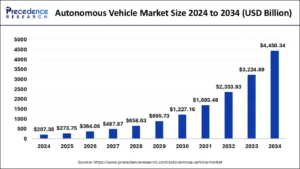
The global autonomous vehicle (AV) market is expanding rapidly. Research says the global AV industry is worth around $207 billion in 2024. It’s expected to grow to $4,450 billion by 2034.

AV market size

Europe alone could see over 30 million autonomous vehicles on the road by 2040, with cities like London, Paris, and Berlin leading adoption. The UK government expects 40% of new vehicles sold domestically to have self-driving features by 2035.

Robotaxi services like Waymoโ€™s are part of a broader shift toward shared, electric, and autonomous mobility (SEAM). Analysts say the global robotaxi market might top $45 billion by 2030. This growth is due to lower operating costs, high demand for ride-sharing, and better vehicle sensors and AI.

Waymoโ€™s parent, Alphabet, views robotaxis as a long-term bet on mobility services. They could one day compete with traditional ride-hailing.

Driving Toward Net-Zero: Waymoโ€™s Green Advantage

Waymoโ€™s all-electric Jaguar I-Pace vehicles help the UK reach its net-zero target by 2050. They also support Alphabetโ€™s sustainability goals. The company gets its energy for vehicle charging from renewable sources when it can. It also designs its operations to reduce carbon emissions.

The International Energy Agency (IEA) says that changing from gasoline cars to electric self-driving vehicles can cut lifecycle emissions by up to 50%. This is true when they use clean energy.

Studies show electric robotaxis emit up to 94% less greenhouse gases than gasoline cars. If 5% of U.S. vehicle sales by 2030 were autonomous EVs, they could save 7 million barrels of oil and cut about 2.4 million metric tons of COโ‚‚ each year.

In London, transportation adds about 25% to local COโ‚‚ emissions. This change could significantly improve air quality. Self-driving fleets can also reduce traffic jams and boost energy efficiency. They do this by optimizing routes and cutting down idle time.

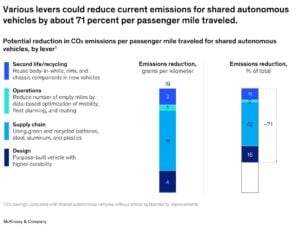
A McKinsey report shows that shared self-driving electric cars can cut pollution a lot. They produce about 85% to 98% less emissions per passenger mile than private diesel cars. If factories and supply chains also get cleaner, total emissions from these vehicles could drop by around 71% compared to todayโ€™s electric cars.

shared AV emission reduction potential

Waymoโ€™s partnership model boosts sustainable infrastructure. It focuses on installing fast-charging hubs and upgrading urban energy grids for clean transport.

Speed Bumps Before the Finish Line

Despite the progress, challenges remain. Londonโ€™s streets are dense, unpredictable, and filled with both old infrastructure and new regulations. Public trust in autonomous vehicles is still growing. Recent surveys show that over 60% of UK residents are cautious about self-driving cars.

Waymo will need to prove that its vehicles can operate safely and reliably under the UKโ€™s strict rules. The companyโ€™s technology must meet or exceed safety standards set by the government. It also needs approval from the Vehicle Certification Agency (VCA) before starting commercial operations.

Additionally, high costs remain a concern. Developing autonomous systems requires billions in investment, and profitability may take years. Analysts think early entrants like Waymo will gain from strong brand recognition and good regulatory ties as markets grow.

A Turning Point for Urban Mobility

Waymoโ€™s London launch represents a defining moment for both the company and the autonomous vehicle industry. It shows how self-driving technology is maturing. Major cities are now ready to test large-scale deployment.

If successful, the London project could become a blueprint for future robotaxi services across Europe. It would show how autonomous mobility can help reduce emissions, improve transport access, and support economic growth.

Waymoโ€™s action boosts the UKโ€™s goal to lead in clean, AI-driven mobility. It balances innovation, safety, and sustainability.

As the world moves toward smarter, greener transportation, Londonโ€™s roads could soon be home to the next generation of driverless vehiclesโ€”quiet, electric, and guided entirely by artificial intelligence.

Billions at Stake: UN Panelโ€™s Article 6.4 Recommendation Could Transform Global Carbon Trading

Corrected and updated: An earlier version of this article incorrectly stated that the Supervisory Body had adopted the methodology. It has been updated to clarify that the expert panel (MEP) has only recommended the methodology, and the Supervisory Body has not yet adopted it.

The United Nations has taken a major step in global carbon markets. A UN panel has recommended the first methodology under Article 6.4 of the Paris Agreement. This marks the start of a new era in international carbon trading. The system will help countries and companies offset emissions under one global standard.

A New Chapter for Global Carbon Markets

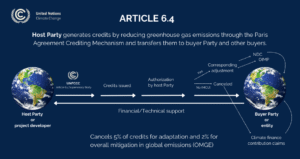
Article 6.4, also known as the Paris Agreement Crediting Mechanism (PACM), aims to build a global market where countries can trade verified emission reductions. It replaces the old Clean Development Mechanism (CDM) from the Kyoto Protocol, which registered more than 7,800 projects between 2006 and 2020. This new system makes sure carbon credits come from real and measurable emission cuts.

The UNFCCC Supervisory Body met in mid-October 2025 to review new market methods. Their approval of the first one marks a major step for climate finance projects around the world.

The first approved method supports waste sector methodology, specifically the methodology for flaring or the use of landfill gas. Meanwhile, the renewable electricity methodology is still under development by the MEP.

The International Energy Agency (IEA) says renewable energy in developing economies must triple by 2030 to reach global net-zero goals.

What Article 6.4 Means

Article 6.4 is part of the Paris Agreementโ€™s cooperation plan. It lets one country fund emission reduction projects in another country and count those reductions toward its own climate goals. The system aims to:

  • Stop double-counting of emission reductions.
  • Improve transparency through strict monitoring.
  • Build trust between developing and developed nations.ย 
article 6.4 PACM
Source: UNFCCC

This system will help countries meet their Nationally Determined Contributions (NDCs) faster. The World Bank estimates that NDC cooperation could cut up to 5 billion tonnes of emissions annually by 2030. It could also unlock around $250 billion in climate finance each year, giving investors a clear way to support credible carbon projects.

At COP29 in Baku, world governments agreed on a new global climate finance goal for after 2025. They pledged to scale up funding for developing countries to at least $1.3 trillion per year by 2035 from public and private sources.

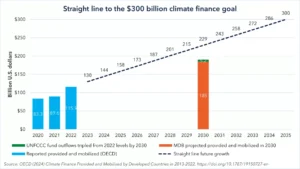
Developed nations will lead by mobilizing $300 billion annually, expanding on the earlier $100 billion target. The agreement allows developing countries to count their own contributions voluntarily. It also includes all multilateral development bank (MDB) climate finance. This aligns with expert estimates that developing nations need $3.1โ€“3.5 trillion yearly by 2035 to meet climate investment and adaptation goals.

300 billion climate finance goal
Source: NRDC

From Rules to Real Markets

Until now, discussions around Article 6.4 have focused mainly on rules and design. The panelโ€™s decision moves the system from theory to action. It shows that global carbon trading is ready to begin.

Experts predict global demand for carbon credits could reach 2 billion tonnes by 2030, and as high as 13 billion tonnes by 2050. The UN wants to make sure only verified, high-quality credits enter this fast-growing market.

Developing nations stand to benefit the most. Many have strong potential for renewable energy, reforestation, and methane reduction projects. Africa alone could supply up to 30% of the worldโ€™s high-quality carbon credits by 2030. These projects could create billions in new revenue for clean growth.

The new methodology allows these projects to earn credits that can be sold internationally, helping communities build clean energy and adapt to climate change.

Ensuring Integrity and Transparency

Old carbon markets faced criticism for weak integrity and unclear reporting. Article 6.4 aims to fix that. Every project must pass strict checks by independent auditors before earning credits. Credits will only be issued if real emission cuts are proven.

The Supervisory Bodyโ€™s framework includes steps for:

  • Setting clear baselines for emissions.
  • Measuring reductions over time.
  • Monitoring performance using standard tools.

This process will help rebuild trust and attract new investors. Each credit will have a digital record, allowing buyers to trace where it came from and what impact it had.

Countries and companies with net-zero targets will finally have a credible tool to meet their goals. Over 160 nations now have net-zero pledges. Around 60% of global companies already use or plan to use carbon credits to reach their climate goals.

How Business and Finance Are Responding

The approval of the first methodology will draw major interest from the energy and finance sectors. Many firms have been waiting for a reliable, UN-backed system.

The voluntary carbon market was worth about $2 billion in 2023, according to McKinsey. It could grow to more than $100 billion by 2030 as Article 6.4 trading begins. The new system will also pressure companies to buy only verified and transparent credits, cutting down on โ€œgreenwashing.โ€

voluntary carbon credit demand growth
Source: McKinsey & Company

Regional exchanges and carbon registries are preparing to include Article 6.4 credits once the market launches. Exchanges in Asia, Europe, and Latin America are already aligning with UN rules. This will help stabilize global carbon prices, which currently range from under $5 per tonne in voluntary markets to more than $90 per tonne in the EU system.

More stable prices could encourage long-term investments in clean energy and climate projects. Experts expect Article 6.4 credits to trade at a premium once investors recognize their higher quality.

ESG and Environmental Impact

The new UN system supports Environmental, Social, and Governance (ESG) goals worldwide. Companies that buy Article 6.4 credits can cut their carbon footprint while funding sustainable projects in vulnerable regions.

Renewable energy projects such as solar and wind farms in Africa and Asia create jobs, cleaner air, and better access to power. The International Renewable Energy Agency (IRENA) reports that renewable energy jobs reached 13.7 million in 2024, with strong growth expected in developing countries. These social benefits align with the UN Sustainable Development Goals (SDGs) for clean energy and climate action.

With stronger oversight, the UN aims to stop misuse and deliver real results. As carbon markets expand, credit integrity will define success. A 2024 studyย found that up to 40% of older offset credits lacked verifiable emission savings. Article 6.4 aims to close that gap.

Toward a Fair, Transparent, and Unified Carbon Future

Challenges remain before the new system reaches full scale. The next step is to approve more methods for areas like forestry, agriculture, and industry. These sectors are complex and need careful rules to avoid overstating emission cuts.

Negotiations between countries will also continue. Some worry that carbon trading may let others delay domestic cuts. Others believe it will open new funding for clean energy and climate adaptation.

The UN says developing countries will need about $4.3 trillion each year by 2030 to meet climate and energy goals. Article 6.4 could help fill that funding gap.

The Supervisory Body will meet again before COP30 in Belรฉm, Brazil, where it may approve more methodologies. They willย meet virtuallyย between 29 to 30 October to consider the methodology and the associated public input received. Governments and investors are watching closely as the system expands.

The UN system promises a fair and transparent market for everyone. As carbon prices become more consistent, the focus will shift to ensuring projects deliver real benefits for people and the planet.

TSMC Posts Record Q3 2025 Earnings as AI Chip Demand Soars 39% and Sustainability Strengthens

Taiwan Semiconductor Manufacturing Company (TSMC), the worldโ€™s largest contract chipmaker, reported record results in the third quarter of 2025. Driven by soaring demand for artificial intelligence (AI) chips, the companyโ€™s profit jumped 39% year-on-year to NT$452.3 billion ($14.77 billion).

Revenue rose 30.3% to NT$989.9 billion ($33.1 billion), beating analyst forecasts and setting a new quarterly record. TSMC’s strong performance shows that it is the backbone of global AI and high-performance computing.

Chief Executive C.C. Wei said AI demand is growing faster than expected, noting:ย 

“AI demand continues to be very strong โ€” stronger than we thought three months ago.โ€ย 

TSMC raised its 2025 revenue growth forecast to the mid-30% range. This shows confidence that the AI boom will stay strong in the coming years. How about the company’s sustainability and net zero aims? Let’s find out.ย 

AI and HPC Fuel Record-Breaking Quarter

tsmc profit and revenue growth

The main growth driver came from high-performance computing (HPC), which includes AI, 5G, and data center chips. This segment made up 57% of TSMCโ€™s total quarterly sales. It shows how AI infrastructure spending is changing the semiconductor market.

Most of TSMCโ€™s production now focuses on its most advanced technologies:

  • 3-nanometer chips: 23% of total wafer revenue
  • 5-nanometer chips: 37%
  • 7-nanometer chips: 14%

Together, these advanced nodes made up 74% of total wafer sales. Smaller and more efficient chips are key for training AI models. They also power cloud computing and support next-gen mobile devices.

TSMC supplies chips to many of the worldโ€™s biggest tech firms, including NVIDIA, Apple, and AMD. Each company is growing its data center capacity. They need this to support AI systems that use thousands of processors. These processors must run all day and night.

Industry analysts estimate that global AI infrastructure spending will exceed $1 trillion within the next few years. McKinsey estimates companies will cumulatively invest $5.2 trillion into AI-related data center capacity by 2030. As the leading manufacturer of advanced AI chips, TSMC is positioned to capture a major share of that investment.

investments for AI-related data center capacity 2030

TSMCโ€™s share price has surged nearly 48% year-to-date, reaching around $298 per share in late October 2025. The stock briefly hit a high of $311, marking its strongest performance in over two years.

Investor optimism is rising. This is due to record profits, strong demand for AI chips, and growing global manufacturing capacity. The chart shows steady growth since April. That’s when AI infrastructure spending picked up among major clients like Nvidia and Apple.
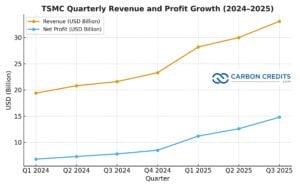
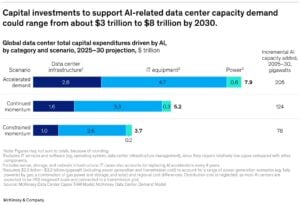
TSMC stock price

Record Expansion Amid Global Competition

TSMC is investing heavily to keep up with soaring demand. The company increased its 2025 capital expenditure to $40โ€“42 billion, slightly higher than previous guidance. Much of this spending supports expansion in both Taiwan and the United States.

The chipmaker is already building two major factories in Arizona, part of a long-term plan to invest over $100 billion in U.S. manufacturing. These sites will produce advanced 3- and 4-nanometer chips for American customers such as Apple and NVIDIA.

This expansion also helps TSMC reduce geopolitical risks amid U.S.โ€“China trade tensions. The company is confident in its Chinese business. However, it is diversifying production. This helps protect against possible export restrictions or tariff changes.

TSMCโ€™s strong performance has boosted its stock price significantly. Shares have gained about 38% year-to-date, reaching record highs as investors bet on sustained growth from AI and high-performance computing.

Managing Challenges in a Shifting Global Landscape

Despite its success, TSMC faces several headwinds. The global semiconductor supply chain remains fragile, with persistent material shortages and high equipment costs. Rising labor expenses in the United States could also affect profit margins for new facilities.

In addition, competition is intensifying. Samsung Electronics and Intel are making advanced 2-nanometer chips. They want to compete directly with TSMC. Each is seeking partnerships with major tech companies to secure long-term contracts.

Still, TSMC maintains a strong technological lead. Its 3-nanometer process is already in mass production, while its 2-nanometer chips are expected to enter commercial use in 2026. These chips provide better performance and use less power. This is crucial for AI workloads that run non-stop in data centers.

TSMCโ€™s Net-Zero Push Strengthens Its Global Reputation

Beyond financial results, TSMC is also expanding its efforts to reduce environmental impact. Making computer chips uses a lot of energy. Between 2015 and 2023, the industryโ€™s power use more than doubled โ€” from about 58,000 GWh to 131,000 GWh.

Some chip factories use as much electricity as a small town. In 2024, chip production emitted about 185 million metric tons of COโ‚‚ equivalent from making integrated circuits. The entire semiconductor sector’s emissions were close to 500 million metric tons COโ‚‚e. This accounts for about 0.5% to 1.3% of global carbon emissions. This shows a mix of growing industry output and continuing efficiency gains.

semiconductor industry carbon emissions
Source: Interface

Because of this, many chipmakers plan to reach net-zero emissions by 2040 to 2050. They are also switching to renewable energy and improving efficiency to lower their environmental impact.

tsmc emissions
Source: TSMC

TSMC is switching to cleaner and more efficient methods. Key sustainability goals and actions include:

  • Net-zero emissions by 2050: TSMC has pledged to reach full carbon neutrality across its operations.
  • Renewable energy target: The company aims to use 100% renewable electricity by 2040.
  • Energy efficiency improvements: Over the past five years, TSMC has cut energy intensity by about 15%, according to its latest ESG report.
  • Water recycling: Its plants now recycle more than 85% of water used in production, a vital step in water-scarce regions like southern Taiwan.
  • Supplier collaboration: TSMC works with its global partners to develop low-carbon manufacturing materials and reduce waste.

The company is on the Dow Jones Sustainability Indices and the CDP Climate Change A List. This shows its leadership in corporate climate action.

TSMCโ€™s environmental strategy also aligns with customer expectations. Many of its clients, like Apple, NVIDIA, and AMD, aim for net-zero. They prefer suppliers who can show clear carbon reductions. This alignment helps the company secure long-term contracts while supporting the broader clean energy transition in tech manufacturing.

The Future: AI Chips and Green Tech Shape the Next Decade

The global semiconductor industry continues to expand rapidly, fueled by AI, electric vehicles, and digital infrastructure. According to the World Semiconductor Trade Statistics (WSTS) organization, worldwide chip sales could grow 15.4% in 2025, reaching nearly US $728 billion.

For TSMC, most of that growth will come from:

  • AI and data-center chips used in training large language models.
  • Automotive semiconductors for self-driving and electric vehicles.
  • 5G and IoT technologies, which connect billions of smart devices.

As more countries invest in digital and AI ecosystems, the need for efficient, low-carbon chip production will rise. TSMCโ€™s focus on sustainability gives it a competitive edge as a responsible manufacturer adapting to global climate goals.

By 2030, analysts expect AI chips to make up more than 25% of TSMCโ€™s total revenue, compared with less than 10% in 2020. The combination of strong AI demand, ongoing capacity expansion, and environmental innovation positions TSMC to remain the worldโ€™s leading semiconductor foundry well into the next decade.

TSMCโ€™s record-breaking third-quarter profit confirms its role at the center of the global AI revolution. With AI and high-performance computing driving over half its sales, the company is expanding aggressively while balancing sustainability goals.