

TotalEnergies has approved a $1.2 billion investment in a large wind and battery project in Kazakhstan. The project moves ahead even with ongoing legal disputes in the country.
The project is called the Mirny wind farm. It is one of the largest renewable energy projects in Central Asia. It will combine 1 gigawatt (GW) of wind capacity with a 600 megawatt-hour (MWh) battery storage system.
The system will help store electricity when wind production is high and will release power when demand is high.
Olivier Jouny, SVP Renewables at TotalEnergies, stated:
“We are delighted to launch one of Kazakhstan’s largest renewable energy initiatives to date, thereby contributing to the country’s target of increasing the share of renewables in electricity generation to 15% by 2030…This 1 GW onshore wind farm will also contribute to the 9 GW renewables portfolio that we are combining with Masdar through a 50/50 joint venture across nine Asian countries, including Kazakhstan.”
Mirny Project Unpacked: Wind Power Meets Grid-Scale Battery Storage
Once completed, the project is expected to supply electricity for around 1 million people. It is also expected to generate about 100 terawatt-hours (TWh) over 25 years. Full operation is targeted for 2029.
However, TotalEnergies is still involved in legal disputes in Kazakhstan’s oil sector. These include a $4.6 billion environmental fine linked to the Kashagan oilfield. There are also disagreements over costs and contracts.
This creates a mixed picture. The energy giant is expanding clean energy while still facing fossil fuel-related legal risks.
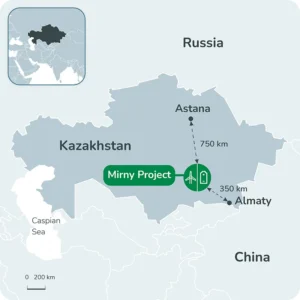
The Mirny wind project is built through a joint structure. TotalEnergies owns 60% of the project. Kazakhstan’s state companies Samruk Energy and KazMunayGas each hold 20%.
The project is also backed by global financing. Around 75% of the total cost will come from external lenders, including development banks and commercial banks.
One key supporter is the European Bank for Reconstruction and Development (EBRD). This reflects a wider trend where multilateral banks support renewable energy growth in emerging markets.
The electricity will be sold under a 25-year power purchase agreement (PPA). This long-term contract reduces market risk and stabilizes revenue. Such structures are now common in large renewable projects. They help reduce upfront risk for developers.
Legal Clouds Over Oil, Clean Energy Rising in Parallel
However, TotalEnergies’ expansion in Kazakhstan is not without risk. The company is still linked to major disputes in the oil and gas sector.
The most notable is a $4.6 billion environmental penalty tied to operations at the Kashagan oilfield. There are also disagreements over cost recovery and investment terms with partners.
These disputes matter for investors. They show that even large energy companies face legal and financial uncertainty in resource-heavy markets. Some global oil companies have slowed investment in similar regions due to regulatory risks. Others have restructured their portfolios to reduce exposure.
TotalEnergies, however, continues to invest in both fossil fuel operations and renewable projects at the same time. This dual strategy reflects a transition phase in the global energy sector.
- SEE MORE: TotalEnergies and Masdar’s $2.2 Billion Deal Signals a Big Push into Asia’s Renewable Energy Boom
Kazakhstan’s Energy Crossroads: Oil Giant, Renewable Future
Kazakhstan plays an important role in global energy markets. The country is one of the largest oil producers in Central Asia. Oil and gas still dominate its energy mix and export revenues. Energy exports are a major source of national income.
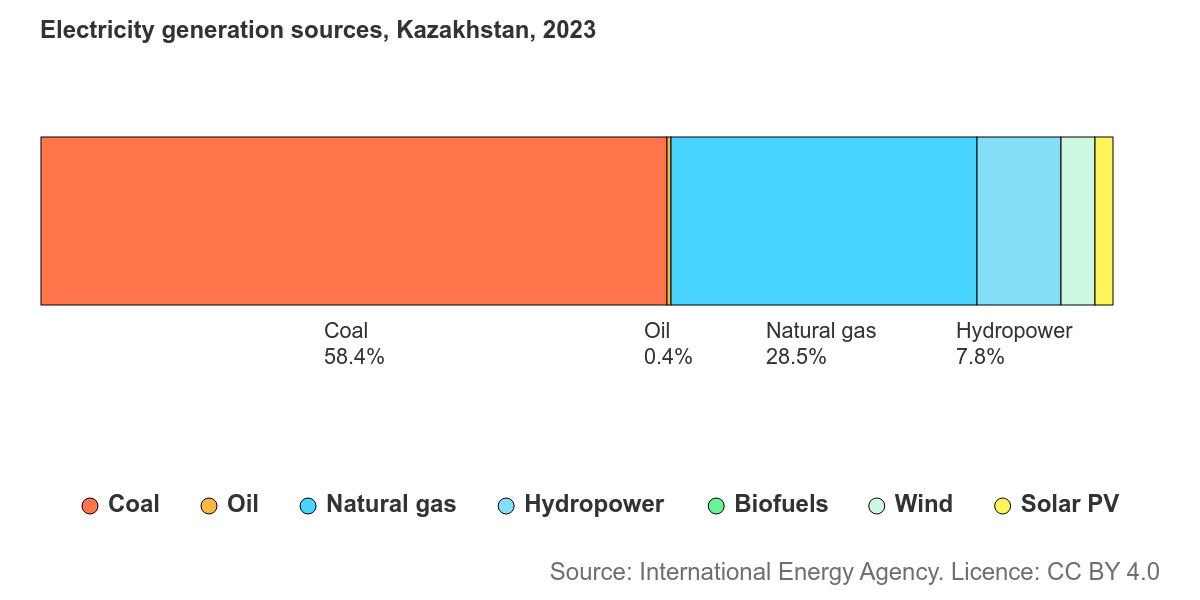
At the same time, Kazakhstan is trying to expand renewable energy. The government has set a target to reach 15% renewable electricity share by 2030. It currently relies heavily on coal, which still generates a large share of electricity.
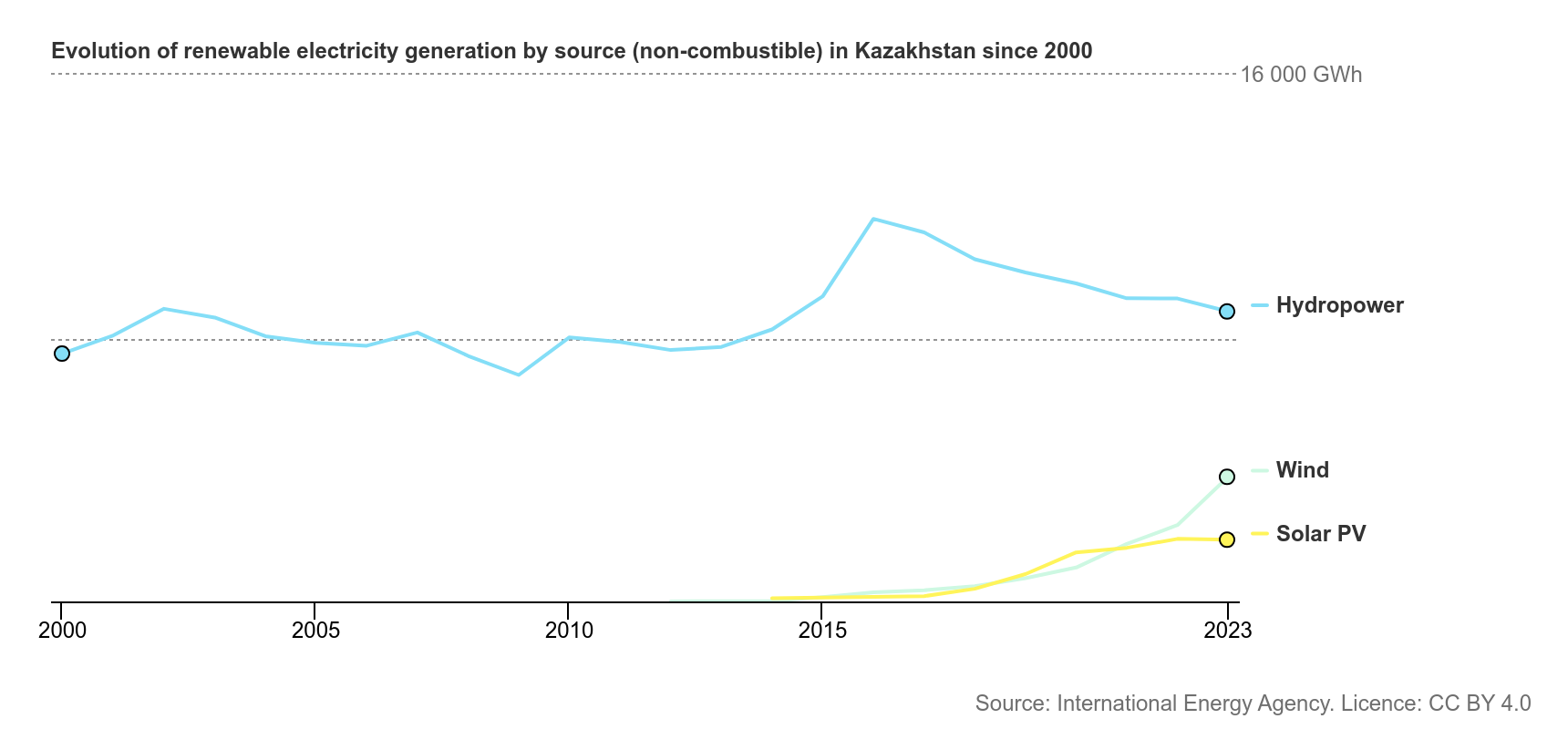
Kazakhstan has strong wind resources, especially in the central and southern regions. Average wind speeds in some areas make it suitable for large-scale wind farms. The share of wind in electricity generation has been increasing, as shown below.
The country also faces growing electricity demand. Industrial growth and urban expansion are increasing pressure on the power grid. This creates a need for new capacity. Renewable energy is seen as one way to meet future demand while reducing emissions.
International companies are increasingly active in this transition. Projects like Mirny are part of Kazakhstan’s strategy to attract foreign investment into clean energy infrastructure.
However, challenges remain. The grid still depends on older fossil fuel systems. Integration of wind and solar requires upgrades in transmission and storage. This makes hybrid projects, like wind plus battery storage, more important for stability.
Global Energy Shift Drives Renewable Expansion
The Kazakhstan project reflects a wider global energy shift. Renewable energy capacity is expanding rapidly worldwide. The International Energy Agency (IEA) reports that wind and solar are leading new power generation growth across many regions.
Similarly, Ember recently reported that renewable and clean power overtook fossil fuels in 2025.
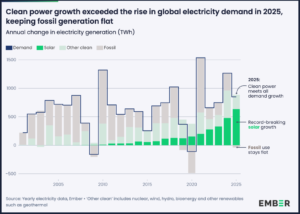
Governments are also tightening climate policies. Many countries now require companies to report emissions and reduce carbon intensity.
The European Union, the United States, China, and Japan are all strengthening clean energy and disclosure rules. This is increasing pressure on global energy firms.
In emerging markets, renewable energy is also linked to economic development. It helps improve energy access and reduce dependence on imported fuels.
Kazakhstan is part of this global trend. It is trying to attract foreign capital while modernizing its energy system. For the oil giant, it impacts its decarbonization journey.
TotalEnergies’ Net Zero Strategy and Energy Transition Plan
TotalEnergies has a long-term climate strategy. The company targets net zero emissions by 2050 across its operations and energy products.
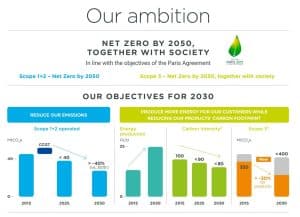
It is also expanding its electricity business. This includes solar, wind, and battery storage projects worldwide. Key targets include:
- Reaching 100 GW of renewable capacity by 2030,
- Producing more than 100 TWh of electricity annually by 2030, and
- Expanding low-carbon power and integrated energy systems.
All these help reduce the company’s GHG emissions in 2025 compared to the prior year.
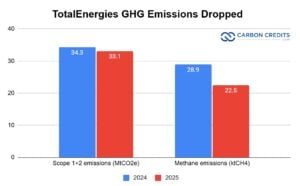
As of recent reporting, TotalEnergies operates over 30 GW of renewable capacity globally. This makes it one of the largest renewable investors among traditional oil companies.
The Kazakhstan wind farm supports this strategy. It combines generation and storage at scale. This improves grid reliability and supports the long-term decarbonization goals of the oil major.
Balancing Growth, Risk, and Energy Transition
The Mirny project shows the complexity of today’s energy transition.
On one side, there is a strong demand for renewable energy investment. On the other hand, legal and political risks remain in fossil fuel-linked economies.
Companies like TotalEnergies are managing both sides at once. They continue oil and gas operations while expanding renewable energy portfolios. This balance is not simple. Legal disputes, financing risks, and regulatory changes all affect project timelines.
Still, large hybrid projects are becoming more common. They combine wind, solar, and battery storage to improve stability.
As global energy demand rises, projects like Mirny will likely play a larger role in emerging markets. They show how energy companies are adapting to both climate pressure and economic realities at the same time.