

The U.S. Environmental Protection Agency (EPA) plans to cancel $7 billion in solar energy grants, according to official sources. These grants were given to states, tribes, and nonprofits through the Solar for All program. This program, made possible by the Inflation Reduction Act (IRA), helps low- and moderate-income families access clean energy. It supports rooftop and community solar installations.
The EPA said it is preparing formal notices to 60 recipients, informing them that their contracts may be revoked. The “Solar for All” program aimed to help solar installations in communities that have been underserved.
Many grant recipients had signed contracts and started their projects when the EPA froze the funds earlier this year. Now, these organizations worry about getting the support they were promised.
The move is part of the Trump administration’s effort to rethink or cancel some climate programs set up during Biden’s presidency. According to officials, the EPA is reviewing whether the “Solar for All” grants were issued in compliance with federal rules. Still, critics warn this change might hurt clean energy growth and access in struggling areas.
Sunset Before Sunrise: Projects Stalled Midway
Before the freeze, the Solar for All program was expected to help install solar systems for up to 900,000 households. The grants aimed to lower electricity bills for families by up to 20%. They also sought to boost energy reliability and create jobs in clean energy.
Some grant recipients, like tribal governments, state energy offices, and local nonprofits, started using the funds. They hired workers, planned construction, and designed outreach programs. These early actions relied on signed contracts, meaning many projects had legal and financial commitments.
With the EPA’s proposed cancellation, these efforts may now be on hold or completely abandoned. Community groups say some residents who signed up for solar panels are unsure about their installation status. Others say job training programs funded by the grants may lose momentum just as they were gaining interest.
Nonprofit legal groups and state attorneys general are looking into legal action to stop the cancellation. Some say that stopping the grants might break the Administrative Procedure Act. They believe this could also mess with the separation of powers in the U.S. Constitution, since the grants were part of an approved federal budget.
Boom Meets Policy Headwinds: Can Solar Keep Rising?
The U.S. solar industry remains one of the fastest-growing parts of the energy sector. In early 2025, the country added 10.8 gigawatts (GW) of new solar capacity—the fourth-highest quarterly total ever recorded.
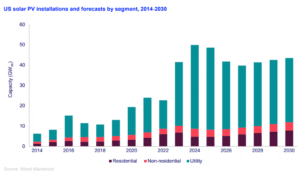
Moreover, solar makes up about two-thirds of all new power generation capacity in the United States. Solar projects are on the rise. California, Texas, and New York are leading in residential, commercial, and utility-scale installations.
However, experts warn that policy reversals like the EPA’s could harm this momentum. Community solar, especially in low-income areas, depends on public funding and federal incentives to thrive. Without grants like Solar for All, many developers may choose not to build projects in these areas due to cost and risk.
A report from the Solar Energy Industries Association (SEIA) found that solar deployment might drop 23% below expected growth by 2030. This could happen if tax credits and clean energy programs are removed.
- This includes the risk of losing up to 54 GW of planned capacity, affecting both grid reliability and job creation.
As demand for electricity rises due to data centers, electric vehicles, and AI, losing clean energy growth may lead to more reliance on fossil fuels.
Equity in the Dark: Who Loses When Solar Stops?
The Solar for All initiative was created not just to promote clean energy, but also to reduce energy poverty. Many of the households targeted by the program pay a large share of their income on electricity.
Solar power can lower bills and also offer backup power during emergencies. Plus, it improves indoor air quality by cutting down on gas appliances.
The program also supported energy justice goals by prioritizing tribal communities, rural areas, and urban neighborhoods most affected by pollution. It aimed to support battery storage, job training centers, and workforce programs. This would focus on areas with high unemployment or limited clean energy projects.
Canceling the program could increase the energy gap. Wealthy communities can afford rooftop solar, but many others cannot. It could also slow down organizations that were finally making progress after years of struggling to fund small clean energy projects.
What Comes Next for Clean Energy Grants?
At the time of this writing, the EPA has not yet finalized the cancellations, but plans to do so in the coming weeks. In the meantime, legal challenges are expected to move through the courts. Some judges have blocked parts of the climate funding freeze. More rulings may decide if the Solar for All grants should be honored.
The U.S. solar industry is still strong. However, changes in federal funding policies may impact where and how quickly future projects happen. Developers might move to larger commercial and utility-scale projects in more profitable areas. This shift could neglect the community solar market, which programs like Solar for All have supported.
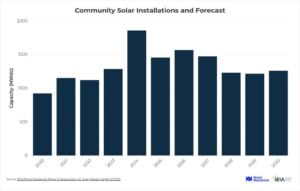
In 2024, the U.S. community solar market added 1.745 GWdc, the largest-ever annual total—a 35% increase over 2023. Growth was led by states like New York, Maine, and Illinois, with New York adding 861 MWdc, up 66% year-over-year.
However, the Q2 2025 SEIA/Wood Mackenzie report predicts a 22% drop in community solar installations for 2025. This decline is due to policy uncertainty and backlog issues. Still, the longer-term outlook is cautious yet hopeful.
Despite the setback, many local groups and clean energy advocates like Powerbank (formerly Solarbank) remain committed to expanding access. They hope funding will come back. If not, they want state incentives or private financing to help fill the gap. Still, the EPA’s decision marks a key moment for federal support of clean energy in low-income communities.
The EPA’s proposed cancellation of $7 billion in solar grants highlights the tension between climate goals and political shifts. While the solar market is growing, policy uncertainty creates risks. This is especially true for low-income households that need government help to access clean energy.
The courts may either allow the grants to move forward or uphold the cancellation. This shows that clean energy success relies heavily on stable policies, clear laws, and long-term commitment.