

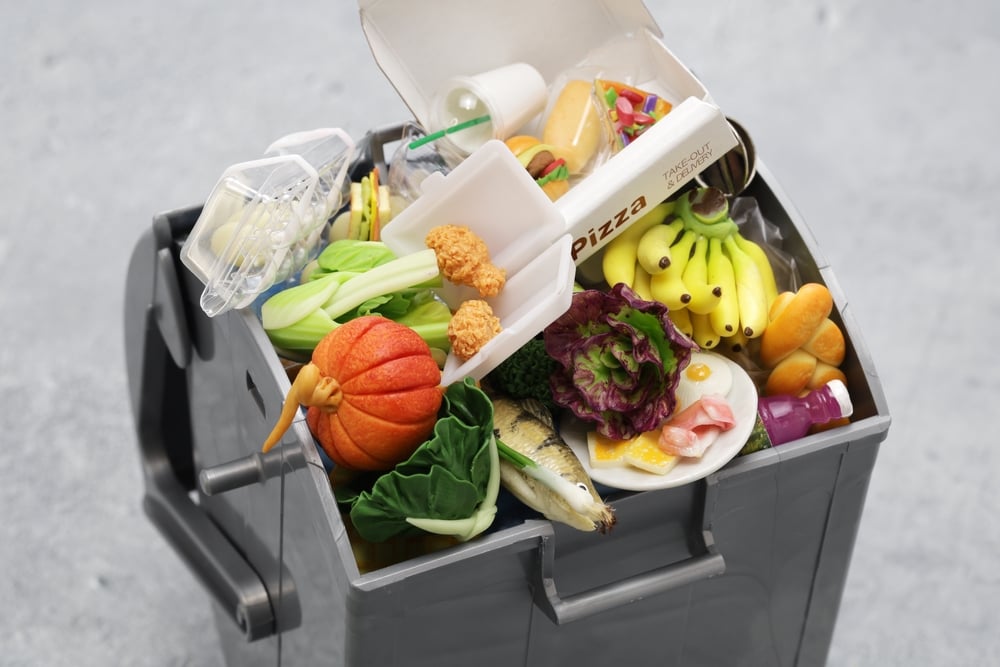
Food waste is becoming one of the world’s biggest environmental and social challenges. Millions of tons of edible food are thrown away every year, while millions of people still struggle with hunger. At the same time, wasted food releases harmful greenhouse gases that worsen climate change.
Now, Verra has registered the first project under its food loss and waste methodology, called VM0046, in the United States. The project, known as the Brightly – Reducing Food Loss and Waste Project (Verra Project 4711), aims to rescue edible surplus food before it reaches landfills. Instead of being discarded, the food is redirected to nonprofit food rescue organizations that distribute it to people in need.
The initiative highlights how carbon markets can support both climate action and food security at the same time.
Why Food Waste Matters
According to the United Nations Environment Programme (UNEP), Food loss and waste account for nearly 8% to 10% of global greenhouse gas emissions. This is a major climate issue because food that ends up in landfills produces methane, a greenhouse gas far more powerful than carbon dioxide over the short term.
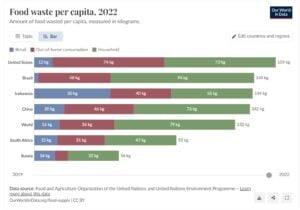
Significantly, around 1.05 billion tons of food were wasted globally in 2022. At the same time, nearly 783 million people faced hunger, while about one-third of the global population experienced food insecurity.
The United States is also one of the world’s largest generators of food waste. Experts estimate that nearly one-third of food meant for human consumption in the country is lost or wasted.
When food is wasted, the damage goes beyond the food itself. All the resources used to produce and deliver that food are wasted, too. This includes:
- Water used in farming
- Energy for processing and refrigeration
- Fuel for transportation
- Agricultural land
- Labor and packaging materials
As a result, food waste creates an enormous environmental and economic burden. Globally, the financial cost of food loss and waste is estimated at nearly $1 trillion every year.
How the Brightly Project Works
The Brightly project focuses on keeping edible food within the human food system instead of sending it to landfills.
Under the seven-year crediting period from 2020 to 2027, the project is expected to help rescue around 167 million pounds of food. It is also projected to generate nearly 115,118 tonnes of carbon dioxide equivalent (CO2e) emission reductions.
The project works closely with nonprofit food rescue organizations. These groups collect surplus food from businesses, retailers, and suppliers before the food becomes waste. The rescued food is then redistributed to communities facing food insecurity.
This process prevents methane emissions that would normally occur if the food decomposed in landfills.
The project uses Verra’s VM0046 Methodology for Reducing Food Loss and Waste to calculate avoided greenhouse gas emissions. The methodology allows projects to generate verified carbon credits based on measurable climate benefits.
These carbon credits can provide funding for food rescue operations, helping organizations expand their reach and improve food distribution systems.
Mandy Rambharos, CEO, Verra, said:
Understanding the Project Boundary
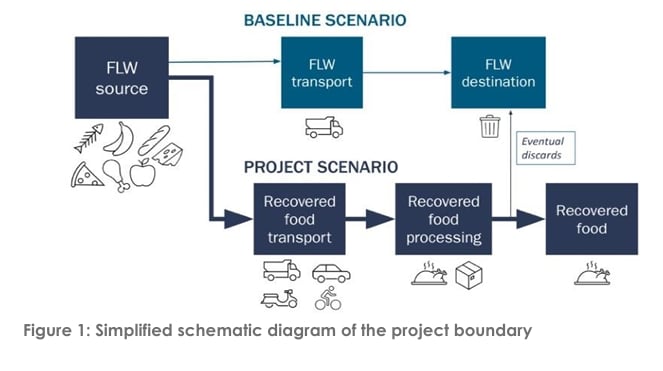
Verra’s methodology clearly defines how emissions are measured within the project boundary.
The project boundary includes areas where:
- Food waste is generated
- The baseline disposal sites are located
- The recovered food is distributed or consumed
The baseline scenario assumes that surplus food would normally be discarded and sent to food loss and waste destinations such as landfills.
Baseline Emissions
The largest baseline emissions come from the disposal and treatment of food waste at landfill sites. Methane emissions from decomposing food are a major part of these calculations.
In some cases, emissions from transporting food waste to disposal facilities may also be included if proper evidence and data are available.
- READ MORE: The Power of Plastic Credits: How Verra’s Waste Reduction Program Can End Global Plastic Pollution
Project Emissions
The project must also account for emissions linked to food recovery activities. These include:
- Transportation of rescued food
- Packaging and processing
- Storage and refrigeration
- Distribution activities
Any additional emissions created by project operations are included in the calculations.
The methodology also considers possible leakage emissions. For example, if recovered food is later discarded or if waste treatment systems are affected by reduced food disposal volumes, those impacts must also be measured.
However, emissions that remain the same in both the project and baseline scenarios are excluded. These may include cooking, digestion, or household refrigeration activities.
Food Rescue and Climate Action
Food rescue organizations are now being recognized as important contributors to climate solutions.
Traditionally, these groups were mainly viewed as charities working to reduce hunger. But projects like Brightly show they also play a major role in reducing greenhouse gas emissions.
By diverting edible food away from landfills, these organizations help slow methane emissions while supporting vulnerable communities.
The growing link between food waste and climate change is receiving more global attention. Extreme weather events, droughts, floods, and supply chain disruptions are already affecting agriculture and food systems worldwide.
Reducing food loss and waste can therefore improve both climate resilience and food security.
Global Push to Cut Food Waste
International organizations are increasingly calling for stronger policies to reduce food waste.
The United Nations’ International Day of Awareness of Food Loss and Waste recently highlighted how cutting food waste can help countries meet climate goals and Sustainable Development Goals (SDGs).
The Food and Agriculture Organization estimates that about 13% of the world’s food is lost during supply chain operations before reaching consumers. Meanwhile, another 19% is wasted at the retail, food service, and household levels.
These figures show that food waste happens throughout the entire supply chain.
Experts say governments need stronger policies, better monitoring systems, improved infrastructure, and more investment in technology to tackle the issue effectively.
Here’s an informational video on this subject:
Carbon Markets Support Food Security
The Brightly project also demonstrates how carbon markets can support social impact alongside emissions reduction.
Revenue generated through carbon credits can help food rescue organizations improve logistics, transportation, storage, and food distribution networks.
This creates a financial incentive to recover edible food rather than discard it.
Verra’s methodology offers a structured way to measure these climate benefits with transparency and accountability. Supporters believe such projects could encourage more investment in food recovery programs globally.
As countries prepare new national climate plans, also called nationally determined contributions (NDCs), food waste reduction is expected to become a more important part of climate policy.
Reducing food loss and waste delivers multiple benefits at once. It lowers emissions, saves resources, supports vulnerable communities, and strengthens food systems. Projects like Brightly show that climate action and social impact can work together through innovative carbon market solutions.