


The global carbon market received a strong signal after the International Civil Aviation Organization (ICAO) Technical Advisory Board approved carbon credits under Verra’s VM0051 methodology for use in the Carbon Offsetting and Reduction Scheme for International Aviation.
This decision brings rice methane reduction projects into a major aviation compliance market. It also opens a new demand channel for agricultural carbon credits, especially for airlines seeking eligible offsets.
The move shows growing recognition that agricultural methane cuts can play a bigger role in global climate goals. It also strengthens the position of rice projects, which have long faced challenges in carbon finance.
VM0051, launched in early 2025, supports improved water and crop management in rice farming. It helps reduce greenhouse gas emissions while improving water use, farm efficiency, and farmer benefits.
With CORSIA eligibility now confirmed, rice carbon credits may emerge as a stronger and more mainstream carbon market asset.
Rice Farming Moves Closer to Mainstream Carbon Markets
Rice production has long carried a large climate footprint. Flooded rice fields release methane, one of the most potent greenhouse gases.
- According to the Intergovernmental Panel on Climate Change, rice paddies emit around 60 million metric tons of methane every year, accounting for roughly 10% to 12% of global methane emissions.
Most of these emissions come from Asia, where rice remains central to food systems and rural economies. At the same time, rising food demand could push emissions even higher in the coming decades.
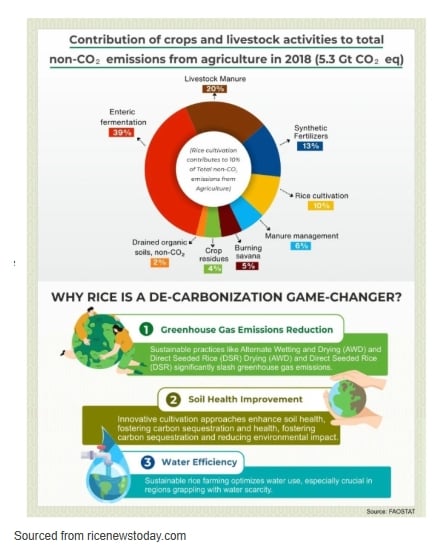
This created a clear need for scalable solutions, yet carbon finance in rice remained limited for years. But VM0051 aims to change this.
The methodology allows project developers to reduce emissions through improved water and crop management. Farmers can adopt practices such as alternate wetting and drying, better nitrogen management, shorter cultivation cycles, and lower-emission rice varieties. Some projects may also use innovative approaches, such as methanotrophic bacteria or avoiding residue burning.
These measures cut methane emissions while improving resource efficiency.
CORSIA Expands Demand for Rice Credits
CORSIA eligibility gives these credits a potential compliance buyer base, which changes the commercial outlook significantly. Airlines can use eligible credits to help meet offsetting obligations, provided projects also secure required host country authorization.
This link between aviation and agricultural methane reduction could help move rice carbon projects from a niche activity into a larger market segment.
Inside the New Framework of VM0051
The approval also draws attention to how much the methodology has evolved.
Verra designed VM0051 to replace an older Clean Development Mechanism methodology that was retired in 2023. The newer framework includes stronger safeguards, broader project options, and more rigorous emissions accounting.
- Additionality requirements have been strengthened to show projects go beyond normal farming practices.
- Dynamic baselines help reflect changing weather conditions. The methodology also requires monitoring of methane, nitrous oxide, and carbon dioxide emissions linked to project activities. This broader accounting matters because carbon markets are placing greater weight on integrity.
- Flexible quantification approaches, including biogeochemical models, give developers more options for emissions measurement. Digital MRV tools, including remote sensing and machine learning, can also help improve monitoring and verification.
These features make the methodology more aligned with what today’s market increasingly expects.
- Importantly, VM0051 does more than support methane reduction. It recognizes a broader set of practices, including improved fertilizer management, biochar use, reduced biomass burning, and efficient fossil fuel use in operations.
- Furthermore, projects must also protect against soil organic carbon losses, an important safeguard in agricultural systems. This wider scope can help developers design stronger projects while improving potential emission reductions.
Credit quality remains central to buyer confidence. In a market shaped by growing scrutiny, methodologies with stronger science and stronger controls tend to attract more attention.
Airlines Could Unlock New Demand for Rice Carbon Credits
The biggest market impact may come from demand. CORSIA eligibility often changes the value proposition of a carbon credit. Access to compliance demand can support liquidity, improve price support, and increase buyer interest.
This is where rice credits may benefit, and countries in South and Southeast Asia could become central to this growth story.
The Verra Registry currently includes eight projects using VM0051, with an estimated annual issuance of more than 1.73 million carbon credits. It remains a relatively small supply base compared with larger project categories in the carbon market.
If airlines begin sourcing these credits, developers may have stronger incentives to expand project pipelines, particularly across major rice-growing economies.
Rice Credits Offer More Than Compliance Value
- The appeal goes beyond compliance demand alone. Many buyers increasingly seek credits linked to broader sustainability outcomes. Rice methane projects can offer multiple benefits alongside emissions reductions, including improved water management, lower pollution, and stronger farmer livelihoods.
- Some projects may also support women’s access to training and financial services, adding social value that could strengthen buyer interest.
- These features may help position rice credits not only as compliance instruments but also as attractive assets in the wider voluntary carbon market.
Market participants will also watch whether CORSIA eligibility supports stronger pricing for these credits.
Historically, compliance-linked credits often receive more market attention than credits limited to voluntary demand. If this pattern holds, VM0051 credits could see stronger commercial interest going forward.
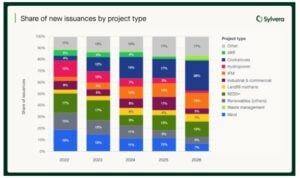
Methane Reduction Gains a Larger Role in Carbon Markets
The approval also fits a larger trend in climate markets. Methane has moved closer to the center of climate strategy. Policymakers, investors, and corporate buyers increasingly view methane reduction as one of the fastest ways to slow warming in the near term.
Thus, this shift has raised interest in projects focused on methane abatement.
Much of this attention has centered on oil and gas, waste, and livestock. Rice cultivation now gains importance because agriculture has often lagged behind other sectors in the carbon market scale.
Forestry, renewable energy, and engineered carbon removal have captured much of the attention. Agricultural methodologies have often faced challenges tied to measurement, fragmentation, and project implementation. And VM0051 significantly addresses some of these barriers through stronger science and digital tools.
The ICAO decision, furthermore, may help reinforce confidence that agriculture can supply credible credits on a larger scale. It may also encourage greater innovation in agricultural carbon methodologies beyond rice.
Developers, registries, and policymakers will likely watch closely to see whether this model expands into broader methane-focused opportunities.
A Turning Point for Rice-Based Carbon Finance
For years, rice carbon credits had strong potential but weak market momentum. Projects faced technical hurdles, limited buyer familiarity, and funding constraints. This approval shifts that outlook.
By adding VM0051 credits to the Carbon Offsetting and Reduction Scheme for International Aviation under the ICAO, a clearer link is created between compliance demand and agricultural methane cuts.
This could accelerate project growth, investment, and adoption of improved rice practices, while pushing agricultural credits closer to mainstream carbon markets.
Future expansion depends on supply, demand, and approvals, but the signal is clear: rice methane credits are entering a larger market phase.