

Shell Plc plans to sell part of its nature-based carbon projects as the carbon offset market, also known as the voluntary carbon market, faces challenges. This move fits into CEO Wael Sawan’s focus on boosting profits with high-return ventures such as fossil fuels. Sawan is shifting away from ventures that don’t offer a strategic advantage, such as offshore wind.
This change shows Shell’s updated strategy and recalibration of its low-carbon commitments. While the company once aimed for big growth in low-carbon projects, it’s now focusing on areas that deliver stronger returns.
Shell’s Carbon Credit Journey: From Green to Greener Profits
Shell launched its nature-based carbon offsets portfolio in 2018, with the goal of generating 120 million carbon credits annually. These credits come from REDD+ projects, which aim to stop deforestation. Each REDD+ credit equals one ton of carbon dioxide emissions avoided.
By 2022, Shell was the world’s largest publicly known buyer of carbon credits, according to BloombergNEF. However, the market has struggled recently.
Spot prices for REDD+ credits have plummeted to an average of $3.60 per credit in 2023, a sharp decline from $12.50 in 2022, according to MSCI Carbon Markets.
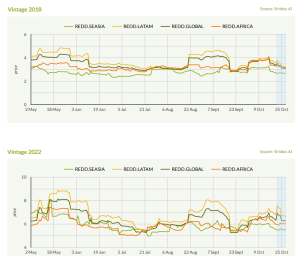
In another carbon pricing data by Viridios AI, REDD+ carbon credit prices for 2018 and 2022 vintages in all regions have been dropping. This price drop reflects reduced demand and skepticism about the environmental benefits of some projects.
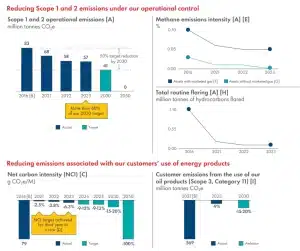
Shell retired 20 million tonnes of carbon offsets in 2023, a significant increase from the 4.1 million tonnes counted in its 2022 net carbon intensity. According to the oil major’s Energy Transition Strategy 2024 report, carbon dioxide emissions from the energy system accounted for nearly 75% of global greenhouse gas emissions in 2023.
Despite this, the company remains committed to reducing emissions from its operations by 50% by 2030, compared to 2016 levels.
Other major corporations and Shell’s industry peers are turning to carbon credits to offset their remaining emissions. Projections suggest the voluntary carbon market could soar to $950 billion by 2037, a dramatic rise from its current $2 billion value.
However, Shell faces challenges in sourcing carbon offsets that meet its rigorous quality standards. And under Sawan’s leadership, Shell’s carbon strategy shifted.
Sawan’s Strategic Shift
Sawan became CEO in January 2023 and quickly changed Shell’s approach to carbon projects. Just six months into his role, Shell cut its plan to spend $100 million a year on new carbon credits. This decision was part of Sawan’s strategy to focus more on fossil fuels, moving away from some of the targets set by his predecessor.
The pivot is evident in Shell’s evolving approach to its carbon credit portfolio. Now, Shell is looking to sell some of its carbon projects but plans to keep a minority stake. Talks are underway with private equity firms interested in buying these projects.
The Royal Dutch energy giant is considering different ways to structure the deal. One option is to sell its share in the projects while agreeing to keep buying the credits. Another option is to sell the projects without any commitment to buy credits. However, this second option might make it harder to find buyers.
This move comes as the voluntary carbon market faces changes. In Asia-Pacific, demand for credits that meet specific local regulations is growing.
At the same time, the Integrity Council for the Voluntary Carbon Market is pushing for higher standards. These stricter rules are influencing what buyers want.
What’s Next for Carbon Removal?
As Shell reduces its focus on nature-based carbon projects, it may look into engineered carbon removal technologies. These include direct air capture (DAC), which removes carbon dioxide directly from the air. These technologies offer a more permanent solution for carbon removal, though they remain costly and require significant scaling.
However, many DAC firms are now aligning with strict carbon accounting standards to satisfy buyer and carbon credit exchange requirements.
Kyle Harrison, head of carbon markets at BloombergNEF, expects more companies to move toward these solutions. He noted that:
“The pain point right now is cost and scale – as these improve it will open the door for more companies to adopt these solutions.”
Shell’s decision to sell part of its carbon portfolio marks a shift in its climate strategy. The company is focusing more on profitable ventures and exploring advanced carbon removal technologies. This change reflects the evolving carbon market and could reshape Shell’s role in the energy transition.