

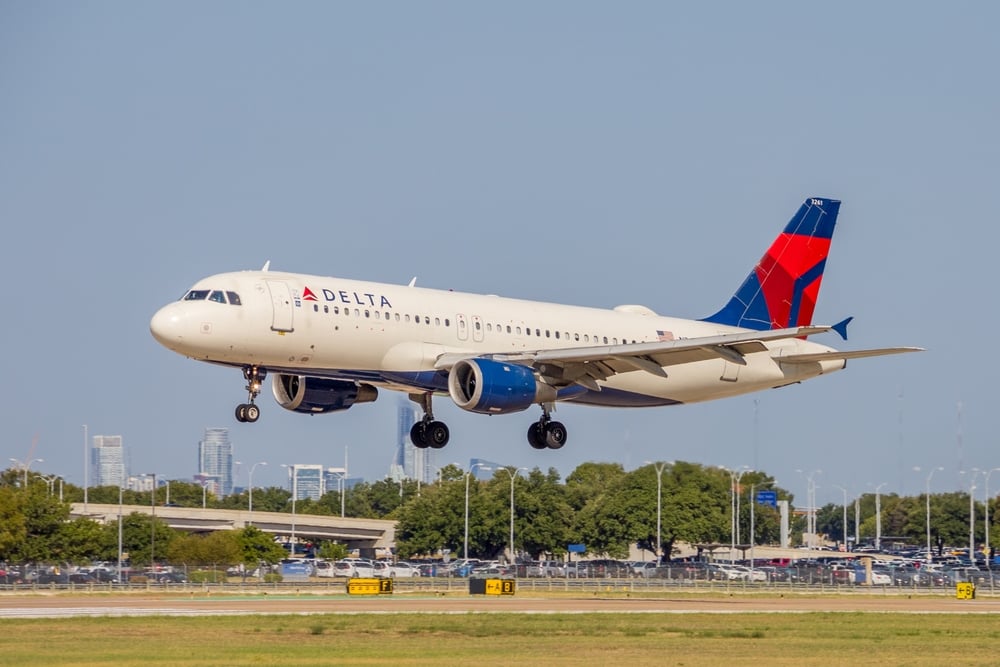
U.S. airline stocks surged sharply, driven by Delta Air Lines’ (NYSE: DAL) exceptionally strong second-quarter earnings. Major carriers like United Airlines (UAL), American Airlines (AAL), Alaska Air Group (ALK), and Southwest Airlines (LUV) saw big gains. This happened after Delta shared its positive financial report and full-year guidance update.
But what about the airline’s environmental and sustainability impact? The company’s net-zero journey shows equally impressive progress.
Delta’s Q2 Performance Sparks Market Optimism
Delta’s stock alone jumped by about 12.5%, making it the top mover of the day. The company reported adjusted earnings per share (EPS) of $2.10, beating analyst forecasts of $2.05–$2.08. Revenue climbed to $15.5 billion, exceeding the expected range of $15.42–$16.41 billion.
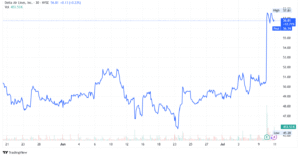
Delta also restored its full-year 2025 guidance, showing management’s confidence. This was important because most major airlines, like Delta, stopped giving forecasts earlier this year. They were worried about global economic instability, especially due to President Trump’s new tariff policies.
Now, Delta expects full-year earnings per share between $5.25 and $6.25, with free cash flow projected to range from $3 billion to $4 billion. These results gave investors a clear signal that the travel sector may be turning a corner.
Sympathy Rally Lifts the Entire Airline Sector
Delta’s upbeat results caused a “sympathy rally.” This is when good news from one company boosts others in the same industry. Here’s how key players performed:
- United Airlines (UAL) surged between 9.4%and 14%, reaching over $89 per share.
- American Airlines (AAL) rose by 7.8% to 13%, closing in on its 200-day moving average.
- Alaska Airlines (ALK) gained nearly 10%, adding more than $5 per share.
- Southwest Airlines (LUV) posted a more modest gain of 2.8% to 3.4%.
This rise shows that investors are more confident now. This comes after a tough start to 2025, which was marked by trade tensions and fluctuating fuel prices.
Analysts liked Delta’s earnings report. They expect United and American Airlines will also do well in their next earnings announcements. Deutsche Bank, among others, forecast continued strong results across the sector.
For investors, these trends suggest that the airline sector may be entering a more stable and profitable phase, following the turbulence of early 2025. But how about the sector’s environmental footprint? Let’s take a closer look at Delta’s sustainability and climate goals.
Delta Airlines: In Route Toward Net Zero
As climate concerns grow and investor pressure mounts, Delta Air Lines has taken firm steps toward its long-term sustainability goals. The company aims to become the first carbon-neutral airline globally and has pledged to reach net-zero emissions by 2050.
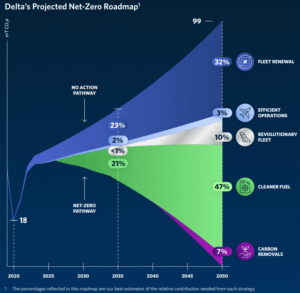
This goal covers three areas: Direct operations (Scope 1), indirect emissions from energy use (Scope 2), and some Scope 3 emissions like upstream fuel production and corporate travel.
Since nearly 90% of its greenhouse gas emissions come from jet fuel, reaching net-zero by 2050 requires Delta to effectively decarbonize its flight operations. The company’s sustainability strategy is designed to support this goal by focusing on:
- What We Fly — transitioning its fleet to more fuel-efficient aircraft
- How We Fly — adopting new technologies, procedures, and other strategies to improve fuel efficiency
- The Fuel We Use — collaborating to scale supply and reduce the cost of SAF
Sustainable Aviation Fuel (SAF): A Key Ingredient
One of Delta’s biggest bets in reducing emissions is sustainable aviation fuel. SAF comes from renewable sources like used cooking oil or plant waste. It can cut lifecycle carbon emissions by up to 80% when compared to traditional jet fuel.
Delta has signed several major SAF purchase agreements, including:
- A long-term agreement with Neste to purchase 10 million gallons of SAF per year.
- A partnership with Gevo, with the potential for 75 million gallons annually starting in 2026.
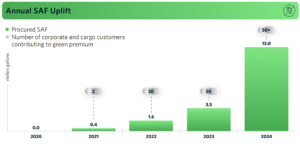
The company’s goal is to replace at least 10% of its conventional jet fuel with SAF by 2030, a target aligned with broader aviation industry goals. Below is the company’s SAF purchases:
Cleaner Planes and Smarter Flying
Delta is also focused on fleet renewal—replacing older planes with newer, more efficient models. The latest Airbus A321neos and A220s offer 20–25% better fuel efficiency per seat, helping lower emissions on each flight.
In addition, Delta uses AI and data analytics to optimize flight routes and reduce fuel burn. The company added lighter seats and cabin materials to cut aircraft weight. It also improved aerodynamics to save energy while flying.
Ground Operations and Renewable Energy
Beyond the skies, Delta is greening its ground operations. So far, the airline has:
- Converted over 25% of its ground service equipment to electric or hybrid.
- Purchased renewable electricity for 100% of its operations at Atlanta’s Hartsfield-Jackson International Airport—Delta’s largest hub.
- Set a goal to electrify 50% of its ground operations by 2025.
Carbon Offsets: A Transitional Tool
While Delta previously announced carbon neutrality starting in 2020, it primarily relied on carbon offset credits to compensate for emissions. These carbon credits supported projects like forest protection and methane capture. In 2022, Delta shifted away from offsets. They decided to focus on reducing actual emissions instead of using compensatory measures.
This move reflects the industry-wide demand for real climate impact and transparency in offset claims. Delta now uses offsets sparingly and only in cases where decarbonization options are limited.
Tracking Progress
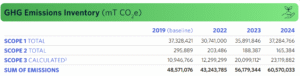
According to Delta’s latest difference report, the company has emitted over 60 million tonnes of CO2e. It has achieved the following progress in cutting its emissions:
- The company cut its Scope 1 emissions intensity by 13% compared to 2019 levels.
- Delta invested $1 billion over 10 years in a long-term climate strategy starting in 2020.
- It avoided 1.7 million metric tons of CO₂ through efficiency improvements and SAF use between 2021 and 2023.
Public Accountability and Disclosure
Delta regularly publishes climate data through its annual ESG and TCFD reports. The company joined the Science-Based Targets initiative (SBTi). It shares risks about climate change, policies, and fuel prices. In 2023, Delta ranked among the top U.S. airlines for climate transparency.
Earnings Up, Green Goals Still in Sight
Delta’s net-zero plan is one of the most comprehensive in the airline industry. It combines technology, SAF, operational efficiency, and transparency to make measurable progress. The company faces challenges, like scaling SAF production and electrifying long trips. Still, its recent actions show a strong commitment to growth and environmental responsibility.
Delta’s strong Q2 2025 results have not only boosted its stock but also lifted the entire airline industry. Behind the numbers is a broader story of operational resilience, pricing discipline, and strategic planning during uncertain times.
At the same time, Delta is showing that profitability and sustainability can go hand in hand. Its investments in SAF, fuel efficiency, and low-carbon operations signal a long-term vision aligned with climate goals.