

The European Union (EU) has unveiled a funding package of €545 million (around US $638 million) to speed up Africa’s clean energy transition. The funds will help develop renewable energy, upgrade electricity grids, and support rural electrification in nine African countries. This move is part of the EU’s Global Gateway strategy. It aims to boost sustainable infrastructure and strengthen economic ties with partner regions.
The package highlights the EU’s focus on both climate action and energy security. It also comes at a time when Africa faces urgent energy challenges. About 600 million people in Africa still don’t have electricity. Meanwhile, the need for reliable and affordable power is rising quickly.
Power to the People: Where the Money Goes
The EU funding will be spread across several African nations, each with projects tailored to local needs:
- Côte d’Ivoire will get the biggest share, around €359.4 million. This funding will help build a high-voltage energy line. It will improve transmission and make the grid more reliable.
- Cameroon will receive €59.1 million to boost rural electrification. This will help about 687 communities.
- Somalia will have €45.5 million to increase access to renewable energy and enhance resilience to climate shocks.
- Mozambique will receive €13 million. This funding aims to support a low-emission transition and draw in private investment.
Other countries in the program are the Central African Republic, the Republic of Congo, Ghana, Lesotho, and Madagascar. Their projects focus on renewable generation, grid integration, and improving access in underserved regions.
This funding could attract more investment from global partners and private firms. The EU believes its support will lower risks for investors. This, in turn, should encourage long-term investments in Africa’s energy sector.
The broader EU-Africa investment agenda under Global Gateway seeks to add 300 GW of renewable capacity across Africa by 2030.
Africa’s Untapped Energy Goldmine
Africa is home to vast renewable energy resources, but its power sector faces deep challenges. The continent boasts some of the highest solar irradiation levels globally. It also has strong wind potential in coastal and desert regions.
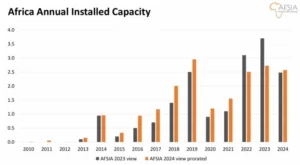
Additionally, there are significant untapped hydro resources and geothermal opportunities in East Africa. Yet, these remain underdeveloped. Here are some facts about the continent’s energy landscape:
- As of 2024, around 43% of Africa’s population has no access to electricity, mostly in rural areas.
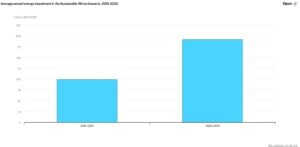
- The International Energy Agency (IEA) says Africa needs $25 billion each year for energy access. This investment is crucial to ensure that everyone has electricity by 2030.
- Africa has 60% of the world’s best solar resource potential. But only about 2-3% of global clean energy investment currently flows to Africa, despite its vast potential.
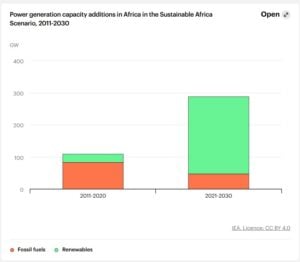
Electricity is central to Africa’s clean energy future, with renewables driving growth. Renewables, led by solar, wind, hydro, and geothermal, will make up over 80% of new power capacity by 2030. Redirecting funds from canceled coal projects could finance half of Africa’s solar additions to 2025.
The clean energy transition is not only about climate. Reliable electricity is essential for health services, schools, businesses, and job creation. According to estimates, Africa’s renewable sector could create 38 million green jobs by 2030. This will happen if there is enough funding and infrastructure.
What’s at Stake
The EU’s $638 million clean energy funding could deliver a range of benefits for African communities and economies.
It can stabilize electricity grids. This makes power more reliable and cuts down on blackouts for homes and businesses. Stronger transmission systems will also make it easier to integrate renewable power sources.
Second, rural electrification projects will deliver power to communities that have long lacked it. Electricity access in rural areas boosts education by letting schools stay open after dark. It also supports local health clinics and creates opportunities for small businesses.
Third, the investment will support Africa’s climate goals. Countries can reduce their reliance on fossil fuels by expanding solar, wind, hydro, and other renewable projects. This shift also helps to cut greenhouse gas emissions.
Finally, EU involvement is expected to encourage co-financing and private sector participation. Investors often see African energy projects as risky. However, public funding from the EU and other groups can lower barriers. This makes projects more appealing.
Roadblocks on the Green Highway
While the funding is significant, there are still challenges that could affect the success of these projects.
Many African electricity grids are weak or fragmented. This makes it hard to add new renewable sources on a large scale. Large infrastructure projects need good governance, transparency, and technical skill. Some areas may not have these.
Financing remains another hurdle. The $638 million package, while important, is only a fraction of Africa’s total energy investment needs. Africa needs hundreds of billions of dollars in extra funding over the next decade. This is essential for universal access and a shift to clean energy.
Political instability, regulatory barriers, and limited local capacity may also slow down progress. To tackle these problems, the EU and African governments must work together. They need strong project oversight and to improve local technical skills.
More Than Money: Why This Partnership Matters
The EU’s support is part of its larger vision for sustainable growth and climate action. Under the Global Gateway initiative, the EU has pledged €150 billion in investment for Africa by 2030, with clean energy as a central focus. This funding aims to support Africa’s development. It also strengthens Europe’s ties with the continent in a competitive world.
By supporting Africa’s energy transition, the EU is also advancing its own climate commitments. Expanding renewable capacity in Africa contributes to global emissions reduction while also reducing reliance on fossil fuel imports.
The projects announced will help lay the foundation for deeper EU-Africa cooperation in the years ahead. If successful, they could serve as models for scaling up investment and technology transfer in clean energy.
Funding alone won’t close Africa’s big investment gap. However, it shows that people are starting to recognize the continent’s role in the global clean energy shift. Success will depend on strong governance, effective implementation, and mobilization of additional financing from both public and private sources.
If delivered well, the initiative could improve millions of lives, create jobs, and bring Africa closer to universal energy access while also contributing to the global fight against climate change.