


The central bank of Chile, the world’s largest copper producer, recently lowered its 2026 economic growth forecast, but it raised its average copper price forecast to US$5.90 per pound. The change reflects strong global demand and limited mine supply. It also shows that copper remains one of the world’s strongest commodity markets, even as economic growth slows.
As the biggest producer, Chile has a major influence on global copper supply. Copper is essential for power grids, electric vehicles (EVs), renewable energy, battery storage, and AI data centers. Higher prices could benefit mining companies while supporting the industries driving the global energy transition.
Chile Sees Strong Copper Prices Ahead
Chile’s latest forecast shows confidence in the copper market. The central bank expects copper to average US$5.90 per pound in 2026, before easing to US$5.20 in 2027 and US$5.00 in 2028.
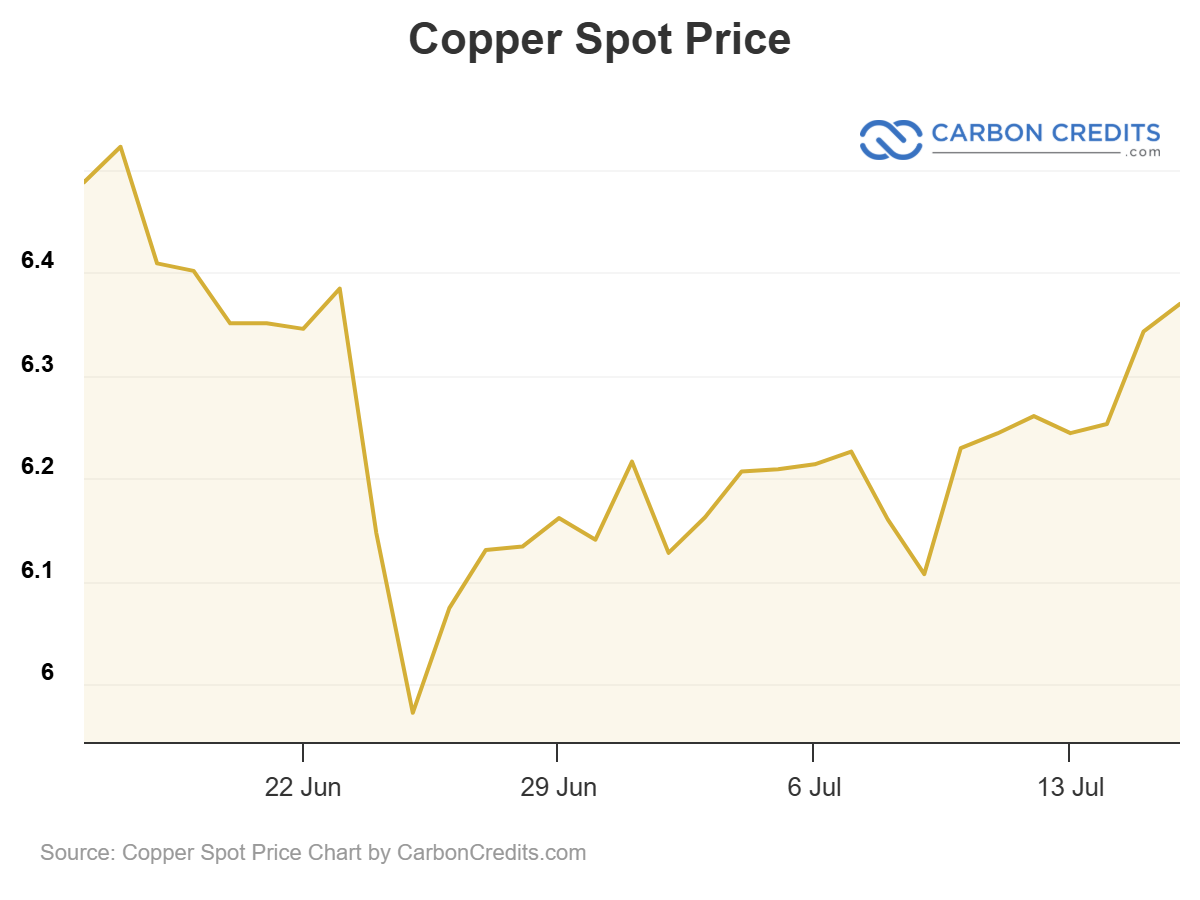
Even with slower economic growth, officials believe demand will stay strong because the world still needs more copper for clean energy and new technology.
Chile’s Copper Commission (Cochilco) shares that view. Earlier this year, it also raised its copper price outlook. The agency said prices are being supported by tight global supply and growing demand from renewable energy, electric transport, and digital infrastructure.
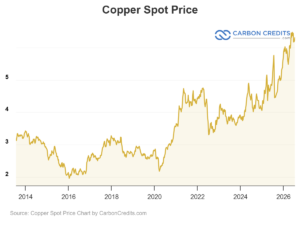
Copper prices have seen some ups and downs over the past year. However, they remain well above their historical average. Analysts say the market is now being driven more by long-term demand than by short-term economic swings.
AI and Clean Energy Are Reshaping Copper Demand
Copper has become one of the world’s most important metals.
According to the International Energy Agency (IEA), power grids will create the largest increase in copper demand over the coming decades. Countries need thousands of kilometers of new transmission lines to connect renewable energy projects and meet rising electricity demand.
Electric vehicles also use much more copper than traditional cars. The IEA estimates that a battery-powered EV needs about 2.5x more copper than a gasoline-powered vehicle. Wind turbines, solar farms, and battery storage systems also require large amounts of the metal.
Artificial intelligence is adding even more demand. AI data centers need transformers, substations, cooling systems, backup power, and large networks of electrical cables. All of these use copper.
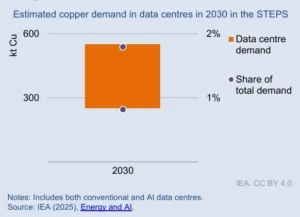
The IEA expects electricity use by data centers around the world to more than double by 2030, reaching about 945 terawatt-hours (TWh) each year. That is roughly equal to Japan’s total annual electricity use today. Most of the increase will come from AI.
As companies like Google, Microsoft, Amazon, and Meta build more AI data centers, demand for copper will keep growing.
Chile Remains the World’s Copper Powerhouse
Chile remains the world’s biggest copper producer.
According to the U.S. Geological Survey (USGS), Chile produced about 5.3 million metric tonnes of copper in 2025. That was about one-quarter of global mine production.
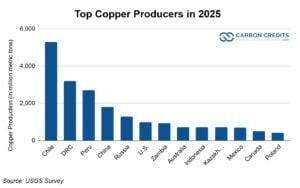
The country’s biggest mines include Escondida, Collahuasi, and Codelco. Together, they supply copper to manufacturers around the world.
Cochilco expects Chile’s annual copper production to reach about 5.54 million metric tonnes by 2034. However, growth is likely to be slow. Many older mines now produce lower-grade ore. New mining projects are also becoming more expensive and take longer to develop.
Chile’s state-owned miner Codelco recently said its production is expected to stay close to current levels over the next few years instead of reaching its long-term target of 1.7 million metric tonnes a year by 2030.
Bernardo Fontaine, Codelco Chairman, remarked:
“It is very possible that it sits at a production rate quite similar to the one it has today.”
The company is still recovering after output fell to its lowest level in more than 20 years during 2022 and 2023. Production from its own mines reached 1.33 million metric tonnes last year.
Fontaine further said several major expansion projects have faced unexpected delays and higher costs as it works to offset declining ore grades. The company also sees the El Abra mine, where it owns a 49% stake alongside Freeport-McMoRan, as a promising project for future investment. Freeport plans to invest US$7.5 billion to expand the mine.
With demand rising and supply growing slowly, many analysts believe copper prices could remain strong for years to come.
Why Global Copper Supply Is Falling Behind
While demand keeps growing, copper supply is not rising as fast.
Many of the world’s largest copper mines are getting older. As ore grades fall, companies must process more rock to produce the same amount of copper. That increases both costs and energy use.
New mines also take a long time to build. According to the IEA, developing a new copper mine can take 15 to 20 years from discovery to production. Permitting, financing, and environmental reviews all add time to the process.
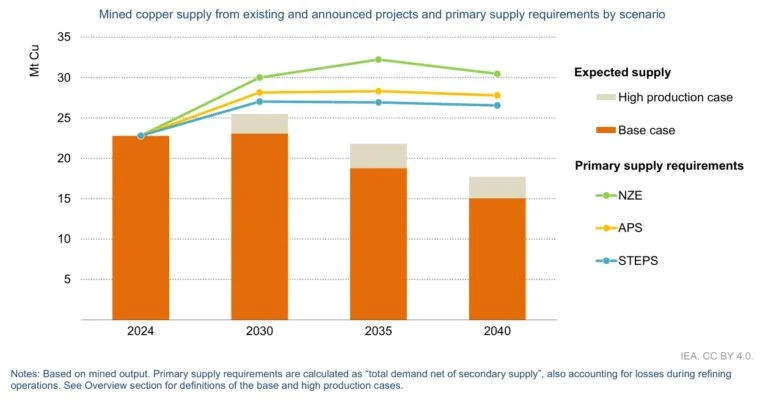
The International Copper Study Group (ICSG) expects global mine production to increase over the next few years. However, many analysts believe that growth will still fall short of future demand because of project delays, lower ore grades, and rising costs.
Copper Is Becoming a Critical Net-Zero Metal
Copper is now at the center of the clean energy transition.
The IEA estimates that clean energy technologies could account for almost half of global copper demand by 2040 under a pathway that reaches net-zero emissions by 2050. That includes electric vehicles, renewable power, battery storage, electricity networks, and hydrogen projects.
Power grids will need the biggest investment. The World Bank estimates that global electricity networks must expand rapidly to support cleaner energy and growing electricity demand. Every new transmission line, transformer, and substation requires large amounts of copper.
The rapid growth of AI is adding another layer of demand. New data centers require huge amounts of electrical equipment before they can even begin operating. As more countries build AI infrastructure, copper demand is expected to remain strong.
High Prices Are Sparking New Mining Investment
Strong copper prices may also encourage companies to invest in new projects. The challenge is timing.
Even if companies approve new projects today, many will not begin producing copper until the next decade. That means supply could remain tight while demand continues to grow.
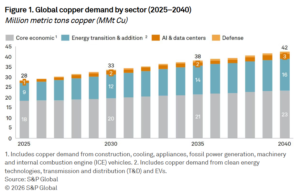
According to S&P Global, global copper demand could nearly double, from 28 million metric tons a year in 2025 to 42 million metric tons by 2040. This is driven mainly by electrification, clean energy, AI, and digital technologies. Meeting that demand will require major investment across the mining sector.
Copper’s Bull Run Faces New Tests
Copper’s long-term outlook remains positive, but risks still exist. A weaker global economy could reduce industrial demand in the short term. Trade tensions and changing government policies may also create periods of price volatility.
However, most market analysts expect the long-term trend to remain strong because the world cannot expand clean energy without more copper.
Chile’s latest forecast reflects that reality. Even as economic growth slows, the country expects copper prices to stay well above historical levels because demand continues to outpace supply.
As countries build more renewable power, modernize electricity grids, expand AI infrastructure, and produce more electric vehicles, demand for copper is likely to remain strong for many years. That is why many analysts believe today’s high prices may be part of a much longer market cycle rather than a short-term rally.