


Microsoft has signed a new solar energy agreement with U.S. energy company Avangrid, a member of the Iberdrola Group. The deal adds another large renewable energy project to Microsoft’s growing clean power portfolio.
The agreement covers the Bluebird Solar project in Klickitat County, Washington. The facility will have a capacity of 140 megawatts direct current (MWdc), or 100 megawatts alternating current (MWac). According to Avangrid, the project can generate enough electricity to power more than 20,000 homes.
Avangrid CEO Jose Antonio Miranda said:
“We are proud to have built a strong relationship with Microsoft to help them meet their energy needs while investing in the communities where we operate. This adds to Avangrid’s strong track record of developing projects to help meet growing energy demands from the world’s leading technology companies.”
AI’s Power Appetite Is Reshaping Energy Markets
The deal uses a power purchase agreement (PPA). This type of contract allows companies to buy renewable electricity over a long period. PPAs also help fund new renewable energy projects before they begin operating.
Bluebird Solar is expected to start commercial operations in 2028. Avangrid says the project represents about $300 million in local investment. It could also create around 300 construction jobs during development.
The agreement strengthens an existing partnership between the two companies. It is now the fourth renewable energy contract signed by Microsoft and Avangrid in the United States.
Together, the companies have more than 500 MW of contracted energy capacity. Their existing projects include:
- Powell Creek Solar in Ohio,
- Camino Solar in California, and
- Juniper Canyon Wind in Washington.
The latest agreement comes as the tech giant faces growing electricity demand. Artificial intelligence, cloud computing, and data centers require large amounts of power. As Microsoft expands these businesses, its energy needs continue to rise.
According to Microsoft’s latest sustainability report, the company’s energy use has increased by 168% since 2020. During the same period, its greenhouse gas emissions rose by 23.4%.
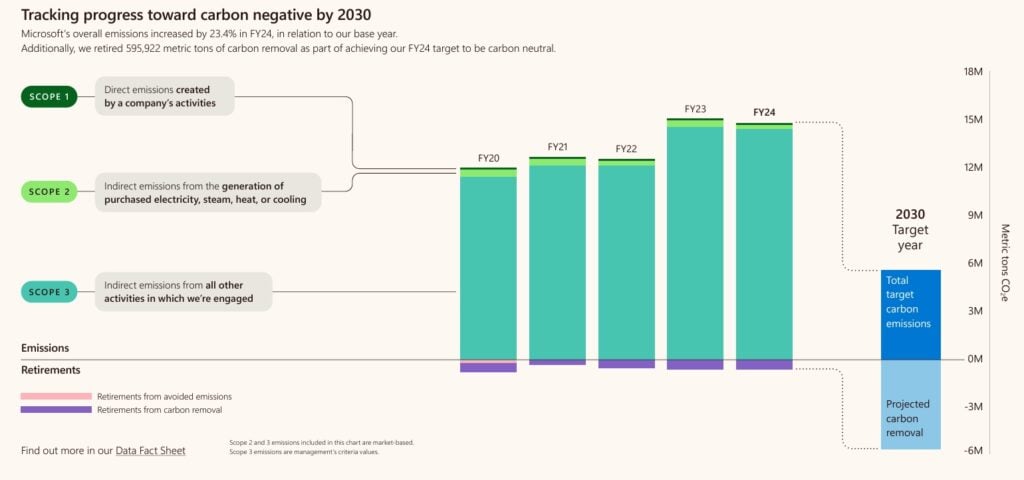
The company says its business growth has been much faster than its emissions growth. Company revenue increased by 71% over the same period.
MORE ON MICROSOFT:
- Microsoft (MSFT) Signs Solar Deal with Zelestra to Power Data Centers in Spain, Supporting Community Projects
- Microsoft Leads on Climate: $800M CIF Drives Clean Tech and AI Energy Deals with ADNOC, Masdar, and XRG
- Microsoft Signs 650,000 Carbon Removal Credit Deal with BioCirc’s Denmark BECCS Project
The challenge is not limited to Microsoft. Many technology companies are building new data centers to support AI services. These facilities need large and reliable sources of electricity.
As a result, companies are signing more renewable energy contracts. Solar, wind, battery storage, and nuclear energy are becoming important parts of long-term power strategies.
The Bluebird Solar agreement reflects this trend. Instead of relying only on existing electricity markets, large companies are helping finance new energy projects directly.
Inside Microsoft’s Expanding Climate and Net Zero Playbook
Microsoft remains one of the world’s largest corporate buyers of renewable energy. The company has committed to becoming carbon negative by 2030. This means it plans to remove more carbon from the atmosphere than it emits each year.
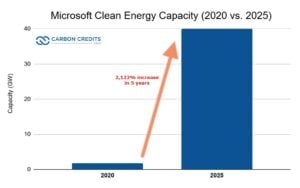
The tech company has promised to remove from the atmosphere all carbon the company has emitted since its founding in 1975. To support these goals, Microsoft has expanded its clean energy program worldwide.
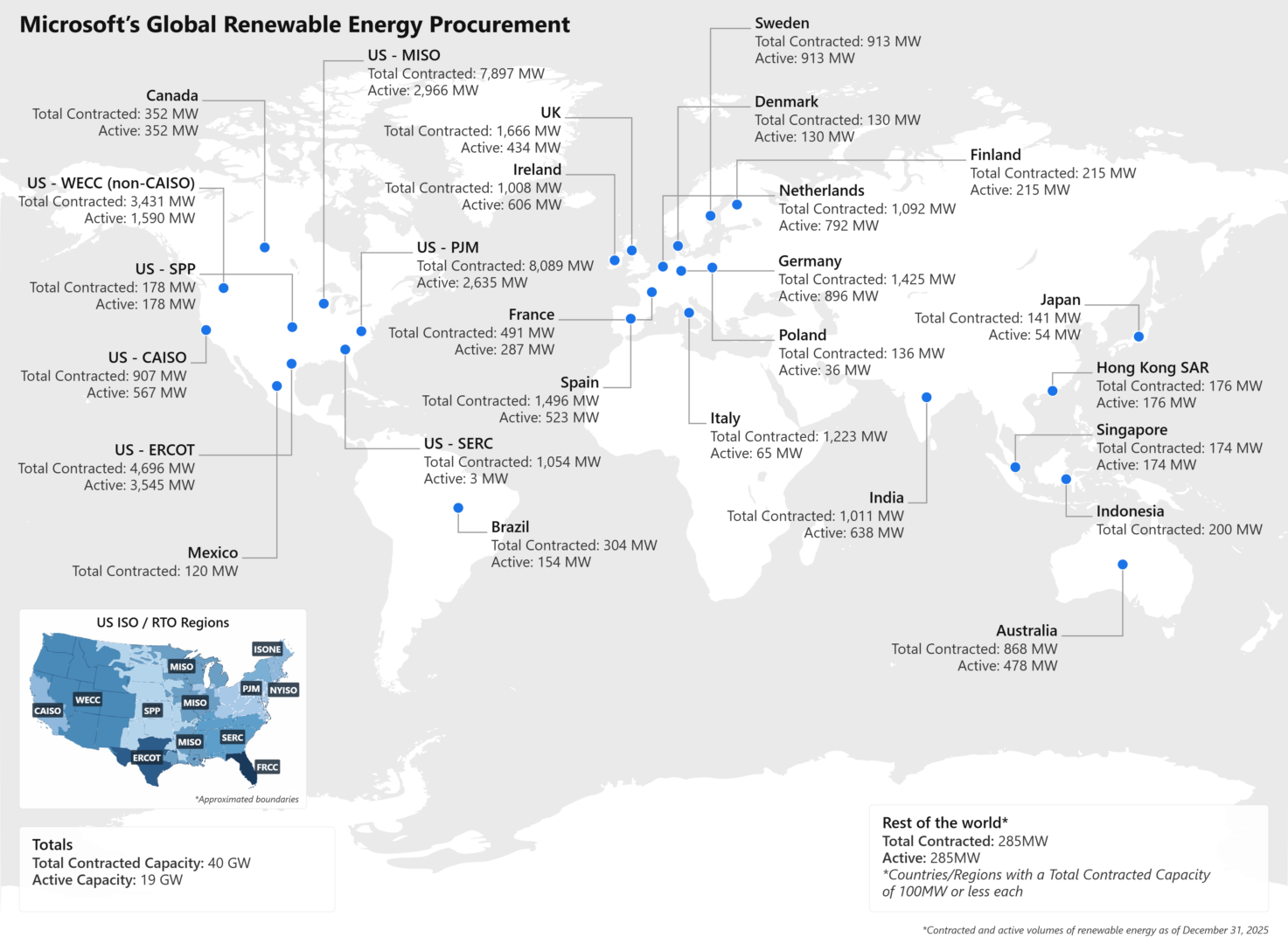
The 2025 Environmental Sustainability Report states that the company has secured 34 gigawatts (GW) of renewable energy. This capacity spans 24 countries.
Microsoft also says it now matches 100% of its annual electricity consumption with renewable energy generation. The company achieved this through more than 400 renewable energy agreements across 26 countries.
Another goal is Microsoft’s “100/100/0” commitment. Under this plan, the company aims to match 100% of its electricity use with carbon-free energy sources, 100% of the time, by 2030.
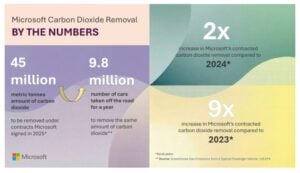
Microsoft is also investing heavily in carbon removal projects. In 2025, it contracted nearly 45 million metric tons of carbon removals. However, the tech company was recently reported to have halted its carbon removal purchases in consideration of its climate strategy.
- SEE MORE: Microsoft Hits Pause on All Carbon Removal Purchases: A Major Shift in Corporate Climate Strategy
The company is also improving the efficiency of its data centers. The tech giant says new cooling technologies can save more than 125 million liters of water per facility each year. It also reports that hybrid timber-steel construction can cut embodied carbon by up to 65% compared with traditional concrete designs.
Avangrid Positions Itself for Growing Corporate Energy Demand
For Avangrid, the agreement highlights growing demand from large corporate customers. The company is part of the Iberdrola Group, one of the world’s biggest renewable energy developers. It operates electricity networks and renewable energy projects across the United States.
Demand from technology companies has become an important growth driver for renewable energy developers. Data center operators are signing long-term contracts to secure clean electricity while meeting climate goals. The Bluebird Solar project is an example of this shift.
Beyond supplying electricity, projects like Bluebird often bring economic benefits to local communities. These include construction jobs, tax revenue, infrastructure spending, and long-term income for landowners.
Hence, renewable developers will have a bigger role as electricity demand grows. They will help with grid expansion and cut down emissions.
Solar and Wind Continue to Dominate America’s Power Buildout
Microsoft’s latest agreement reflects broader changes across the U.S. energy sector. Renewable energy now accounts for most new electricity generation capacity being added nationwide.
According to Federal Energy Regulatory Commission data, renewable energy sources comprised nearly 90% of new U.S. electrical generating capacity added in 2025. Solar led the growth. It accounted for 36.3% of total available installed utility-scale capacity.
Corporate buyers remain a major driver of this growth. More and more technology companies, manufacturers, retailers, and financial firms are using power purchase agreements. These agreements help them secure clean electricity and manage future energy costs.
Solar energy is becoming one of the most important technologies in the global transition to net zero. It is now one of the lowest-cost sources of new electricity in many markets. As costs continue to fall, more industries are using solar power to reduce emissions from their operations.
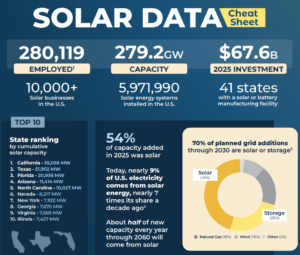
This trend is helping drive decarbonization across sectors such as manufacturing, transportation, mining, and data centers. Companies are under increasing pressure from investors, customers, and regulators to cut emissions. Access to renewable electricity is becoming a key part of those efforts.
Industry forecasts suggest electricity demand will continue rising throughout the decade. Growth in AI, electric vehicles, and industrial electrification will require large amounts of new power generation. This creates a growing need for clean energy projects that can support economic growth without increasing carbon emissions.
Clean Energy Partnerships Are Becoming Strategic Investments
The Microsoft-Avangrid agreement highlights how renewable energy procurement is changing. Corporate clean energy contracts were once seen mainly as sustainability initiatives. Today, they are becoming part of long-term infrastructure planning.
For technology companies, access to reliable electricity is now closely linked to future growth. Renewable energy agreements help secure power supplies while supporting climate commitments.
For energy developers, these contracts provide stable revenue that helps finance new projects.
The Bluebird Solar project represents only 140 MW of new capacity. However, it reflects a much larger shift taking place across the energy sector.
Companies are no longer just buying electricity. More of them are helping build the energy infrastructure needed to support future economic growth while advancing the transition to lower-carbon energy systems.