

BioCirc has signed a major agreement with Microsoft (MSFT stock) to deliver 650,000 high-durability carbon removal units (CRUs) over seven years. The deal will support Microsoft’s goal of becoming carbon negative by 2030 while helping expand the market for durable carbon removal solutions in Europe.
The agreement focuses on BioCirc’s bioenergy with carbon capture and storage (BECCS) platform in Denmark. Under the deal, BioCirc will supply around 100,000 CRUs every year between 2026 and 2032. Deliveries will begin in the second half of 2026 as the project gradually ramps up.
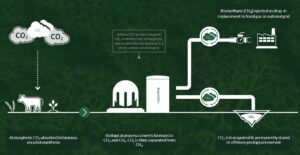
Each CRU represents one metric ton of carbon dioxide permanently removed from the atmosphere and stored underground. The captured carbon will come from biogenic CO2 generated at BioCirc’s biogas plants and then stored deep beneath the Danish North Sea.
Deal Comes After Questions Around Microsoft’s Carbon Removal Strategy
The agreement is important because it comes shortly after reports suggested Microsoft had slowed some carbon removal purchases. Earlier reports claimed the company had informed some suppliers that it was pausing parts of its procurement activity.
However, as per reports, Microsoft later clarified that its carbon removal program remains active. The company’s Chief Sustainability Officer, Melanie Nakagawa, explained that carbon removal still plays a key role in Microsoft’s climate strategy. She also noted that the company may adjust the pace and scale of future purchases depending on market conditions and project readiness.
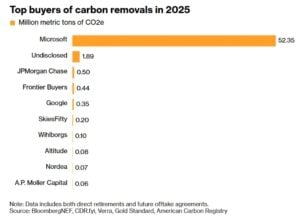
This new agreement with BioCirc shows that Microsoft continues to invest in large-scale, durable carbon removal projects despite recent concerns. It has significantly emerged as one of the world’s largest buyers of high-quality carbon removal credits. Instead of depending on one technology, the company spreads its investments across several approaches.
BioCirc Expands Its Circular Energy Vision
BioCirc operates in the circular bioeconomy sector and focuses on reducing emissions through biogas and renewable energy systems. The company develops energy solutions that use every part of the biogas value chain while lowering carbon emissions and supporting energy security.
The CCS project has become one of the company’s most important climate initiatives. BioCirc plans to connect biogas production with carbon capture and permanent underground storage. This approach allows the company to remove carbon dioxide from the atmosphere while continuing to generate renewable energy.
- The project will capture biogenic CO2 from five Danish biogas plants. These facilities include Favrskov Biogas, Vesthimmerland Biogas, Haderslev Biogas, Grønhøj Biogas, and Vinkel Biogas.
Operations are expected to expand gradually between 2026 and 2032. During this period, BioCirc aims to capture and permanently store up to 1 million tonnes of CO2. According to the company, that amount equals the annual direct emissions of more than 130,000 people in Denmark.
Carbon Will Be Stored Beneath the North Sea
- The captured carbon dioxide will be transported to the Greensand Future storage site in the Danish North Sea.
- There, the CO2 will be injected around 1,500 to 1,800 meters beneath the seabed into the Nini West reservoir.
- This process creates a complete carbon capture and storage value chain. It starts from decentralized capture at biogas facilities and ends with permanent offshore geological storage.
The project also receives support from the Danish Energy Agency through the NECCS fund. According to BioCirc, both the government subsidy and Microsoft’s carbon removal purchase agreement are necessary to make the project financially viable.
The company also emphasized that all lifecycle emissions linked to the process will be measured carefully. This includes emissions from biomass sourcing, plant operations, and transportation. BioCirc said the accounting process will ensure that the project delivers genuine net carbon removal.
In addition, the biomass used in the system must meet strict Danish sustainability standards. The company added that its facilities already meet or exceed Denmark’s methane detection and leak prevention requirements.
Microsoft Makes Carbon Removal the Key to Managing AI-Driven Emissions
Despite its ambitious climate commitments, Microsoft continues to face growing emissions challenges. The rapid expansion of artificial intelligence, cloud computing, and data center infrastructure has increased the company’s carbon footprint in recent years.
Its total emissions have risen by more than 30% compared to 2020 levels. The increase mainly comes from the growing energy demand linked to AI systems and large-scale digital infrastructure.
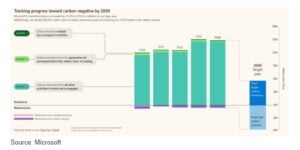
At the same time, the tech giant continues to pursue some of the corporate world’s most aggressive climate goals. The company plans to become carbon negative by 2030, meaning it intends to remove more carbon from the atmosphere than it emits each year.
Diversifying Carbon Removal Investments
To support these goals, Microsoft has invested heavily in carbon removal projects worldwide. By 2025, the company had committed more than $750 million to carbon removal initiatives and contracted around 45 million tonnes of carbon removals.
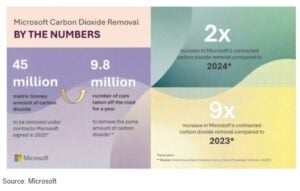
These include BECCS, direct air capture, mineralization, and other engineered removal systems. This strategy allows the company to reduce risks while helping multiple carbon removal technologies scale commercially.
The BioCirc agreement strengthens Microsoft’s BECCS portfolio while supporting a project with relatively high technical readiness. BioCirc’s existing biogas operations and integrated infrastructure make the project more commercially practical compared to some earlier-stage carbon removal technologies.
The company also believes its model can expand beyond Denmark. BioCirc said the system could eventually be replicated across Europe’s more than 1,500 biomethane production sites.
Overall, the whole deal shows that BECCS projects could play a larger role in helping industries and governments meet long-term climate targets while building new low-carbon energy systems.