

Canada has reached a new agreement with Alberta that reshapes the country’s industrial carbon pricing system. The deal involves a financial commitment of up to C$600 million from each party, the federal government and Alberta. This agreement is represented by Premier Danielle Smith and Prime Minister Mark Carney.
The funds will support carbon capture and storage (CCS) projects between 2030 and 2040. These projects aim to reduce emissions from heavy industry, especially oil and gas operations in Alberta.
At the center of the agreement is a broader policy shift. Alberta will raise its industrial carbon price. The goal is $130 per tonne by 2040. Interim increases will begin this decade.
The deal also connects carbon pricing with future energy infrastructure plans. This includes potential pipeline development, which remains politically sensitive across Canada.
Taken together, the agreement signals a new phase in Canada’s climate strategy. It links emissions pricing, industrial competitiveness, and large-scale infrastructure planning in one policy framework.
How Canada’s Industrial Carbon Pricing System Is Changing
Canada already has a national carbon pricing system, but provinces can design their own frameworks if they meet federal standards. This creates a mixed system that combines federal oversight with provincial flexibility.

Under the new Alberta–Ottawa agreement, the industrial carbon price will rise gradually over time. The goal is to increase predictability for companies while still pushing long-term emissions reductions.
Key elements of the plan include:
- A rising carbon price path toward $130/t by 2040
- Annual benchmark increases through the 2030s
- Stronger compliance rules under Alberta’s TIER system
- Support for carbon capture investment through public funding
This structure reflects a shift away from short-term carbon pricing signals. Instead, Canada is moving toward long-term “price certainty” for industrial emitters.
Economists often argue that stable carbon prices are more effective than volatile systems. They allow companies to plan long-term investments in cleaner technology. However, critics say the pace of change is still too slow to meet climate targets.
CCS Becomes Canada’s Bridge Between Oil and Net Zero
A central feature of the agreement is the joint investment in carbon capture and storage. Under Friday’s agreement, Alberta and the federal government will jointly invest up to C$1.2 billion in carbon capture and storage projects, with the cost split equally between both parties.
This means each side will contribute up to C$600 million to support CCS deployment. Carbon capture is a technology that traps CO₂ emissions from industrial facilities. The gas is then stored underground in geological formations.
In Alberta, CCS is mainly focused on oil sands and heavy industry. These sectors are among the most carbon-intensive parts of Canada’s economy.
Supporters argue that CCS is necessary because emissions from these industries are difficult to eliminate quickly. They say it can reduce emissions while keeping industrial production active.
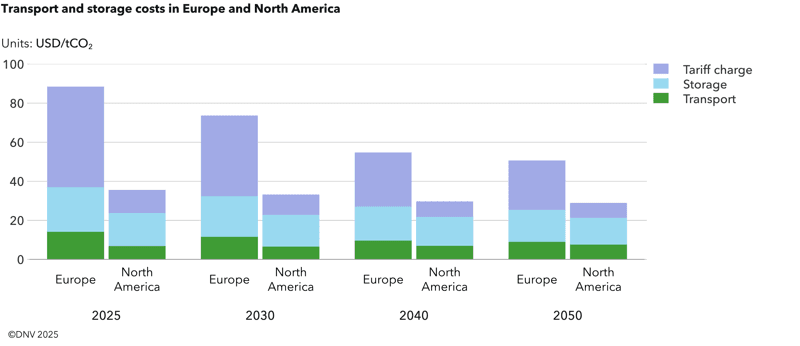
But CCS remains expensive. Global projects often depend on government support to remain viable. Costs can vary widely depending on location, technology, and storage conditions. The DNV report forecasts the CCS costs in North America and Europe as follows:
The Canadian government has also linked CCS investment to future industrial development. In some cases, it is seen as a condition for infrastructure approvals, including potential pipeline expansion.
Canada already operates several large-scale CCUS facilities, mainly in Alberta and Saskatchewan. One of the largest is the Quest Carbon Capture and Storage Project in Alberta, which captures and stores about 1 million tonnes of CO₂ annually.
The North American country is also emerging as a major player in the global CCUS market. Canadian projects account for roughly 11.5% of planned global carbon capture storage capacity.
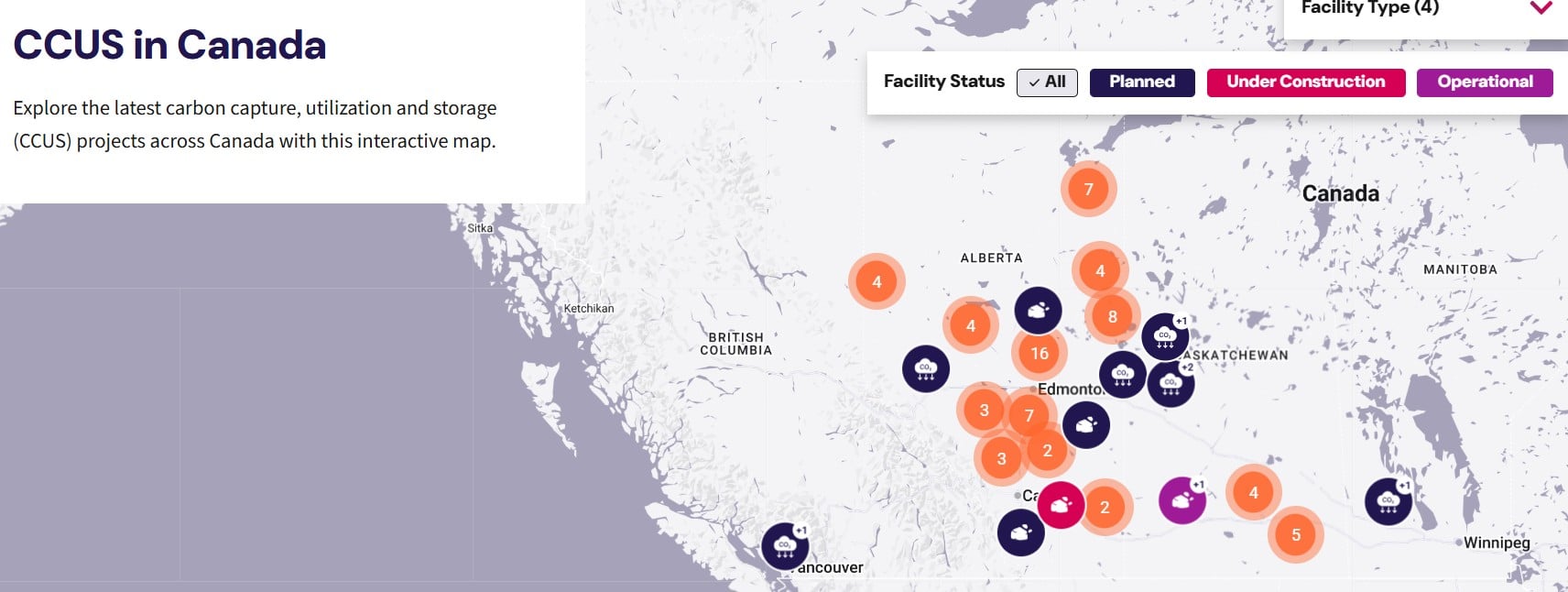
National CCUS capacity could grow from about 4.4 million tonnes of CO₂ per year today to around 16.3 million tonnes annually by 2030. The federal government is also supporting the sector through programs like the Energy Innovation Program, which funds CCUS research, clean energy technologies, and smart grid development to help support Canada’s 2050 net-zero target.
Industrial Climate Policy Moves From Short-Term to Long Horizon
Canada has long committed to reaching net-zero emissions by 2050. However, industrial emissions remain one of the hardest challenges.
Oil and gas production accounts for roughly a quarter of Canada’s total greenhouse gas emissions, according to federal climate data. This makes Alberta central to national climate policy.
At the same time, Canada is trying to expand energy exports. This creates a policy tension between climate goals and economic growth. The new agreement tries to balance both sides. It keeps the long-term net-zero target while allowing continued fossil fuel development under stricter carbon pricing rules.
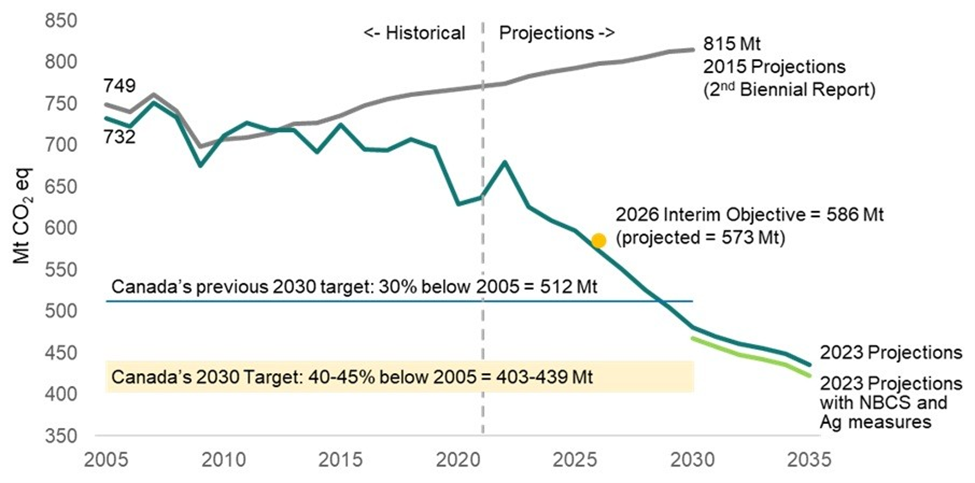
Recent policy changes also show this balancing act. Canada has rolled back some emissions caps for the oil and gas sector while strengthening carbon pricing mechanisms.
Officials say this approach aims to maintain investment while still driving emissions reductions over time. Critics argue that delaying stricter limits could slow Canada’s progress toward its climate goals.
Economic Pressure on Heavy Industry
One of the biggest drivers of the deal is economic pressure on Alberta’s energy sector. High-emission industries face rising compliance costs under carbon pricing systems. As carbon prices increase, companies must either reduce emissions or pay higher fees.
Current provincial systems already impose costs on large emitters. The federal system also sets a minimum price that rises over time.
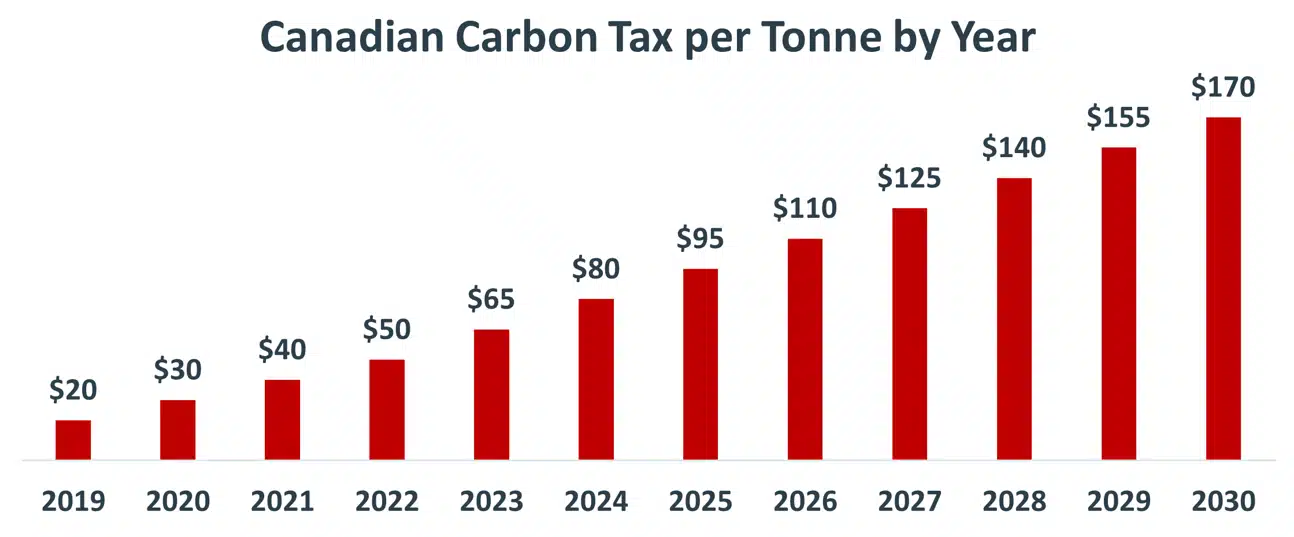
According to government data, Canada’s carbon price floor is scheduled to increase gradually toward higher levels by 2030 and beyond. For Alberta, this creates both risk and opportunity.
On one hand, higher carbon prices increase operating costs for oil and gas producers. On the other hand, they create incentives for cleaner technologies and efficiency upgrades.
Industry groups often warn that higher carbon costs could reduce competitiveness compared to countries with weaker climate rules. However, supporters of carbon pricing argue that it helps align Canada with global climate standards and reduces long-term transition risks.
Infrastructure, Pipelines, and Climate Policy Are Now Linked
The agreement also ties climate policy more closely to energy infrastructure development. Reports suggest the deal could help support future pipeline expansion tied to Canadian oil exports.
Canada remains one of the world’s largest oil producers, exporting roughly 4 million barrels per day to global markets. At the same time, the oil and gas sector accounts for about 31% of the country’s total greenhouse gas emissions.
The federal government has said future infrastructure growth must align with stricter carbon pricing and emissions reductions, including carbon capture deployment. This reflects a broader shift where climate policy is increasingly linked to industrial investment and export strategy.
Canada’s Carbon Market Is Entering a New Phase
Canada’s carbon pricing system is becoming more long-term and industry-focused, with Alberta now playing a central role through its Technology Innovation and Emissions Reduction (TIER) system.
Alberta’s TIER market is already one of Canada’s largest compliance carbon systems. Large industrial emitters that cut emissions below required levels can earn carbon credits.
In contrast, those with higher emissions must buy credits or pay compliance costs. The federal carbon benchmark is also set to rise to C$170 per tonne by 2030.
The changes come as carbon pricing expands globally. According to the World Bank, carbon pricing systems now cover about 24% of global greenhouse gas emissions worldwide.
At the same time, Canada is increasingly linking carbon pricing, carbon credits, carbon capture, and energy infrastructure into one broader industrial strategy. The goal is to reduce emissions while giving companies more certainty for long-term investment and competitiveness.
The new Ottawa-Alberta carbon agreement reflects a political and economic compromise. It supports continued industrial activity while seeking to strengthen the credibility of climate policy.
The success of this approach will depend on how effectively carbon capture technologies scale, how industries respond to rising carbon prices, and whether long-term investments in clean infrastructure deliver real emissions reductions.